
Benefits of Curated Tours for Immersive Travel in 2026
- Rban Tours
- a few seconds ago
- 7 min read
Curated tours are expertly designed travel experiences built around your interests, mood, and pace, removing the stress of planning while unlocking authentic cultural access that standard trips rarely deliver. The benefits of curated tours go far beyond convenience. They give you insider access to a city’s real rhythm, connect you with local creatives and hidden venues, and replace the anxiety of DIY logistics with genuine presence. Whether you are wandering the markets of Mexico City, tracing the backstreets of Barcelona, or absorbing the quiet rituals of Japan, a well-curated experience changes how deeply you feel a place.
1. Benefits of curated tours: time saved and stress eliminated
The single biggest practical advantage of curated travel is time. Expert-led curation cuts pre-trip logistics time drastically compared to planning a trip yourself. That means no hours lost comparing hotels, no guesswork on which restaurant is actually worth it, and no last-minute scramble when a reservation falls through.
A skilled curator handles:
Transportation between sites and neighborhoods
Restaurant reservations at local favorites
Entry timing for museums and cultural landmarks
Coordination with local guides and artisans
Contingency planning when weather or crowds shift
Hidden costs of independent travel often exceed what travelers expect. The opportunity cost of spending evenings researching instead of experiencing is real. Curated tours absorb that cost so your vacation time stays yours.
Pro Tip: When briefing your curator, share your energy level and pace preference, not just a list of sights. A curator who knows you prefer slow mornings and active afternoons will build a day that actually fits you.

2. Deeper cultural immersion through expert curation
Curated tours produce a fundamentally different quality of cultural experience. Timing activities during off-peak hours, such as early mornings at a temple or a market before the tourist crowds arrive, is one of the most effective techniques curators use. That scheduling shift alone changes the emotional texture of a visit.
The access goes further than timing. Insider access to authentic local restaurants and experiences not available through standard booking channels is often the most memorable part of a curated trip. Think a private ceramics lesson in a Kyoto workshop, a street food walk through a neighborhood most visitors never reach, or a vintage market tour guided by someone who actually shops there.
“Slow travel through curated tours facilitates genuine connection and a deeper understanding of culture, versus the surface-level satisfaction of fast-paced sightseeing.” — Semat Travel
Curated travel experiences also connect you with the people who give a city its pulse. Local creatives, chefs, and artisans bring a destination to life in ways no guidebook can replicate. That human layer is what travelers remember years later.
For travelers who want to understand what this depth actually looks like in practice, the curated city experience guide from Rbantours breaks it down clearly.
3. Personalization that adapts to your mood, not a rigid plan
The most common misconception about curated tours is that they are inflexible. The opposite is true. Best curators use local, real-time knowledge to adjust plans on the fly, responding to your energy, the weather, and what is actually happening in the city that day.
The key is how you communicate with your curator before and during the trip. Effective communication is about conveying your travel “mood” and priorities, not building a rigid schedule. Tell your curator you want to feel like a local, not a tourist. Tell them you love food markets but find museums exhausting. That kind of input produces a day that feels alive.
This intent-focused curation approach means your experience stays adaptive. If a neighborhood festival is happening two streets over, a good curator pivots toward it. That spontaneity is not accidental. It is the product of deep local knowledge working in your favor.
Pro Tip: Before your tour, send your curator three words that describe how you want to feel at the end of the day. Words like “grounded,” “energized,” or “inspired” give them more useful direction than a list of attractions.
The second misconception worth addressing: curated travel is not only for luxury budgets. Travel experts consistently highlight that curation is about meaningful intent and depth, not necessarily higher cost. A well-designed half-day walking tour can deliver more genuine cultural value than a week of unstructured wandering.
4. Peace of mind and predictable costs
Curated tours provide peace of mind and predictable costs, which independent travel rarely offers. When you travel solo or without a plan, you carry the mental load of every decision. That cognitive weight accumulates and quietly drains the joy from a trip.
With a curated experience, the logistics are solved before you arrive. You know what you are doing, who you are meeting, and roughly what it will cost. That clarity frees your attention for the actual experience. You notice the light on the cathedral facade. You linger over coffee. You ask the vendor about the story behind what she is selling.
The highest value in curated tours often lies in the logistics and local insights that most independent travelers never access. That value is invisible until you experience the difference firsthand.
5. Depth over breadth: the case for fewer places, more feeling
Travelers feel more satisfied spending more time in fewer places rather than rushing through multiple cities. Curated tours are built around this principle. Instead of checking off ten neighborhoods in three days, you spend a full morning in one, learning its history from someone who grew up there.
This depth-first approach produces richer memories and a more honest understanding of a place. You leave knowing something real about the city, not just having photographed its landmarks. That distinction matters more as travelers grow more experienced and more selective about how they spend their time abroad.
Curated food experiences are a strong example of this principle in action. A culinary travel experience built around one neighborhood’s food culture teaches you more about a city than a full-day bus tour of its monuments. The meal becomes a window into history, economy, and daily life.
6. Value comparison: curated tours vs. standard and independent travel
Not every trip calls for a curated tour. The right choice depends on what you want from the experience.
Feature | Curated tours | Standard group tours | Independent travel |
Time investment | Low (logistics handled) | Low to medium | High |
Cultural depth | High | Medium | Variable |
Flexibility | High (intent-based) | Low | High |
Cost transparency | High | High | Low |
Insider access | High | Low | Variable |
Stress level | Low | Low to medium | High |
Standard group tours work well for travelers who want structure and social connection with a large group. Independent travel suits those who prioritize total freedom and have significant time to research. Curated tours deliver the best combination of depth, flexibility, and local access for travelers who want a meaningful experience without carrying the full planning burden themselves.
The intangible benefits are harder to put in a table but equally real. Knowing that someone with genuine local knowledge has your day covered changes how you show up. You arrive curious instead of anxious. That shift in presence is the real return on investment.
Key takeaways
Curated tours deliver their greatest value through expert logistics, insider access, and intent-based personalization that transforms travel from sightseeing into genuine cultural connection.
Point | Details |
Time savings are significant | Expert curation eliminates weeks of pre-trip planning by handling all logistics upfront. |
Off-peak timing changes everything | Scheduling visits during quieter hours dramatically improves cultural immersion and comfort. |
Personalization starts with mood | Share your travel intent and energy level, not a rigid list, to get the most adaptive experience. |
Curated does not mean expensive | Meaningful curation is about depth and intent, not luxury price points. |
Depth beats breadth | Spending more time in fewer places produces richer satisfaction than rushing through many. |
What we have learned about curated travel after years on the ground
The shift we keep seeing is this: experienced travelers stop asking “how many places can I see?” and start asking “how deeply can I feel one?” That question is the heartbeat of curated travel.
We have watched travelers arrive in Barcelona with a packed itinerary and leave wishing they had spent three full days in one neighborhood instead of half a day in six. The ones who slow down, who let a local guide take them somewhere unplanned, who eat where the chef’s grandmother used to cook — those are the travelers who come back changed.
The practical lesson we share with every traveler we work with: brief your curator on feeling, not function. Do not say “I want to see the Gothic Quarter.” Say “I want to feel like I actually live here for a morning.” That single reframe produces a completely different experience.
Choosing the right curator matters as much as choosing the right destination. Look for someone with genuine local roots, not just a polished website. Ask them what they personally love about the city. If they answer with a landmark, keep looking. If they answer with a story, you have found your guide.
— Rban
Rbantours brings curated cultural experiences to life
Rbantours designs walking and cultural tours that put you inside the city’s rhythm, not just in front of its monuments. Every experience is built around local knowledge, creative energy, and the kind of access that only comes from genuine community roots.
[
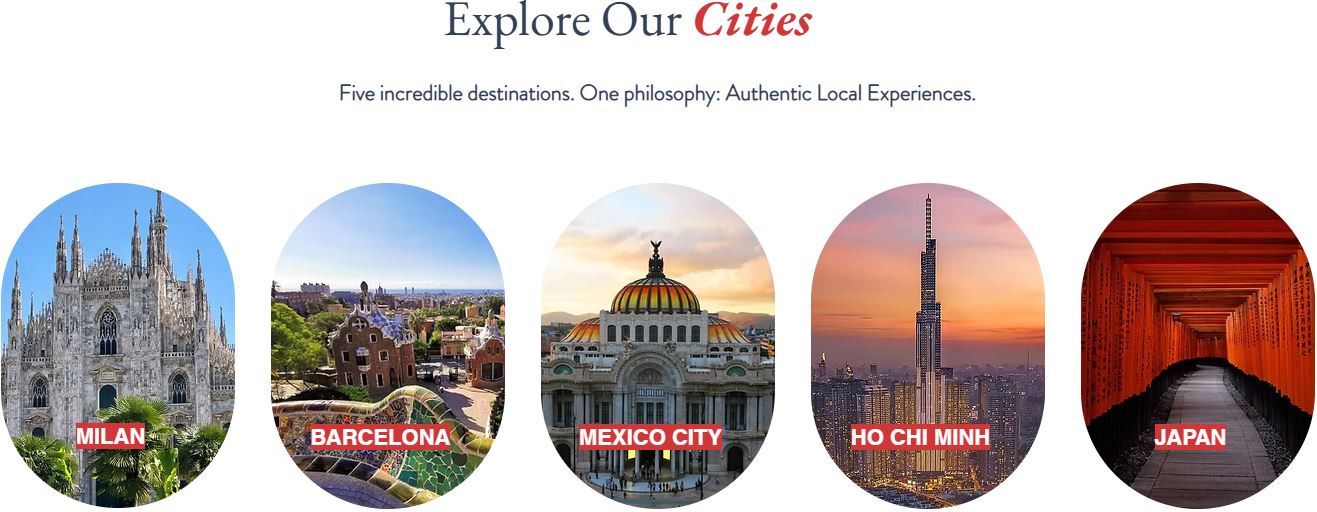
From street food walks in Mexico City to design-led neighborhood tours in Barcelona and immersive cultural programs in Japan, Rbantours operates across destinations where depth and authenticity are the whole point. Each itinerary adapts to who you are and what you want to feel. If you are ready to experience a city the way its most curious residents do, explore Barcelona experiences or browse the full range of destinations at Rbantours.
FAQ
What is curated travel, exactly?
Curated travel is a style of touring where an expert designs your experience around your interests, mood, and pace rather than a fixed generic itinerary. The focus is on depth, local access, and meaningful cultural connection.
Why choose curated tours over planning a trip yourself?
Curated tours eliminate the time and stress of pre-trip logistics while delivering insider access that independent research rarely uncovers. The result is more presence and less planning anxiety during your actual trip.
Are curated tours only for luxury travelers?
Travel experts consistently note that curation is about meaningful intent, not high price points. A well-designed half-day walking tour can deliver genuine cultural depth at an accessible cost.
How do I get the most out of a curated tour?
Communicate your travel mood and priorities to your curator rather than a rigid list of sights. Sharing how you want to feel at the end of the day gives your curator the flexibility to build something truly personal.
What destinations work best for curated tours?
Cities with rich local culture, distinct neighborhoods, and active creative communities, such as Barcelona, Mexico City, Kyoto, and Rome, tend to reward the curated approach most. The more layered the city, the more a local expert adds.
Recommended