
Definition of Lifestyle Tours: What Modern Travelers Need to Know
- Rban Tours

- 3 days ago
- 8 min read
A lifestyle tour is defined as a curated travel experience that prioritizes authentic cultural engagement, personal connection, and purposeful activity over passive sightseeing. Unlike standard tour packages, lifestyle tours are built around who you are as a traveler: your pace, your passions, and the kind of meaning you want to take home. The industry term for this broader movement is lifestyle tourism, and it reflects a fundamental shift in how people think about travel. Modern travelers are no longer asking “Where should I go?” They’re asking, as research confirms, “What will this experience mean to me?”
What is the definition of lifestyle tours?
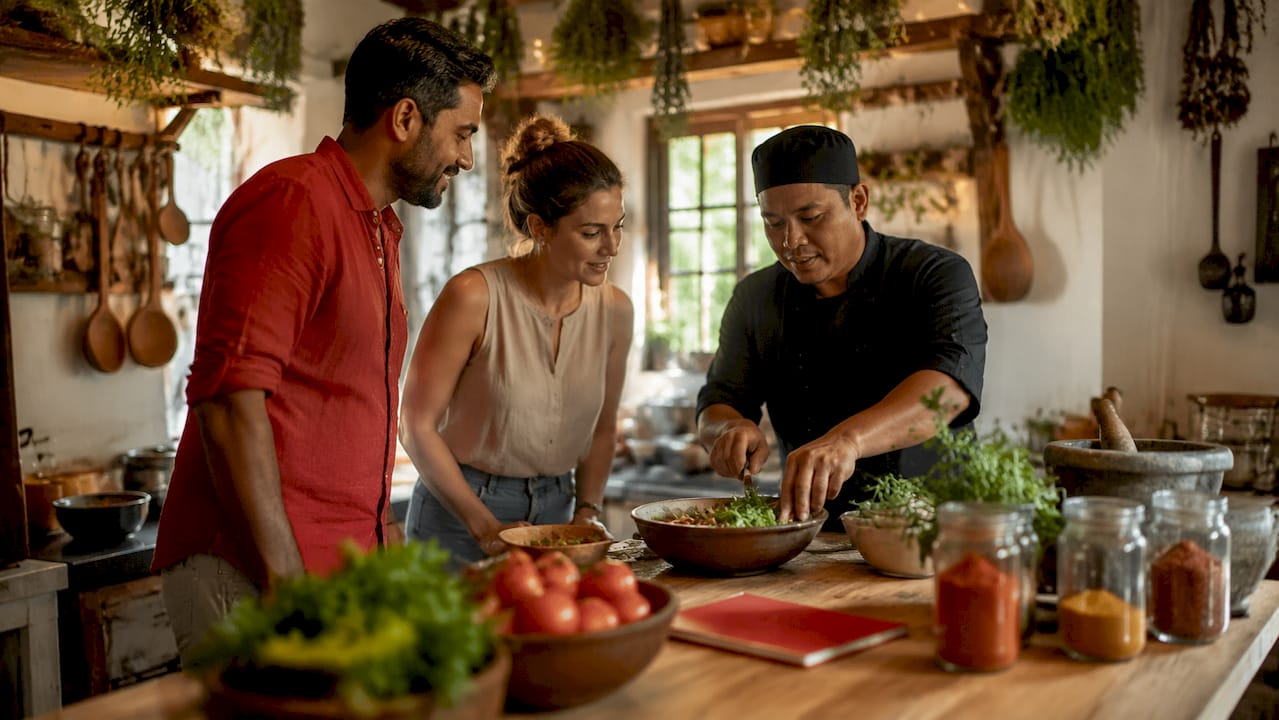
Lifestyle tours are immersive, personalized travel experiences designed to connect you with a destination’s culture, rhythm, and daily life. The focus is on doing and feeling, not just seeing. A lifestyle tour in Barcelona might mean learning to cook traditional Catalan dishes with a local chef, visiting an independent ceramics studio in the Gothic Quarter, or joining a curated vintage market walk with a local stylist. Each of these activities reflects the traveler’s interests, not a generic itinerary.
Lifestyle tourism, as a recognized concept in travel research, sits at the intersection of experiential travel, cultural immersion, and personal identity. It draws from the broader idea that quality of life and self-realization drive travel decisions more than price or convenience. This is what separates a lifestyle tour from a bus tour with a checklist.
The key distinction is intentionality. Every element of a lifestyle tour, from the neighborhood you walk through to the artisan you meet, is chosen to reflect something real about the destination and something meaningful to you.
How do lifestyle tours differ from traditional tour packages?
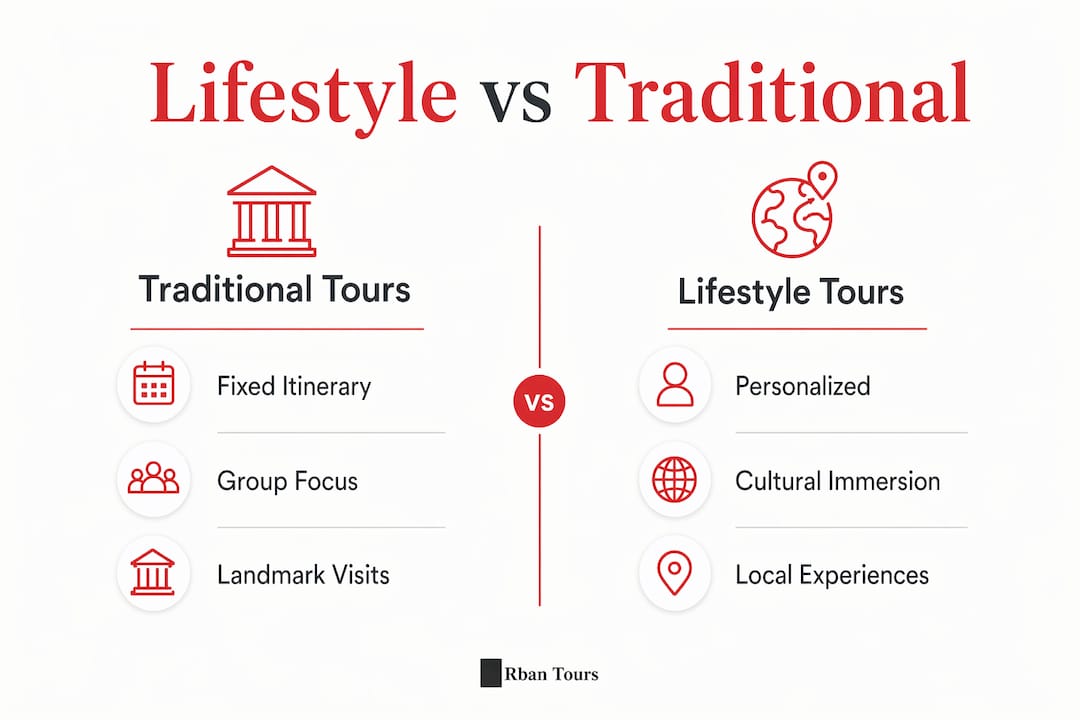
Traditional tour packages are built around efficiency and broad appeal. They move groups through famous landmarks on a fixed schedule, with little room for personal preference. A lifestyle tour starts from the opposite direction: your preferences come first, and the itinerary is built around them.
True personalization means building a journey from scratch, not swapping one hotel for another on a pre-set route. That distinction matters enormously in practice.
Feature | Traditional tour package | Lifestyle tour |
Planning approach | Fixed itinerary, group schedule | Built around individual interests and pace |
Activities | Landmark visits, guided bus tours | Workshops, local experiences, cultural immersion |
Flexibility | Minimal | High, often fully customizable |
Cultural depth | Surface level | Deep, community-connected engagement |
Group size | Large, often 20+ travelers | Small groups or private experiences |
Pro Tip: When evaluating any tour, ask the provider how they personalize the experience for you specifically. A lifestyle tour operator will ask about your interests before they suggest an itinerary.
The emotional quality of the experience also differs. Traditional tours deliver information. Lifestyle tours deliver connection. You leave knowing not just what a city looks like, but how it feels to live there.
What activities and experiences define a lifestyle-driven tour?
Lifestyle tours include a wide spectrum of activity categories, each chosen to foster genuine engagement with local culture and environment. The activity is the experience, not a backdrop to it.
Here are the most common types of lifestyle tour activities:
Culinary workshops: Cooking classes, street food walks, and market tours led by local chefs or food historians. Food is one of the most direct ways to access a culture’s identity. Rbantours explores this connection in depth through its food and city tours across multiple destinations.
Creative workshops: Paint and Sip sessions, ceramics, textile dyeing, or photography walks with local artists. These activities create a tangible memory and a direct relationship with local creative culture.
Artisan and maker visits: Time spent with local craftspeople, from leather workers in Mexico City to textile weavers in Vietnam. These visits reveal the living traditions behind a destination’s aesthetic identity.
Outdoor and wellness experiences: Guided hikes, surf lessons, breathwork sessions, and nature immersions that connect physical activity to the landscape of a place.
Neighborhood and lifestyle walks: Curated walks through local markets, independent shops, and residential streets that show how people actually live, not just where tourists go.
The trend is clear: US travelers were booking nearly 5 tours per trip in 2023, up from fewer than 3 in 2019. That shift reflects a desire to do more within a destination, not just pass through it.
How do lifestyle travel agencies design and curate personalized tours?
Lifestyle travel agencies act as artisans, crafting journeys that resonate with a traveler’s unique interests rather than pulling from a catalog of pre-packaged options. The curation process is what makes the difference between a tour that feels generic and one that feels made for you.
The planning process at a strong lifestyle agency typically follows this structure:
Discovery conversation: The agency learns about your travel style, pace preference, social energy, and the kind of experiences that genuinely excite you. This is not a form you fill out. It’s a real conversation.
Blank canvas design: Every element of the trip including destinations, transport, accommodation, and activities is built from scratch around your profile. Nothing is borrowed from a template.
Local partner activation: The agency connects you with vetted local guides, venues, and creatives who can deliver authentic access. This is where the real insider knowledge lives.
Iterative refinement: Good agencies adjust the plan as they learn more about you. If you mention you love architecture on day two, the rest of the trip shifts to reflect that.
Pro Tip: Ask your tour provider who their local partners are and how those relationships were built. The quality of those connections is the most reliable indicator of the experience you’ll have.
Lifestyle travel cost reflects access and curation, not luxury alone. You are paying for intentionality: someone who knows which ceramics studio in Oaxaca is run by a third-generation artist, and why that matters to your trip. That kind of knowledge cannot be found on a booking platform.
Rbantours applies exactly this model across its destinations. In Barcelona, for example, the team collaborates with local creatives and neighborhood venues to design experiences that feel genuinely local, not staged for tourists.
Why are lifestyle tours becoming more popular among modern travelers?
Purpose-driven travel focused on impact, connection, and personal alignment is rising fast. Travelers are no longer satisfied with relaxation alone. They want to come home changed in some way, with a story worth telling and a perspective worth keeping.
Several forces are driving this shift:
Emotional meaning over destination prestige. The fundamental shift in lifestyle travel is prioritizing the emotional impact of an experience over the name recognition of a destination. Saying “I went to Tokyo” carries less weight now than saying “I spent a morning with a sake brewer in a 200-year-old family distillery outside Kyoto.”
The rise of lifestyle migration thinking. Research shows that lifestyle migrants prioritize well-being and self-realization over economic factors when making location decisions. The same psychology applies to travel. People choose destinations and experiences that reflect who they want to be, not just where they want to go.
The activity surge. The jump from fewer than 3 tours per trip in 2019 to nearly 5 in 2023 is not a small trend. It represents a structural change in how travelers allocate time and money. Experiences are now the primary purchase, with accommodation and flights as supporting logistics.
“The shift from ‘Where am I going?’ to ‘What will I feel and learn there?’ is the defining characteristic of lifestyle tourism. It’s not a niche. It’s the direction travel is heading.”
Personalized travel is no longer a premium add-on. For a growing segment of travelers, it is the baseline expectation.
Key takeaways
Lifestyle tours are defined by intentionality, personalization, and authentic cultural engagement, making them the most meaningful form of modern travel.
Point | Details |
Core definition | A lifestyle tour prioritizes authentic cultural engagement and personal connection over passive sightseeing. |
Key differentiator | Lifestyle tours are built from individual preferences, not fixed group itineraries with minor tweaks. |
Activity variety | Culinary workshops, artisan visits, wellness experiences, and creative sessions all qualify as lifestyle tour activities. |
Curation process | Agencies design from a blank canvas, activating local partners to deliver genuine insider access. |
Market momentum | US travelers booked nearly 5 tours per trip in 2023, up from fewer than 3 in 2019, showing strong demand growth. |
What we’ve learned from watching travelers discover cities differently
We have watched hundreds of travelers walk into a city expecting to see it and leave having felt it. That gap, between seeing and feeling, is exactly where lifestyle tours live.
The most common thing we hear after a well-designed experience is not “That was beautiful.” It’s “I didn’t know a city could feel like that.” That reaction tells us something important: most people have never been given the chance to engage with a destination on its own terms. They’ve been handed a highlight reel.
What we’ve found, working across destinations from Mexico City to Japan, is that the most memorable moments are almost never the famous ones. They happen in a small workshop where a local artist explains why a particular color matters to their community. They happen over a shared meal in a neighborhood that doesn’t appear in any travel magazine. The soul of a destination lives in those moments, and a lifestyle tour is the structure that makes them accessible.
The travelers who get the most from these experiences are the ones who arrive with curiosity rather than a checklist. If you’re willing to follow the rhythm of a place instead of imposing your own schedule on it, a lifestyle tour will give you something no landmark ever could: a genuine sense of belonging, even briefly, somewhere new.
— Rban
Discover your city through Rbantours
[
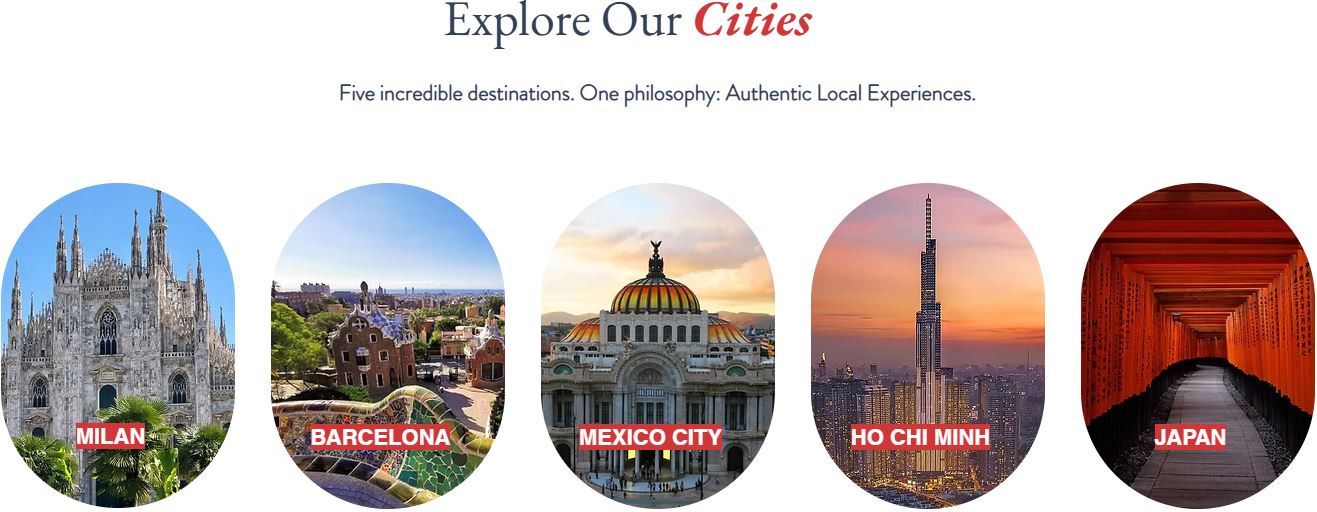
Rbantours designs lifestyle travel experiences that let you live a city from the inside out. Whether you’re drawn to the creative energy of Mexico City’s neighborhoods or the layered cultural life of Barcelona’s local scene, every Rbantours experience is built around authentic connection, not tourist checkboxes. From immersive food walks and Paint & Sip workshops to wellness sessions and artisan visits, each activity is curated with local partners who know their city’s heartbeat. If you’re ready to travel with intention and come home with more than photographs, explore what Rbantours has waiting for you.
FAQ
What is the lifestyle tourism definition?
Lifestyle tourism is a form of travel that prioritizes authentic cultural engagement, personal growth, and purposeful experiences over traditional sightseeing. It reflects a shift in traveler values toward meaning, connection, and self-realization.
What is a lifestyle-driven tour?
A lifestyle-driven tour is a personalized travel experience built around your individual interests, pace, and passions. Activities are chosen to create genuine cultural immersion rather than to cover famous landmarks.
What are the main types of lifestyle tours?
Lifestyle tours include culinary workshops, creative sessions like painting or ceramics, artisan visits, wellness retreats, and curated neighborhood walks. Each type is designed to connect travelers with the living culture of a destination.
How do lifestyle tours differ from standard package tours?
Standard packages follow fixed itineraries built for broad appeal, while lifestyle tours are designed from scratch around individual preferences. The planning process, activity selection, and local access are all personalized to the traveler.
Are lifestyle tours only for luxury travelers?
Lifestyle tour cost reflects curation and access rather than luxury status alone. The value comes from intentional design and local expertise, which are available across a range of price points depending on the destination and provider.
Recommended
Comments