
Reserve 6–12 Weeks: Barcelona Group Plans & Italian Booking Tips

Food tours, private sightseeing, boat cruises, and creative workshops top the list of best group experiences in Barcelona, and they work because they scale without losing intimacy. The move for Italian planners is simple: decide your group’s mood first, then reserve early through WhatsApp or email, confirming headcount and deposit in writing. A number of local operators curate several of these formats around Barcelona, providing fast, no-guesswork starting points.
TL;DR:
Booking experiences at least 6 to 12 weeks in advance is essential, especially during peak seasons, to secure the desired venue and activity slots.
Combining an active experience like a boat trip or surf lesson with a food-centered activity such as tapas or wine tasting covers diverse group preferences.
Confirming Italian-speaking guides, private rooms, and menu options upfront helps prevent misunderstandings and ensures proper accommodation for specific needs.
Larger groups benefit from direct communication with providers via WhatsApp or email to negotiate better rates, deposit terms, and ensure clarity on included extras.
Proper logistics, including designated meeting points, shared itineraries, and transportation arrangements, are critical to maintaining group cohesion throughout the trip.
Table of Contents
Le migliori esperienze per gruppi a Barcellona (per atmosfera e numero di persone)
Food and drink experiences: tastings versus hands-on classes
Keeping your group together: transfers, meeting points, and backup plans
What Permits or Regulations Apply to Group Activities in Barcelona?
What Italian Planners Get Wrong About Booking Barcelona Groups
Le migliori esperienze per gruppi a Barcellona (per atmosfera e numero di persone)
Barcelona rewards groups that know what mood they’re chasing before they start browsing options. A stag party wants something different from a corporate offsite, and a family reunion wants something different again. The city’s strength is that it can genuinely deliver all three without anyone feeling like an afterthought.
Here’s how the main categories break down by group size and vibe.
Social and party energy. Bar-crawl tours, rooftop sunset experiences, and prebooked nightclub entry cover groups from eight people up to 40 or more. Barcelona’s rooftop scene, especially around the Gothic Quarter and Eixample, tends to peak at golden hour, so timing a sunset tour matters as much as picking the venue. Nightclubs often require prebooked tables for larger parties, and cover charges vary by night and season, so confirming this ahead of time avoids a group standing outside a door at midnight.
Food-forward experiences. Tapas walking tours, hands-on paella classes, wine tastings, and private dinners with a set menu work for groups as small as six and as large as 100, depending on the venue. Many restaurants in Barcelona run dedicated group menus with minimums, often starting around 10 guests, and private dining rooms that scale with your numbers. Some venues in areas like Barceloneta can host hundreds of guests across tailored private rooms, which matters if you’re organizing a wedding party or a large corporate dinner rather than a table for eight.
Cultural and private sightseeing. Skip-the-line private tours of the Sagrada Família or Casa Batlló, plus guided walks through Gaudí’s modernist Barcelona, suit small to mid-sized groups best, generally under 20 people, so everyone can actually hear the guide. If your group speaks little English, ask specifically whether the provider offers guides who speak Italian; not every operator does, and it’s worth confirming before you book rather than discovering it on arrival.
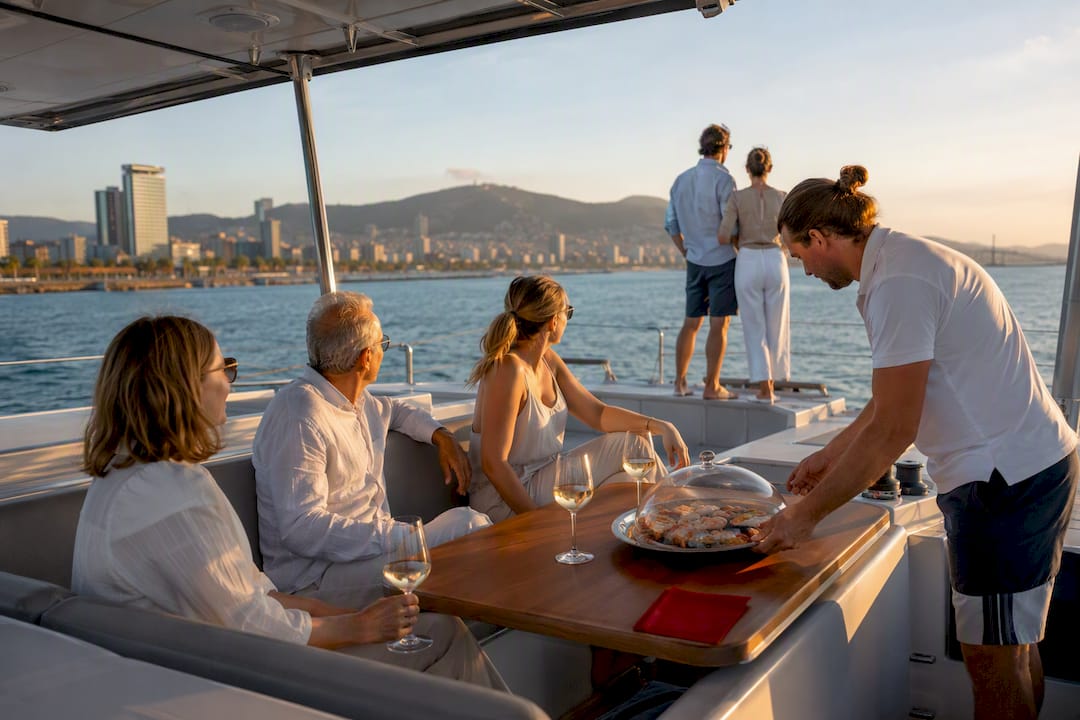
Relaxed and scenic outings. A private catamaran tour, or a catamaran with an onboard barbecue, handles groups from eight up to 80 comfortably. These need earlier booking than almost anything else on this list, and it’s worth asking upfront whether an open-bar package is included or priced separately. Boat charters for group celebrations often come with flexible add-ons like music systems or catering, which can turn a simple cruise into the highlight of the trip.
Active and adventure formats. Surf lessons, go-karting, jet-ski outings, and escape rooms work best in smaller waves, typically four to 20 people per session, because instructor-to-participant ratios matter for both safety and enjoyment. Surf schools in Barcelona regularly run group sessions for stag and hen parties and corporate team-building, adapting equipment and instruction to the group’s skill level.
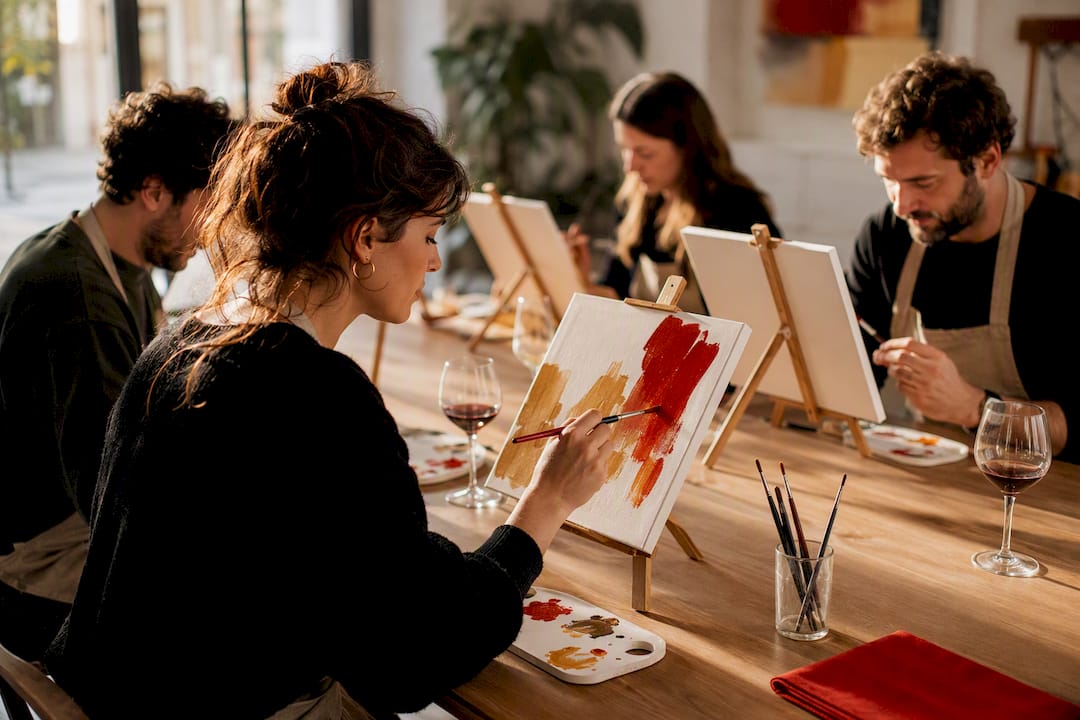
Creative and social workshops. Paint & Sip sessions, cocktail-making classes, and flamenco lessons work across almost any group composition, mixed ages, mixed interests, corporate teams that don’t know each other well yet. These formats are forgiving: nobody needs prior skill, and the shared creative task tends to loosen up even a stiff first meeting between colleagues.
Pro Tip: Local event operators consistently recommend pairing one active experience with one convivial, food-centered one in the same trip. A morning of go-karting followed by an evening tapas crawl covers both the adrenaline-seekers and the ones who just want good conversation over wine.
If your group can’t agree on a single vibe, that pairing strategy solves more arguments than any group vote ever could.
How do you book group experiences in Barcelona?
Booking for a group is not the same transaction as booking for two people, and treating it that way is the most common mistake Italian planners make. Providers need lead time to block capacity, brief extra staff, and, in the case of restaurants, plan a kitchen around a set menu instead of an à la carte rush.
Here’s a realistic booking timeline by activity type:
Tours and workshops (walking tours, Paint & Sip, cooking classes): reserve 2 to 6 weeks ahead for groups under 20.
Large dinners and boat experiences: reserve 6 to 12 weeks ahead, especially for groups over 30 or venues with private rooms.
Peak season (June through September, plus Easter week and December holidays): push every booking earlier than you think you need to, since Barcelona’s group calendar fills quickly during these windows.
Before you send a deposit, get the following confirmed in writing, not just spoken over the phone:
Final headcount policy (can numbers shift by a few people, and by when?)
Deposit amount and what it covers
Cancellation terms, including partial cancellations
Included extras (drinks, transport, equipment) versus what’s billed separately
A single lead contact person on the provider’s side
Payment flow is worth settling early too. Some groups have one organizer pay the full amount upfront; others split invoices among participants. Contacting venues directly through WhatsApp or email tends to be the fastest way to negotiate either arrangement, and it creates a written record you can refer back to if a detail gets disputed later. If your group needs a formal invoice for expense reporting, ask for VAT and billing details at the time of booking, not after the event.
Where to eat for groups: private rooms, menus, and budgets
Barcelona’s restaurant scene is genuinely built for groups, more so than most Italian cities realize before they arrive. Many venues advertise dedicated “menus for groups” with private rooms and set pricing tiers, which removes the chaos of 20 people ordering individually off a regular menu.
Expect three rough budget bands per person, though inclusions vary:
€20 to €35: simple set menus, shared tapas style, house wine included
€35 to €60: fuller multi-course menus, better wine selection, sometimes a welcome drink
€60 and up: premium ingredients, curated wine pairing, private room guaranteed
Capacity matters as much as price. Many group-friendly venues require a minimum of around 10 guests to access these set menus, while some larger restaurants, particularly in Barceloneta, can accommodate several hundred people across multiple private salas for events like weddings or corporate galas.
Pro Tip: If your group has more than three dietary restrictions in play (vegetarian, gluten-free, allergies), ask the restaurant for a sample tasting menu ahead of the event rather than trusting a written description. Larger venues that regularly host groups, including operators running multiple restaurants and pubs across the city, are usually equipped to accommodate this without much friction.
When you email or message a venue, ask directly about private room availability, per-person menu tiers, any AV equipment you might need for speeches or presentations, and the deposit deadline. Vague questions get vague answers; specific questions get bookable confirmations.
Active and adrenaline options: safety and capacity notes
Adventure activities are where group logistics get technical fast, mostly because instructor ratios and equipment limits are non-negotiable rather than flexible.
Surf lessons: typically run in groups of 6 to 12 per instructor, sessions last 90 minutes to two hours, and wetsuits and boards are usually included in the package price.
Go-karting: most tracks cap sessions at 10 to 16 karts at once, so larger groups get split into heats with a short wait between rounds.
Jet-ski outings: often limited to two riders per ski and small guided convoys, so groups over 10 usually need multiple time slots.
Escape rooms: fixed at 4 to 8 players per room by design, meaning a group of 20 needs several rooms running in parallel.
Before booking any of these, confirm instructor qualifications, insurance coverage, and whether a signed waiver is required. Ask about minimum age and basic fitness expectations, since a stag party in their 20s has different needs than a mixed-generation family group.
For groups larger than one session can handle, split into waves and build in buffer time between them. This keeps the whole group moving without anyone standing around waiting, and it also gives everyone a chance to swap stories and photos before moving to the next stop.
Food and drink experiences: tastings versus hands-on classes
The choice between a guided tasting tour and a hands-on cooking or cocktail class comes down to what your group actually wants from the afternoon: to learn something together, or to walk and talk while someone else does the work.
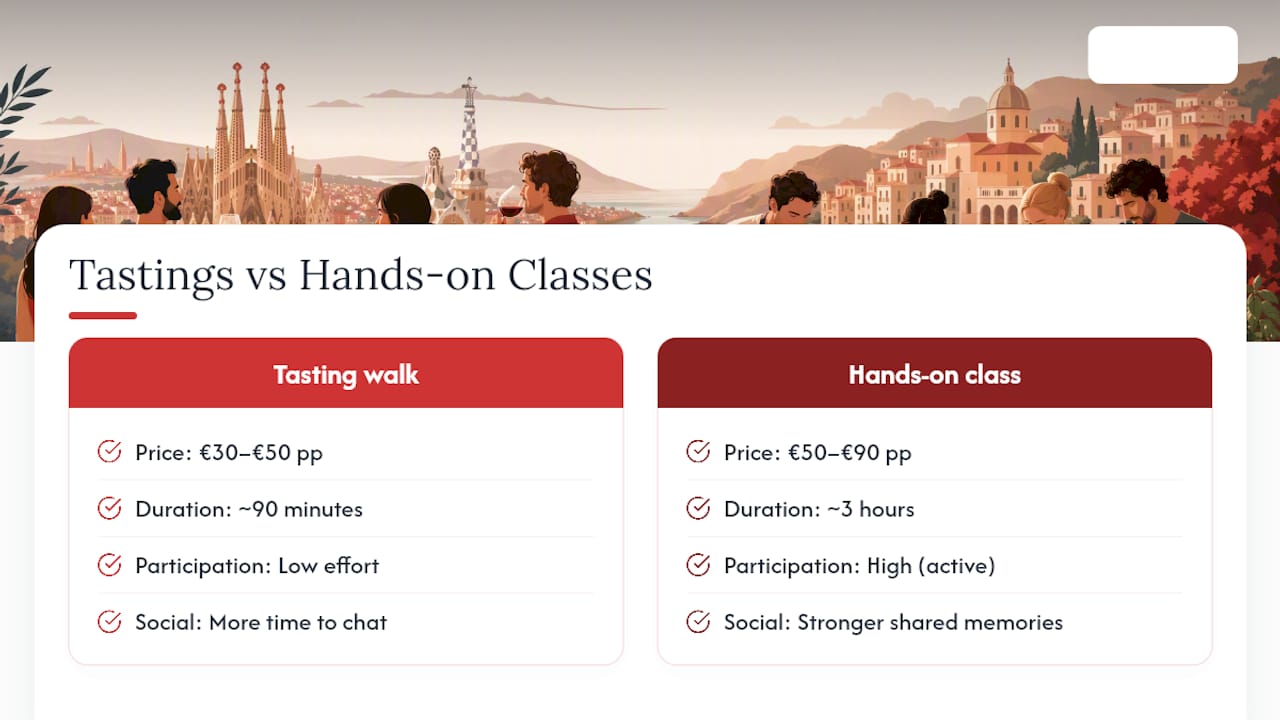
Guided tapas and wine walks are lower effort and more social; you’re moving through the city, sampling at three or four stops, with more time for group conversation. Hands-on classes, like a paella cooking session or a cocktail-making workshop, ask more participation but tend to create stronger shared memories, especially for corporate groups meeting each other for the first time.
Typical price bands run from around €30 to €50 per person for a guided tasting walk, and €50 to €90 per person for a hands-on class with ingredients and instruction included. Durations range from 90 minutes for a walking tasting tour to three hours for a full cooking class with a meal at the end.
If your group includes non-Italian or non-English speakers, or if you simply want everyone briefed clearly, ask providers in advance whether they offer guides or instructors who speak Italian, or at least translated recipe cards and tasting notes. Pairing a tasting experience with a dinner reservation afterward, rather than treating them as separate outings, keeps the group together and avoids the classic problem of half the party splitting off to find food elsewhere.
Team-building formats that actually match corporate goals
Not every corporate outing needs to be an escape room, and not every creative workshop counts as real team building. The format should follow the objective, not the other way around.
Collaboration and problem-solving → escape rooms or scavenger-style city challenges
Creativity and loosening up a stiff group → Paint & Sip or cocktail-making workshops
Relaxation and reward for hitting targets → a catamaran cruise or private beach afternoon
Cross-team bonding for people who rarely interact → tapas walking tours, where conversation happens naturally between stops
When briefing a provider, give them more than a headcount. Share your actual goal (communication, creativity, simple decompression), your group’s profile (ages, seniority mix, physical ability), your timeframe, and any accessibility needs. If you’re aiming for measurable outcomes rather than just a fun afternoon, ask whether the provider offers a facilitator or a short debrief session at the end. Rban Tours’ own corporate experience planning guide walks through how to structure a Barcelona offsite around specific team goals rather than generic entertainment.
Keeping your group together: transfers, meeting points, and backup plans
Logistics quietly determine whether a well-planned day feels smooth or chaotic, and Barcelona’s traffic and metro crowds during peak season punish sloppy planning.
For groups over 15, a private minibus usually beats splitting into multiple taxis, both on cost and on keeping everyone together.
Set one clear meeting point per activity, and share it in a WhatsApp group or a shared document rather than relying on memory.
Ask every venue directly about step-free access and wheelchair availability, and get that confirmation in writing if anyone in your group needs it.
Build in schedule padding and identify an indoor backup for any outdoor activity, since Barcelona’s weather can shift fast even in summer.
A shared itinerary document, even a simple one, prevents the single most common group-trip failure: half the party ending up at the wrong entrance of the Sagrada Família while the guide waits at the other.
Why Book Through a Curated Local Operator Like Rban Tours
Coordinating six vendors for one Barcelona trip means six different contact points, six deposit policies, and six chances for miscommunication. Rban Tours works differently: it’s a design-led experience company that lets travelers discover cities through a local, authentic lens, built around small-group formats rather than mass tourism. Beyond Barcelona, it runs vintage shopping tours, street food explorations, and creative workshops like Paint & Sip across several destinations. For an Italian planner, that translates into one WhatsApp thread, one tailored itinerary, and a single point of contact instead of a scattered group chat with five strangers.
What Permits or Regulations Apply to Group Activities in Barcelona?
Most standard group experiences, walking tours, tastings, workshops, don’t require the organizer to secure any permit; the operator or venue handles their own licensing. Where it gets more specific is with certain activity categories and public-space usage.
Boat charters and catamaran operators need maritime licenses and typically carry passenger insurance, which is one reason it’s worth booking through an established charter company rather than an informal arrangement. Large gatherings in public squares or beaches, think a big group photoshoot or an organized street activity, can require a municipal permit if they involve amplified sound or block pedestrian flow, so check with your provider whether that applies to your plan.
Nightlife venues and clubs operate under Barcelona’s own licensing for capacity and closing hours, which is part of why prebooking a table for a larger group matters: venues manage their door numbers against their permitted capacity, and a group that shows up unannounced can simply be turned away regardless of how much they intended to spend.
For anything involving alcohol service outside a licensed venue, such as a private villa event with catering, ask your provider directly whether they hold the relevant local permits. This is a case where getting it in writing protects your group, not just the operator, since responsibility for an unlicensed event can fall back on whoever organized it.
Are There Group Discounts for Larger Parties in Barcelona?
Larger parties routinely unlock better per-person pricing across Barcelona’s tour and activity market, though the size of the discount depends heavily on the provider and the season. Restaurants offering set group menus often price them lower per head than their standard à la carte offering, partly because a fixed menu simplifies kitchen planning for them.
Tour operators frequently apply tiered pricing, where a group of 15 pays less per person than a group of six for the same private tour, since the guide’s time cost gets distributed across more guests. Boat charters and catamaran rentals work similarly: the boat costs the same to run whether it carries 20 people or 60, so filling more seats naturally lowers everyone’s individual price.
It’s worth asking every provider directly whether they offer a group rate, since not all of them list it publicly. Some hold back their best pricing for direct inquiries rather than advertising it, especially for bespoke bookings like private dinners or full-day itineraries. If you’re planning a multi-activity trip, ask whether bundling several experiences with the same operator earns a further reduction. It often does, particularly with operators who run several formats under one roof.
Finding Italian-Speaking Guides for Group Experiences
Not every Barcelona tour operator offers Italian-language guiding, and this is worth confirming before you book rather than assuming it’s standard. English is the default second language across most of the city’s tourism industry, so Italian support tends to be the exception, not the rule, outside of operators who specifically market to the Italian traveler segment.
When you’re vetting providers, ask directly: is the guide a native Italian speaker, or will materials simply be translated in advance? There’s a real difference between the two, especially for cultural tours where nuance and humor matter as much as facts. For workshops and tastings, ask whether recipe cards, tasting notes, or safety instructions come in Italian, since a mistranslated allergy warning is a bigger problem than a mistranslated joke.
If your group is mixed, some Italian speakers, some fluent in English or Spanish, ask whether the provider can run bilingual narration rather than forcing a choice. Some operators handle this smoothly with a single guide who switches between languages; others need two staff members, which may affect pricing or availability. Booking earlier gives you more room to find a provider who genuinely covers this rather than settling for a compromise on the day.
What Italian Planners Get Wrong About Booking Barcelona Groups
The biggest mistake we see in Italian group planning isn’t picking the wrong activity. It’s underestimating how much lead time Barcelona’s best group experiences actually need, then scrambling to fill gaps with whatever has last-minute availability. A private catamaran or a proper Sagrada Família skip-the-line slot books out weeks ahead in peak season, and the groups who wait end up settling for generic alternatives.
The second mistake is treating every activity as interchangeable entertainment rather than matching it to the group’s actual mood. A stag party dragged through a slow modernist walking tour is a mismatch, just as a corporate offsite crammed into a nightclub crawl usually backfires.
What actually works is deciding the mood first, reserving the anchor experience early, and filling the rest of the schedule around it. Groups that get this right spend less time negotiating logistics and more time doing what they came for.
— Rban
Rban Tours: How to Book a Group Experience in Barcelona
Rban Tours runs several formats built for exactly this kind of planning headache: the Barcelona Hidden Gems 2-Hour Walking Tour for cultural groups who want a local’s perspective without crowds, a hands-on Paint & Sip Workshop for corporate teams or creative bonding, and a Bar Hopping Tour for groups chasing nightlife energy with less coordination hassle. Each is delivered in private or small-group settings, led by local hosts who tailor the itinerary to what your group actually wants rather than a fixed script.
To request a quote, send your dates, headcount, group objective, rough budget, and any accessibility needs directly through the Barcelona tours page. One message, one contact, one confirmed booking reference, no juggling five separate providers to plan a single trip.
Sources
FAQ
Dove posso trovare un viaggio di gruppo a Barcellona?
Barcelona group trips are best organized through a mix of direct venue contact for dining and specialized operators for activities like surf, boat charters, or walking tours. Rban Tours offers curated small-group experiences across the city, bookable directly through its Barcelona tours page.
Quali sono le migliori esperienze da regalare a Barcellona?
Food tours, creative workshops like Paint & Sip, and private sunset boat trips tend to work as gift experiences because they suit almost any group size and mood. A Bar Hopping Tour or a private catamaran outing also makes a strong milestone gift for birthdays or bachelor and bachelorette celebrations.
Dove posso trovare visite guidate a Barcellona in italiano?
Not every Barcelona tour operator offers Italian-speaking guides, so it’s worth confirming this directly before booking rather than assuming it. Ask specifically whether the guide is a native Italian speaker or whether only written materials are translated, since the two experiences differ significantly.
Qual è il periodo peggiore per andare a Barcellona?
Late July and August bring the heaviest tourist crowds along with the highest heat, which can make walking tours and sightseeing uncomfortable for larger groups. Booking during shoulder seasons, like May, June, or September, tends to offer more availability for group activities and more comfortable weather for outdoor experiences.
Quanto costa una tour hopping tour o un’esperienza a Barcellona con Rban Tours?
Rban Tours’ Barcelona experiences start from listed rates: the Barcelona Hidden Gems 2-Hour Walking Tour from €20, the Vintage Shopping Tour from €40, the Bar Hopping Tour from €49, the Sunset Rooftop Tour from €63, and the Street Food Tour from €65 per person. Exact pricing depends on group size and customization, so a written quote confirms the final figure.
Recommended
Comments