
25 Examples of Creative Workshops for Any Group or Goal

Every strong creative workshop starts with a category, a format, and a group size that actually fits the room. Here’s a working list, organized by outcome, so you can find the right session without scrolling through generic inspiration boards.
Crafts (hands-on, take-home): soap-making, pottery wheel basics, woodworking small builds, jewelry design. Best as a one-off, 2 to 4 hours, groups of several to a dozen.
Visual arts: watercolor painting, linocut printmaking, phone photography walks, mixed-media collage. Half-day format, 8 to 15 people, focused on technique plus a shareable finished piece.
Culinary and sensory: cook-along dinners, cocktail or mocktail mixing, coffee cupping, chocolate tasting. Two to three hours, 8 to 20 people, built around guided tasting rounds.
Performance and storytelling: improv warm-ups, storytelling circles, flash-fiction sprints, group spoken-word pieces. About 90 minutes to half-day, groups sized for comfort and engagement, low-pressure by design.
Team-building and ideation: design sprints, collaborative mural painting, mini hackathons. Half-day, 8 to 20 people, tuned for either bonding or problem-solving, rarely both at once.
Digital and hybrid: shipped maker kits with a live virtual demo, asynchronous photography cohorts, VR team challenges. Multi-week or single live session, any group size with the right platform.
Sustainability and social impact: upcycled textile design, community mural projects, tree-planting with a creative reflection component. Half-day to full-day, 10 to 30 people, usually run with a local partner.
Professional-skill workshops: portfolio review clinics, pricing-and-marketing sessions for makers, studio-practice retreats. 90 minutes to multi-day, 4 to 12 people, focused on career traction rather than a finished object.
Creative workshops explained simply: they’re structured sessions that blend doing, learning, and open-ended inquiry rather than passive instruction. The role of creative workshops is to give people a safe container for making, testing ideas, and connecting with strangers or colleagues without the fear of getting it “wrong” hanging over the room, a distinction the OpenLearn Create framework draws out clearly. Whether you’re planning a corporate offsite, a bachelorette weekend, or a solo creative reset while traveling, the format you choose should map directly to the outcome you want.
Key Takeaways
The strongest creative workshops match a specific format and group size to a clear outcome, then run on a demo, practice, and share structure backed by actual research.
Point | Details |
Pick the outcome first | Choose bonding, skill-building, sensory, or social impact before selecting a format or venue. |
Match group size to goal | Ideation sessions perform best at a moderate size; larger groups suit bonding-focused activities. |
Confirm logistics early | Lock in venue power, ventilation, sinks, and staffing ratios at least two weeks ahead. |
Run process over product | Center sessions on the experience of creating, not the polish of the final piece. |
Close the loop with feedback | Send a take-home handout and a short survey to raise satisfaction and inform the next session. |
Book instead of build | Rbantours offers fully facilitated workshops like Paint & Sip with materials and venue already arranged. |
Table of Contents
1. Hands-On Craft and Maker Workshops
Craft workshops give people something tangible to walk away with, and that physical object does more for satisfaction than most facilitators give it credit for. These sessions work because they’re inherently low-stakes: nobody expects a beginner’s first soap bar to look professional, which frees participants to actually enjoy the process.
Here are eight formats worth building a program around:
Soap-making — sensory, scent-driven, produces a take-home bar in under two hours.
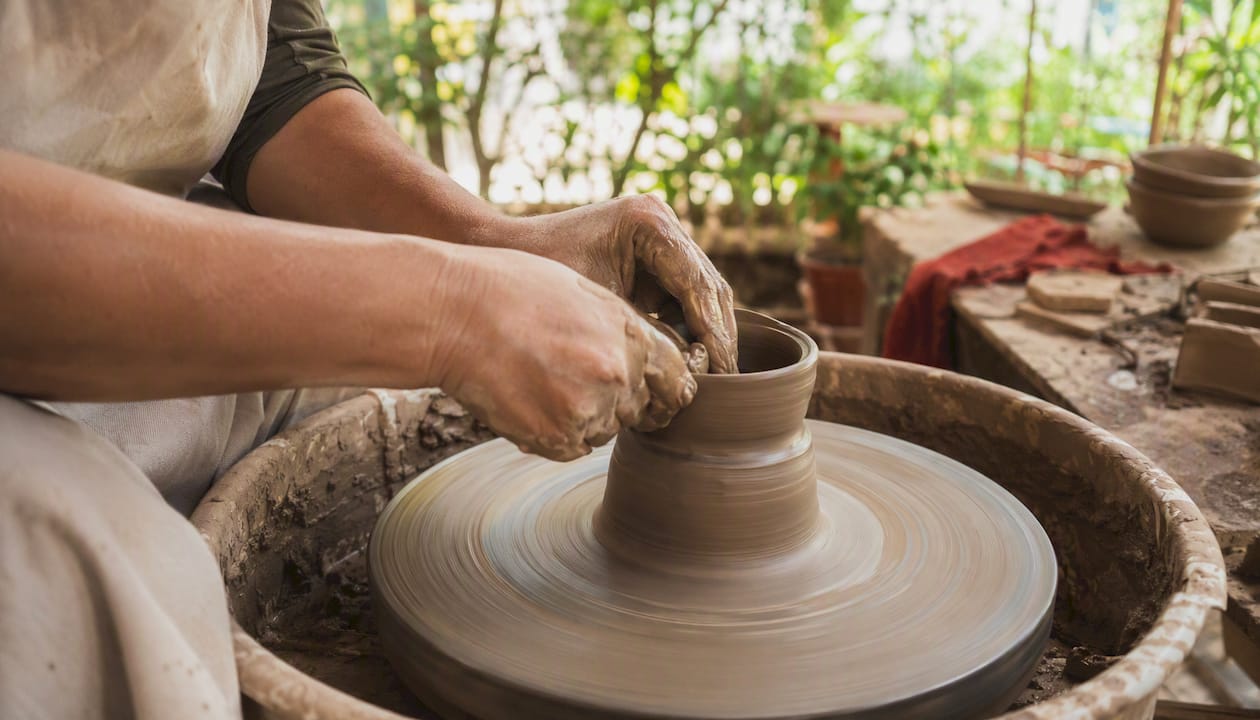
Pottery wheel basics — tactile and meditative, ideal for small groups who want a slower pace.
Woodworking mini builds — cutting boards or small shelves, popular for team offsites with a practical bent.
Jewelry design — wire-wrapping or beading, works well for bachelorette parties and low-mobility venues.
Candle pouring — fast setup, minimal mess, strong fit for large groups or corporate lobbies.
Leather crafting — wallets or keychains, appeals to participants who want a durable, useful result.
Ceramic hand-building — no wheel required, more forgiving than pottery-wheel sessions for total beginners.
Terrarium or plant styling — combines craft with a living, ongoing project participants keep maintaining.
Most craft sessions follow the same rhythm: a short demo, guided practice with the facilitator circulating, then a finishing and take-home stage. That structure matters more than the medium. Practitioners who run these sessions regularly report that 3 to 5 hour one-off workshops tend to produce the best combination of income for the maker and satisfaction for participants, and that bundling workshops or including food improves retention and perceived value.
Pro Tip: If you’re running back-to-back craft sessions in one day, prep your materials in individual kits the night before. Bundling supply prep this way cuts your setup time between groups by more than half.
Duration | Recommended group size | Cost-per-person consideration |
2 hours | 6 to 10 | Lower cost, minimal materials waste, best for quick craft intros |
3 to 5 hours | 8 to 12 | Mid-range, allows for a more finished take-home piece |
Full day or multi-session series | 4 to 8 | Higher cost per head, justified by skill depth and materials complexity |
2. Artistic and Visual-Arts Workshops
Visual-arts workshops reward a simple, repeatable structure: demonstrate a technique, give participants timed hands-on practice, then close with a group share or light critique. That three-part shape shows up again and again in facilitation research, including in a pilot program where artist-led sessions built around exactly this structure helped engineering students develop creative thinking skills they hadn’t previously practiced.
Consider these examples of artistic workshops for your next program:
Watercolor painting — forgiving medium, easy for beginners, strong visual payoff.
Linocut printmaking — teaches a full print-making cycle in a single session.
Phone photography walks — no equipment barrier, works in any city or venue.
Mixed-media collage — zero “wrong answer” pressure, ideal for anxious first-timers.
Charcoal or ink figure drawing — better suited to intermediate participants comfortable with looser techniques.
Botanical illustration — slow-paced, detail-oriented, popular with wellness-focused groups.
Abstract acrylic pouring — highly visual, satisfying results even for absolute beginners.
Materials range widely by budget. A low-cost session can run on basic watercolor pads, student-grade paints, and shared brushes. A premium version upgrades to professional paper stock, individual brush sets, and archival inks, roughly doubling the per-person materials cost. For absolute beginners, keep instructions to one technique at a time and skip formal critique altogether. For intermediate participants, add a short peer-feedback round at the end so the session builds actual skill rather than just producing a pretty souvenir.
3. Culinary, Beverage, and Sensory Workshops
Sensory workshops tap into something craft and visual sessions can’t: taste and smell trigger memory and conversation faster than almost any other sense, which is why cook-alongs and tastings consistently rank among the highest-engagement formats for events and corporate programming, according to Eventbrite’s roundup of workshop ideas.
Strong sensory formats include:
Cook-along dinners — full meal prep in 2 to 3 hours, strong for mixed-skill groups.
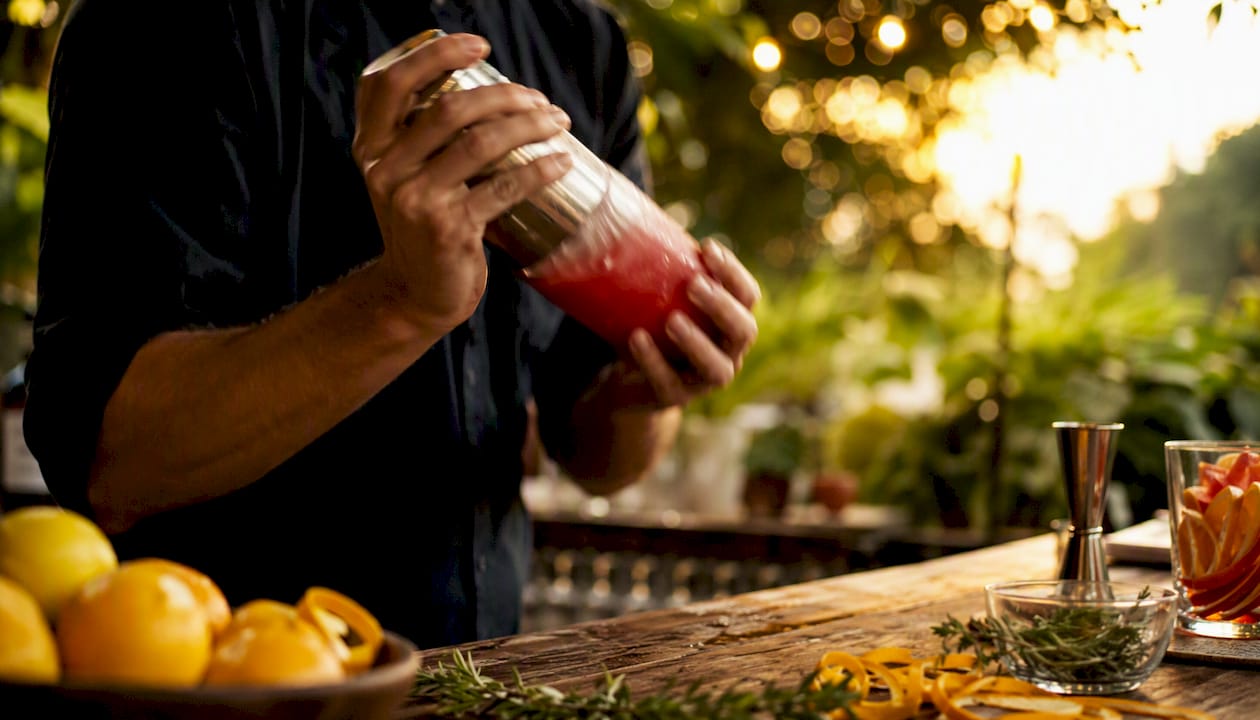
Cocktail or mocktail mixing — fast-paced, highly social, works for both alcohol and alcohol-free crowds.
Coffee cupping — structured tasting rounds, appeals to detail-oriented participants.
Chocolate tasting — low prep, minimal equipment, easy to scale to larger groups.
Regional street-food tasting flights — pairs well with a short cultural or historical framing.
Nearly a third of Americans manage a food allergy or intolerance, so any culinary or sensory session needs a dietary intake form before the event and clear ingredient labeling at every tasting station. Local food-handling rules vary by venue and jurisdiction, so confirm requirements with the venue directly rather than assuming your last location’s rules apply everywhere. A well-structured culinary experience treats taste as the entry point into a broader sensory conversation, not the whole show.
Pro Tip: Run tasting rounds in silence for the first thirty seconds. Ask participants to notice smell, then texture, then flavor, before anyone speaks. It slows the room down and produces far richer group discussion than jumping straight to “so, what do you think?”
4. Performance, Storytelling, and Writing Workshops
Performance-based workshops make people nervous before they arrive and grateful they came by the end, mostly because good facilitation removes the audience-judgment fear that keeps most adults from ever trying improv or reading their own writing aloud.
Examples worth running:
Improv warm-up games — “yes, and” exercises, name games, zip-zap-zop for group energy.
Storytelling circles — one prompt, five minutes each, no notes allowed.
Flash-fiction sprints — 15-minute timed writing to a single image or word prompt.
Group spoken-word creation — collaborative poem-building, one line per participant.
Facilitation norms matter more here than in almost any other category. Here’s a sequence that keeps mixed-skill groups engaged without anyone shutting down:
Open with a low-stakes warm-up that has no wrong answers (a name game, not a monologue).
Introduce the prompt and give a strict time limit, no exceptions.
Set a “silent author” rule for feedback: the writer or performer listens without responding while the group shares, then gets the final word.
Close with one voluntary share, never a mandatory one.
That silent-listening norm exists in most creative-writing workshop cultures for good reason. It stops the writer from immediately defending or explaining their work, which lets the group’s honest reaction land before it gets talked over. Making this rule explicit at the start, rather than assuming people know it, prevents the awkward moment where someone interrupts their own critique.
5. Team-Building and Problem-Solving Creative Workshops
Not every corporate creative session should aim for the same outcome, and conflating bonding with ideation is one of the most common planning mistakes. A trust-building afternoon and a design-sprint focused on solving a real business problem need different formats, different group sizes, and different facilitators.
Outcome | Best-fit format | Recommended group size |
Bonding | Collaborative mural painting, shared cook-along | 10 to 25 |
Ideation and problem-solving | Structured design sprint, mini hackathon | 6 to 12 per breakout table |
Skill-building | Hands-on craft or technique workshop | 8 to 15 |
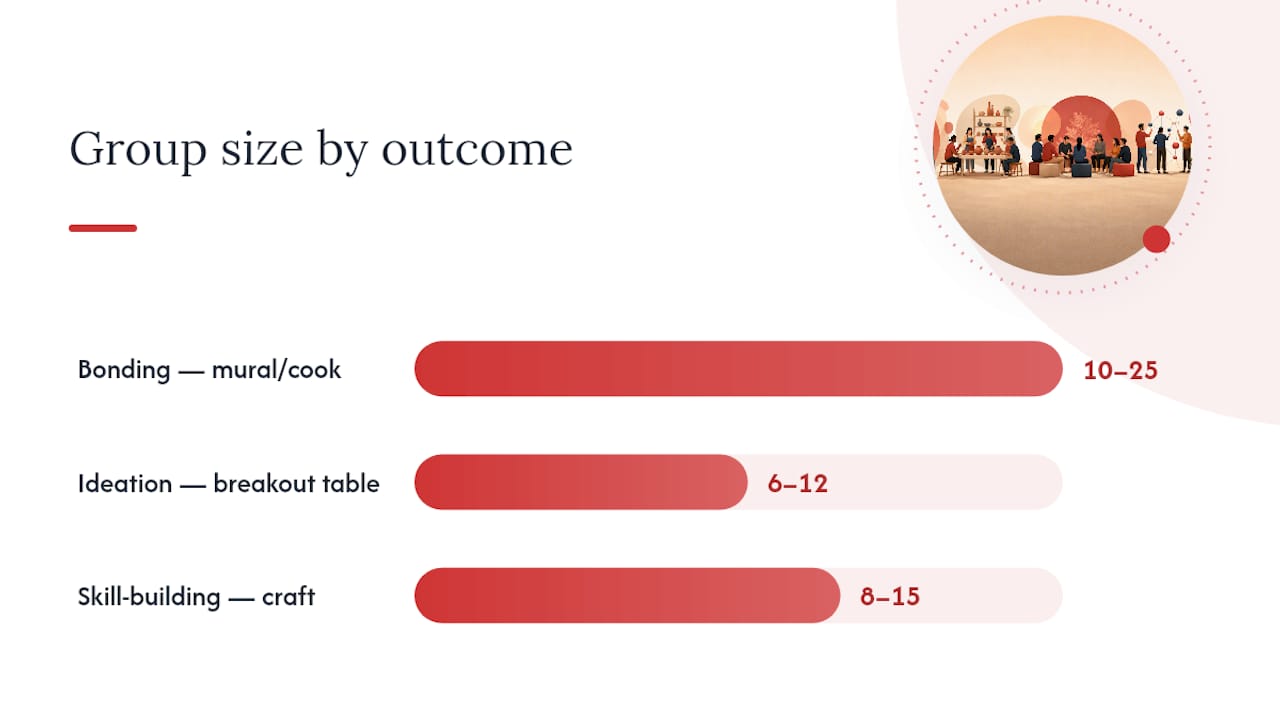
Group size matters more for ideation than most planners realize. A study analyzing 152 creativity workshops found an inverse U-shaped relationship between group size and idea generation: too few people and you don’t get enough perspective diversity, too many and coordination overhead drowns out actual contribution. The same research found that combining multiple creativity techniques within a single session, rather than relying on one method like open brainstorming, produces a measurably stronger output.
A sample half-day ideation agenda looks like this: 30 minutes of framing the problem, 45 minutes of individual silent ideation, 90 minutes of structured small-group building using two or three different techniques (analogy mapping, then rapid prototyping), a short break, then a 45-minute cross-group share and vote. That structure, not the venue or the snacks, is what separates a workshop that produces usable ideas from one that produces a wall of sticky notes nobody revisits.
6. Digital, Virtual, and Hybrid Workshop Ideas
Remote creative sessions fail for one predictable reason: organizers treat a video call like a lecture instead of designing for hands-on participation. The fix isn’t better slides, it’s better logistics.
Formats that hold up well online:
Shipped maker kits with a live demo — participants receive materials ahead of time, then follow a facilitator in real time.
Virtual photography assignments — a themed prompt completed on personal devices, shared and discussed together.
VR team challenges — collaborative building or puzzle-solving inside a shared virtual space.
Asynchronous creative cohorts — a multi-week series where participants post work on their own schedule and give peer feedback between live check-ins.
Before you run one, work through this checklist:
Confirm the video platform supports breakout rooms if your group exceeds 10 people.
Test camera angles in advance. Overhead shots work far better than face-forward for craft demonstrations.
Ship materials at least five business days ahead, with tracking numbers sent directly to participants.
Assign a co-host whose only job is monitoring chat and tech issues, so the lead facilitator never has to stop demonstrating.
Build in a low-tech fallback: a PDF instruction sheet participants can follow if the stream drops.
Accessibility deserves specific attention here. Closed captions, a chat option for verbal contributions, and materials described aloud (not just shown) make the difference between a session that includes everyone and one that quietly excludes people with hearing or visual limitations.
7. Sustainability, Social-Impact, and Community Workshops
Pairing a creative activity with a community or environmental outcome does something a standalone craft session can’t: it gives participants a reason to care beyond their own finished product.
Strong examples include reusable-bag design sessions using upcycled fabric, community mural co-creation projects, eco-prototyping workshops where participants redesign single-use packaging, and tree-planting events with a creative reflection component built in afterward, such as a group journaling or sketching exercise. Partnering with a local NGO, community center, or environmental group adds credibility and often provides the venue and materials at reduced cost.
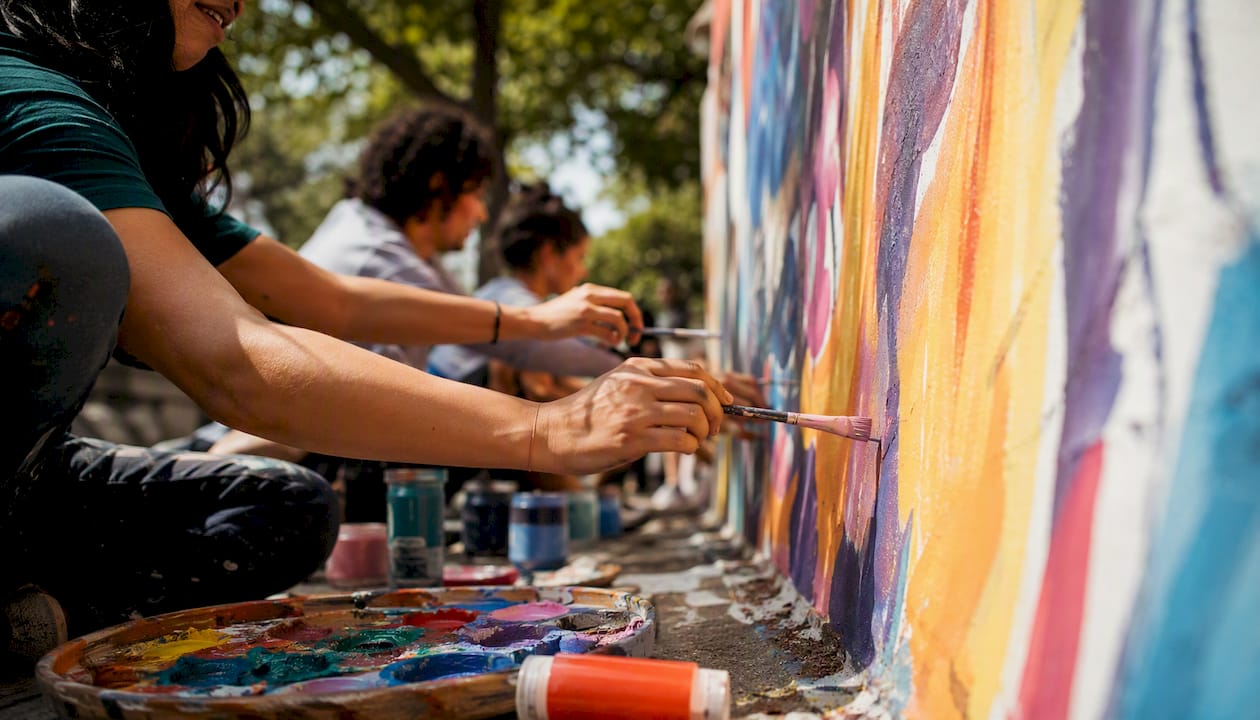
Creative activities have a documented effect on group dynamics worth knowing about here: participatory creative methods can shift power dynamics in mixed groups, making engagement between community members and institutional partners more equal than a standard meeting format allows. That same research is honest about a limitation, though. A single workshop rarely sustains long-term collaboration on its own; it needs follow-up facilitation to turn a good afternoon into an ongoing relationship.
Before running a community-facing session, confirm two logistical details that are easy to overlook: liability coverage for any outdoor or physical activity, and whether your venue or activity requires a local permit. Both should be locked down at least two weeks out, not the morning of.
For measurable impact, define your outcome before the session, not after. A tree-planting event might track number of trees planted and follow-up survey responses on environmental attitude shift. A mural project might track community foot traffic or local media coverage in the following month.
8. Professional-Skill and Creative-Career Workshops
Not every creative workshop is about play. Some exist to move a participant’s actual career or business forward, and those sessions need a tighter, more outcome-driven structure than a casual craft afternoon.
Examples worth building into a program:
Portfolio review clinics — one-on-one or small-group critique sessions for photographers, designers, or artists.
Pricing-and-marketing workshops for makers — practical sessions on setting rates and finding buyers.
Studio-practice retreats — multi-day intensives focused on developing a consistent creative practice.
Format and pricing here look different from a casual craft class. Creative-writing and professional-development workshops commonly run from a single 90-minute generative session up through semester-long courses, and multi-week community programs in this space typically price between $150 and $500 depending on length and instructor experience. Follow-up options matter as much as the initial session: mentorship pairings, ongoing critique groups, or a structured multi-week series all extend the value of a single workshop into something closer to real career support.
A 90-minute professional-skill session works well in three stages: 20 minutes of framing talk (a specific technique, market insight, or pricing model), 45 minutes of guided practice applying it to the participant’s own work, and 25 minutes of group critique or peer feedback. That structure keeps the session from tipping into a passive lecture, which is the single most common complaint about professional-development workshops.
How to Choose the Right Creative Workshop for Your Goal
Match the format to the outcome first, then pick materials and venue around that decision, not the other way around.
Define the primary goal. Team bonding, skill-building, a party or celebration, wellbeing, or creative research each point toward a different format from the categories above.
Match group size to format. Bonding activities tolerate larger groups; ideation and skill-building sessions perform better closer to the study-backed optimum of a moderate, focused group.
Confirm the session structure with the organizer. Ask specifically whether the plan includes hands-on practice time or just a facilitator demonstration.
Check accessibility needs upfront. Dietary restrictions, mobility considerations, and sensory sensitivities should shape the format choice, not get patched in afterward.
Plan the follow-up before the session ends. A one-time craft afternoon needs no follow-up. A skill-building or team-ideation workshop usually does.
When vetting a facilitator or organizer, ask these questions directly:
What’s the intended outcome of this session, and how will we know if it worked?
What materials are provided, and what should participants bring themselves?
What accessibility accommodations are built in?
Is there a follow-up plan, or does the value end when the session does?
Watch for these red flags before booking or planning: no stated safety plan for anything involving tools, heat, or food; no clear outcome beyond “have fun”; and a facilitator who plans to demonstrate the entire time without building in real practice for participants. Clear organizer guidance on venue fit and participant caps consistently separates workshops that run smoothly from ones that don’t.
Materials, Venue, and Logistics Checklist
Every workshop type has its own supply list, but the venue requirements cluster into a few predictable categories worth checking before you book anything.
Power access: required for any digital, photography, or projector-based session.
Sinks and water access: essential for pottery, painting, and most culinary workshops.
Ventilation: non-negotiable for woodworking, printmaking, and any session using solvents or strong-smelling materials.
Storage: a locked space for supplies and works-in-progress if the session spans multiple days.
Tables versus floor space: craft and writing workshops need tables; performance and movement-based sessions need open floor.
Budget tier | Typical inclusions | Best fit |
Low | Shared basic supplies, simple venue, no food | Casual community sessions, large groups |
Mid | Individual supply kits, moderate venue, light snacks | Corporate team sessions, paid public workshops |
Premium | Premium materials, dedicated venue, full catering, take-home handout | Retreats, bachelorette or milestone events, VIP corporate programs |
Staffing ratios matter more than most planners budget for. One facilitator per 12 to 15 participants works for most craft and visual-arts sessions; anything hands-on with tools or heat should drop that ratio to one facilitator per 8 participants for safety. Build in a mandatory 10 to 15 minute break for any session running past 90 minutes; energy and attention both drop sharply without one.
Before running the session live, test your timing with a friend or colleague standing in as a participant. This single step catches more planning problems than any amount of solo rehearsal, because a real second person always takes longer on each step than you expect. Sending a one-page take-home handout with supply lists and technique reminders after the session also measurably raises participant satisfaction, based on facilitator-reported best practices in design and facilitation guidance.
Why These Workshop Formats Work: Evidence and Facilitation Best Practices
The best creative workshops aren’t just fun, they’re built on a handful of consistent, research-backed patterns that separate sessions people remember from ones they forget by the following week.
The clearest finding comes from that study of 152 creativity workshops analyzing 38 distinct techniques: sessions using multiple creativity methods together produced measurably stronger idea generation than sessions relying on a single technique like open brainstorming. The same research documented the inverse U-shaped relationship between group size and output mentioned earlier, meaning there’s a real, evidence-backed sweet spot rather than “bigger is always better” or “smaller is always better.”
Structure matters as much as technique variety. The demonstration, practice, and sharing sequence used in artist-led workshops with engineering students produced genuine gains in creative thinking, not just enjoyment. That’s a meaningful distinction: a well-structured workshop teaches a transferable skill, while an unstructured one just produces a pleasant afternoon.
A typical 90-minute session includes framing and warm-up, technique demonstration, hands-on practice, and group sharing in balanced segments. Stretch that to a half-day format and you simply add a second technique and a longer sharing round, rather than extending any single stage indefinitely.
For measuring success, three methods work without requiring a research team: a short post-session survey asking participants to rate confidence and enjoyment, a simple count of ideas or finished pieces generated, and a follow-up check-in two to four weeks later to see whether anyone continued the skill or project on their own.
Author’s Perspective: Notes From Running Creative Programming
Test your timing before you ever run a session for a paying group. Every facilitator underestimates how long hands-on practice actually takes, and the gap between “planned 20 minutes” and “actual 35 minutes” is exactly where workshops start feeling rushed at the end. Run through your plan once with a friend standing in as a participant and adjust before the real thing.
The other habit worth stealing: bundle sessions instead of running them one at a time. A facilitator running three separate 90-minute craft workshops across a week spends far more total setup and teardown time than one running the same three sessions back-to-back on a single day. Participants benefit too, since a bundled day builds momentum a scattered week can’t replicate.
My favorite quick format, and the one I’d point most first-time organizers toward, is the 90-minute demo, make, and share. It’s tight enough to fit into a travel itinerary or a lunch break, structured enough to teach something real, and short enough that even reluctant participants rarely regret saying yes. That’s exactly the logic behind how curated cultural workshops fit into a guest’s overall experience: the format has to respect people’s time while still delivering something genuine.
Book a Ready-Made Creative Workshop Instead of Planning One From Scratch
Building your own session from this list takes real time. Sourcing materials, booking a venue with the right ventilation and power access, finding a facilitator who can actually teach, and testing your own timing all add up before a single participant shows up. Rbantours skips that entire buildup by handing you a fully planned, locally hosted session instead.
[
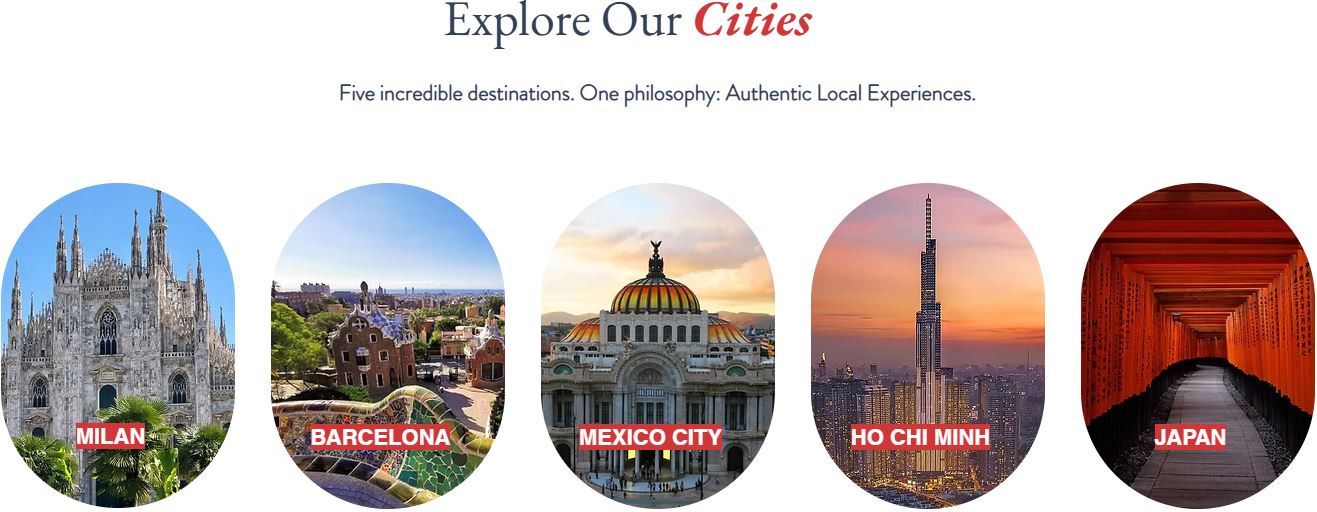
Every Rbantours creative workshop, including the hands-on Paint & Sip experience, comes with the facilitator, materials, and venue coordination already handled. You show up, and the session runs. That matters most for group or corporate bookings, where the logistics above (staffing ratios, dietary needs, accessibility, follow-up handouts) are exactly the details that eat up a planner’s week. If a sensory format fits your group better, the homemade liqueur workshop applies the same demo, practice, and share structure to mixing rather than painting.
If you’re planning a trip or event around Barcelona, browse the Barcelona experiences lineup and check available dates for your group size and timeline.
Sources
Recommended
Comments