
4 Day Mexico City Food Itinerary for Italians: Markets and Masa

Three days gets you the essentials of a Mexico City food itinerary; four days let you add a masa workshop and a museum afternoon between meals. Either way, five experiences anchor the trip: a market morning, a taco crawl mixing al pastor and suadero, a hands-on masa or tortilla workshop, a mezcal night in a real cantina, and one fine-dining tasting to discover where the street-food logic lands on a plate. Book the tasting menu weeks out, and hit the markets between 9 and 11 in the morning.
TL;DR:
Most markets are best visited between 9 and 11 a.m. for optimal freshness, vendor selection, and fewer crowds.
Booking Michelin-starred restaurants like Pujol or Quintonil two to four weeks in advance ensures availability for dinner.
A typical street taco costs between 15 and 35 Mexican pesos, with quality often indicated by local crowds and active cooking stations.
A guided food tour can improve vendor selection, language navigation, and timing for a deeper culinary experience.
Budget approximately $1 to $3 per street item and $10 to $25 for a mid-range sit-down meal, influenced by your choice of meals.
Table of Contents
Mexico City Foodie Itinerary at a Glance
Here’s how the days break down depending on how much time you’ve carved out. The rhythm follows the city’s own logic: markets and street corners in the morning and evening, a slower midday to let your stomach catch up.
The 3-day express version:
Day 1, Centro Histórico — Breakfast at a tamale stand or El Moro, a market tasting crawl through Mercado de San Juan, and an evening taco run built around al pastor and suadero.
Day 2, Roma and Condesa — Mercado Roma or Mercado Medellín in the morning, a coffee stop and light lunch, then a hands-on masa class before an evening mezcal crawl.
Day 3, Coyoacán — Mercado de Coyoacán snacks, Casa Azul, and a relaxed dinner in a plaza.
Add a fourth day and you get La Merced’s wholesale market chaos, a proper nixtamal workshop, an afternoon at the Museo Nacional de Antropología, and a farewell tasting menu at Pujol or Quintonil to close the loop.
For a base, Roma and Condesa give you walkable cafés and boutique energy; Centro puts you steps from the biggest markets; Polanco earns one night if you’re doing the fine-dining finale there. Many travelers building a 3, 5, or 7 day Mexico City plan split their nights between two of these three zones rather than committing to one.
Day 1: Centro Histórico, Tamales, and the First Taco Crawl
Start slow, eat often, and let your stomach acclimatize before the trip gets serious. Centro Histórico is the right place to do that because everything worth eating sits within a twenty-minute walk.
Morning: tamales, churros, and Mercado de San Juan
Skip the hotel breakfast. Grab tamales from a street cart, or head to El Moro for churros dipped in thick Mexican hot chocolate. Both are loud, cheap introductions to how Mexico City eats before 9 a.m.
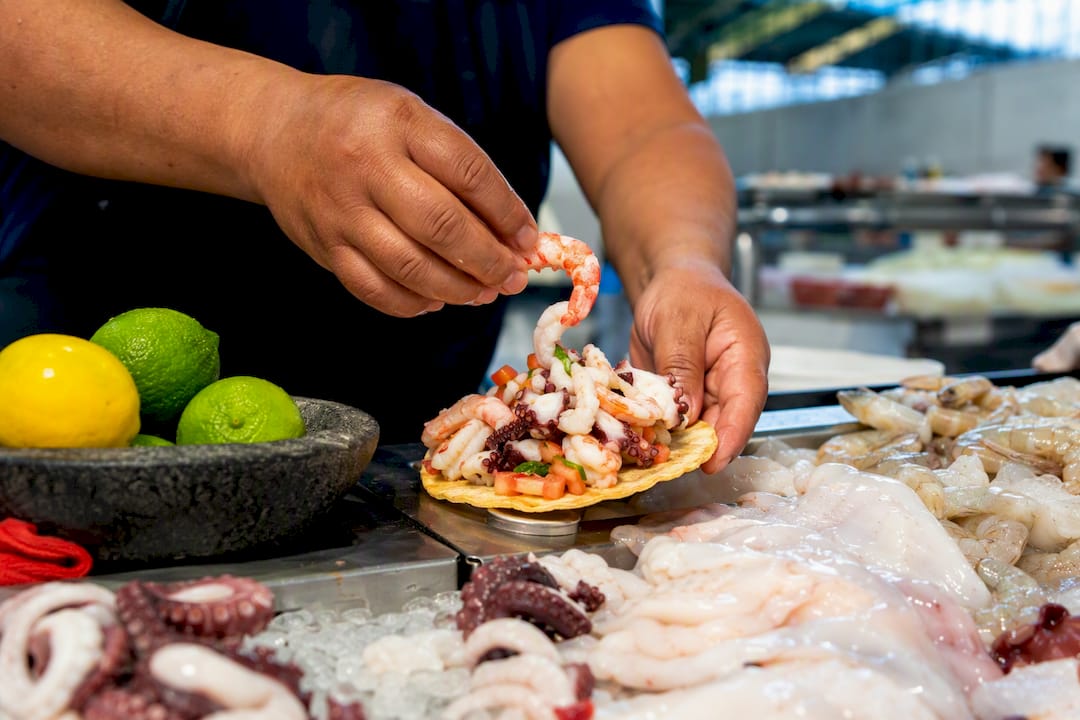
By late morning, walk to Mercado de San Juan, the city’s exotic-ingredient market and a favorite haunt of chefs sourcing rare cuts and imported cheeses. Beyond the novelty stalls, look for the seafood counters serving fresh tostadas topped with shrimp, octopus, or a citrus-cured mix that eats like ceviche’s tighter cousin. This is also where you’ll spot ingredients you won’t see at a neighborhood market, from huitlacoche to game meats, which is part of why food professionals treat San Juan as a destination in its own right.
Afternoon: a deliberate pause
Resist the urge to keep eating. Head instead to the Templo Mayor ruins or the Palacio de Bellas Artes for an hour or two. Food fatigue is real on day one, and a museum break resets your appetite for the evening’s main event.
Evening: the al pastor and suadero crawl
This is the taco crawl the whole trip builds toward. Al pastor (marinated pork shaved off a vertical spit, ideally with a thin slice of pineapple) and suadero (slow-braised beef brisket, crisped on a flat griddle) represent two entirely different taco traditions, and a proper crawl means eating both at separate stands rather than settling for whichever is closest. Street-food staples like these, along with tacos de canasta and tlacoyos, define Mexico City’s street food identity more than any restaurant menu does.
Crowds peak between 8 and 10 p.m. near busy corners, so arrive slightly earlier if you want a shorter wait, and never hover awkwardly at a packed stand. Order at the counter, eat standing, move on.
Order in small quantities and rotate stands rather than filling up at the first one.
Watch which stand locals are lining up at. That’s your quality signal, more reliable than any online review.
Carry small pesos in cash. Most street vendors don’t take cards.
Pro Tip: Ask for your taco “con to-do” if you want the full treatment, onion, cilantro, and salsa included. Leaving it to the vendor’s judgment almost always beats a customized order.
Day 2: Roma and Condesa, Market Bites and a Hands-On Masa Class
Day two shifts west into Roma and Condesa, where the food scene runs on specialty coffee, design-forward cafés, and markets that feel more curated than Centro’s chaos.
Morning: Mercado Medellín or Mercado Roma
Mercado Medellín leans into the city’s Latin American diaspora, with Colombian, Cuban, and Venezuelan stalls alongside the usual Mexican produce vendors. Mercado Roma, by contrast, is a modern food hall with a gourmet, market-to-table sensibility. Either works as your morning stop; Medellín rewards the curious eater, Roma rewards someone who wants a polished first bite of the day.
Midday: coffee and a light lunch
Roma and Condesa have some of the city’s best independent coffee shops, worth a sit-down break rather than a to-go cup. Follow it with a light lunch built around tlacoyos (thick masa cakes stuffed with beans or cheese, griddled and topped with salsa) or huaraches (a longer, sandal-shaped version of the same idea). Both are filling enough that you’ll want a lighter dinner plan.
Afternoon: a masa or tortilla workshop
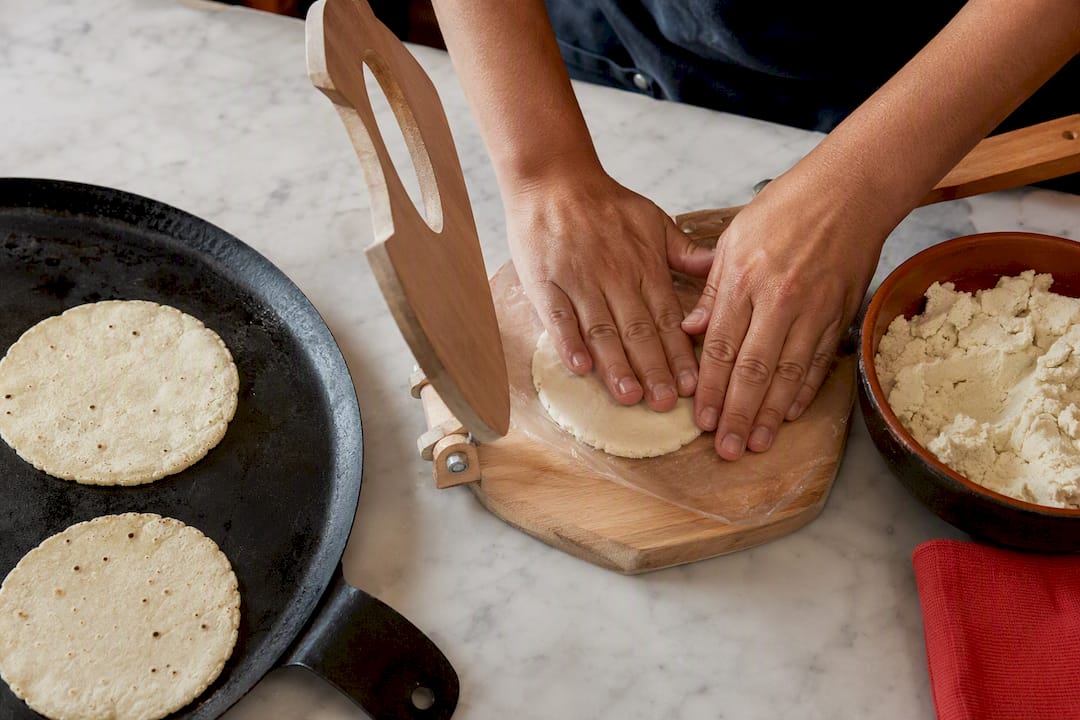
This is where the trip stops being passive. A hands-on masa or tortilla class, usually two to three hours, walks you through nixtamalization (the lime-and-water process that transforms raw corn into workable dough), hand-pressing tortillas, and cooking them on a comal. It reframes everything you ate on day one. Once you understand how much labor goes into a fresh tortilla, a five-peso taco stops looking cheap and starts looking like a bargain.
Evening: mezcal, done properly
Mezcal deserves better than a rushed shot. A proper crawl through two or three cantinas means small pours, sipped slowly, often with orange slices dusted in worm salt (sal de gusano) on the side. Bartenders in serious mezcalerías expect questions about the agave variety and the region it came from. Ask them.
Pace yourself. Mezcal runs higher proof than most wine, and altitude amplifies its effect.
Order a flight if the bar offers one. It’s the easiest way to taste regional differences side by side.
Eat something starchy before you start. An empty stomach and mezcal don’t mix well at 7,350 feet above sea level.
Pro Tip: If a bartender offers you a second, unlabeled pour “on the house,” that’s usually a sign they want you to compare it against what you just ordered. Take them up on it.
Day 3: Coyoacán, Frida Kahlo, and a Slower Pace
Coyoacán runs at a different speed than Centro or Roma, cobblestone streets, plazas shaded by jacaranda trees, and a market that feels more like a neighborhood gathering spot than a tourist stop.
Timing Casa Azul and the market crawl
Casa Azul, Frida Kahlo’s former home, sells timed tickets that sell out days in advance during high season, so book online before you land. Structure the day around whichever slot you land: a morning ticket means market snacks after, an afternoon ticket means market first.
Mercado de Coyoacán is the right stop either way. It’s smaller and calmer than San Juan or Medellín, which makes it a good fit for a slower food day. Look for tostadas de ceviche, piled with citrus-marinated fish or shrimp, along with churros and local pastries sold from the same stalls. Pair anything you eat with an agua fresca, fresh fruit water in flavors like horchata, jamaica (hibiscus), or tamarindo.
Arrive at the market before noon if you want first pick of the fresher seafood tostadas.
Save room for a pastry. Coyoacán’s market bakeries rarely make it into guidebooks but consistently deliver.
Wander the plaza after eating. It’s one of the few genuinely unhurried public spaces in the city.
The optional Xochimilco detour
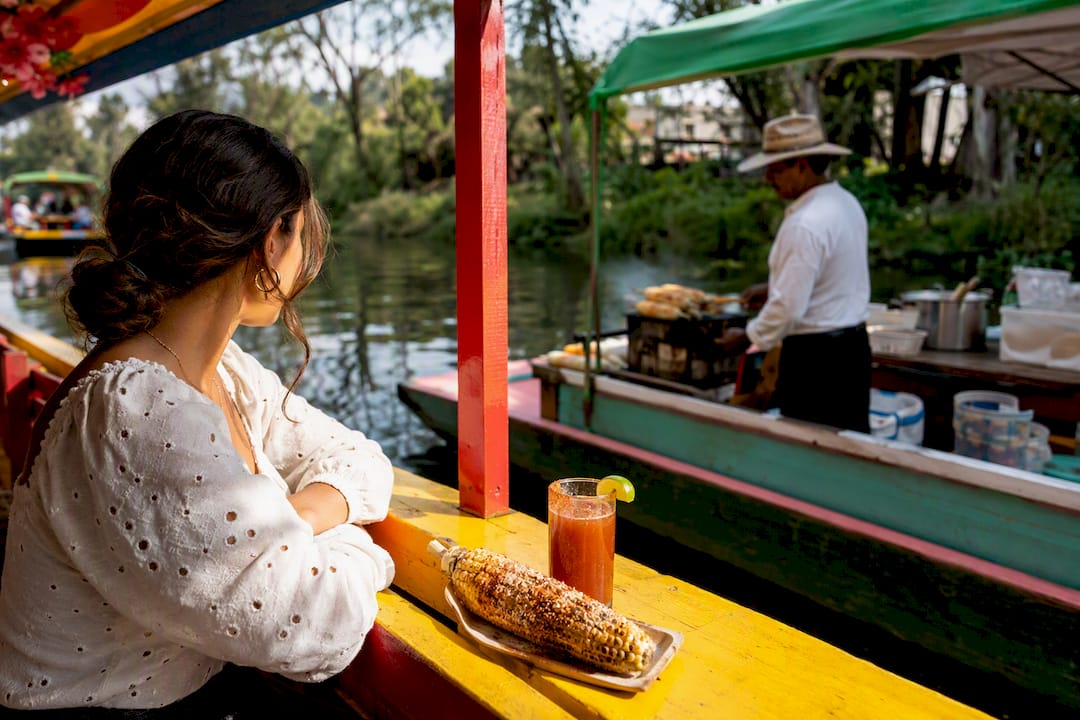
If you have the afternoon, Xochimilco’s canals are a short drive south. Colorful trajineras (flat-bottomed boats) float past vendor boats selling grilled corn, micheladas, and full meals cooked on tiny onboard stoves, an entirely different, floating version of street food. It’s touristy, loud on weekends, and worth it anyway for the novelty.
Close the day with a calm dinner around a plaza table in Coyoacán itself. Reserve ahead on weekends; the neighborhood fills with local families as much as visitors.
Day 4: La Merced, Nixtamal, and a Farewell Tasting Menu
If you’ve built in a fourth day, spend the morning where Mexico City’s food supply chain actually starts.
La Merced is the city’s largest wholesale market, sprawling and disorienting compared to the curated stalls of Roma or San Juan. Stick to the produce and prepared-food sections rather than wandering into the wholesale wings, and watch a working tortillería in action if you find one, most run all day.
A nixtamal or masa workshop here goes deeper than the Day 2 version, often walking through the full corn-to-dough process rather than just the pressing and cooking stage. This kind of masa-focused itinerary treats nixtamalization as the foundation the entire cuisine sits on, and once you’ve made dough from scratch, you’ll taste the difference in every tortilla for the rest of the trip.
Museo Nacional de Antropología in the afternoon puts everything in context. Maize isn’t just an ingredient here; entire exhibits trace its role in Mesoamerican culture going back millennia.
The farewell dinner is where you book Pujol or Quintonil, both two-Michelin-star kitchens that treat market ingredients you’ve spent three days eating raw and street-side as the raw material for tasting menus. Reserve these two to four weeks ahead; walk-in tables essentially don’t exist.
Where and What to Eat at Every Market
Each market has a personality, and knowing what to order before you arrive saves you from wandering past the good stalls.
Mercado de San Juan: seafood tostadas, exotic-ingredient stalls, and cheese counters that supply half the city’s restaurants.
Mercado Roma: gourmet food-hall stalls, natural wine, and a market-to-table sensibility aimed at a slightly more polished crowd.
Mercado Medellín: Latin American diaspora cooking, Colombian arepas and Cuban sandwiches alongside standard Mexican produce.
Mercado de Coyoacán: tostadas de ceviche, churros, pastries, and aguas frescas in a quieter, neighborhood setting.
La Merced: wholesale-scale produce, prepared foods, and tortillerías, best for context rather than a leisurely meal.
By the numbers: Street tacos across Mexico City typically run 15 to 35 Mexican pesos each, meaning a five-taco crawl rarely tops the cost of a single appetizer at a sit-down restaurant back home.
Choosing a stall safely comes down to a few visible cues rather than guesswork: a line of locals, a griddle that’s visibly hot and constantly turning over meat, and a vendor who handles raw and cooked ingredients with separate tools. Skip anything sitting unrefrigerated in direct sun for hours, particularly seafood.
When to Book and What to Budget in Mexico City
Timing makes or breaks a food-first trip here, and most of the mistakes travelers make come down to booking too late or eating at the wrong hour.
Visit major markets between 9 and 11 a.m. for the freshest ingredients, the widest vendor selection, and noticeably thinner crowds.
Book Pujol or Quintonil two to four weeks ahead; popular but less exclusive spots like Contramar need only two to three days’ notice.
Budget roughly $1 to $3 per street item, $10 to $25 for a mid-range sit-down meal, and considerably more for a tasting menu at a Michelin-starred kitchen.
Use the Mexico City Metro for long cross-town hops and Uber for short, late-night trips between neighborhoods.
Altitude note: Mexico City sits above 7,000 feet, which means alcohol and rich food hit harder and faster than at sea level. Drink water between mezcal pours and pace your eating accordingly, especially on Day 1 before you’ve adjusted.
How to Book a Guided Food Experience in Mexico City
Doing this itinerary solo works fine if you’re comfortable navigating a foreign market on your own and don’t mind occasionally guessing at a menu. But a guided food tour solves three problems the DIY version can’t: language barriers at smaller stalls, the risk of missing a market’s best vendors entirely, and the time lost figuring out logistics instead of eating.
Most guided options in Mexico City fall into two categories: larger group tours that move fast through a fixed list of stops, or smaller, private experiences built around your pace and appetite. If you’re traveling with a partner or a small group, the private route generally delivers more tastings per hour because you’re not waiting on a group of twelve to finish ordering.
Booking is straightforward across most operators. Look for options with flexible start times (morning market tours suit early risers, evening taco crawls suit night owls), clear group-size caps, and a host who actually lives locally rather than reading from a script. A step-by-step approach to sequencing Mexico City experiences helps if you’re stacking a food tour alongside museum visits or a shopping stop on the same trip. Confirm dietary restrictions ahead of time. Reputable operators will adjust a route around allergies or preferences rather than forcing a fixed menu.
Why a Guided Food Experience Adds Something the Itinerary Can’t
A well-built itinerary gets you to the right markets at the right hours. What it can’t do is talk to the vendor who’s been running the same al pastor stand for twenty years, or explain why one tostada stall at San Juan uses a different citrus cure than its neighbor. That context comes from a local host, not a guidebook.
Some guided food tours in Mexico City offer small groups, no rushing, and hosts who introduce you to vendors rather than just pointing at them. It’s less about replacing the DIY plan above and more about deepening one piece of it, the taco crawl or market morning, with someone who can skip the guesswork and the language gap entirely.
— Rban
Book a Curated Food Tour in Mexico City With Rban Tours
If the idea of navigating Mercado de San Juan or timing a taco crawl on your own feels like more logistics than vacation, there are tour operators with CDMX lineups designed for this kind of trip. The CDMX Hidden Gems 2-Hour Walking Tour runs from €30 and pairs naturally with the market and taco-crawl days already in this itinerary, small group, local host, no crowd-fighting.
[

What separates it from cobbling together your own route is straightforward: a host who already knows which stall runs out of suadero by 9 p.m., which market vendor speaks enough English to explain an unfamiliar ingredient, and how to sequence stops so you’re never standing in a line that isn’t worth it. That’s the value private, small-group tours consistently deliver over solo wandering, as broader guides to defining a culinary experience also point out. For Italian travelers used to a slower, quality-over-quantity approach to eating, it’s a natural fit.
Check availability for your travel dates and book through the CDMX tours page, or reach out directly through WhatsApp to build a private route around your own itinerary.
Sources
FAQ
What is the best month to visit Mexico City for food?
October through April brings drier weather and comfortable temperatures for walking between markets and street stalls, avoiding the heaviest summer rains that can disrupt outdoor food crawls.
What’s a good itinerary for a Mexico City food trip?
A 3 to 4 day itinerary built around Centro, Roma/Condesa, and Coyoacán covers markets, taco crawls, a masa workshop, mezcal tastings, and one fine-dining meal, as laid out day by day above.
What does a 3-day Mexico City itinerary look like?
Day 1 covers Centro’s markets and a taco crawl, Day 2 covers Roma and Condesa with a market visit and masa class, and Day 3 covers Coyoacán’s market and Casa Azul, with an optional Xochimilco stop.
How much does 10 days in Mexico cost for food alone?
Budgeting $10 to $25 per meal for mid-range dining plus $1 to $3 per street item, a food-focused traveler should plan for a budget varying depending on the choice of meals, more if a Michelin-starred tasting menu is on the list.
How far ahead should I book Pujol or Quintonil?
Reserve two to four weeks ahead for either restaurant, while popular non-Michelin spots like Contramar typically need only two to three days’ notice.
Is street food in Mexico City safe to eat?
Yes, as long as you choose stalls with visible turnover, a busy local line, and hot, actively cooking griddles. Rban Tours’ guided food tours also help newcomers identify trustworthy vendors without the guesswork.
Recommended
Comments