
Your Complete Japan Vintage Shopping Guide


Tokyo is the world’s richest city for secondhand fashion, and your best starting points are Shimokitazawa, Koenji, and Harajuku — each with its own rhythm, specialty, and price register. Whether you’re hunting raw denim, Comme des Garçons archive pieces, or a pristine Chanel flap, the right neighborhood and store type will determine what you find and what you pay.
Before you go, two things matter most:
What to hunt: Denim and Americana, Japanese designer archives (Yohji, Issey, CDG), luxury handbags and watches, streetwear (Supreme, BAPE), and kimono textiles are Japan’s strongest categories.
Top practical tip: Learn the S/A/B/C condition grading system used across most stores, and carry your passport every day — you’ll need it for tax-free purchases over ¥5,000.
Key Takeaways
Japan’s vintage market rewards preparation: knowing your neighborhoods, your grading system, and your timing will consistently outperform any amount of spontaneous wandering.
Point | Details |
Prioritize three neighborhoods | Shimokitazawa for variety, Koenji for bargains, Harajuku for Japanese designer archives. |
Learn the S/A/B/C grading scale | Condition grades map directly to price; use them to set expectations before checking any tag. |
Carry your passport daily | Tax-free exemption on purchases over ¥5,000 requires passport presentation at the register. |
Time your visits strategically | Weekday mornings after Thursday/Friday restocks yield the freshest inventory across boutiques. |
Go suburban for bargains | Suburban 2nd Street and Hard Off locations consistently offer lower prices than central Tokyo stores. |
Book with Rbantours for guided access | Rbantours vintage shopping tours include authentication support, translation, and shipping coordination. |
Table of Contents
What’s the Best Neighborhood for Vintage Shopping in Japan?
Tokyo’s vintage pulse beats loudest in four districts, each with a distinct character. Shimokitazawa, Koenji, and Harajuku are the city’s primary vintage hubs, and knowing which one fits your style saves hours of wandering.
Shimokitazawa is the undisputed center of Tokyo’s vintage world. Dense, walkable, and packed with over 20 shops within a 10-minute radius, it rewards a full day of digging. Americana is the specialty here — popular vintage denim, band tees, and workwear flood the racks. Early weekday mornings are ideal; stores restock overnight and the crowds haven’t arrived yet.
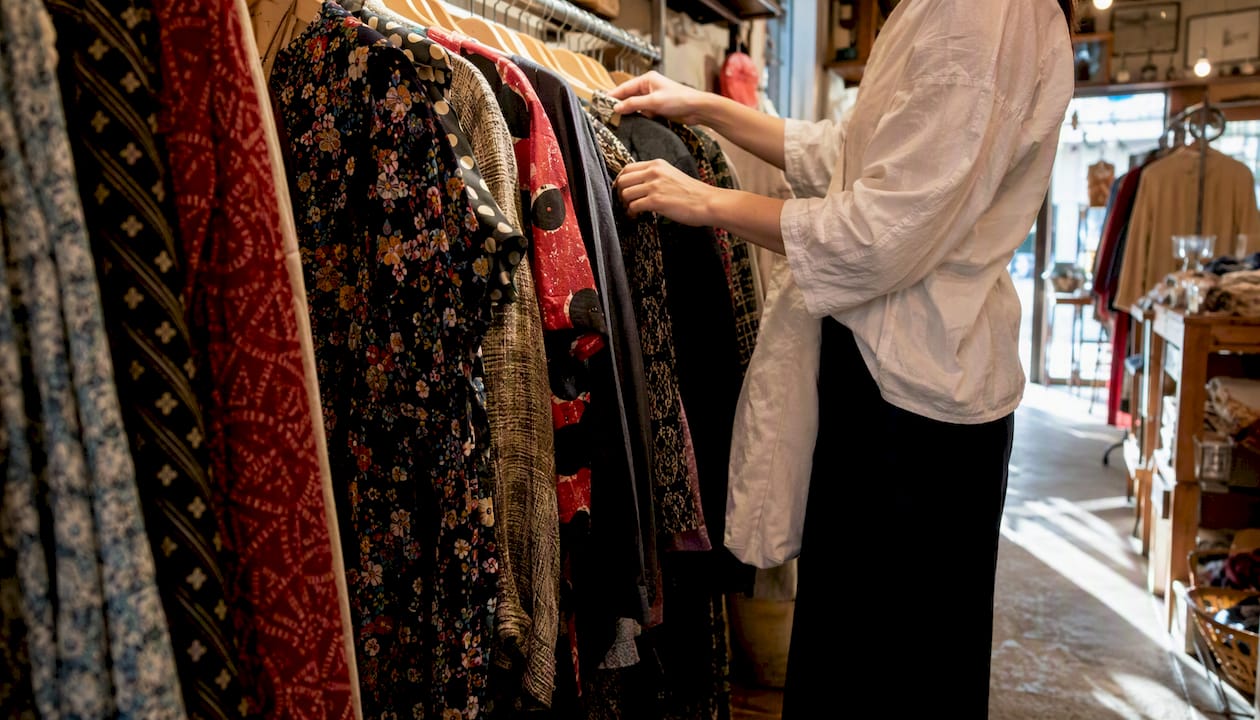
Koenji runs on a different energy. The neighborhood has a punk and subculture soul, and prices tend to run lower than Shimokitazawa. It’s the place to go when you want to dig without a budget ceiling hanging over you. Weekend flea markets near Koenji Station add a spontaneous, high-variance layer to the hunt.
Harajuku and Omotesando are where Japanese designer archives live. Curated boutiques here stock Yohji Yamamoto, Issey Miyake, and Comme des Garçons at prices that reflect the curation. Streetwear archives — Supreme Japan drops, BAPE early runs — also surface regularly. Expect higher prices and more selective inventory.
Shibuya and Ginza shift the register entirely toward authenticated luxury. This is where you find Hermès, Louis Vuitton, and Rolex at resale, verified and tagged. Less digging, more deliberate buying.
Outside Tokyo, Osaka’s Shinsaibashi and Dotonbori neighborhoods offer bargain density that rivals Koenji, with a looser, more spontaneous shopping culture. Kyoto is quieter and slower, but it’s the right place for traditional textiles, kimono, and antique accessories that rarely surface in Tokyo’s fast-moving shops.
Pro Tip: Arrive at Shimokitazawa before 11 AM on a Thursday or Friday — those are the most common restock days across the neighborhood, and the best pieces move within hours of hitting the floor.
Chain Recycle Shops and Megastores Worth Adding to Your List
Japan’s recycle shop chains operate on a completely different logic from boutiques. They buy directly from the public, process and grade everything in-house, and turn over inventory at volume. That volume is the point — and it’s why a suburban megastore can yield a find that a curated Harajuku boutique would never carry.
2nd Street is the most widespread chain, with hundreds of locations across Japan. The suburban branches (Saitama, Chiba, Kanagawa) consistently outperform central Tokyo stores on price and inventory depth. Expect a wide mix of clothing, accessories, and homewares.
Book Off / Book Off Super Bazaar is primarily known for media but its Super Bazaar format includes clothing, bags, and accessories at very low price points. Great for unexpected finds at near-throwaway prices.
Hard Off / Mode Off covers furniture, electronics, and clothing under one roof. Mode Off is the clothing-focused sub-brand. Suburban Hard Off locations are legendary among experienced diggers for surfacing imported Americana and overlooked designer pieces.
Ragtag sits at the premium end of the chain world, specializing in Japanese and European designer secondhand. Condition standards are high, prices reflect that, and the curation is noticeably tighter than a standard recycle shop.
Komehyo focuses on authenticated luxury — watches, jewelry, bags — and operates with a level of rigor closer to a luxury reseller than a recycle chain.
When to go suburban: if your priority is volume, bargain pricing, or finding imported Americana that hasn’t been cherry-picked, a day trip to a suburban megastore cluster is worth the train ride. Planning a three-to-four store loop in one suburban area and using a regional rail pass makes the trip cost-effective. The Saitama and Kanagawa corridors are the most productive.
Pro Tip: Check the chain’s online catalog the night before your visit — 2nd Street and Ragtag both list new arrivals digitally, so you can pre-screen before committing to a trip.
Which Specialist Boutiques Are Worth Your Time?
The boutique layer of Japan’s vintage market is where the real magic lives. These shops curate with intention, and the best ones operate more like consignment galleries than thrift stores — condition standards are high, and the staff often know the provenance of key pieces.
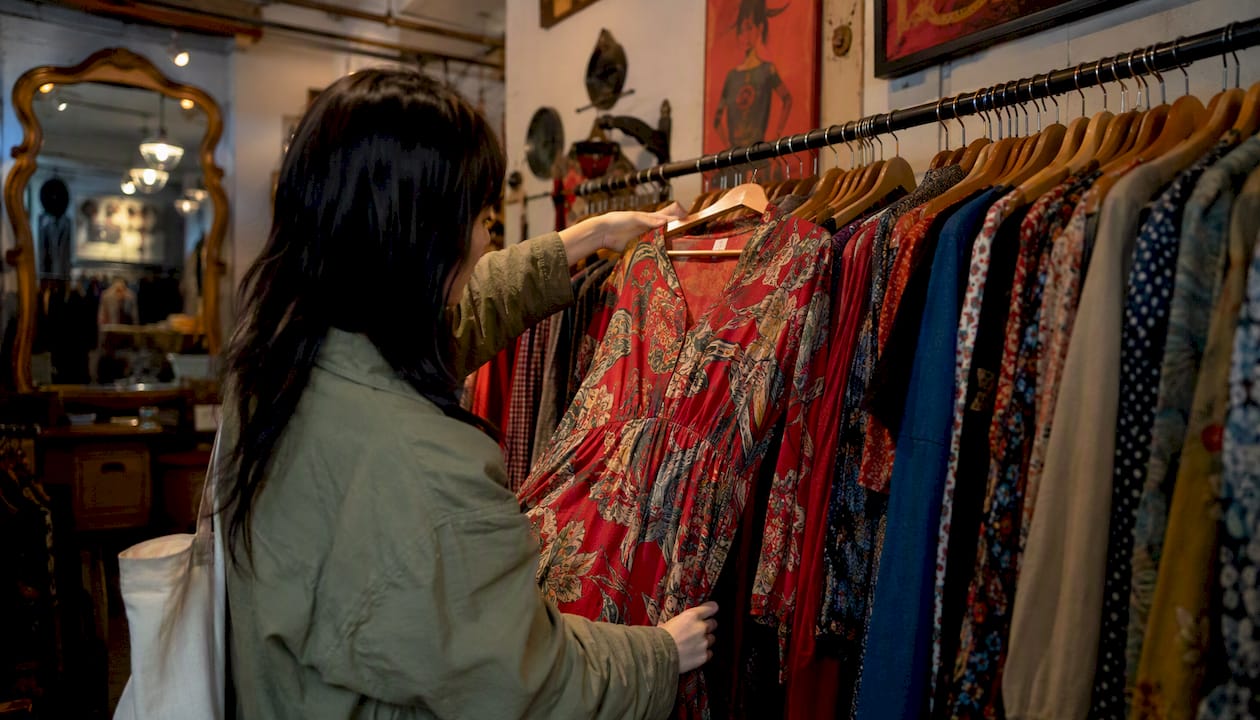
Amore Vintage (Harajuku) is one of the most photographed shops in Tokyo for a reason. It stocks a dense, well-organized mix of European and American vintage with strong color curation. Prices are fair for the quality.
Vintage Qoo carries a deep archive of Japanese domestic brands alongside imported pieces, with particular strength in 1980s and 1990s Japanese fashion. The shop has a reputation for appointment-style access to deeper archive stock — worth asking about when you visit.
Casanova Vintage leans into a romantic, European-influenced aesthetic. Think silk blouses, structured coats, and accessories with a strong feminine sensibility. It’s a boutique that rewards slow browsing.
Flamingo runs multiple locations across Tokyo and Osaka, making it one of the more accessible curated boutiques for first-time visitors. The Shimokitazawa branch is particularly strong on Americana and casual vintage.
Chicago (Shimokitazawa) is a neighborhood institution — large by boutique standards, with a broad mix that spans denim, outerwear, and accessories. It’s a reliable first stop on any Shimokitazawa loop.
Berberjin is the go-to for serious denim and Americana collectors. The shop stocks selvedge denim, vintage workwear, and military surplus with a level of expertise that’s hard to match anywhere in the city.
Safari focuses on outdoor and military-influenced vintage — think vintage Gore-Tex, field jackets, and technical outerwear from the 1970s through 1990s. A niche shop, but essential for that category.
Atlantis Vintage carries a curated mix weighted toward 1990s and early 2000s archive pieces, with strong streetwear representation. It’s a reliable stop for Supreme Japan and early BAPE.
Komehyo and Ragtag anchor the authenticated luxury resale end of the spectrum. Komehyo’s flagship in Shinjuku is particularly strong for watches and jewelry; Ragtag handles designer clothing and bags with a clean, gallery-like presentation.
What Should You Actually Buy in Japan?
Japan’s secondhand market rewards shoppers who know what the country does exceptionally well. Mixing chain and boutique visits is the smartest strategy, but knowing which categories to prioritize in each setting makes the difference between a good trip and a great one.
Denim and Americana: Japan has the world’s deepest pool of vintage Levi’s, Lee, and Wrangler, plus American workwear and military surplus. Suburban chains often have the best prices; boutiques like Berberjin have the best condition and provenance.
Japanese designer archive: Comme des Garçons, Yohji Yamamoto, and Issey Miyake pieces surface regularly in Harajuku boutiques and Ragtag. Prices are higher than Americana but still well below what these pieces command in Europe or the US.
Luxury handbags and watches: Komehyo and authenticated resellers in Ginza and Shinjuku are the right venues. Expect market-rate pricing, but authentication standards are rigorous.
Streetwear archives: Early Supreme Japan, BAPE, and Undercover pieces appear in Harajuku and Shimokitazawa boutiques. Condition varies; grading tags are your guide.
Kimono and antique textiles: Kyoto is the best source, but Tokyo’s flea markets and some Shimokitazawa shops carry them. Lightweight and packable — ideal for luggage-conscious travelers.
On the question of what not to buy: large furniture and heavy appliances are a logistical headache unless you’re shipping a container. Scarves, jewelry, small ceramics, and folded textiles are the smart traveler’s categories — high value, low weight.
How Do You Shop Vintage in Japan Without Making Mistakes?
The practical mechanics of shopping in Japan differ enough from Western secondhand markets that a little preparation goes a long way. Here’s the checklist that will keep you efficient and respectful.
Sizing: Japanese labels run one to two sizes smaller than US or European equivalents. Always try on before buying. Look for the measurement tags inside garments — bust, waist, and hip in centimeters are the reliable numbers, not the size label.
Condition grading: Most stores use an S/A/B/C/JUNK scale. S is near-new; A has minor wear; B shows visible use; C has significant flaws; JUNK is sold as-is. This grading system is your most reliable tool for setting price expectations before you touch a tag.
Payment: Small independent shops often prefer cash. Chains (2nd Street, Book Off, Ragtag, Komehyo) accept major credit cards. Carry ¥10,000–¥20,000 in cash as a baseline for any boutique-heavy day.
Restock timing: Weekday mornings, especially later in the week, tend to be the most productive windows across Shimokitazawa and Koenji. Arriving at opening means you’re first through restocked racks.
Bargaining: Fixed prices are the norm at chains and most boutiques. Polite negotiation is occasionally accepted at independent shops, especially for multiple purchases — but push too hard and you’ll simply be declined. Read the room.
Fitting rooms: Always use the provided face cover (a paper or fabric sleeve) when trying on tops and hats. It’s standard practice and skipping it is considered rude.
Photography: Ask before photographing items or the interior. Many shops allow it; some don’t. A quick “shashin, ii desu ka?” (“Is it okay to take a photo?”) covers you.
Passport: Carry it every day. Tax-free purchases require it at the point of sale, and you won’t be reimbursed afterward.
Where and When Do You Find the Best Bargains?
Timing and geography are the two levers that move prices in Japan’s secondhand market. Pull both correctly and you’ll find things at a fraction of what they’d cost in a central Tokyo boutique.
March and April are the richest inventory months. Japan’s moving season drives a surge of household offloading, and local stylists confirm that late March is when the best clothing and furniture surfaces in suburban chains. August and September bring fall restock waves as summer inventory clears.
Suburban megastores consistently undercut central Tokyo on price for equivalent condition. A B-grade Levi’s 501 that costs ¥3,500 in Shimokitazawa might be ¥1,800 at a Saitama Hard Off. The trade-off is travel time, which a regional rail pass absorbs.
Oedo Antique Market at Tokyo International Forum runs on the first and third Sunday of each month. It’s the city’s most reliable antique fair, strong on ceramics, jewelry, and textiles. Arrive early — the best pieces go in the first hour.
Pop-up vintage fairs appear seasonally in Shimokitazawa and Koenji, often announced on Instagram by the organizing shops. Following the accounts of Flamingo, Chicago, and Berberjin will keep you informed.
Suburban day trips are most productive when planned as a loop: three or four stores in one suburban corridor, starting at opening time and finishing by early afternoon before the commuter crowds build.
The finds are bulkier and more numerous than you expect.*
How Is Japan’s Secondhand Market Structured?
Understanding the three tiers of Japan’s vintage market helps you choose the right store for your goal, whether that’s a bargain dig or an authenticated investment piece. The market organizes into three distinct layers, each with different condition standards, pricing logic, and restock rhythms.
Tier | Store Type | Examples | Condition Standard | Best For |
1 | Recycle chain / megastore | 2nd Street, Hard Off, Mode Off, Book Off | B–A, graded in-house | Volume, bargains, Americana, surprises |
2 | Curated vintage boutique | Flamingo, Chicago, Berberjin, Amore Vintage, Casanova Vintage | A–S, hand-selected | Specific styles, Japanese designer, rare finds |
3 | Authenticated luxury resale | Komehyo, Ragtag, Brand Off | S–A, authenticated | Investment bags, watches, verified designer |
Tier 1 chains buy directly from the public and process everything at scale. Condition varies, but the grading tags are honest and prices reflect the grade. Tier 2 boutiques hand-select their stock, which means tighter curation, higher average condition, and higher prices — but also the pieces you won’t find anywhere else. Tier 3 authenticated resellers add serial number checks, receipt verification, and specialist appraisal to the process, making them the right choice for anything you’re buying as an investment.
The restock rhythm differs by tier too. Chains restock continuously as new items come in from the public. Boutiques tend to restock in batches, often weekly, which is why weekday mornings after a restock window are so productive. Authenticated resellers move more slowly — inventory is smaller and the authentication process takes time.
How Do You Handle Authenticity Checks and Tax-Free Shopping?
For anything above ¥20,000, a quick authentication check before you pay is worth the extra two minutes. For luxury investment pieces, it’s non-negotiable.
Authentication checklist:
Serial and date codes: Louis Vuitton, Chanel, and Hermès all use internal codes that can be cross-referenced. Ask the shop to show you the code location and verify it matches the production period.
Hardware stamps: Authentic luxury hardware is stamped with the brand name. Check clasps, zippers, and feet.
Stitching and lining: Uneven stitching, mismatched thread color, or a lining that doesn’t match known production standards are red flags.
Receipts and documentation: Komehyo and Ragtag typically provide their own authentication certificates. Ask for these at the point of sale.
Specialist appraisal: For high-value watches or jewelry, consider a third-party appraisal before leaving Japan. Some authenticated resellers offer this as a service.
Tax-free shopping: Non-residents can claim a point-of-sale exemption on the 10% consumption tax for qualifying purchases over ¥5,000. Show your passport at the register, and the exemption is applied immediately — no paperwork to file later. Chains and larger boutiques handle this routinely; very small independents may not participate. The items are typically sealed in a bag that customs can inspect on departure.
Customs and shipping: Declare high-value purchases honestly when returning home. For bulky or fragile finds, Japan Post’s EMS service and private shippers like Yamato Transport offer reliable international shipping. Yamato’s “takkyubin” service can collect from your hotel and deliver to your home country, which is the cleanest solution for anything you can’t fit in a carry-on.
Connectivity tip: Checking online catalogs, translating labels, and booking shipping pickups all require reliable data. A Japan travel eSIM keeps you connected without hunting for Wi-Fi — compare your options before you land so you’re ready from day one.
Two Sample Routes for a Vintage Shopping Day in Tokyo
Half-day: Shimokitazawa loop (4–5 hours)
Start at Chicago when it opens at 11 AM — it’s large enough to warm up your eye without overwhelming you. Walk five minutes to Flamingo for a tighter, more curated Americana edit. From there, Berberjin is a short walk and essential for denim and workwear. Take a coffee break at one of the neighborhood’s many small cafés (the area around the south exit has several), then finish with Amore Vintage for European and color-forward pieces. Budget ¥500–¥1,000 for coffee and lunch; the whole loop covers under a kilometer on foot.
Full-day: Koenji to Harajuku to Shibuya (7–8 hours)
Open in Koenji at 10 AM for bargain digging and punk-era finds. Spend 90 minutes working the main vintage strip, then take the Chuo Line to Harajuku (20 minutes). Hit Vintage Qoo and Casanova Vintage for Japanese designer and feminine archive pieces, then walk to Atlantis Vintage for streetwear. By mid-afternoon, move to Shibuya or Ginza for authenticated luxury at Komehyo or Ragtag. If time allows, a late-afternoon suburban detour to a 2nd Street in Kanagawa adds a volume-bargain layer before heading back. Use a Suica or Pasmo card for seamless rail transfers throughout.
For a deeper look at how local guides structure neighborhood itineraries, the difference between a planned route and a wandering day is usually two or three key finds.
Shop Etiquette, Language Tips, and Staying Safe
Japan’s shopping culture rewards patience and politeness. A few simple habits will make every interaction smoother and keep you on the right side of local norms.
Dos and don’ts:
Always use the provided face cover (a fabric or paper sleeve) when trying on tops, hats, or scarves. It’s standard and expected.
Remove shoes if asked — some smaller boutiques have tatami or carpeted areas near fitting rooms.
Handle items carefully and return them to the rack or shelf as you found them. Leaving a pile of unfolded garments is considered disrespectful.
Ask before photographing. A simple gesture toward your phone and a questioning look usually communicates the question; most staff will nod yes or shake their head.
Be patient at the register. Tax-free processing takes a few extra minutes and rushing the staff creates friction.
Useful Japanese phrases:
“Kore, shichaku dekimasu ka?” — “Can I try this on?”
“Shashin, ii desu ka?” — “Is it okay to take a photo?”
“Zeikin menjo, onegaishimasu” — “Tax exemption, please” (show your passport alongside this)
“Ikura desu ka?” — “How much is this?”
Most chain store staff have basic English for transactions. Boutique staff vary widely. A translation app (Google Translate’s camera mode works well on Japanese tags) covers most gaps, and reliable mobile data makes it instant. An eSIM for Tokyo means you’re never dependent on a shop’s Wi-Fi to look something up mid-browse.
Safety notes: Crowded weekend markets like the Oedo Antique Market are safe but dense. Keep your bag in front of you and be mindful of your surroundings when handling cash. For heavy finds, ask the shop about same-day shipping pickup rather than carrying large items through the subway. Japan’s streets and transit are extremely safe by global standards, but physical strain from heavy bags is the real risk on a long shopping day.
Why a Guided Shopping Tour Changes What You Find
There’s a version of vintage shopping in Japan that most travelers never access: the appointment-only archive, the shop owner who pulls pieces from the back room for a trusted contact, the suburban store that requires a local to know it exists. Going solo is rewarding, but it has a ceiling.
We’ve seen it repeatedly in our work designing curated experiences across Japan: a local guide doesn’t just translate — they negotiate in a cultural register that a phrase book can’t replicate, they know which boutiques restocked that morning, and they can spot a questionable authentication in 30 seconds. The time saved on a single authentication question alone can be worth the cost of a guided day.
The other underrated benefit is logistics. A guide who knows the shipping services, the tax-free paperwork flow, and the best lunch stop between Shimokitazawa and Harajuku turns a potentially exhausting day into something that feels effortless. You spend your energy on the actual finding, not the figuring-out.
For travelers who want to go deeper into Japan’s creative culture alongside shopping, pairing a vintage day with one of the top creative workshops in Japan — a fabric dyeing session or a kimono remake workshop — adds a dimension that no amount of solo digging can replicate.
Rbantours Vintage Shopping Tours in Japan
Rbantours runs curated vintage shopping tours across Tokyo’s best neighborhoods, designed specifically for fashion-conscious travelers who want expert access without the guesswork of going it alone.
[

Rbantours vintage shopping tours typically cover two to three neighborhoods in a day, with local guides assisting with translation, authentication checks, tax-free paperwork, and shipping coordination. Group sizes stay small — the experience is personal, not a bus tour. The guide selects the day’s route based on current restock cycles, so you’re always hitting the right shops at the right time.
Who benefits most: first-time visitors to Japan’s vintage scene, serious collectors who want authentication support, and anyone who’d rather spend their energy finding great pieces than navigating logistics. Book your Japan vintage shopping tour directly through Rbantours, or browse the full range of Japan experiences to build a complete itinerary around your trip.
Sources
These sources are worth bookmarking before your trip — each covers a specific layer of Japan’s vintage market in useful depth.
Recommended
Comments