
Food, Photos, Bargains: Pick the Ho Chi Minh Night Market for Italians

For a food-first evening, head to Ben Thanh and Ky Hoa. For flowers and photography, Ho Thi Ky comes alive after 10 PM. For bargain shopping with locals instead of tourists, Hanh Thong Tay wins. For the deepest local flavor, Binh Tay in Cholon delivers a slice of Saigon that feels untouched by guidebooks. Expect crowds after 7 PM and street meals mostly under 100,000 VND.
TL;DR:
Ben Thanh is the most tourist-friendly market, open from 6:30 PM to 11 PM, with prices generally higher and crowds peaking after 8 PM.
Ho Thi Ky offers vibrant photography opportunities after 10 PM and runs later than most markets, making it ideal for a late-night visit.
Bargain shopping and authentic local experiences are best at Hanh Thong Tay and Ba Chieu markets, where prices are lower and English is less common.
Most street food dishes cost under 100,000 VND, with popular items including bánh mì, gỏi cuốn, bánh xèo, and hủ tiếu.
Combining market visits with nearby nightlife, such as District 1’s bars or Cholon’s temples, enhances the evening experience, especially if timed around festivals like Tet or Mid-Autumn.
Table of Contents
Mercati Notturni Ho Chi Minh: Profili dei Mercati Da Non Perdere
Ho Chi Minh City has no shortage of night markets, but they are not interchangeable. Each one has its own rhythm, its own regulars, and its own reason to exist. Here is what actually separates them.
Ben Thanh Night Market sits in District 1 and runs roughly from 6:30 PM to 11 PM, with around 300 stalls selling everything from grilled seafood skewers to knockoff sunglasses. It is the most tourist-accessible market in the city, which means English gets you further here than anywhere else on this list, but it also means prices run higher and the crowds thicken fast after dinner hour. Treat it as your orientation night: a place to taste a broad spread of Vietnamese street food before venturing into markets that ask a little more of you.
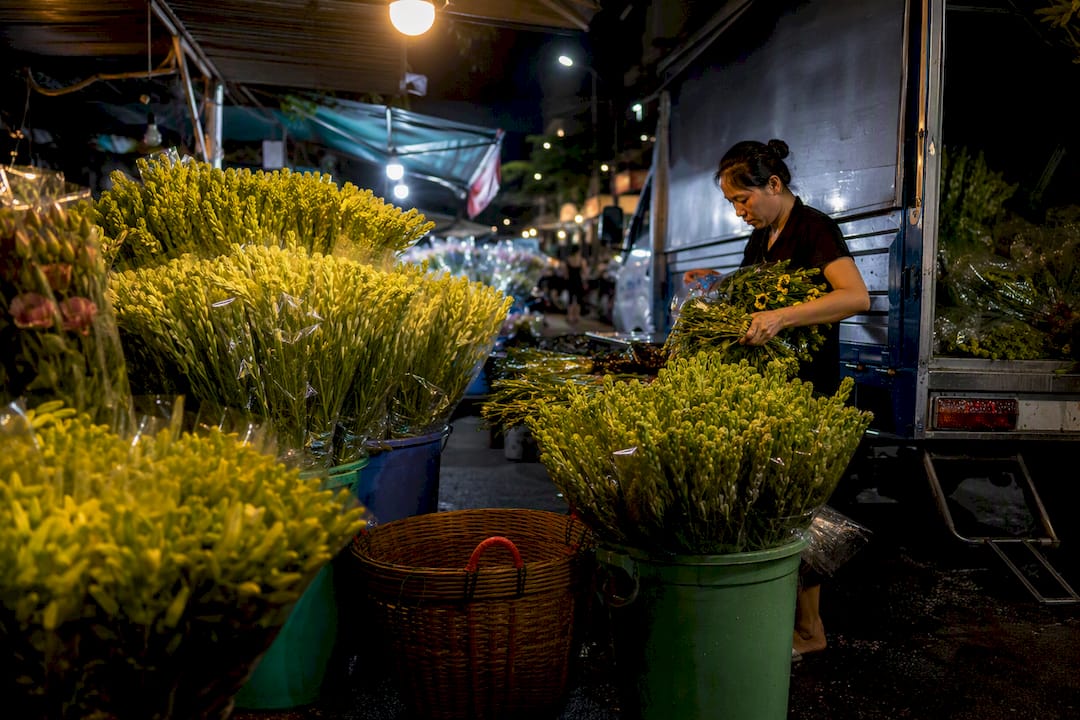
Ho Thi Ky Market is something else entirely. By day it is a produce and flower wholesale hub in District 10; by night, especially after 10 PM, trucks roll in with fresh stock and the whole block turns into a sea of color under bare bulbs. If you carry a camera, this is the market that rewards you. It also runs later than almost anywhere else in the city, so it pairs well with a late dinner elsewhere first.
Hanh Thong Tay Night Market, out in Go Vap district, is where young locals shop for clothes and accessories at prices that make Ben Thanh look expensive. It runs about 6 PM to 11 PM, and bargaining is not just tolerated, it is expected. You will hear far less English here, which is exactly the point if you want an evening that feels like Saigon rather than a tourist loop.
Ky Hoa Night Market is built for people who want to eat sitting down rather than grazing on the move. It packs over 250 stalls around a large central food court, so navigation is easier than at denser markets, and the layout suits families or anyone tired of shuffling through narrow alleys.
Binh Tay Market, the beating heart of Cholon in District 5, is Ho Chi Minh’s Chinatown market. Daytime hours cater to wholesale buyers, but the surrounding night stalls sell Chinese-Vietnamese ingredients, herbal remedies, and food you rarely see translated on a tourist menu. It is one of the most consistently cited local markets for authenticity, and for good reason.
A handful of smaller markets round out the list, each worth a detour depending on your itinerary:
Minh Phung (Cay Go) Night Market in District 6 leans heavily local, with cheap clothing, household goods, and a food strip that barely acknowledges foreign visitors.
Ba Chieu Night Market in Binh Thanh district mixes produce, clothing, and street snacks in a compact layout that rewards quick browsing over long wandering.
Hoa Binh Market in District 5 blends day-market commerce with an evening food scene that locals treat as a neighborhood staple rather than a destination.
Tan Dinh Market in District 1, better known by day for its pink facade and fabric stalls, offers a calmer evening food scene than Ben Thanh just a short walk away.
How to Pick the Right Night Market for Your Evening
Match the market to what you actually want from the night, not to whichever one shows up first in a search.
If food is the priority, Ben Thanh gives you breadth and Ky Hoa gives you comfort with its seated food court. If you want photographs and color, nothing beats Ho Thi Ky after dark. If bargain shopping with locals is the goal, Hanh Thong Tay or Ba Chieu deliver real prices instead of tourist markups. If you want the deepest sense of place, Binh Tay in Cholon rewards the extra travel time.
With one evening, choose a single market close to your hotel and commit to it fully rather than rushing between two. With two evenings, split by district: District 1 for Ben Thanh or Tan Dinh, then District 4 or 5 for a grittier, more local scene, since District 3 and 4 street food consistently outclasses District 1’s tourist-facing stalls on both price and flavor.
A realistic one-evening plan looks like this:
Arrive by 6:30 PM at a District 1 market for a food sampler before the dinner rush peaks.
Eat two or three street dishes rather than one large meal, so you can taste more.
Shop for anything non-food after eating, when vendors are less rushed.
Grab a short ride to a second, more local market if energy and time allow.
Head back before midnight, since most stalls start closing by 11 PM.
Pro Tip: Arrive right at opening time, around 6:30 PM, if crowds bother you. The same peak-hour crush that hits Ben Thanh after 8 PM applies to most central markets, and the first hour is noticeably calmer.
What to Eat and Buy at Ho Chi Minh’s Night Markets
The food is why most people come back. A proper street-food crawl through a Ho Chi Minh night market rarely costs more than a single café meal in Milan.
Signature dishes worth hunting down include:
Bánh mì, the classic Vietnamese sandwich, running about 25,000 to 35,000 VND.
Gỏi cuốn, fresh spring rolls, typically 15,000 to 20,000 VND.
Bánh xèo, a crispy stuffed pancake, usually 30,000 to 50,000 VND.
Hủ tiếu, a noodle soup found across most markets, around 40,000 to 60,000 VND.
Most complete street meals land under 100,000 VND, roughly the price of a coffee and pastry back home once converted, which explains why grazing your way through five stalls in one night rarely feels like a splurge.
Shopping splits into a few clear categories: fast-fashion clothing at Hanh Thong Tay and Ba Chieu, handcrafted souvenirs and lacquerware at Ben Thanh, fresh flowers and dried goods at Ho Thi Ky, and genuine Chinese-Vietnamese ingredients or herbal products at Binh Tay. Prices at tourist-heavy markets often run double what locals pay for the same item just a few blocks away, so a little comparison shopping before your first purchase pays off quickly.
Money, Bargaining, and Safety Basics for Market Nights
Carry Vietnamese dong in small denominations. Cards are rarely accepted at food stalls, and even clothing vendors often prefer cash.
Start bargaining at 50 to 60 percent of the asking price for non-food items, then meet somewhere in the middle.
Walking away, even briefly, is often the fastest way to get a better offer.
Wear bags across the front of your body in dense crowds, and skip flashing phones or jewelry unnecessarily.
Book short taxi or Grab rides for the return trip, and agree on a pickup point before you enter the market, since street names near entrances get confusing after dark.
Pro Tip: Save your hotel’s address in Vietnamese script on your phone before you go out. Drivers navigate far faster with the local spelling than with a transliterated Italian version of the street name.
Why This Guide Reflects How Ho Chi Minh’s Markets Actually Work
Some tour companies build street-food explorations and design-led city experiences around exactly this kind of local terrain, working with vendors and neighborhoods most visitors never find alone. A small-group, host-led evening can solve the two biggest friction points, language and vendor trust, while making crowded markets far easier to navigate safely. Check current tour availability.
Weekend Markets and Seasonal Events Worth Timing Your Trip Around
Most of Ho Chi Minh’s night markets run daily, but a few moments each year turn an ordinary evening into something worth planning around. Tet, the Lunar New Year, transforms flower markets like Ho Thi Ky into their most spectacular version of themselves, with entire streets given over to kumquat trees, peach blossoms, and marigolds sold by the truckload in the days leading up to the holiday.
Mid-Autumn Festival, usually falling in September or October, brings a similar surge to markets near Cholon, where mooncakes, lanterns, and paper crafts flood stalls that otherwise sell everyday goods. Binh Tay and the surrounding Chinatown streets lean into this celebration harder than anywhere else in the city, given the district’s Chinese-Vietnamese heritage.
Some markets also see weekend-specific spikes rather than true weekend-only operations. Friday and Saturday nights at Ben Thanh and Ky Hoa draw noticeably larger crowds than weeknights, with more live street performers and a longer stretch of open stalls. If a quieter, more conversational visit matters more to you than energy and spectacle, a Tuesday or Wednesday evening beats a Saturday by a wide margin.
None of this means you need to time a whole trip around a festival calendar. But if your travel dates happen to overlap with Tet or Mid-Autumn Festival, treat it as a reason to prioritize the flower and Cholon markets specifically, since the ordinary version of those markets barely hints at what they become during the celebration.
Pairing a Market Visit With the Rest of Ho Chi Minh’s Nightlife
A night market rarely needs to be the entire evening. Ben Thanh sits within easy walking distance of Bui Vien Street, District 1’s backpacker strip, where bars stay loud and open well past midnight. It makes sense as a natural second stop after you have eaten your fill of skewers and spring rolls.
For something calmer, the rooftop bars scattered across District 1 offer a view over the city that puts the market’s chaos into perspective from a few floors up. If you visited Tan Dinh Market, its proximity to quieter District 1 cafés makes for an easy wind-down before heading back to your hotel.
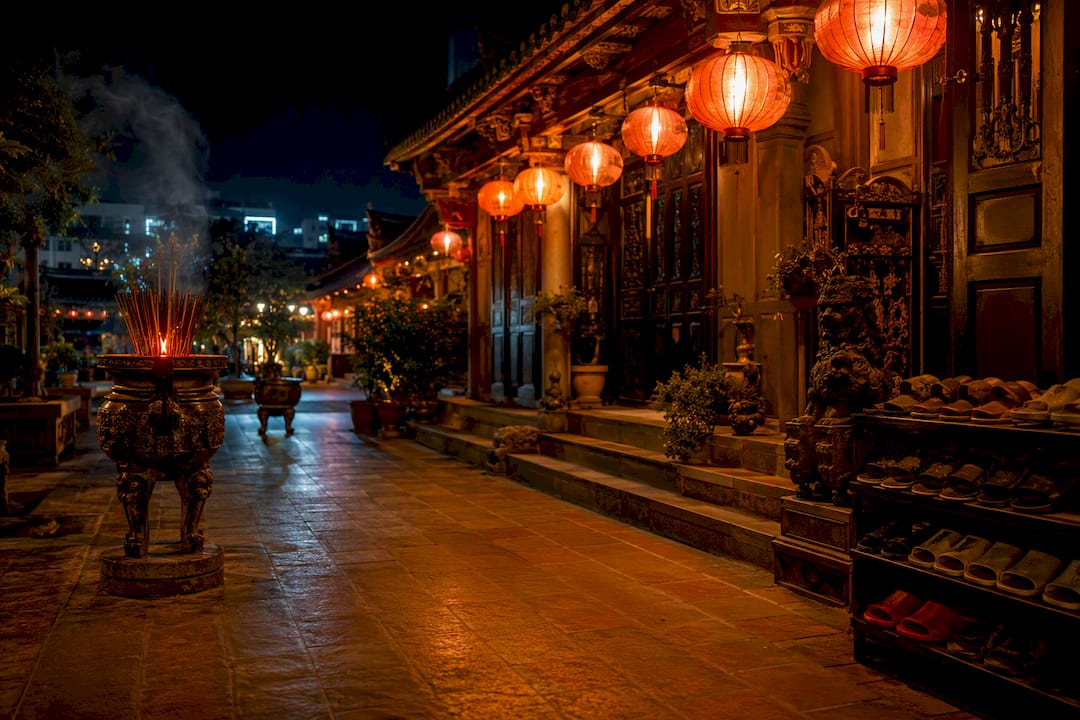
Cholon, home to Binh Tay Market, rewards a slower evening. The district’s temples, including the well-known Thien Hau Pagoda, sit just a short walk from the market and stay atmospheric well into the evening hours, lit by incense and lantern light rather than neon. Pairing the market with a walk through Cholon’s older streets gives you a fuller picture of the district than the market alone ever could.
If your evening includes Hanh Thong Tay or Ba Chieu, both sit farther from the central nightlife strip, so plan your return transport before you commit to a late-night bar crawl elsewhere. Treat market and nightlife pairing as a two-part evening: eat and shop first, then decide based on energy levels whether the night continues or winds down.
Talking to Vendors Without Speaking Vietnamese
Language barriers at Ho Chi Minh’s night markets are real but rarely a dealbreaker. Vendors at Ben Thanh and other tourist-heavy markets generally speak enough English to complete a transaction, quote a price, or point toward a dish. The farther you get from District 1, though, the less English you will hear, and that is where a few habits make a real difference.
Numbers matter more than words. Most price negotiations happen through fingers, calculators, or phone screens rather than spoken language, so learning to recognize Vietnamese numbers, or simply keeping a phone calculator handy, solves most misunderstandings. Pointing at a dish someone else is eating, then nodding, works better than trying to pronounce a menu item you cannot read.
A handful of Vietnamese words go a long way even when pronunciation is imperfect: “xin chào” for hello, “cảm ơn” for thank you, and “bao nhiêu” for how much. Vendors notice the effort even when the accent is rough, and it tends to soften prices rather than the opposite.
Translation apps with offline camera scanning handle menu boards reasonably well, though transliterated street signs can still confuse a taxi driver more than the Vietnamese script itself. Smiling, pointing, and staying patient beats forcing a conversation that neither side can finish. Most vendors have handled thousands of visitors who spoke zero Vietnamese, and the transaction almost always works out.
Respectful Behavior That Goes Beyond Bargaining
Good market etiquette in Ho Chi Minh City extends well past knowing how to haggle. Aggressive bargaining, raised voices, or walking away in visible frustration reads as rude rather than savvy, even when the price gap feels small in absolute terms. A calm, good-humored negotiation almost always lands better than an insistent one.
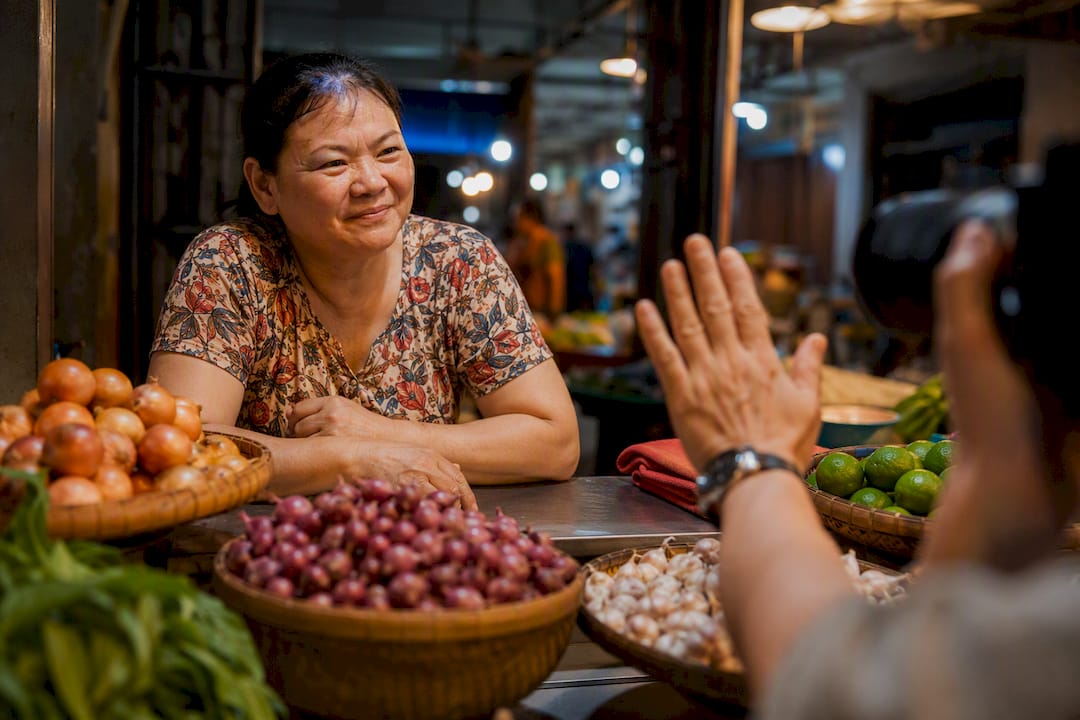
Photographing vendors and their stalls without asking first is one of the more common missteps among visitors. A quick gesture toward your camera and a nod of confirmation takes seconds and avoids an awkward exchange, particularly at smaller local markets like Minh Phung or Ba Chieu where tourists are less frequent.
Handling food and produce matters too. Touching items you have no intention of buying, especially fresh produce at flower or food markets like Ho Thi Ky, is generally discouraged. Let vendors select or hand you items instead of grabbing directly from a display.
Dress modestly if your evening market visit overlaps with a nearby temple stop, particularly around Cholon’s pagodas. And keep foot traffic in mind: narrow market aisles get crowded fast, and stopping abruptly to take a photo or check a phone creates a bottleneck that locals navigate around dozens of times a night. Small courtesies like these are what separate a visitor who blends into the evening from one who disrupts it.
What the Guidebooks Get Wrong About These Markets
Most travel guides treat Ho Chi Minh’s night markets as interchangeable stops on a checklist, ranking them by stall count or Instagram appeal. That misses the actual decision that matters: what mood are you chasing tonight? Ben Thanh’s convenience comes at the cost of authenticity, while Binh Tay’s authenticity demands more effort and less English support. Neither is objectively better.
The overlooked advice is district logic. Travelers fixate on individual market names without considering that Hanh Thong Tay and Ba Chieu sit far enough from the tourist core that combining them with a second market in one night rarely works logistically. Pick your district first, then your market.
What should come first is honesty about your own travel style. If crowded improvisation among strangers energizes you, Ben Thanh delivers. If you would rather have a local host translate, negotiate, and steer you toward the stall actually worth the walk, a guided evening removes the guesswork entirely.
— Rban
Skip the Guesswork With a Local-Led Market Evening
Rban Tours turns the planning above into a single booked evening: a small-group walking and cultural tour through Ho Chi Minh City with a local host who knows which stalls at Ben Thanh are worth the line and which side streets near Cholon locals actually eat on. Instead of piecing together district logic, bargaining phrases, and transit timing on your own, you get someone who has already done that homework, leaving you free to actually taste and shop rather than navigate.
[

The tour blends market stops with street-food tastings and neighborhood walks that most independent visitors never find. If an evening built around real local access sounds better than another solo Google Maps scramble, check dates and reserve a spot on the walking and cultural tour page.
Sources
Recommended
Comments