
60–90 Minute Barcelona Street Food Plan for Italian Travelers
- Rban Tours

- Aug 29
- 8 min read
The best street food in Barcelona lives in three places: the market halls, the tapas bars of El Born and Poble Sec, and inside a guided food walk that connects the two. Start at La Boqueria, Mercat de Sant Antoni, or Time Out Market for the tasting, then wander Barceloneta or El Born for the local gastronomy experiences in Brugge for the neighborhood snacks. For a first visit, pairing a market stroll with a guided tapas tour saves you from guessing which stalls are worth your appetite.
TL;DR:
Visit La Boqueria early or late to avoid crowds, and focus on ham, seafood, and fresh fruit stalls for the best experience.
Prioritize dishes like patatas bravas, croquetas, bomba, and small seafood tapas to enjoy authentic street flavors without filling up on mediocre options.
Choose market visits during late morning or early evening and plan for no more than three stalls per market to maximize tasting and avoid overeating.
Guided tapas tours typically last 1.5 to 3 hours, include several tastings and drinks, and work best when booked in advance with attention to group size and start location.
Timing visits around festivals or local events can enhance the experience, but expect longer lines and sold-out stalls during popular celebrations like La Mercè.
Table of Contents
Which Barcelona Markets Have the Best Street Food?
Barcelona’s food halls each have a different personality, and picking the right one shapes your whole afternoon. La Boqueria is the city’s largest and most visited public market, a maze of ham legs, fruit towers, and tiny tapas counters just off La Rambla. It’s iconic for a reason, but that fame means midday crowds can turn a quick snack into a shuffle through elbows.
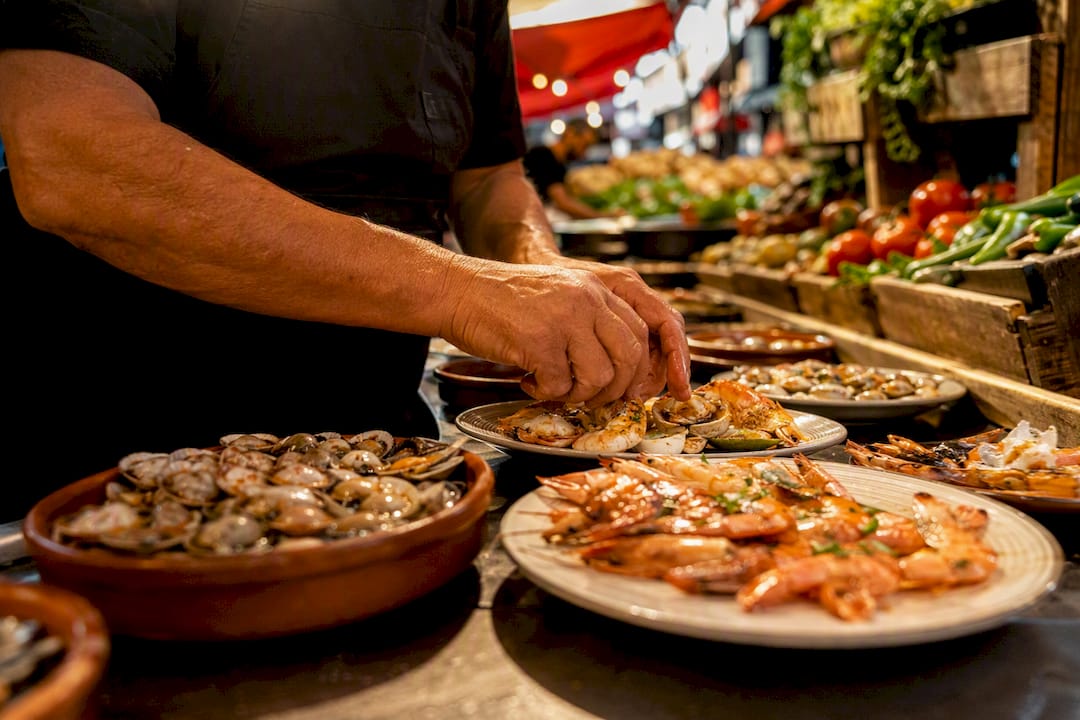
Mercat de Sant Antoni sits a fifteen-minute walk southwest and feels like the Barcelona locals actually shop in. Sunday brings a book and record market to the surrounding streets, and the food stalls inside lean toward producers selling directly rather than tourist-facing counters.
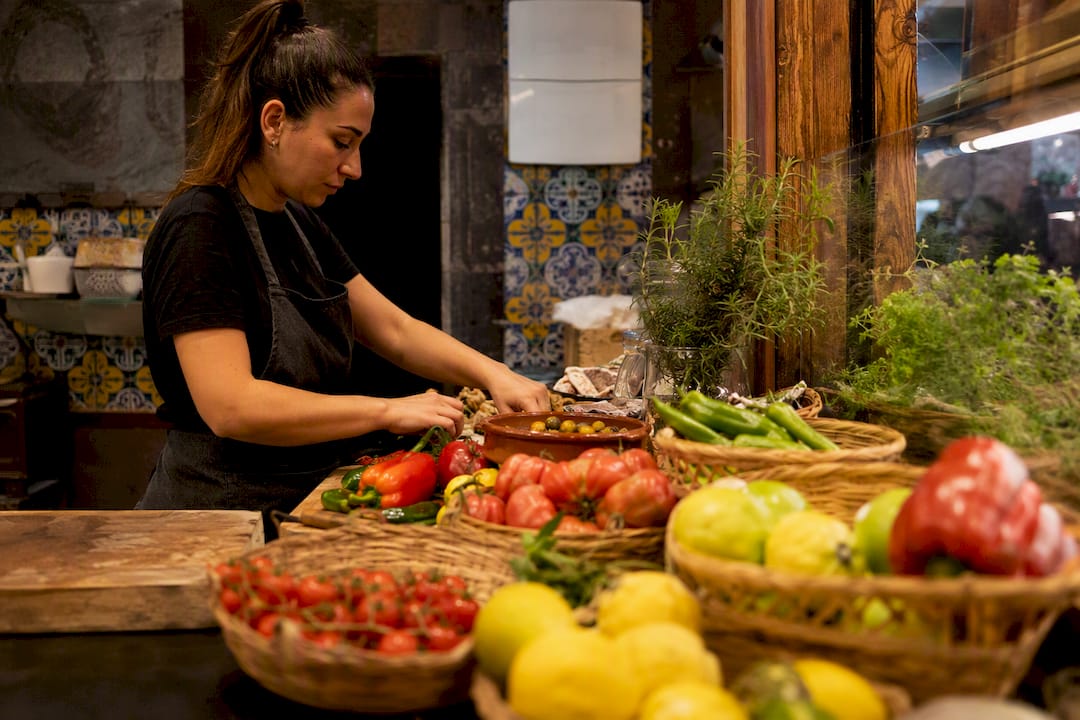
Time Out Market Barcelona works differently. Instead of independent vendors, it’s a curated hall where chef-run stalls offer a one-stop tasting experience, so you can sample several kitchens’ signature dishes without crossing town. Mercat de Santa Caterina, recognizable by its wavy rainbow-tiled roof, and Mercat de la Barceloneta near the beach both lean into seafood, with counters serving anchovies, mussels, and grilled fish straight from the port.
Timing matters more than most guides admit:
Visit La Boqueria before 10 a.m. or after 5 p.m. to dodge tour groups.
Sant Antoni gets liveliest on weekend mornings, especially Sunday.
Time Out Market stays busy through dinner, so an early lunch avoids the wait.
Santa Caterina and Barceloneta are calmest on weekday mornings, when fishmongers restock.
Mercat de Sant Antoni and Mercat de Santa Caterina also work well as a quieter alternative if La Boqueria feels overrun on your visit.
What Street Foods Should You Actually Order?
Some dishes show up on every Barcelona menu, and knowing which ones earn their reputation saves you from filling up on mediocre plates. Here’s what to prioritize.
Patatas bravas – fried potato chunks in spicy tomato sauce and garlic aioli, almost always shared, usually €4–€7 a plate.
Croquetas – creamy béchamel fritters, often filled with ham or mushroom, sold two or three to an order.
Bomba – a breaded potato ball stuffed with meat and topped with spicy sauce, a Barceloneta specialty.
Pa amb tomàquet – toasted bread rubbed with ripe tomato and olive oil, the base for half of Catalan tapas.
Bocadillo (entrepa) – a crusty sandwich, often filled with jamón or tortilla, built for eating on the move.
Churros con chocolate – fried dough dipped in thick hot chocolate, best found near morning markets.
Pintxos – small skewered bites on bread, common in tapas bars that charge by the toothpick.
Grilled or fried calamari – a seafood-counter staple at Santa Caterina and Barceloneta.
Marinated anchovies (boquerones) – vinegar-cured, sharp, and a good test of a market stall’s quality.
Esqueixada – a cold salted cod salad with tomato and onion, refreshing in summer heat.
Nearly every list of Barcelona’s essential dishes converges on the same core group: patatas bravas, croquetas, bomba, bocadillos, churros, and small seafood tapas appear again and again across guides and tour menus alike. Vegetarians will find pa amb tomàquet, most croqueta varieties, and patatas bravas safe bets, though bravas sauce sometimes contains anchovy paste, so ask if you’re avoiding fish.
What Should You Eat at Each Market?
Knowing the dish is only half the plan. Knowing which counter to walk toward saves real time once you’re inside.
At La Boqueria, head first to the ham counters near the main entrance for jamón ibérico by the slice, then move toward the back for fresh seafood tapas bars where you can eat standing at the counter. Small kiosks scattered through the middle sell fruit smoothies and pre-cut coconut, useful if you’re pacing yourself.
At Mercat de Sant Antoni, skip the produce stalls unless you’re cooking, and look instead for the modern tapas counters that have opened along the market’s edges in recent years. Weekend mornings bring the best energy, with vendors more willing to chat about what’s fresh.
At Time Out Market, pick two or three stalls representing different cuisines rather than filling up at one. It’s designed for grazing, not a sit-down meal.
At Mercat de Santa Caterina and Mercat de la Barceloneta, seafood counters are the draw. Order small and often. A few grilled sardines here, a handful of clams there, adds up to a fuller meal than one large plate.
Pro Tip: Give yourself 60 to 90 minutes and hit no more than three stalls per market. Any longer and you’ll fill up before reaching the good stuff.
What Do Barcelona Tapas Tours Include, and What Should They Cost?
A well-run tapas tour turns a market’s chaos into a curated tasting, which is exactly why so many first-time visitors book one before wandering off on their own. Most guided walks run 1.5 to 3 hours and include three to five tastings plus at least one drink, with a local guide narrating the history behind each stop.
Typical inclusions and price drivers:
Tastings at three to five stops, often paired with wine, vermouth, or beer.
A guide who explains ordering customs, ingredients, and neighborhood history.
Small group sizes, usually under twelve people, for better access to counter space.
Routes through the Gothic Quarter, El Born, and Poble Sec, where tours commonly sample patatas bravas, croquetas, and local vermouth.
Standard price range per person is moderate, varying by group size and add-ons, rising for private groups or premium add-ons like extra wine pairings.
When comparing options, check group size, whether the guide speaks Italian or English, how dietary restrictions are handled, and the cancellation policy before you pay. Meeting points matter too. Confirm the tour starts somewhere convenient, since many gather near La Boqueria or Plaça Sant Jaume and expect one to two and a half hours of standing and walking.
Rban Tours runs curated street-food experiences through Barcelona built around this same format: small groups, local hosts, and stops chosen for flavor rather than foot traffic. You can browse dates through Rban’s Barcelona tours.
When Should You Go, and What Should You Budget?
Planning around Barcelona’s rhythm rather than fighting it makes the food better and the lines shorter. Markets peak between noon and 2 p.m., so late morning or early evening visits give you breathing room. Tapas bars, on the other hand, come alive after 8 p.m., which is standard dinner hour in Catalonia.
Rough budgets to plan around:
A market snack: €3–€10 per item.
A tapas crawl covering several bars costs a moderate amount per person.
A guided tour with tastings and drinks included costs moderately, depending on inclusions.
A few etiquette notes worth knowing before you order. Tapas are meant to be shared, so ordering two or three plates for a table of four is normal, not stingy. Tipping isn’t obligatory in Spain, though rounding up or leaving a euro or two for good service is appreciated. Useful phrases include “una ración de” (a full plate of) versus “una tapa de” (a small taste), and “¿tiene opciones sin gluten?” if you need gluten-free options.
Pro Tip: If you have a shellfish allergy, say “alergia” clearly when ordering seafood tapas. Cross-contamination at busy counters is common, and staff take allergy warnings seriously once flagged.
Are There Food Festivals Worth Timing Your Trip Around?
Barcelona’s calendar includes several food-focused events that reshape the street-food scene for a few days at a time. La Mercè, the city’s biggest festival held every September, fills Barceloneta and the old town with food stalls alongside its fireworks and parades, turning ordinary squares into open-air tasting grounds.
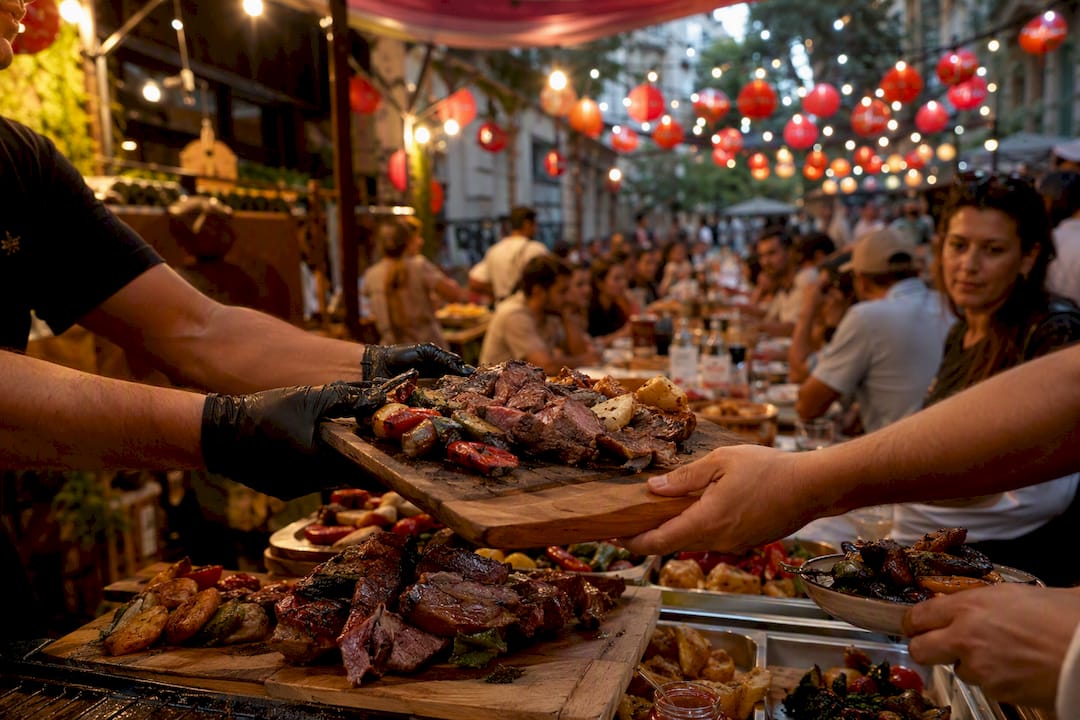
Smaller neighborhood festivals, called festes majors, pop up through spring and summer in barrios like Gràcia and Sants, where residents string up decorations and set up communal tables serving local specialties. These are less curated than a market visit but far more social, and vendors often sell dishes you won’t find on a typical tapas menu.
Winter brings its own version through Christmas markets, where roasted chestnuts and turrón replace the usual seafood counters. If your trip lands near one of these dates, build in extra time. Festival crowds move slower than a normal market day, and the best stalls sell out early.
Checking the city’s event calendar a few weeks ahead helps you decide whether to chase a festival or stick to the standard market circuit. Either way, pairing a festival visit with a walking and cultural tour gives you context for what you’re eating and why it matters locally.
Rban’s Perspective: Why a Guided Food Walk Changes the Visit
We built our Barcelona food walks around one idea: a market is only as good as the story behind each stall. Our local hosts skip the tourist-facing counters and lead you toward the ones they’d bring a friend to, saving you the trial and error of guessing which bravas are worth the wait. Reviews of guided tapas experiences consistently point to access to hidden stalls and local bars as the real value, more than the food itself. That’s the gap we design for.
— Rban
Book a Guided Street-Food Walk With Rban Tours
Rban Tours’ Barcelona street-food experiences pair a local host with a route built around the counters worth your time, not just the ones with the longest lines.
[
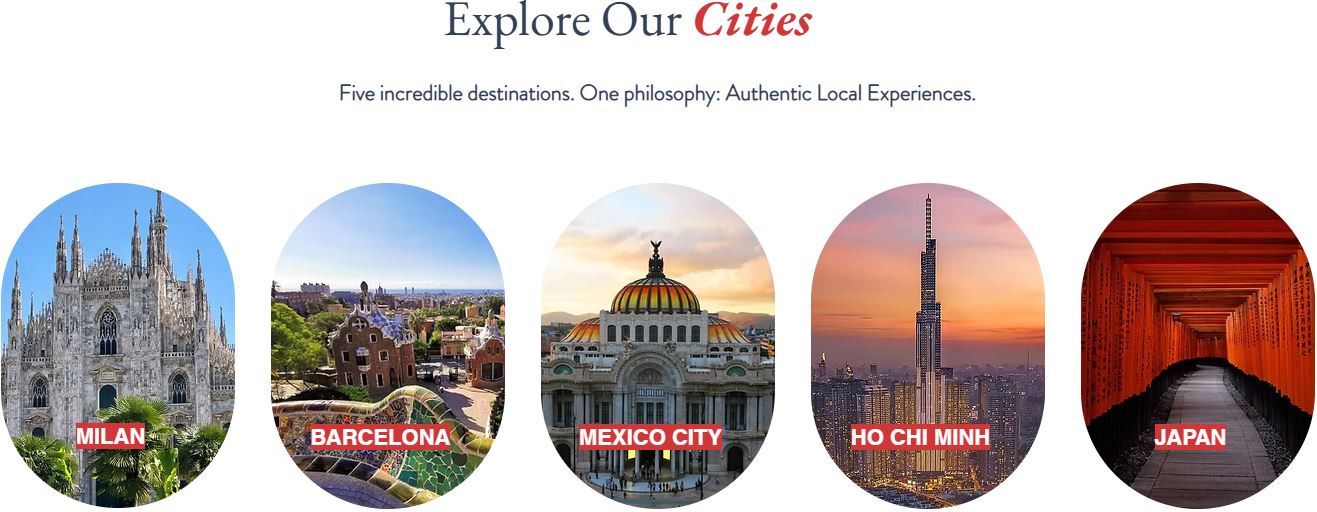
Each walk includes several tastings, context on the neighborhood you’re eating in, and a pace that fits real appetites rather than a rushed checklist. If you’re coming from Italy and want the ordering, the history, and the best bites handled for you, browse available dates on Rban’s Barcelona experiences page and reserve your spot before the week you’re traveling.
Sources
Recommended
Comments