
The Role of Storytelling in Tours: A Traveler's Guide

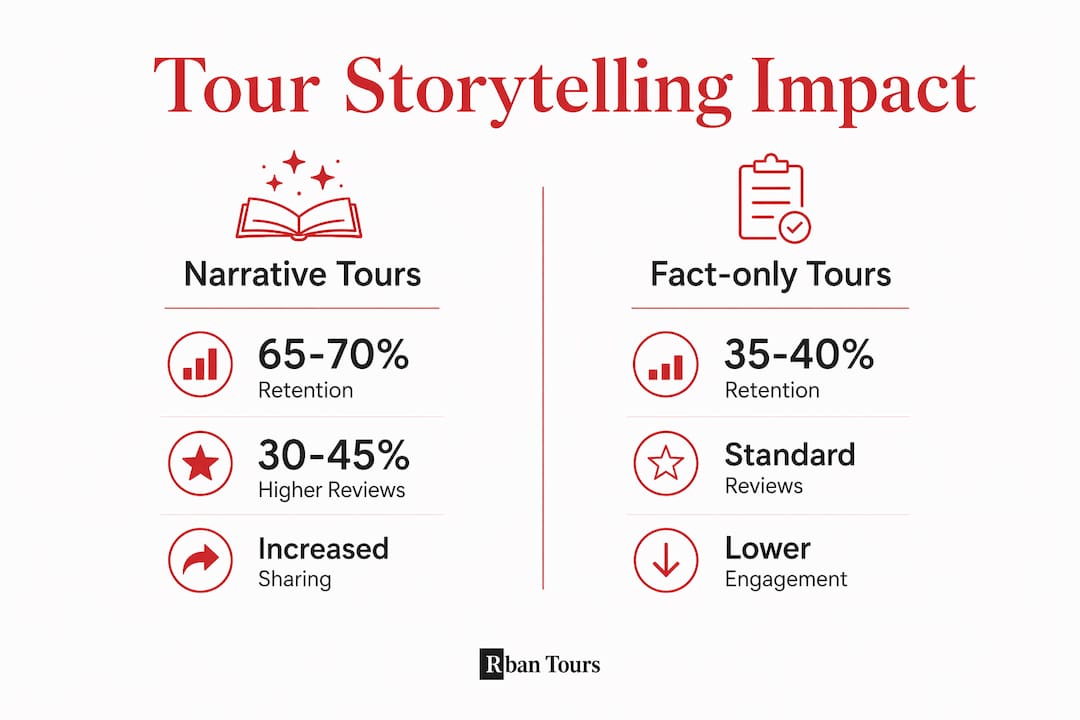
Travel storytelling is defined as the practice of weaving narrative, emotion, and sensory detail into guided experiences to transform a destination from a place you visit into a place you feel. The role of storytelling in tours goes far beyond reciting dates and facts. It is the difference between standing in front of a cathedral and actually understanding the lives of the people who built it. Tours led by trained storytellers receive 30–45% higher review scores and improve visitor retention of information to 65–70%, compared to only 5–10% with fact-only delivery. That gap is not a small detail. It is the entire argument for why narrative belongs at the center of every great travel experience.
What is travel storytelling and how does it differ from fact-sharing?
Travel storytelling is the art of building a narrative arc around a place, person, or moment so that travelers feel emotionally connected to what they are experiencing. It is not the same as sharing information. A fact tells you that a market has operated since 1714. A story puts you inside the stall of a vendor whose grandmother sold the same spices in the same spot for sixty years.
The difference comes down to structure and intent. Fact-based tour delivery answers “what” and “where.” Storytelling answers “why” and “how it felt.” The best guides use a combination of five core elements to build that emotional bridge:
People: Real characters, local voices, and personal histories that make abstract history human
Place: Sensory detail that brings a location to life beyond its physical appearance
Personalization: Adapting the narrative to the specific group standing in front of you
Performance: Vocal tone, pacing, and physical presence that hold attention without becoming theatrical
Platform: Choosing the right moment and setting to deliver each story for maximum impact
These elements work together. Remove one and the experience flattens. A guide who knows the history of a neighborhood but delivers it in a monotone, without connecting it to the people in the group, loses the room within minutes.
Pro Tip: Before booking a tour, read two or three recent reviews and look specifically for words like “felt,” “moved,” or “remembered.” Those words signal a storytelling guide, not just an information guide.
Understanding city storytelling as a distinct skill helps travelers set better expectations and choose experiences that will genuinely stay with them.
How does storytelling impact tourist experiences during guided tours?
The impact of storytelling on tours is measurable, not just emotional. Guides rated as excellent storytellers generate 2.5 times more rebookings and can command 20–35% price premiums. Emotional experiences delivered through narrative are three times more likely to be shared on social media. Those numbers reflect something real: people pay more, return more often, and talk about experiences that made them feel something.
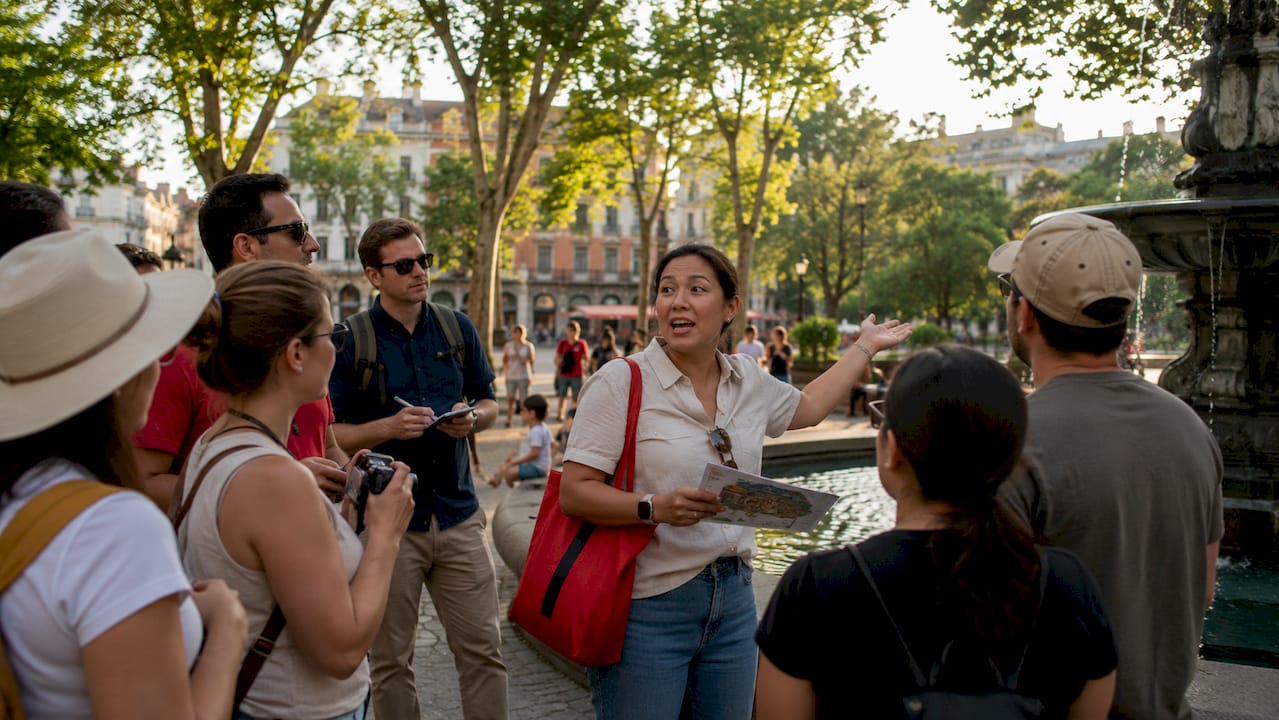
The psychology behind this is called narrative transportation. When a story pulls you in fully, your brain processes the experience similarly to a real event. Place attachment forms faster and runs deeper. You do not just remember the Colosseum. You remember the guide’s story about the gladiator who refused to fight on his last day, and you feel the weight of that choice.
Experience Type | Information Retention | Review Score Lift | Social Sharing Rate |
Fact-only tour delivery | 5–10% | Baseline | Low |
Storytelling-led tour | 65–70% | 30–45% higher | 3x more likely |
Dark tourism with narrative | Significantly elevated | High | Moderate to high |
Heritage tourism and dark tourism show this effect most clearly. True-crime tours increase visitor interaction and reflection by 30–50% compared to non-narrative site visits. That is not because the subject matter is sensational. It is because a well-constructed story creates stakes. You care about the outcome. You carry the experience home.
For diasporic travelers, the effect runs even deeper. Storytelling that uses immersive historical reconstruction and ancestral symbolism increases place identity scores by up to 40% within hours of a visit. That is a profound result. A single afternoon with the right guide can reshape how someone understands their own cultural roots.
The Mexico City storytelling experience is a strong example of how narrative transforms a neighborhood walk into a conversation about identity, memory, and belonging.
What storytelling techniques do the best tour guides use?
Effective storytelling in tours follows a recognizable structure, even when it feels spontaneous. The best guides build toward emotional peaks, not just informational ones. Here is how they do it:
Open with a hook. The first thirty seconds set the tone. Great guides open with a question, a mystery, or a provocative claim. “This square looks peaceful now. Sixty years ago, it was the site of the city’s most controversial public execution.” You are already leaning in.
Build dramatic tension. Every good story has a problem to solve or a conflict to resolve. Guides who structure their narrative around tension keep travelers engaged between stops, not just at them.
Use sensory cues. The smell of a spice market, the sound of a bell tower, the texture of an ancient stone wall. Sensory detail is not decoration. It is the mechanism that moves a story from the head into the body.
Adapt to the audience. A group of college students and a group of retirees need different entry points into the same story. Authentic storytelling means reading the room and adjusting, not delivering a rehearsed script.
Resolve with meaning. The best guides end each story with a takeaway that connects the past to the present. Not a lesson, but a resonance. Something that makes the traveler think, “I will remember this.”
Ethical delivery matters as much as technique, especially in sensitive contexts. Ethical storytelling balances dramatic narrative with factual accuracy, avoiding trivialization in places where real suffering occurred. A guide at a former prison or a war memorial carries a responsibility that a guide at a food market does not. The best practitioners know the difference.
Pro Tip: The ‘performance trap’ is real. Guides who over-rehearse their delivery often lose authenticity. The most engaging guides focus on genuine connection with the group rather than theatrical presentation.
Storytelling is also a trainable skill. AI-powered coaching tools now allow guides to refine their narrative arcs and delivery without the pressure of a live audience. That means the quality of storytelling on tours is rising across the industry, not just among naturally gifted communicators.
How can travelers get more from storytelling on tours?
Travelers who understand how storytelling works get significantly more out of every guided experience. Awareness is the first step. When you know a guide is building toward an emotional peak, you listen differently. You stay present instead of reaching for your phone.
Choose guides with storytelling credentials. Look for reviews that mention emotional impact, not just accuracy. A guide who “knew everything” is not the same as a guide who “made history feel alive.”
Ask questions that invite story. “What is the most surprising thing that happened here?” opens a narrative door. “When was this built?” closes it.
Practice emotional openness. The travelers who get the most from narrative-rich tours are the ones willing to be moved. That is not a passive state. It is an active choice to be present.
Capture your own story. The most powerful travel stories depict moments of challenge and growth, not just highlights. Write down what surprised you, what confused you, and what stayed with you after the tour ended.
Choosing tours that prioritize narrative over logistics is the single most effective way to deepen your connection with a destination. The role of authentic city guides in shaping that connection cannot be overstated. A great guide does not just show you a city. They give you a way to understand it.
The guest experience in hospitality and tourism consistently improves when narrative is central to the design of the experience, not an afterthought.
Key Takeaways
Storytelling is the single most powerful tool for turning a guided tour into a lasting memory, and travelers who seek it out consistently report deeper satisfaction and stronger cultural connection.
Point | Details |
Storytelling lifts retention dramatically | Narrative-led tours improve information retention to 65–70%, versus 5–10% for fact-only delivery. |
Review scores and rebooking rates rise | Storytelling guides earn 30–45% higher reviews and 2.5x more rebookings than non-narrative guides. |
Emotional peaks drive social sharing | Story-driven experiences are three times more likely to be shared on social media after the tour. |
Technique and ethics both matter | Great guides balance dramatic tension with factual accuracy, especially in sensitive heritage contexts. |
Travelers can actively participate | Asking open questions and practicing emotional openness measurably improves the tour experience. |
What we have learned from years of building story-driven experiences
The tours that travelers remember for years share one quality: they made the traveler feel like a participant, not a spectator. We have seen this pattern repeat across every city we work in, from the layered colonial streets of Mexico City to the creative pulse of Barcelona’s neighborhoods. The guides who generate the most loyalty are never the ones with the longest fact sheets. They are the ones who know how to make a stranger care about a place they just arrived in.
What surprises most travelers is how quickly a great story can shift their relationship with a destination. You can walk past the same mural a hundred times and feel nothing. Then a guide tells you who painted it, why they painted it at 3 AM, and what happened to them afterward. Suddenly that wall has a heartbeat. That is not magic. That is craft.
The trend we are watching closely is the rise of AI-assisted storytelling training for guides. The skill is no longer reserved for people who were born with natural charisma. Any guide who commits to the practice can learn to build narrative arcs, read an audience, and deliver a story that lands. That is genuinely exciting for the future of travel. It means the gap between a mediocre tour and an unforgettable one is closing.
Our honest recommendation: when you are choosing a tour, treat storytelling ability as a non-negotiable criterion. Read reviews carefully. Look for emotional language. And when you find a guide who can make history feel personal, book them again.
— Rban
Rbantours brings storytelling to life across every experience
At Rbantours, every experience we design starts with a question: what story does this place want to tell? That question shapes everything, from the route we walk to the local voices we bring into the conversation.
[

Our walking and cultural tours are built around narrative first. Each guide is selected for their ability to connect travelers emotionally with a destination, not just inform them about it. Whether you are exploring the rhythm of Barcelona’s Gothic Quarter or the creative energy of a Mexico City neighborhood, the story is always the center of the experience. If you are ready to feel a city rather than just see it, our Barcelona experiences are a strong place to begin.
FAQ
What is the definition of travel storytelling?
Travel storytelling is the practice of using narrative structure, emotional detail, and sensory language to connect travelers with a destination on a personal level. It goes beyond facts to explain why a place matters and how it felt to the people who shaped it.
Why does storytelling matter in tourism?
Storytelling increases information retention to 65–70% and drives 30–45% higher review scores compared to fact-only tours. It creates emotional connection that makes destinations memorable long after the trip ends.
What storytelling techniques do great tour guides use?
The most effective guides use dramatic tension, sensory cues, audience adaptation, and meaningful resolutions. They avoid scripted theatrical delivery and focus on authentic connection with the specific group in front of them.
How can I tell if a tour guide is a skilled storyteller?
Read reviews for emotional language: words like “moved,” “felt,” and “remembered” signal a storytelling guide. A guide who “knew everything” is not the same as one who made you care about what you learned.
Does storytelling work differently in heritage or dark tourism?
Storytelling in sensitive contexts requires balancing emotional drama with factual accuracy. Research shows that narrative-led visits to dark tourism sites increase visitor reflection by 30–50%, but ethical delivery is critical to avoid trivializing real historical suffering.
Recommended
Comments