
Top Creative Workshops in Japan for Design-Focused Travelers


For international travelers who want vetted, English-supported creative workshops across Japan without the guesswork of cold-calling studios, Rbantours is the clearest starting point. We curate design-led experiences that connect you directly with skilled artisans, handle the language and logistics, and fold each session into a wider itinerary so nothing feels like a detour.
Japan’s craft categories run deep. The workshops travelers reach for most often include:
Ceramics (Tokyo, Kyoto, Arita region) — typically require firing and shipping
Indigo/shibori dyeing (Kyoto, Osaka) — often finished same day, travel-ready
Lacquerware/urushi (Kanazawa, Wajima) — curing time means shipping is standard
Woodblock printing (Kyoto, Tokyo) — prints dry quickly, easy to carry home
Washi papermaking (Kyoto, Echizen) — finished on the spot, lightweight souvenir
Calligraphy (Tokyo, Kyoto) — no curing, immediate takeaway
Food-sample (sampuru) making (Tokyo’s Kappabashi district) — sets on the spot, travel-proof craft
Contemporary design studios (Naoshima, Tokyo) — format varies by studio
City quick-scan: Tokyo pulses with accessible, English-friendly studios near major stations. Kyoto holds the soul of traditional textile and ceramic craft. Kanazawa is Japan’s gold-leaf and lacquer heartland. Naoshima blends art-island energy with contemporary design. Osaka offers a more spontaneous, food-culture-forward creative scene.
Pre-booking checklist — confirm all six before you pay:
Total time including setup and cleanup (not just the activity itself), per Japan Atlas
Photography rules — ask before arrival and again on the day, since studio policies vary and proprietary processes are often off-limits
Finished-piece handling: firing, curing, or same-day pickup?
Shipping options to the U.S. and estimated cost
Language support: English-speaking host or interpreter confirmed?
Cancellation and refund terms in writing
Pro Tip: Tell the studio your purpose upfront — souvenir versus deeper study — so they match you with the right format: a one-hour micro-experience, a half-day class, or a multi-session masterclass. This single detail prevents the most common booking mismatch.
Browse Rbantours’ Japan offerings to see which workshops are currently available and bookable in English.
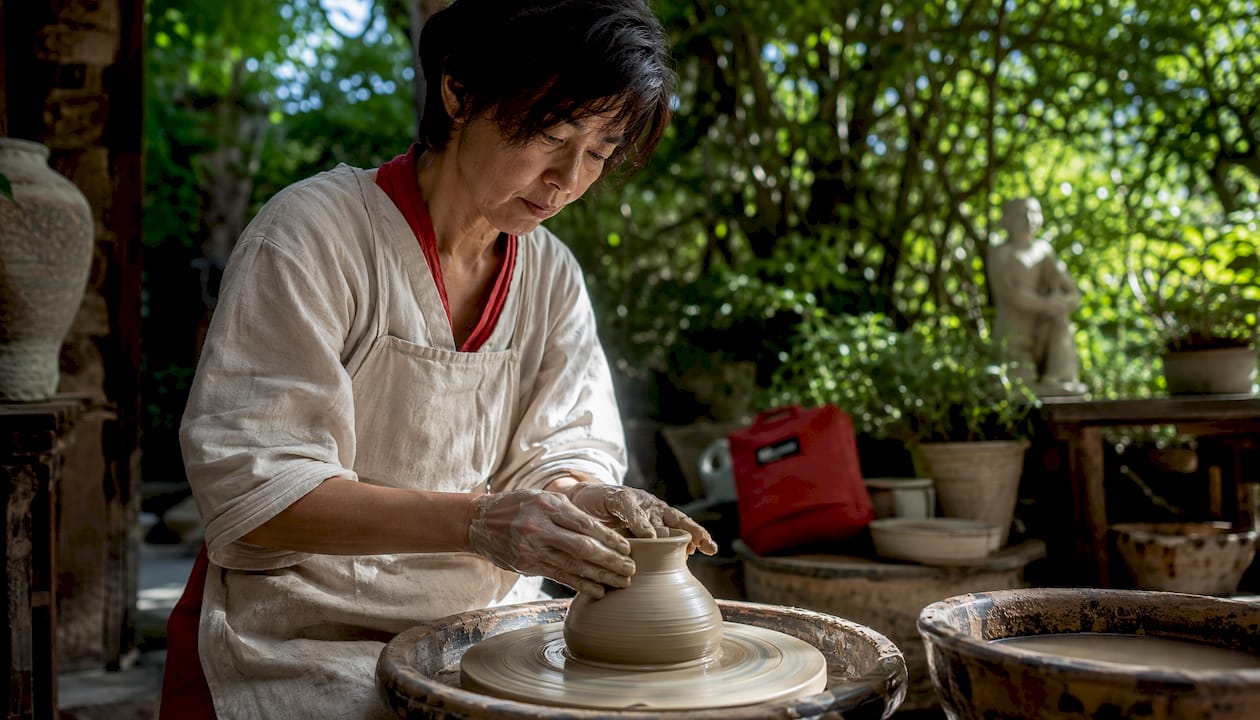
Table of Contents
How Rbantours makes booking Japan creative workshops easy
[
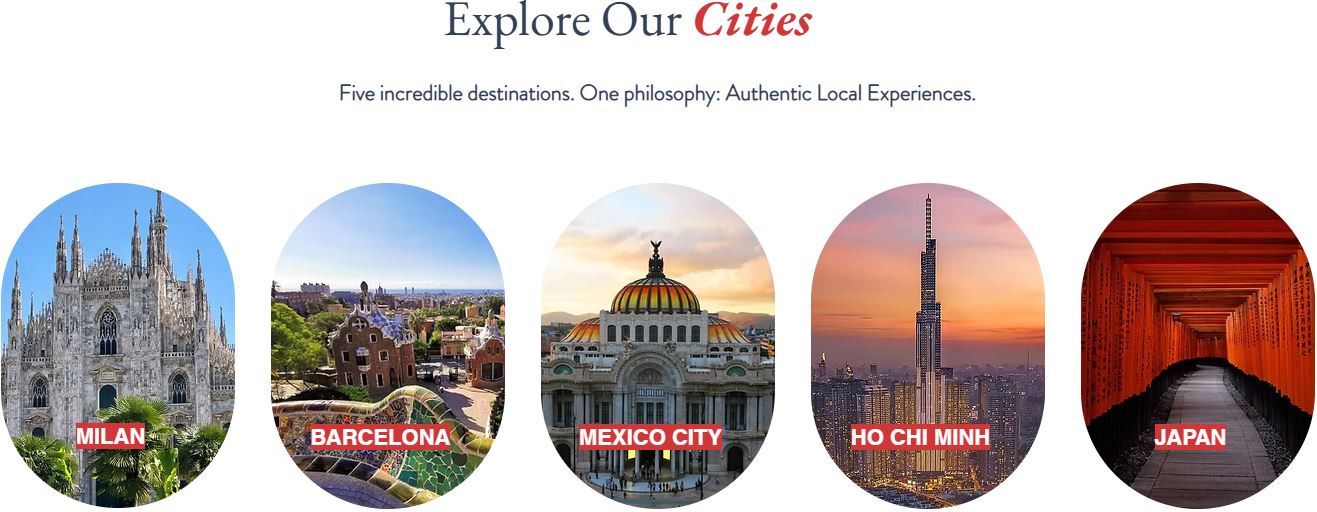
Rbantours pre-vets every studio partner for English support, transparent total-time disclosure, and written shipping options — the three trust signals most likely to prevent day-of surprises, according to Kogei Japonica. You select your craft type, state your skill level and language needs, and we confirm the rest: group size (private or small-group), proximity to your hotel or next stop, and whether your finished piece ships home or travels with you.
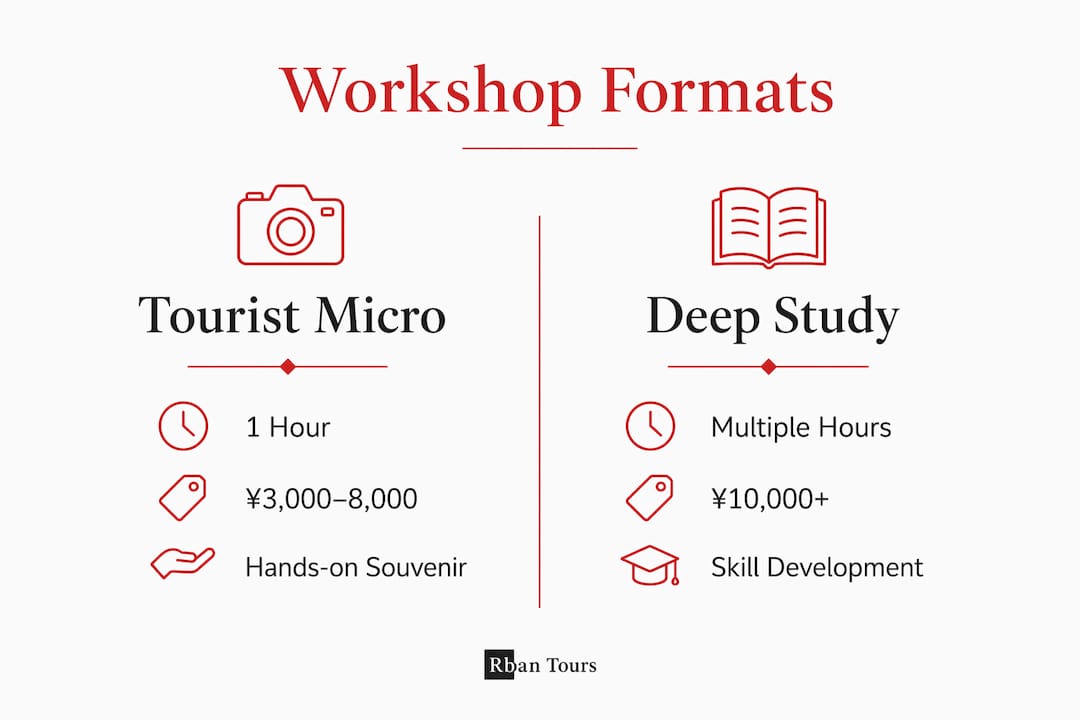
Typical price ranges (sourced from studio booking data):
Format | Approximate range | Usually includes |
Tourist micro-experience (1 hr) | ¥3,000–8,000 | Materials, basic instruction |
Half-/full-day workshop | ¥8,000–20,000 | Materials, firing or dyeing |
Multi-day masterclass | ¥30,000–200,000+ | Materials, teacher time, finishing |
For pottery and lacquerware, ceramics need bisque and glaze firings while lacquer requires curing — plan for studio finishing and shipping via EMS or TA-Q-BIN, and request written cost estimates before committing. Fragile works benefit from carrier-declared value insurance and professional art packing.
Step-by-step booking flow with Rbantours:
Choose your craft category and preferred city
Confirm skill level (beginner, intermediate, design-minded)
State language needs and group size
Review total time, price, and what’s included
Confirm shipping preference and cancellation terms
Pay to secure your spot — lead times vary; Mogami Kogei in Tokyo, for example, requires reservations at least one week in advance
On arrival: wear clothes you don’t mind staining, remove jewelry before clay or dye work, and never touch tools or materials until the instructor invites you. Some regional studios, particularly in Kanazawa and Wajima, sit outside major transit corridors — confirm the meeting point and travel time when booking. For guided tours in Japan, Rbantours pairs each workshop with nearby cultural stops so the day builds into something more than a single session.
Ready to make something with your hands in Japan? Book your creative workshop through Rbantours and arrive knowing every detail is already handled.
Key Takeaways
Japan’s top creative workshops reward travelers who book with a vetted, English-supported operator like Rbantours and confirm logistics — shipping, total time, and photography rules — before arrival.
Point | Details |
Match craft to your itinerary | Same-day crafts (sampuru, shibori, washi) suit tight schedules; ceramics and lacquer require shipping. |
Confirm total time upfront | Setup and cleanup can extend a session well beyond the advertised activity length. |
Ask about photography twice | Studio rules on photos vary and often restrict work-in-progress; confirm pre-booking and on arrival. |
Price scales with format | Micro-experiences range from ¥3,000–8,000; half-/full-day workshops from ¥8,000–20,000; masterclasses from ¥30,000 to over ¥200,000. |
Rbantours handles the friction | Pre-vetted studios, English support, and shipping guidance are built into every Rbantours Japan booking. |
Recommended
Comments