
2 Hour Milan Neighborhood Tours by Theme for Cultural Travelers

The best Milan neighborhood tours match a district to a mood: Isola for regeneration and street art, Brera for gallery culture, Navigli and Ticinese for canals and aperitivo, Porta Venezia and Via Padova for Liberty facades and intercultural stories, Ortica for murals, and the Quadrilatero della Moda for fashion history. If your time is tight, pick one theme and book a 1 to 2 hour guided walk. Small-group experiences are offered across several of these districts for travelers who want that focus without the planning.
TL;DR:
Tours focused on street art, migration, or Liberty architecture are best suited for those with specific interests in neighborhoods like Ortica, Via Padova, or Porta Venezia.
A 1 to 2 hour guided walk is ideal for a quick overview, but half-day tours help explore neighborhood stories and connections more deeply.
Travelers should confirm tour details such as meeting points, accessibility, and whether food or drinks are included to ensure the experience matches their needs.
Booking with local hosts and sharing specific interests beforehand increases the chances of a personalized, authentic neighborhood encounter.
Costs vary by theme and length, with small-group Milan tours typically starting around 35 euros, but checking current listings is recommended.
Table of Contents
Top Neighborhoods To Tour In Milan
Milan doesn’t reveal itself from a single viewpoint. Every neighborhood carries its own rhythm, and a guided walk through the right one tells you more about the city than a checklist of monuments ever could.
Isola and Porta Nuova deliver the sharpest contrast in the city: glass towers next to a village of narrow streets that survived Milan’s postwar sprawl. The Bosco Verticale and the BAM gardens sit minutes from craft workshops and layered street art, and a good guide frames that transformation instead of just pointing a camera at it.
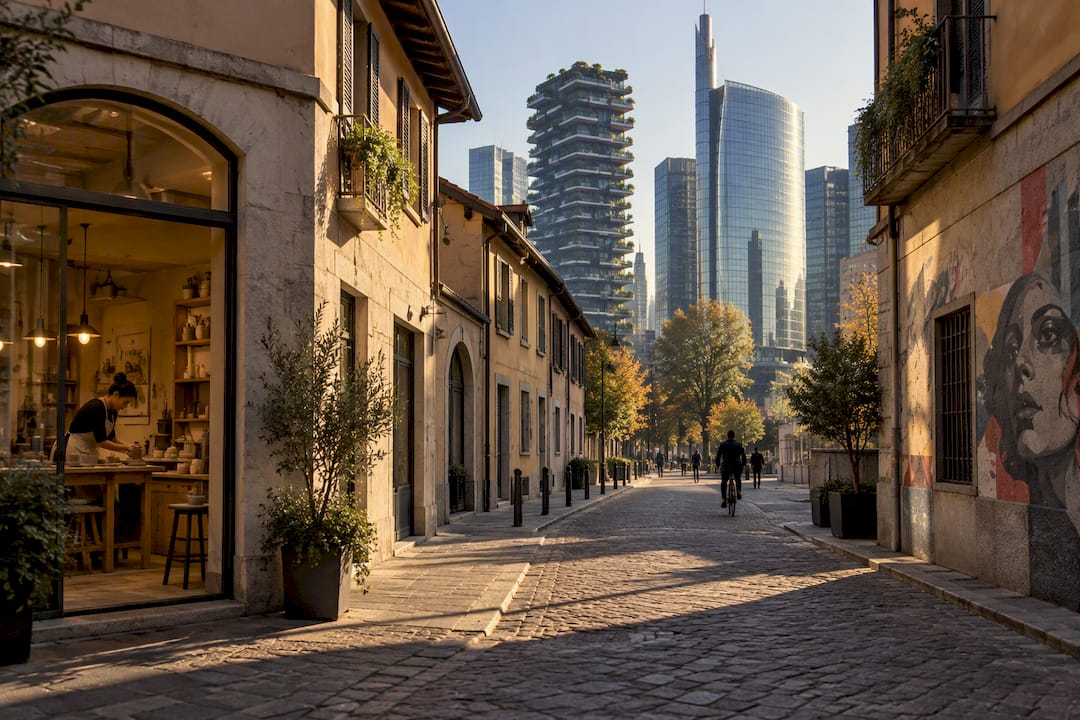
Brera is Milan’s art quarter, all cobbled lanes, courtyard cafés, and the pull of the Pinacoteca nearby. It rewards slow walking more than any other central district.
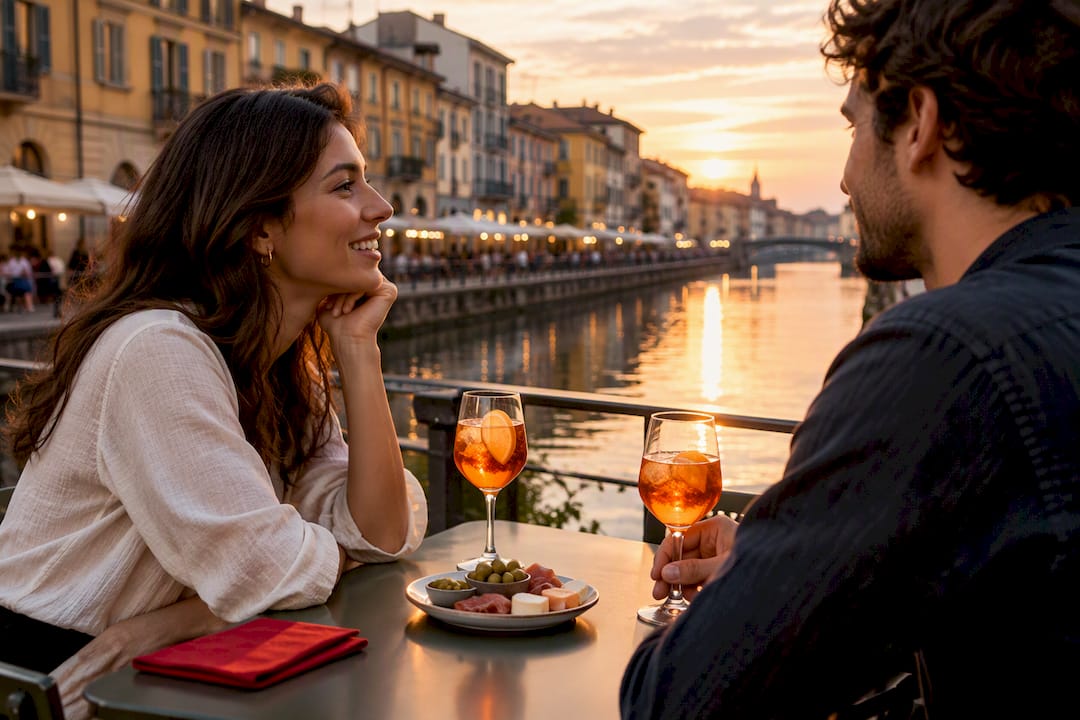
Navigli and Ticinese run along the old canals down to the Darsena, where the evening aperitivo tradition takes over the waterfront. Street art threads through Ticinese too, giving the area a double identity: daytime design shops, nighttime social energy.
Porta Venezia and Via Padova hold some of the city’s finest Liberty architecture alongside multicultural markets that tell Milan’s immigration story in a way postcards never do.
Ortica trades postcard views for a mural itinerary built into old industrial walls, a neighborhood where the street art carries genuine working-class memory rather than decoration.
Gorla, Precotto, and Adriano sit along the Martesana river, quieter and largely untouched by tourism, with local markets that still serve the neighborhood rather than visitors.
The Quadrilatero della Moda and Porta Magenta close the loop with fashion streets, elegant promenades, and museums a short walk from the shopping.
If murals are your focus, this guide to Milan’s street art by neighborhood maps out where the free walls actually are.
How To Pick The Right Neighborhood Tour For You
Choosing well comes down to four quick decisions, not a long deliberation.
Match the theme to your interest. Art and Liberty architecture point toward Brera or Porta Magenta; street art and social history point toward Isola, Ortica, or Via Padova; food and nightlife point toward Navigli and Ticinese.
Pick your duration. A 1 to 2 hour walk gives you a neighborhood snapshot. A half day lets a guide slow down and connect stops with actual stories instead of rushing between them.
Consider group size and language. A small or private group means the route can bend toward what you actually want to see, and you should confirm the tour language before booking.
Ask the right questions upfront. Meeting point, arrival time, cancellation policy, accessibility needs, and whether food or drinks are included or extra all belong in your pre-booking message.
Pro Tip: Tell your guide your specific interests, whether that’s Liberty facades, street art, or aperitivo culture, before the tour starts. Operators who know your priorities in advance can cut the dead transitions and spend more time where you actually want to be.
For more on framing what you want before you book, this piece on discovering Milan’s hidden gems like a local walks through exactly that conversation.
Sample 2-Hour Itineraries Worth Copying
A tight, themed route almost always beats a scattered highlights tour, since a guide can build a real narrative across four or five stops instead of rushing through fifteen.
Isola and Porta Nuova: start at the Bosco Verticale, cut through the village streets for street art and craft shops, finish at BAM with a coffee or early aperitivo.
Brera: wander the gallery lanes, pause at a courtyard café, end near the Pinacoteca context for a final gallery stop.
Navigli and Ticinese: walk the Darsena, follow the canal past the street art clusters, land at an aperitivo spot as the evening crowd builds.
Liberty architecture: trace facade highlights through Porta Venezia and Porta Magenta, a route built entirely around looking up.
Cimitero Monumentale: the site itself runs modular themed itineraries of 30, 60, and 120 minutes, proving that a single narrative thread, art, theatre, or biography, often beats trying to see everything.
Getting There: Transport, Timing, And Price
Getting the logistics right matters as much as picking the neighborhood.
Transport: ATM runs Milan’s metro, tram, and bus network under the STIBM zoning system, so check which zone your meeting point falls in before buying a ticket.
Arrival: confirm the exact address and nearest stop, and plan to arrive early rather than exactly on time.
Price: small-group paid neighborhood tours in Milan vary by theme and length, so check the specific listing for current pricing rather than assuming a flat rate.
Accessibility: many routes cross cobbled streets at a walking pace; flag mobility needs with the operator ahead of time.
Weather: pack layers and comfortable shoes, and ask whether the operator has a rain contingency built into the route.
Pro Tip: Most walking tour operators in Milan ask guests to arrive a few minutes before the stated start time, so build a small buffer into your schedule rather than timing your arrival to the minute.
For a broader planning checklist, see how to plan cultural experiences in Milan like a local.
Why Intercultural Walks Tell A Different Story
Migrantour Milano flips the usual tour model. Instead of a monument-led route, guides of migrant origin lead you through everyday shops, places of worship, and community associations, turning a neighborhood into something legible through lived experience rather than landmarks. Itineraries cover Via Padova, Paolo Sarpi, Porta Venezia, Gorla, and Niguarda, each one built around migration history and daily life rather than a checklist of sights. When booking any walk billed as intercultural or community-led, look for guides drawn from the neighborhood itself. That detail usually separates a genuine responsible-tourism model from a rebranded sightseeing loop.
Why Curated Neighborhood Walks Beat Checklist Touring
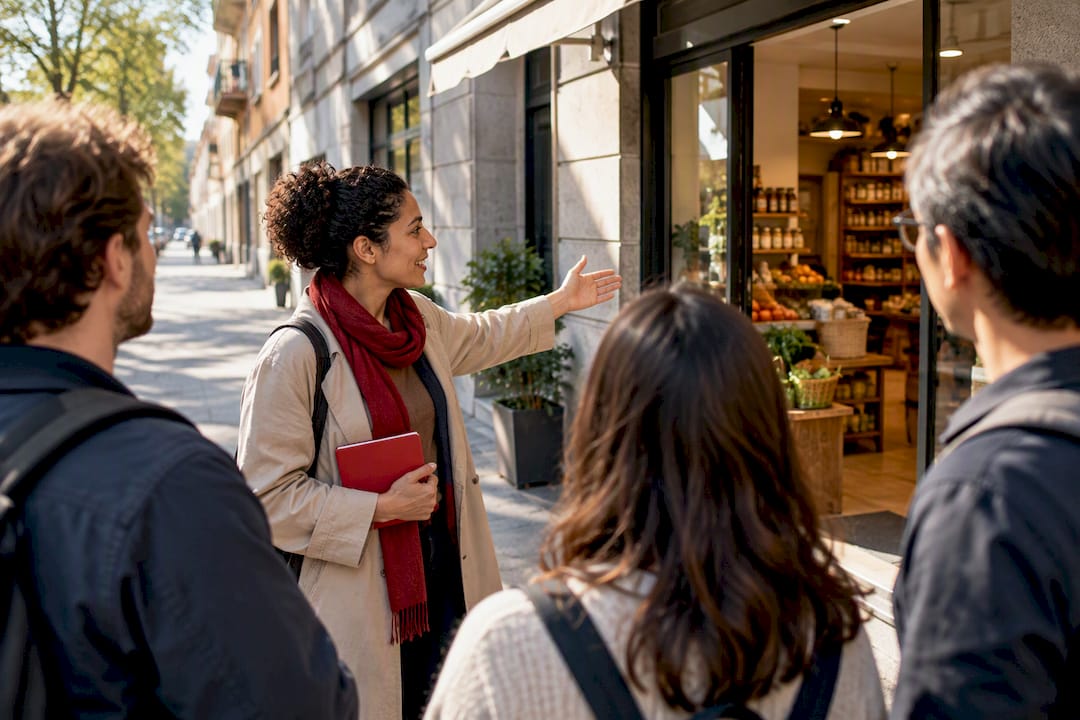
Milan gives up its best stories to people who slow down in one place, not people who sprint between ten. That is the whole case for a curated, small-group approach: a local host who reads the room, adjusts the route to your interests, and treats the neighborhood as a narrative rather than a list of stops. It produces a sharper, more memorable encounter than any self-guided highlights reel.
— Rban
Book A Milan Neighborhood Experience With Rban Tours
Rban Tours runs its Milan neighborhood experiences around exactly the themes covered above: the Milan Highlights & Hidden Gems 2-Hour Walking Tour for a fast, story-driven introduction to a district, plus street food outings, vintage shopping routes, bar-hopping evenings, and a Paint & Sip Workshop for a creative break between neighborhoods.
[
These walks are led by local hosts in private or small groups, built around actual interests rather than a fixed script, and are bookable conveniently over WhatsApp. If food is the draw, a themed walk built around fewer, better stops tends to land better than grazing widely, a point echoed in this piece on designing meaningful food experiences. Confirm your language, meeting point, and any accessibility needs when you message the host, then check current dates and pricing on the Milan tours page and lock in your neighborhood.
Sources
FAQ
What is the most beautiful neighborhood in Milan?
There’s no single answer since it depends on what you’re drawn to. Brera wins for art-lovers and cobbled charm, Isola for architectural contrast and street art, and Porta Venezia for its Liberty-style buildings and multicultural streets.
What are some famous walking routes for a Milan tour?
Popular routes include the Isola and Porta Nuova loop past the Bosco Verticale and BAM, the Navigli canal walk down to the Darsena, and the Monumentale’s themed itineraries, which run 30 to 120 minutes depending on the theme. Rban Tours’ Milan Highlights & Hidden Gems 2-Hour Walking Tour covers several of these in one guided outing.
Which is the wealthiest neighborhood in Milan?
The Quadrilatero della Moda and the streets around Porta Magenta hold that reputation, with fashion houses, elegant promenades, and museums packed into a compact, upscale area.
Which Milan neighborhood is considered the most chic?
Brera and the Quadrilatero della Moda both carry that label, one for its artistic, boutique-lined lanes, the other for its designer flagship stores and polished streets.
How much does a Milan neighborhood tour cost?
Prices vary by theme, duration, and group size, so it’s worth checking exact listings before booking. Rban Tours’ Milan Highlights & Hidden Gems 2-Hour Walking Tour starts from €35, with other themed experiences like the Paint & Sip Workshop and The Vineyard Escape listed on the same page.
Recommended
Comments