
Your Vintage Shopping Checklist: What to Check Before You Buy

Start with measurements, inspect the construction, verify the seller, and search with precision. That’s the whole game, whether you’re standing in a dusty flea market stall or scrolling Vinted at midnight. Before you hand over a dollar or click “buy,” run through this:
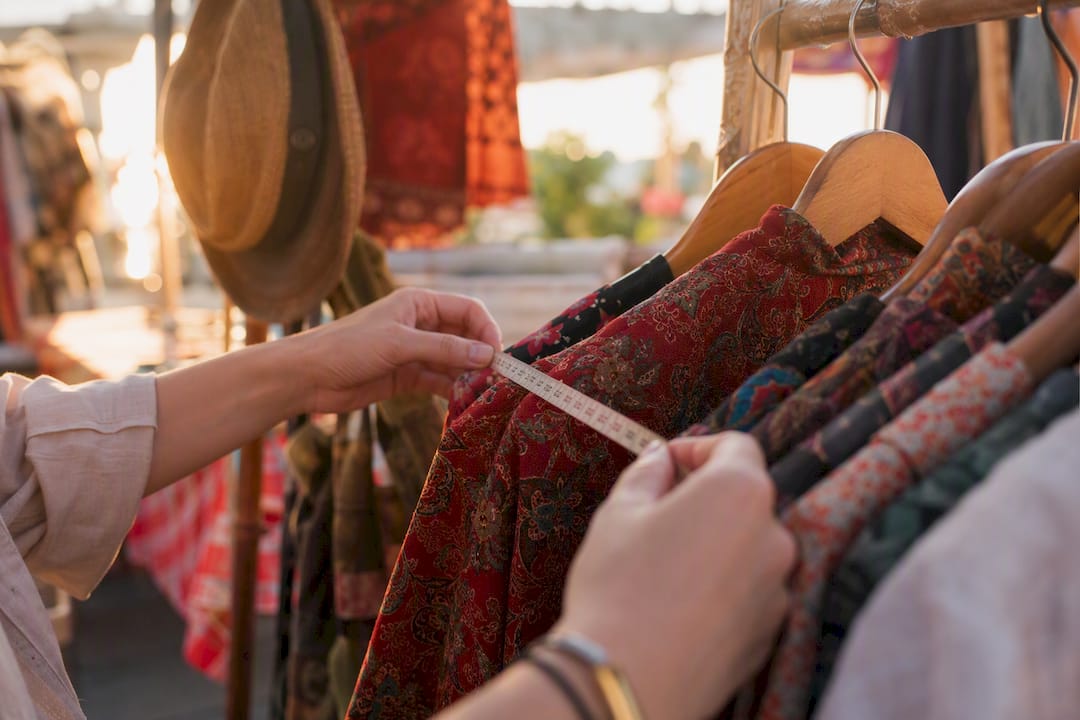
Measure it flat (pit-to-pit, waist, length, sleeve) against something already in your closet
Check the seams and stitching for looseness, puckering, or machine work that doesn’t match the era
Open the lining and look for staining, tears, or a mismatched repair
Test every zipper, button, and clasp by hand
Smell it for mildew, smoke, or must that a wash won’t fix
Ask about moth holes anywhere the seller hasn’t photographed, especially wool and cashmere
Trace the provenance through labels, tags, and any story the seller can tell you
Read the return policy before you fall in love with anything
Three moves separate casual browsers from confident buyers: search with hyper-specific terms (think “'70s silk blouse,” not “vintage top”), check completed or sold listings to confirm real market value, and go early on weekday mornings when fresh stock hits the floor. If you’d rather skip the trial and error, Rban Tours’ vintage shopping tour puts you in front of vetted shops with someone who already knows which racks matter.
Key Takeaways
Confident vintage shopping comes down to measuring before you buy, inspecting construction over labels, and verifying price through sold listings rather than asking prices.
Point | Details |
Measure before you buy | Compare pit-to-pit, waist, and length against a garment you already own and trust. |
Inspect construction, not labels | Check seams, lining, hardware, and fabric feel before trusting any size tag. |
Shop with precision | Use decade, fabric, and style keywords, and check sold listings to confirm real prices. |
Time your hunt | Weekday mornings and out-of-season visits consistently turn up fresher stock. |
Consider a guided route | Rban Tours’ vintage shopping tour connects you directly with vetted local shops and hosts who know the racks. |
Table of Contents
What Counts as Vintage, and Why the Word Matters
“Vintage” technically means a garment at least 20 years old, though most dealers use it loosely for anything from the 1920s through the early 2000s. “Antique” applies to items over 100 years old, and “retro” describes new clothing styled to look old. Getting these terms straight changes what you should expect to pay and how forgiving you should be about wear.
The distinction matters because it resets your expectations for condition and price. A true vintage piece from the 1960s will show its age: some fading, maybe a small repair, original hardware that’s slightly tarnished. That’s normal, not a flaw. What tells you a piece is genuinely from its stated era rather than a modern reproduction usually comes down to a handful of physical clues:
Union labels or care tags with a specific format (a woven label with no fiber content listed often points to pre-1960s manufacture)
Metal zippers rather than plastic, especially on anything claiming to be pre-1980s
Fabric weight and hand that feels heavier and more substantial than most fast fashion today
The single most reliable signal isn’t the label, it’s the construction. French seams, hand-finished hems, and metal zipper pulls tell you more about true age than any tag ever will.
Where to Shop: Marketplaces, Boutiques, and Everything In Between
Every platform and venue rewards a different kind of hunter. Knowing which one matches your goal saves hours of scrolling and walking.
Vestiaire Collective leans toward designer and luxury resale, with an authentication process built into every sale over a certain price point. It’s the strongest online option if you’re chasing a specific label rather than a general vintage vibe. eBay remains the largest and messiest of the bunch: enormous inventory, wildly inconsistent seller quality, but unmatched for tracking down obscure or discontinued pieces if you’re willing to sift. Depop skews younger and more curated by individual sellers, often at a markup for anything trending on social media, so it rewards buyers who know a fair price before they open the app. Vinted runs closer to a peer-to-peer flea market: lower prices, fewer seller protections, and a search function that works best when you already know exactly what you want. Etsy sits somewhere in between, with vintage shops that curate more heavily and often include better listing photos and measurements than the peer-to-peer platforms.
Offline, curated vintage boutiques do the sorting for you and charge accordingly, while flea markets and estate sales reward patience and a good eye with far lower prices. Thrift stores are the wild card: mostly modern castoffs, but the occasional vintage find slips through at a fraction of boutique pricing.
Best For | Inventory Focus | Pricing Shape | Authentication/Returns | Search by Era or Brand |
Designer investment pieces | Luxury and designer resale | Higher, fee-inclusive | Built-in authentication above set thresholds | Strong filters by brand and category |
Everyday vintage variety | Broad, unfiltered inventory | Wide range, negotiable | Seller-dependent, limited returns | Decent keyword search, inconsistent tagging |
Trend-forward, curated finds | Individually curated by seller | Often marked up | Case-by-case buyer protection | Good, but pricing varies by seller |
Budget, peer-to-peer finds | High volume, low curation | Lowest average prices | Minimal seller protections | Requires precise keywords |
Well-documented shop listings | Curated vintage shops | Mid-range | Shop-policy dependent | Strong tagging by decade in good shops |
Whatever platform you settle on, save your searches. Most of these apps let you set alerts for specific keywords, sizes, or price ranges, so new listings land in your inbox instead of requiring a daily manual hunt.
The Timing and Search Tactics Pros Actually Use
Seasoned vintage buyers treat shopping like a schedule, not an impulse. Fresh stock tends to land early in the week, and weekday mornings routinely outperform weekend visits because boutiques restock before the crowds arrive and pick the racks clean. Shopping out-of-season works the same way: winter coats in July and sundresses in January get you better prices and better selection, since you’re competing with almost nobody.
Online, the biggest lever is search specificity. Typing “vintage dress” into eBay returns tens of thousands of results you’ll never finish scrolling. Typing “1970s silk wrap dress floral” narrows that instantly. Combining decade, fabric, and style into a single query consistently surfaces better matches than generic terms ever will.
Before you commit to a price, check completed or sold listings on eBay (filter by “sold items”) to see what similar pieces actually closed at, not just what sellers are asking. A reverse image search can also confirm whether a “rare” piece is actually being sold by five other people at half the price.
Pro Tip: Follow your favorite sellers and shop owners directly. Many will message loyal customers before new inventory ever hits the floor or the app, which means you’re shopping before the crowd even knows there’s something new.
How to Inspect a Vintage Piece Before You Buy It
Treat every inspection the same way, whether you’re holding the garment or staring at five photos on a phone screen. The order matters, because each step can save you from wasting time on a piece with a fatal flaw.
Feel the fabric first. Natural fibers like wool, silk, and cotton typically age better than early synthetics, which can go brittle or start to shed.
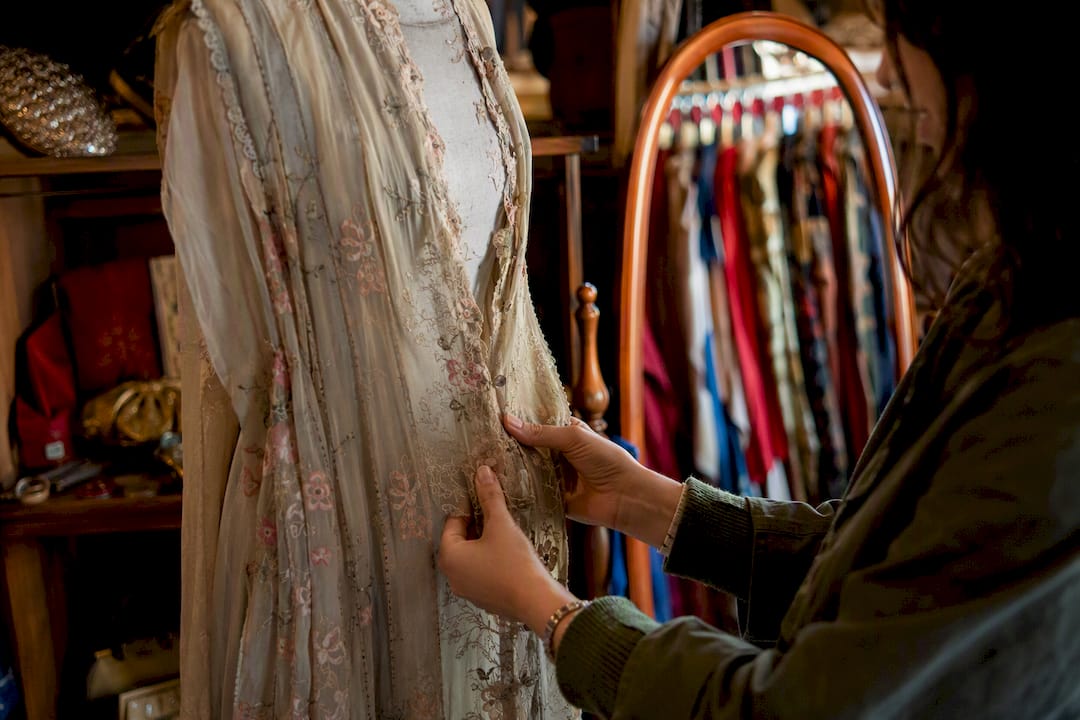
Check the seams. Run your fingers along every seam looking for looseness, fraying, or a repair that doesn’t match the original stitch length.
Open the lining. Linings hide more sins than any other part of a garment: staining, tearing, and old deodorant marks all live here.
Test every closure. Zippers, buttons, hooks, and snaps should all function smoothly; a stiff zipper can sometimes be fixed, a broken one often can’t.
Search for moth holes. Hold wool and cashmere up to the light and check seams, underarms, and folded areas where moths tend to feed.
Smell it. Mildew and heavy smoke odor rarely wash out completely, especially in wool.
Check for hidden stains. Underarms, collars, and cuffs are the usual culprits, and some stains only show up under direct light.
Look at padding and interfacing. Older structured garments often use materials that degrade with age; crumbling shoulder pads are a common casualty.
Check hem allowances. A generous hem gives you room to lengthen a piece later if you need to.
Shopping online means adapting this same process to photos and questions. A trustworthy listing includes flat measurements, close-up shots of the label, and honest notes about condition, not just flattering angles. If a seller’s listing skips these basics, ask directly: request a photo of the interior seams, a video of the zipper in action, and a close-up of any tag or union label. Sellers who dodge these requests are telling you something.
Some flaws are simply deal breakers. Dry rot, fabric that crumbles or tears under light pressure, and set-in stains that have already oxidized into the fibers won’t respond to cleaning or repair. Extensive prior repairs, especially amateur ones, are a signal to negotiate hard or walk.
Whether you’re in a shop or reading a listing, record the same core measurements every time: pit-to-pit (double it for full chest), natural waist, total length from shoulder to hem, and sleeve length from shoulder seam to cuff. Compare each number against a garment you already own and love the fit of. That comparison, not the tag sewn into the collar, is what tells you whether something will actually fit.
Sizing Is a Myth. Measurements Are the Truth.
Vintage size labels are close to meaningless. A “size 10” from the 1970s often fits like a modern size 4 or 6, because standardized sizing charts have shifted dramatically across decades and even across countries. Relying on the tag instead of the tape measure is the single biggest reason vintage returns happen.
Comparing flat measurements to a garment you already own is the only method that consistently works. Pit-to-pit, waist, and total length tell you more in thirty seconds than any size label will tell you in an entire shopping trip.
Before you buy something that’s close but not perfect, run through a short tailoring gut check:
Can the seams be let out, or were they cut with a narrow seam allowance that leaves no room?
Does the fabric type tolerate alteration well (wool and cotton generally do, delicate silk and structured tailoring often don’t)?
Is the flaw a simple hem or a full pattern change, since those costs vary enormously?
Pro Tip: When in doubt, buy the piece that’s slightly too big. Tailors can take fabric in far more easily than they can add fabric that was never there. A too-small vintage find is often a lost cause the moment you try it on.
Judging Value, Spotting Fakes, and Negotiating Like You Know What You’re Doing
Pricing a vintage piece starts with the same instinct that seasoned resellers use: check what similar items actually sold for, not what they’re listed for. A closed eBay listing tells you the real market price; an active listing just tells you someone’s hope. Factor in what it’ll cost to dry-clean or tailor the piece before you decide whether the asking price makes sense.
For anything higher-value, designer labels especially, look past the tag itself. Hardware stamps, serial numbers, and construction details that match the brand’s known techniques for that era matter more than the label alone, since labels get counterfeited far more often than stitching patterns get faked convincingly. When the stakes are high enough (a designer coat, a signed couture piece), it’s worth paying a specialist authentication service before you commit real money.
The best vintage shoppers treat every purchase as a small investment. They ask not just “do I love this” but “does the price reflect its actual condition, rarity, and what it’ll cost me to make it wearable.”
Negotiation works best when it’s specific and polite. Point to an exact flaw, not a vague “it’s a bit worn,” and ask for a fair adjustment. Buying multiple pieces from the same seller often unlocks a bundle discount, and timing your offer for the end of a market day or the tail end of a season gives sellers a real incentive to say yes.
Confirm the seller offers insured or trackable shipping before you buy anything fragile or high-value.
Photograph the item’s condition immediately upon arrival in case you need to file a claim.
Check the platform’s buyer protection policy before assuming you’re covered.
Why the Real Skill Is Patience, Not Luck
Most people treat vintage shopping like a treasure hunt, and it partly is. But the shoppers who build wardrobes that actually last aren’t the luckiest, they’re the most consistent. They return to the same shops, they learn which sellers photograph honestly, and they stop buying everything that fits just because it’s cheap. That shift, from impulse finds to intentional pieces, is what separates a closet full of “someday” items from one you actually wear.
We’ve watched this pattern play out with travelers on our own vintage shopping tour: the first visit is about volume, the third is about specificity. Local relationships, the kind built over repeated visits rather than a single lucky afternoon, are still the fastest path to the good stuff before it ever hits a rack.
A Guided Shortcut Through the City’s Best Racks
Hunting down the right vintage shop in an unfamiliar city eats up hours you’d rather spend actually shopping. You don’t know which boutiques curate honestly, which sellers negotiate fairly, or which neighborhood even has the good stuff.
[

Rban Tours built its vintage shopping tour around solving exactly that problem. Instead of wandering into random storefronts, you’re walking straight into vetted shops with a host who already has relationships with the owners and knows how to spot quality construction on the spot. It’s the difference between guessing your way through a city’s secondhand scene and shopping it like a local who’s done it a hundred times. For travelers heading to Barcelona, the same principle applies across our Barcelona experiences, where vintage shopping pairs naturally with a broader afternoon of neighborhood exploration. Pair a shopping day with a walking and cultural tour to round out the trip, and if food’s part of your travel style too, urban food tourism is worth exploring for the same city. This is a paid, guided experience, not a free walking tour, and spots fill up during peak travel months. Check availability and book your date directly through the vintage shopping tour page.
Sources
Recommended
Comments