
Art Tourism: Hands-On Workshops and Studio Experiences

Art tourism is travel driven by direct, creative engagement with local artists, studios, and maker-led workshops rather than passive sightseeing. Where a typical city break might include a museum afternoon, art tourism centers the experience on doing — throwing clay, painting alongside a local artist, or walking a neighborhood mural trail with the person who made it. Tourism scholars describe this as value co-creation: traveler, maker, and place jointly produce something that neither could create alone.
Three features define the experience:
Participatory workshops — you make something, not just observe it
Studio visits and artist interaction — access to the creative process and the person behind it
Design-led local experiences — curated itineraries that follow the rhythm of a neighborhood’s creative life
Table of Contents
What activities actually count as art tourism?
The clearest way to understand art tourism is through what you do, not where you go. These are the activity types that genuinely qualify:
Hands-on workshops: Paint & Sip evenings, printmaking sessions, pottery classes, natural-dye textile workshops, glassblowing introductions
Studio visits: Spending time in a working artist’s space, watching process, asking questions, and sometimes purchasing directly
Artist-led neighborhood walks: A muralist guides you through their district; a ceramicist shows you the local clay suppliers they use
Community art projects: Joining a public mosaic installation or a collaborative print run with a local collective
Art festivals with maker labs: Events like open-studio weekends where visitors rotate through working ateliers rather than finished galleries
Creative residency day programs: Short-format versions of residencies where travelers spend a half-day embedded with a maker
A good example of how this works in practice: a boutique curator in a U.S. city selects a local printmaker, caps the group at eight people, runs a two-hour hands-on session, and sends everyone home with a signed print they pulled themselves. That takeaway is the physical proof of the co-created experience. Rbantours builds experiences on exactly this model, pairing small groups with local makers across its destinations.
Pro Tip: When searching for art tourism experiences in U.S. cities, use terms like “artist-led workshop,” “open studio visit,” or “maker experience” rather than “art tour” — the latter often returns gallery-hopping itineraries rather than hands-on sessions.
How does art tourism differ from cultural and museum tourism?
These three categories overlap, and the confusion is understandable. The difference that matters most to you as a traveler is the level of participation and your relationship to the creator.
Category | Your role | Creator relationship | Typical outcome |
Museum tourism | Observer | None or mediated | Knowledge, aesthetic appreciation |
Cultural tourism | Participant-observer | Indirect (heritage sites, performances) | Cultural context, broader understanding |
Creative tourism | Active maker | Direct collaboration | Skill, personal creation, local insight |
Art tourism | Co-creator | Direct with living artist | Skill + relationship + unique artifact |
Academic research argues art tourism deserves its own category precisely because the experience is distinctive: you leave with something you made alongside someone whose work defines a place. Museum tourism is about receiving; art tourism is about making. Cultural tourism can include both, but it rarely prioritizes the hands-on creative relationship the way art tourism does.
Creative tourism sits closest to art tourism, but art tourism specifically centers the artist as host and collaborator, not just the activity. That distinction shapes everything from group size (smaller is better) to what you take home.
Why do travelers choose art tourism?
The personal benefits are real and varied. You learn a craft, even at a beginner level. You meet someone whose creative life is woven into the city you’re visiting. You leave with a souvenir that has a story attached to it, not a price tag from an airport gift shop.
Beyond the personal, the economic case for arts-focused travel is striking. An Ontario arts and culture tourism study found that arts and culture trips generated an average spend of approximately $617 per trip, compared to roughly $213 for non-arts trips. That gap reflects how deeply engaged travelers invest in the places they visit.
Benefit | What it means for you |
Skill acquisition | Leave with a technique you can practice at home |
Meaningful souvenirs | Objects you made or commissioned, not mass-produced |
Local connection | Direct relationship with a working creator |
Higher perceived value | Arts trips consistently outspend general tourism |
Industry analysis also shows that destinations built around authentic maker-led activities attract higher-spending, experience-driven visitors, which in turn strengthens the local creative economy. When you pay a fair workshop fee, you’re contributing to that cycle directly. Art tourism also pairs naturally with other experience-driven travel; many travelers combine it with gastronomy tourism for a fuller picture of a city’s creative culture.
How do you find and book art tourism experiences in the U.S.?
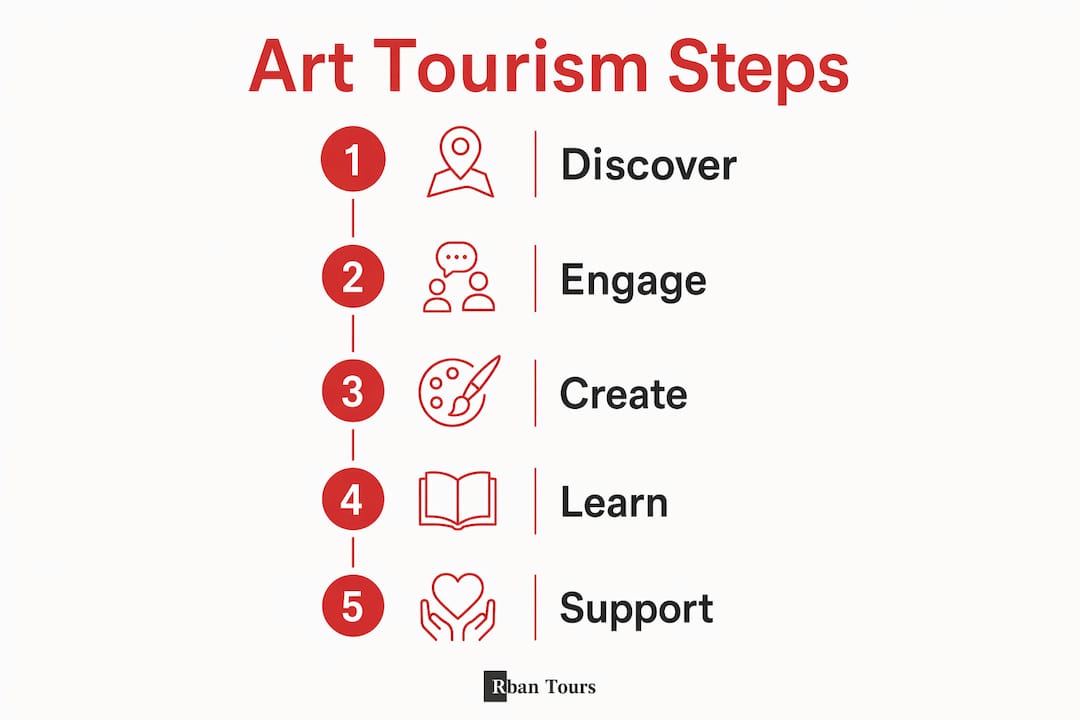
Finding the right experience takes a little more intention than booking a standard tour. Here’s a practical sequence:
Search with the right terms. Use “open studio,” “artist workshop,” “maker experience,” or “creative class” plus your destination city. Platforms like Eventbrite, local arts council websites, and community art center calendars are reliable starting points.
Check boutique operators. Curated experience companies like Rbantours vet their local partners and design the itinerary around the maker’s actual process, not a tourist-friendly approximation of it.
Verify host credentials. Look for a working artist or maker with a real studio practice, not a facilitator running a generic class. A portfolio, social media presence, or gallery affiliation all signal authenticity.
Assess group size. Anything over 15 people compromises the hands-on time and your access to the artist. Eight or fewer is the sweet spot for genuine interaction.
Confirm what’s included. Materials, tools, and a tangible takeaway should be part of the package. Ask whether the artist is present throughout or only at the start.
Check the cancellation policy. Small-group workshops often have stricter cancellation windows because the artist’s time is the product. Know the terms before you book.
Book 2–4 weeks ahead for popular U.S. cities. Prices for quality small-group workshops typically run $65–$150 per person for a two-to-three-hour session, with full-day experiences ranging higher.
Pro Tip: Before booking, ask one question: “Will the artist be present and working alongside us the entire time?” The answer tells you everything about whether the experience is genuinely participatory or just a branded class.
What should you expect on a workshop or studio visit?
Most well-designed art tourism sessions follow a recognizable arc. The host welcomes the group, gives a brief demo or context-setting introduction (usually 15–20 minutes), then moves into hands-on time that takes up the bulk of the session. A short critique or group share at the end lets everyone reflect on what they made.
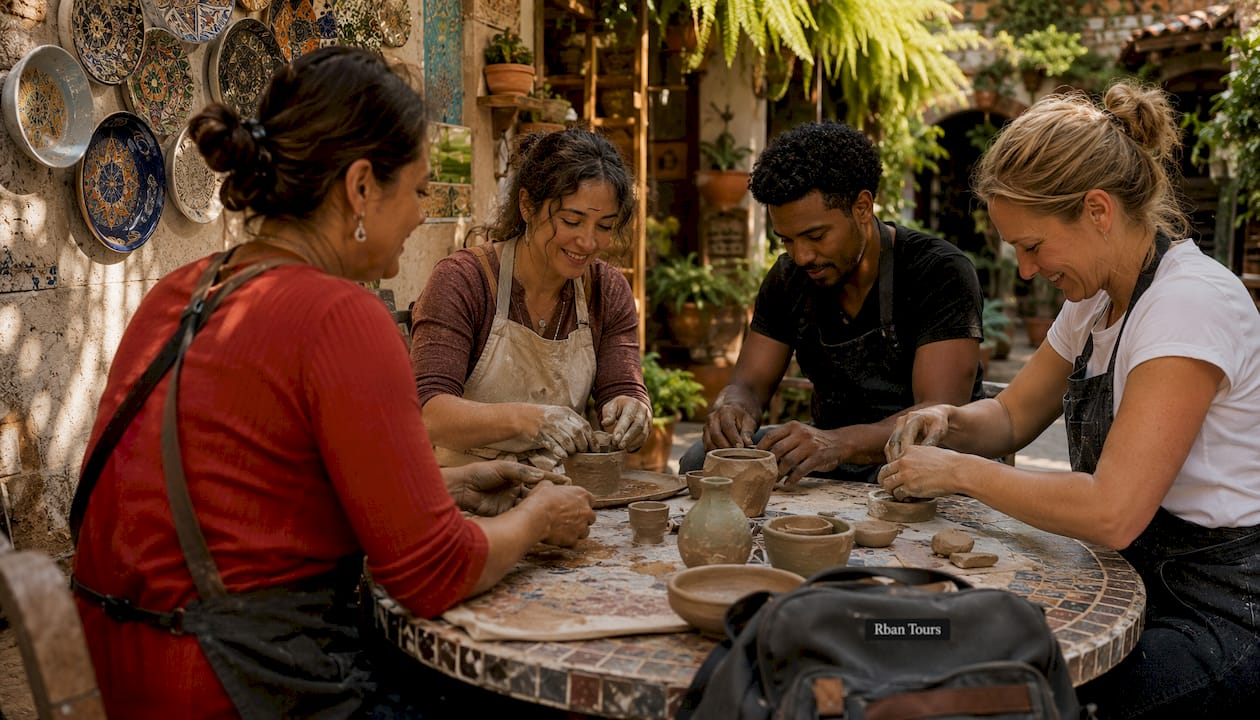
Half-day experiences typically run 2–3 hours; full-day formats extend to 5–6 hours and often include a meal or neighborhood walk woven in. Organizers generally provide all tools and materials. What you should bring: comfortable clothes you don’t mind getting paint or clay on, a phone for photographing your process, and genuine curiosity.
You don’t need to be an artist. Research confirms that the most memorable art tourism experiences happen when hosts bridge expert knowledge for curious visitors, not when they assume prior skill. The best hosts read the room and adjust the depth of instruction accordingly.
Pro Tip: Photograph your process, not just the finished piece. The in-progress shots tell a richer story and give you something to share that most people won’t have seen before.
How do you support local creatives responsibly?
Ethical participation matters. A few practical rules:
Pay the full fee without negotiating. The workshop price reflects the artist’s time, materials, and expertise. Haggling undercuts a creative livelihood.
Buy originals or commission work directly. If you love what you see in a studio, purchasing from the artist rather than a secondary retailer puts money where it belongs.
Respect studio privacy. Ask before photographing work in progress, especially pieces not yet released publicly.
Credit creators when you share. Tag the artist when you post your workshop photos. That visibility has real value for independent makers.
Watch for red flags. Mass-produced items sold as “locally made,” vague answers about artist compensation, and groups of 30+ are all signs that the experience prioritizes volume over authenticity.
Sustainable art tourism design requires transparent artist compensation and local sourcing of materials. When operators cut corners on either, the community feels it.
Pro Tip: For longer-term impact, sign up for a follow-on class after you return home, commission a piece for delivery, or donate to a local arts organization in the city you visited. The relationship doesn’t have to end when the trip does.
How boutique curators design memorable art-tourism experiences
The best art tourism experiences don’t happen by accident. They’re built around a deliberate process that prioritizes the maker’s world over a tourist-friendly facsimile of it.
A well-designed experience follows a curator’s checklist:
The Rbantours curation model: Select a local maker with an active studio practice. Cap the group at a small number of participants to ensure genuine interaction. Design a tactile takeaway the traveler made themselves. Embed a neighborhood walk or shared meal to extend the context. Pre-brief participants so they arrive curious, not anxious. This is value co-creation in practice: the traveler, the maker, and the place each contribute something the others couldn’t produce alone.
Research on curated art routes shows that stringing together multiple maker stops — ateliers, indie galleries, creative hubs — produces deeper local insight than any single-site visit. Rbantours applies this principle across its destinations, designing itineraries that move through a neighborhood’s creative pulse rather than stopping at one landmark. The result is a richer understanding of how a city actually makes things, not just how it displays them. You can see how this approach shapes art-based city tours across Rbantours’s destinations.
Key Takeaways
Art tourism is the most direct way to understand a city’s creative soul: you make something alongside a local artist, and that shared act produces meaning no museum ticket can replicate.
Point | Details |
Core definition | Art tourism centers hands-on creative engagement with local makers, not passive observation. |
Economic value | Arts and culture trips average roughly $617 per trip vs. $213 for non-arts travel (Ontario data). |
Booking criteria | Prioritize small groups, a working artist as host, and a tangible takeaway included in the price. |
Ethical participation | Pay full fees, credit creators publicly, and buy originals directly from the artist’s studio. |
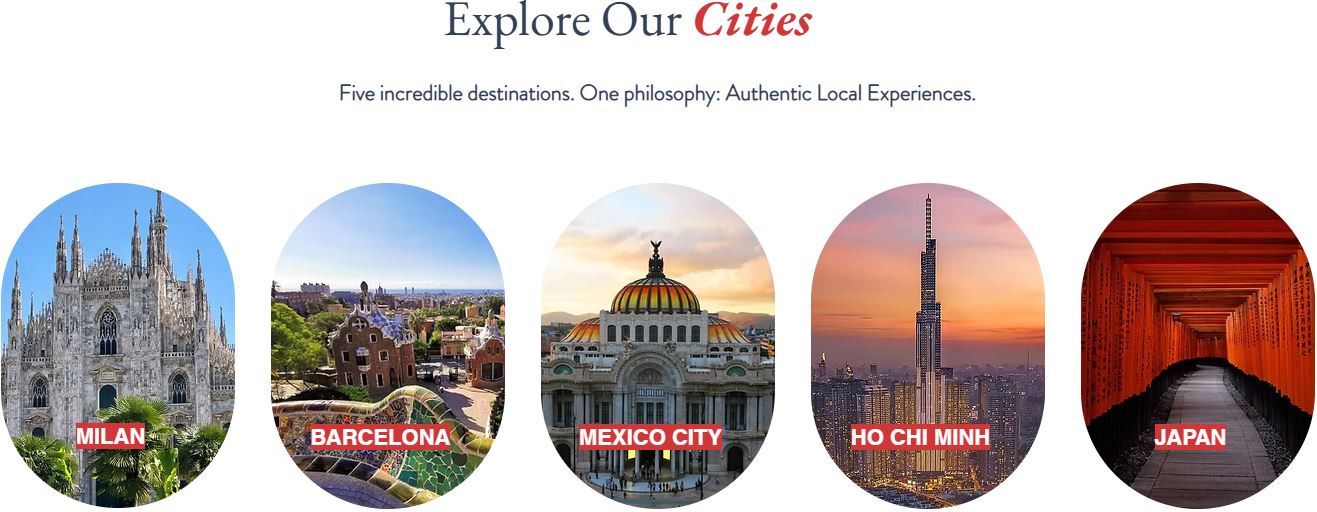
Rbantours approach | Rbantours curates small-group, design-led workshops and cultural walks across Milan, Barcelona, Mexico City, and beyond. |
Why curated creative experiences are worth choosing deliberately
Most travelers underestimate how much the design of an experience shapes what they take away from it. A workshop run by a working artist in their actual studio is a fundamentally different thing from a themed class in a rented event space, even when the activity looks identical on paper. The difference lives in the specificity: the tools the artist actually uses, the stories that come out during hands-on time, the neighborhood context that surrounds the building.
We believe the most honest travel is the kind that teaches you something about how a place actually works. Not its highlights, not its Instagram moments, but its creative rhythm. That’s why we think every traveler should choose at least one experience that requires them to make something. The act of making slows you down, puts you in conversation with a local expert, and produces a memory that’s genuinely yours.
The conventional wisdom says art tourism is for art lovers. We’d push back on that. Curiosity is the only qualification that matters.
Ready to book a curated workshop or creative walk?
Rbantours designs small-group, design-led experiences that put you inside a city’s creative life, not just in front of it. Whether you want to paint alongside a local artist at a Paint & Sip workshop or explore a neighborhood’s creative pulse on a walking cultural tour, every experience is built around a working local maker and capped for genuine interaction.
[
Private group bookings are available for birthdays, bachelorette parties, and corporate events. Check availability for your destination and dates directly on the Rbantours platform, and reach out to request a custom itinerary if you want something tailored to your group’s creative interests.
Recommended
Comments