
Modern Travel: What It Means to Explore with Intention
- Rban Tours

- 23 hours ago
- 5 min read
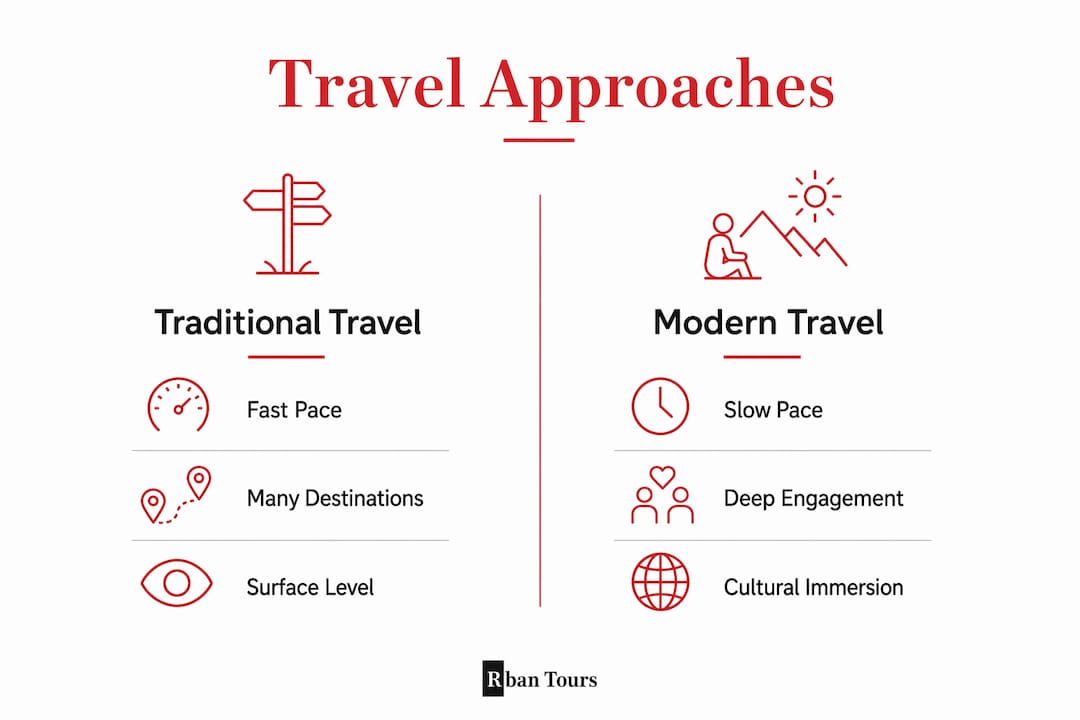
Modern travel is immersive, transparent, culturally rich, and deliberately slow. It is not about racing through a checklist of landmarks. It is about feeling the pulse of a place, connecting with the people who actually live there, and returning home genuinely changed. Travel industry advisor Felix Shpilman describes modern travel as inherently complex and expensive, and argues that the best providers succeed by hiding that complexity so travelers can focus entirely on the experience itself. The USTOA’s June 2026 report confirms that transparency in pricing, logistics, and communication is now a baseline expectation, not a bonus. Researcher Magni Haakon frames the shift even more directly: slow travel prioritizes deep cultural experience over rapid tourism, treating each destination as a place to inhabit rather than photograph.
At its core, modern travel rests on a few defining principles:
Immersion over observation: engaging with local culture, food, and creative life rather than watching from a distance
Transparency: honest pricing, clear logistics, and proactive communication from every provider in the chain
Flexibility: agile itineraries that adapt in real time, with penalty-free options when plans shift
Sustainability: conscious choices around transport, lodging, and spending that support local communities
Technology as a tool: digital platforms that reduce friction without replacing human expertise or spontaneity
Slow rhythm: longer stays in fewer places, chosen for depth rather than volume
Table of Contents
What defines modern travel today?
Modern travel has moved decisively away from the packaged tour and the rigid itinerary. Travelers now experiment with travel as personal growth, treating each trip as an extension of their identity and values rather than a passive escape. The shift is structural. McKinsey’s 2024 survey found that a majority of travelers report increased interest in travel compared to before the pandemic, with millennials and Gen Zers dedicating a significant portion of their incomes to travel.
Stat: Many travelers prioritize sustainability when booking, with some willing to pay more for greener flights and eco-friendly lodging.
Several characteristics now define how modern travelers plan and experience their trips:
Transparent pricing: hidden fees and vague cancellation terms erode trust instantly; the USTOA report identifies clarity as the single most important confidence builder
Flexible booking: penalty-free changes and mobile itinerary management are expected, not exceptional
Social media as inspiration: travelers seek destinations that resonate authentically, not just photographically
Health and safety integration: transparent health protocols and adaptive risk management are woven into planning from the start
Personalization: one-size-fits-all offerings have grown obsolete; travelers want experiences shaped around their own stories
Technology support: from real-time alerts to digital reservations, digital tools reduce friction while human expertise handles complexity
Why slow travel has become the soul of modern exploration
Slow travel is not a pace. It is a philosophy. Rather than collecting destinations, slow travelers choose depth over breadth, staying long enough in one place to feel its rhythm, learn a few words of the local language, and discover the café that locals actually use. Magni Haakon’s research describes this as prioritizing cultural exchange and personal transformation over the checklist approach that defined mass tourism for decades.
The appetite for this approach is real and growing, with many travelers planning their vacations specifically to slow down and switch off. That is not a niche preference. It reflects a broad shift in what people want from the time they spend away.
Slow travel in practice looks like this:
Choosing a single neighborhood over a multi-city sprint
Eating where residents eat, not where tour buses stop
Joining a creative workshop or a local market rather than a guided monument tour
Walking or cycling instead of hopping between taxis and attractions
Allowing unscheduled hours where the city can surprise you
The deeper value is personal. Travelers who stay longer and engage more intentionally tend to return with stories rather than just photographs. That shift from passive sightseeing to immersive cultural experience is the clearest marker of what modern travel has become.
How Rbantours brings modern travel values to life
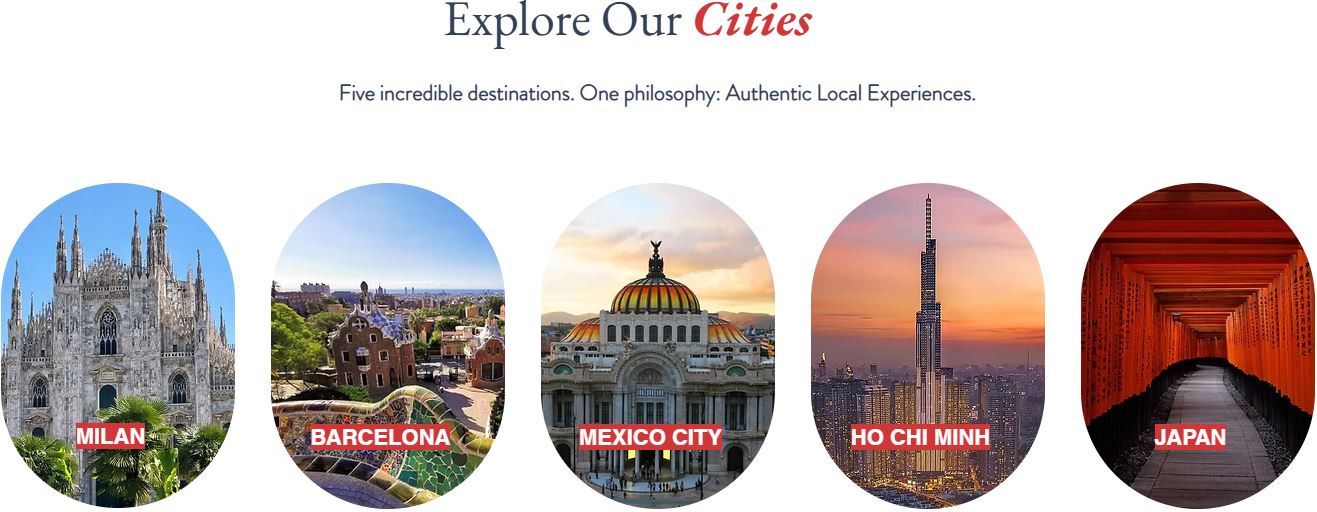
Rbantours was built around exactly this philosophy. Operating across Barcelona, Mexico City, Italy, Vietnam, and Japan, the brand designs experiences that let travelers live each city like an insider rather than observe it like a tourist. Every experience, from vintage shopping tours and street food explorations to Paint & Sip workshops, is crafted to combine culture, creativity, and genuine human connection.
What separates Rbantours from generic tour operators is the attention to storytelling and atmosphere. Local creatives, neighborhood venues, and community partners shape each experience, so the result feels like a conversation with the city rather than a presentation about it. The guest experience is designed to feel personal from the first moment.
Rbantours’ approach reflects the principles the USTOA and Felix Shpilman identify as defining modern travel:
Transparency: clear pricing, honest descriptions, and no hidden complexity
Flexibility: experiences designed to fit individual rhythms, not rigid group schedules
Cultural authenticity: local collaborators who bring genuine insider knowledge
Creative depth: workshops and explorations that produce memories, not just photographs
Community: a social dimension that connects travelers with each other and with the city’s creative pulse
Practical ways to travel like a modern explorer in the U.S.
Embracing modern travel principles does not require an international flight. U.S. cities are rich with neighborhoods, food cultures, and creative communities that reward the slow, curious traveler. The key is intention.
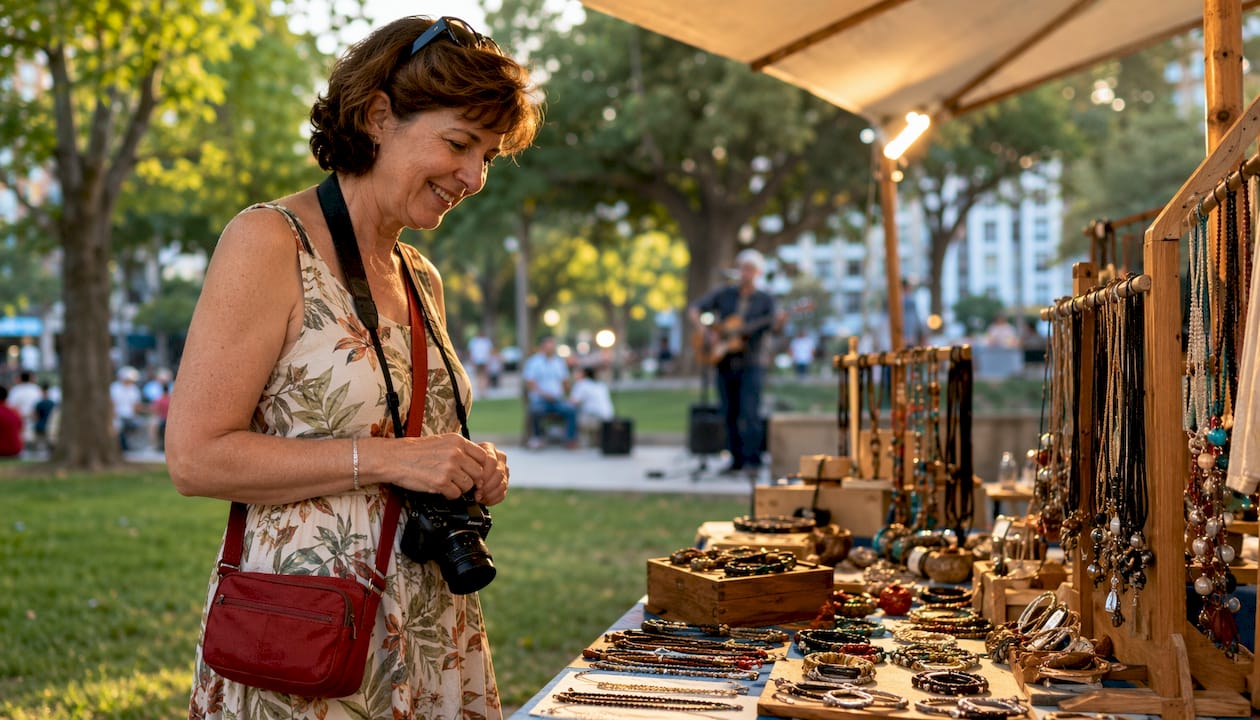
Pro Tip: Before you book anything, ask yourself what you want to feel at the end of the trip, not just what you want to see. That single question will reshape your entire itinerary.
A few approaches that consistently work:
Extend your stay in one place. Two nights in a neighborhood tells you almost nothing. Five nights lets you find your coffee spot, your evening walk, and your favorite local conversation.
Book flexible. Seek out providers that offer penalty-free changes. Uncertainty is part of travel; your booking structure should accommodate it.
Prioritize doing over seeing. A cooking class, a neighborhood walking tour, or a creative workshop will outlast any monument visit in your memory. Rbantours’ personalized city tours are built on exactly this idea.
Use technology to reduce friction, not to over-plan. Mobile itinerary tools and real-time alerts are genuinely useful. But leave open hours. The best moments in any city are rarely scheduled.
Travel sustainably. Choose locally owned accommodation, eat at independent restaurants, and walk or use public transit when possible. Your spending shapes the neighborhood you are visiting.
Follow curiosity, not the algorithm. Social media can surface beautiful places, but the most authentic experiences usually live one street behind the most-photographed corner.
For travelers ready to put these principles into practice, Rbantours’ Barcelona experiences offer a direct entry point into design-led, culturally grounded urban exploration.
[
Key Takeaways
Modern travel is defined by cultural immersion, transparency, and intentional slowness, with flexibility and sustainability as the practical foundations that make it work.
Point | Details |
Immersion over sightseeing | Modern travelers seek authentic cultural engagement, not landmark checklists. |
Transparency is expected | USTOA’s 2026 report identifies honest pricing and clear logistics as baseline traveler demands. |
Slow travel drives depth | Many U.S. travelers plan trips specifically to slow down and switch off. |
Flexibility is non-optional | Penalty-free booking and real-time itinerary changes are now standard expectations, not perks. |
Sustainability shapes choices | Over one-third of travelers prioritize eco-conscious options when planning their trips. |
Recommended
Comments