
Why Book Guided Experiences for Richer Travel

Guided experiences are professionally curated travel activities led by expert local guides who handle logistics, cultural interpretation, and safety so you can focus entirely on the destination. The reasons for guided experiences go far beyond convenience. They deliver something independent travel rarely matches: structured access to a city’s rhythm, its stories, and its people. Whether you’re exploring the ancient temples of Japan, the street art corridors of Barcelona, or the food markets of Mexico City, a skilled guide transforms what you see into what you feel. This article breaks down exactly why book guided experiences is one of the smartest decisions a modern traveler can make.
Why book guided experiences to save time and reduce stress
Planning a trip from scratch is genuinely exhausting. Routes, timing, restaurant reservations, transport connections, entrance tickets — every decision compounds the mental load before you’ve even packed a bag. AAA confirms that guided tours pre-arrange all major trip components, eliminating the last-minute scrambling that derails so many independent itineraries. That means more time absorbing the city and less time staring at Google Maps in a foreign train station.
The logistical advantages are especially pronounced on short or complex trips. A five-day visit to Japan, for example, involves bullet train bookings, temple entry windows, and neighborhood-specific dining that takes weeks to research properly. A guided itinerary collapses that research into a single booking. You arrive knowing exactly where you’re going and why.
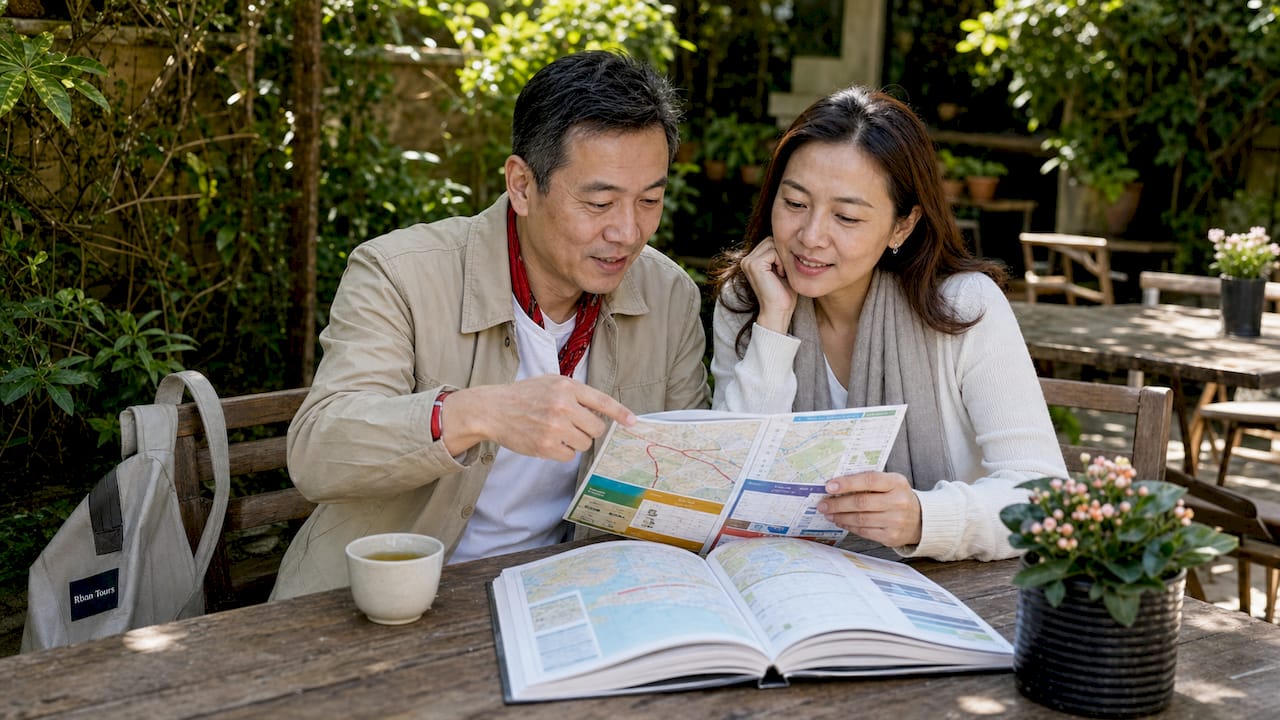
Decision fatigue is a real travel killer. AAA notes that guided tours replace guesswork with expert insight, which is why travelers consistently report feeling more relaxed and present on guided trips than on self-planned ones. The guide carries the cognitive load so you don’t have to.
Here’s what a well-designed guided experience typically handles for you:
Transportation between sites and neighborhoods
Entry tickets and timed reservations at high-demand venues
Curated dining recommendations or included meals
Local context and storytelling at each stop
Contingency planning when weather or closures disrupt the schedule
Pro Tip: When comparing guided tour options, look for operators who publish detailed daily itineraries. Vague descriptions often signal poor planning, which defeats the entire purpose of booking a guided experience in the first place.
What safety advantages do guided experiences offer?
Safety is the most underrated benefit of guided travel, and most travelers don’t think about it until something goes wrong. A phenomenological study of 19 active tour guides found that risk management is not a secondary concern for professional guides. It is integrated into every phase of their practice, from pre-tour hazard identification to real-time responsive decision-making on site. That level of preparation is nearly impossible to replicate as an independent traveler in an unfamiliar city.
Experienced guides carry layered safety strategies. They know which neighborhoods shift in character after dark, which trails become dangerous in wet weather, and how to communicate calmly with local emergency services. That knowledge protects you in ways a travel app simply cannot.
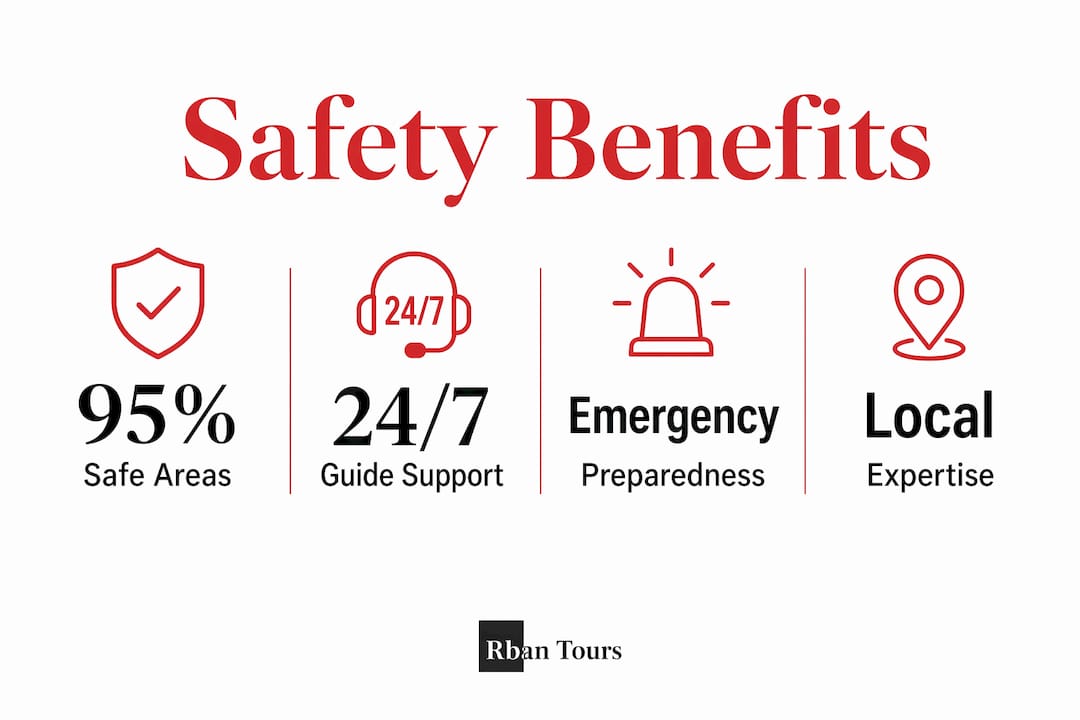
The same qualitative study on guide risk management reveals something even more interesting: the best guides weave safety communication directly into their storytelling rather than treating it as a separate briefing. You absorb the safety context naturally as part of the experience, which means you’re better prepared without feeling like you’re sitting through a safety lecture.
Key safety advantages guided experiences provide include:
Pre-tour hazard assessments specific to the destination and activity type
On-site monitoring of group dynamics and environmental conditions
Crisis management protocols and direct access to local emergency contacts
Clear communication of behavioral expectations in culturally sensitive spaces
Reduced exposure to tourist-targeted scams and petty crime
Pro Tip: Before booking any guided experience, ask the operator one direct question: “What is your guide’s safety training background?” A credible operator will answer without hesitation. Vague responses are a red flag.
How do guided tours enhance cultural immersion?
Seeing a place and understanding it are two completely different things. A 2025 best-worst scaling study found that local cultural and historical knowledge is the single most important performance criterion for tour guides, accounting for 31% of the total evaluation weight. Language skills and customer service ranked significantly lower. This tells you something important: what makes a guide genuinely valuable is not charm or fluency. It’s depth of knowledge.
That depth transforms the experience. Walking through Kyoto’s Gion district with a knowledgeable local guide means you’re not just looking at wooden machiya townhouses. You’re hearing about the geisha apprenticeship system, the seasonal festivals tied to specific shrines, and the tension between preservation and modernization that shapes the neighborhood today. Independent travelers rarely access that layer of context.
Structured guided experiences also facilitate deeper engagement in a way that unstructured wandering cannot. When a guide sets the sequence of a visit, each stop builds on the last. The narrative accumulates. By the end of the experience, you don’t just have photographs. You have a framework for understanding the culture you’ve just moved through.
Here’s how expert guides build genuine cultural understanding:
They provide historical context before you arrive at a site, so you’re primed to notice details that would otherwise be invisible.
They translate cultural codes in real time, explaining why locals behave a certain way, what a gesture means, or why a particular food carries symbolic weight.
They connect you to living culture, not just monuments. The best guides take you to the places locals actually use: the morning market, the neighborhood bar, the artisan workshop.
They answer questions honestly, including the uncomfortable ones about politics, inequality, or contested history that guidebooks tend to avoid.
“The soul of a destination lives in its stories, not its skyline. A great guide gives you both.”
Traveling with local hosts consistently produces richer cultural encounters than solo exploration, precisely because locals carry the living memory of a place that no travel app can replicate.
What social and emotional benefits come with guided experiences?
Travel is inherently social, yet independent travel can be surprisingly isolating, especially for solo travelers in unfamiliar cities. Guided experiences change that dynamic immediately. A MDPI study on cross-cultural adaptation found that structured study tours accelerate social belonging and emotional stabilization through peer interaction and multisensory engagement with local culture. The group format creates a shared context that makes connection between strangers feel natural rather than forced.
The social benefits extend beyond the group itself. Guided experiences create structured moments of interaction with local communities: a cooking class in a family kitchen in Mexico City, a Paint & Sip workshop in a Barcelona studio, a street food walk through a Vietnamese market. These are not passive observations. They are participatory encounters that leave a genuine emotional impression.
Solo travelers gain the most from this dynamic. Joining a small group tour means you arrive alone and almost immediately have a shared experience with a handful of other curious, open-minded people. That social scaffolding makes unfamiliar cities feel less daunting and more alive.
The emotional benefits are equally real:
Reduced travel anxiety through the presence of a knowledgeable guide who handles the unexpected
Increased confidence in navigating cultural norms and social situations
Stronger emotional memory formation through multisensory, story-driven experiences
A sense of belonging that accelerates cultural adaptation, particularly on longer trips
Guided tours vs. independent travel: cost and real value
The upfront cost of a guided tour looks higher than a DIY trip on paper. That perception shifts quickly when you account for what’s actually included. AAA’s analysis shows that guided tour packages often cost less than equivalent self-planned trips once you factor in transportation, accommodations, activity fees, and the hidden cost of poor decisions made without local knowledge.
The value equation also includes access. Guided experiences regularly include entry to venues, neighborhoods, and events that are genuinely difficult to access independently. A guided sake tasting in a private Tokyo brewery, a behind-the-scenes textile workshop in Oaxaca, or an after-hours gallery visit in Barcelona are not experiences you can replicate by booking separately online.
Factor | Guided experience | Independent travel |
Upfront cost | Higher, but consolidated | Lower initial outlay |
Hidden costs | Minimal, most inclusions covered | Frequent: wrong transport, missed bookings |
Cultural depth | High, guided by local expert | Variable, depends on self-research |
Exclusive access | Common, often built into itinerary | Rare, requires significant advance planning |
Time investment | Low, pre-arranged | High, ongoing research required |
Safety net | Built in, guide manages issues | Self-managed, no on-site support |
The smartest approach for most travelers is a hybrid model. Use guided experiences for the moments that matter most: the cultural highlights, the neighborhoods with complex histories, the activities where local knowledge genuinely changes what you get out of it. Reserve independent time for wandering, shopping, and the spontaneous discoveries that no itinerary can plan for.
Key takeaways
Guided experiences deliver measurable advantages in logistics, safety, cultural depth, and social connection that independent travel consistently struggles to match.
Point | Details |
Logistics handled upfront | Guides pre-arrange transport, timing, and access so you arrive informed and present. |
Safety is built in | Professional guides integrate risk management into every phase of the experience. |
Cultural knowledge drives value | Guides with deep local knowledge, not just language skills, produce the richest experiences. |
Social connection accelerates | Group guided formats reduce isolation and build genuine cross-cultural bonds. |
Value exceeds sticker price | Inclusive packages often outperform DIY costs when hidden expenses are factored in. |
Why guided experiences changed how we think about travel
We’ve spent years designing experiences across Japan, Barcelona, Mexico City, Vietnam, and Italy. And the single most consistent thing we’ve observed is this: travelers who book guided experiences don’t just see more. They understand more. That understanding is what they carry home.
The conventional wisdom says guided tours are for people who don’t want to think for themselves. That’s wrong. The travelers who get the most from guided experiences are precisely the ones who think carefully about how they want to spend their time. They recognize that a great guide is not a crutch. A great guide is a collaborator who opens doors you didn’t know existed.
What we’ve learned from building authentic city experiences is that the magic happens in the details: the guide who knows the baker by name, the alley that doesn’t appear on any map, the story behind the mural that changes how you see the whole neighborhood. Those moments don’t happen by accident. They happen because someone who loves the city deeply decided to share it with you.
Our honest advice: don’t treat guided and independent travel as opposites. Treat them as tools. Use each one where it works best. And when you want to go deep, go guided.
— Rban
Discover Rbantours’ curated city experiences
At Rbantours, we design guided experiences that put you inside the heartbeat of a city, not just in front of it. Our expert local guides in Japan, Mexico City, and Barcelona lead you through the neighborhoods, flavors, and creative spaces that define each destination’s pulse.
[
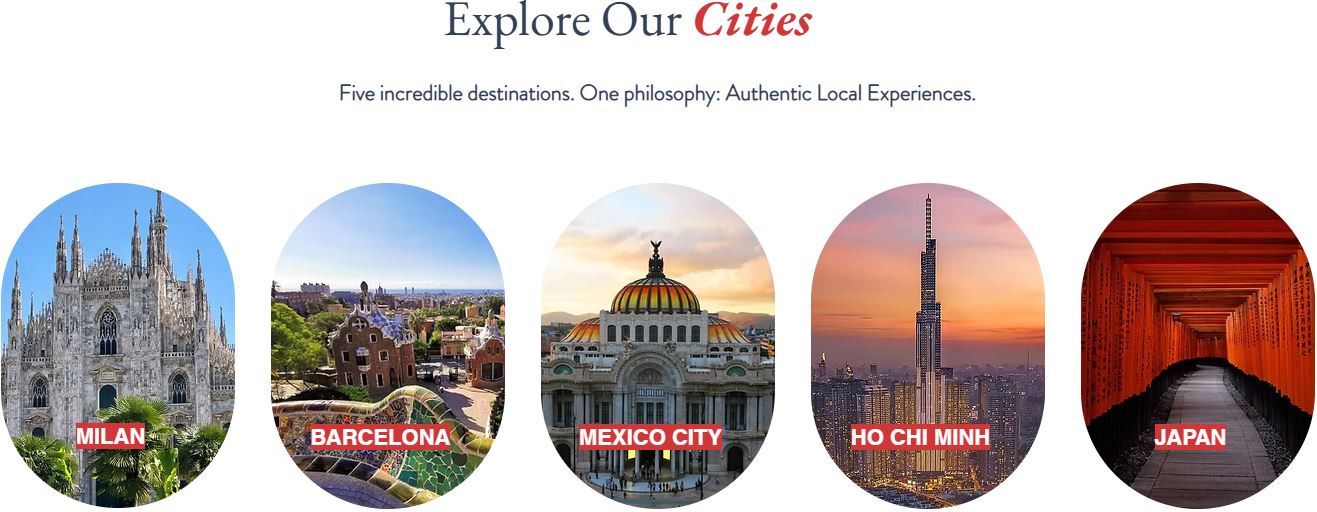
Every experience we create, from street food walks to Paint & Sip workshops, is built around one idea: that the best travel memories come from genuine human connection and local knowledge. If you’re ready to live a city like an insider, we’re ready to take you there. Browse our current experiences and find the one that fits your next trip.
FAQ
Why book guided experiences instead of traveling independently?
Guided experiences provide pre-arranged logistics, expert cultural context, and built-in safety management that independent travel rarely replicates. They are especially valuable in destinations with complex histories, language barriers, or high-demand venues that require advance access.
What are the main benefits of guided tours for first-time travelers?
The primary benefits of guided tours for first-time visitors include reduced planning stress, on-site safety support, and structured cultural interpretation that turns sightseeing into genuine understanding. AAA identifies expert insight and logistical support as the core advantages over DIY travel.
How do guided tours improve cultural immersion?
Guides with deep local and historical knowledge, which accounts for 31% of guide quality evaluations, provide narrative context that transforms monuments into living stories. That depth of interpretation is the defining advantage of a guided experience over independent exploration.
Are guided experiences worth the cost compared to solo travel?
Yes, when all inclusions are factored in. Guided packages consolidate transportation, access fees, and local expertise into a single cost that frequently matches or beats the total spend of an equivalent self-planned trip, with significantly less time and effort required.
Can guided experiences benefit solo travelers specifically?
Guided group formats are particularly effective for solo travelers because they provide immediate social context and peer connection. Research on cross-cultural adaptation shows that structured group experiences accelerate emotional stabilization and social belonging, making unfamiliar destinations feel genuinely welcoming.
Recommended
Comments