
Why Choose Design-Led Tours for Authentic Travel

Design-led tours are immersive travel experiences built around human-centered principles, thematic focus, and intentional pacing to create genuine, lasting connections with a destination. Unlike traditional sightseeing, this approach treats every sensory detail, every transition, and every story as part of a coherent whole. The result is travel that feels less like a checklist and more like a conversation with a city. If you have ever left a trip feeling like you saw everything but understood nothing, understanding why choose design-led tours may change how you travel forever.
Why choose design-led tours over traditional sightseeing
The core difference between design-led tours and conventional tours is intentionality. Traditional tours move groups from landmark to landmark, prioritizing coverage over connection. Design-led tourism, by contrast, is organized around a central theme, whether that is architecture, local craft, street food culture, or creative history, and every stop serves that theme.
Design-led tours typically last about one week and feature small group sizes of 10–20 people to enhance intimacy and flexibility. That size is not incidental. It means your guide can pause when someone asks a question, take an unplanned detour down a side street, or slow down when a moment deserves more time.
Here is what sets design-focused travel experiences apart from the standard model:
Thematic depth over breadth. Instead of visiting 12 sites in a day, a design-led tour might spend three hours in one neighborhood, reading its architecture, its sounds, and its social history as a single story.
Narrative structure. Each experience is sequenced like a story, with an opening mood, a building middle, and a satisfying close. You feel the arc.
Sensory coherence. Guides use local sounds, textures, scents, and flavors to anchor memories. A market visit is not just visual. It is the smell of dried chiles and the weight of handwoven fabric.
Smaller, more engaged groups. Small groups under 20 are a deliberate choice to improve travel satisfaction and immersion, not just a logistical preference.
Pro Tip: Before booking any tour, ask the operator what the central theme is. If they cannot answer in one sentence, the experience probably lacks the design clarity that makes these tours worth choosing.
What are the advantages of choosing design-led tours?
The advantages of design-led tours go well beyond a more pleasant afternoon. They reshape what you take home from a trip.
Deeper cultural connection. Design-led tourism focuses on human-centered problems, aiming to make guests feel seen, valued, and connected rather than passive passengers. You are not consuming a destination. You are engaging with it.
More meaningful memories. When experiences are built around narrative and sensory cues, the brain encodes them more richly. You remember the story, not just the photo.
Flexible, slower pacing. Design-led tours resist the urge to rush. That slower rhythm lets you absorb what you are seeing and ask the questions that actually matter to you.
Support for local communities. Design-led tours support sustainable travel by choosing local partners, family-owned accommodations, and experiences that preserve culture and environment. Your spending creates a positive legacy rather than feeding extractive tourism.
Expert guides who are storytellers. The best guides on these tours are cultural interpreters. They do not recite facts. They help you see the city through a specific, informed lens.
“The approach moves beyond transactional exchanges to meaningful cultural connection.” — The Tourism Institute
The benefits of design-led tours compound over the course of a trip. By day three, you are not just visiting a city. You are starting to understand its rhythm, its contradictions, and its soul.
How do design-led tours create truly immersive experiences?
The meaning of design-led tours becomes clearest when you look at the principles behind how they are built. Good design turns logistics into atmosphere and information into emotion. That transformation requires mastering four elements: pacing, sensory cues, transitions, and narrative consistency.
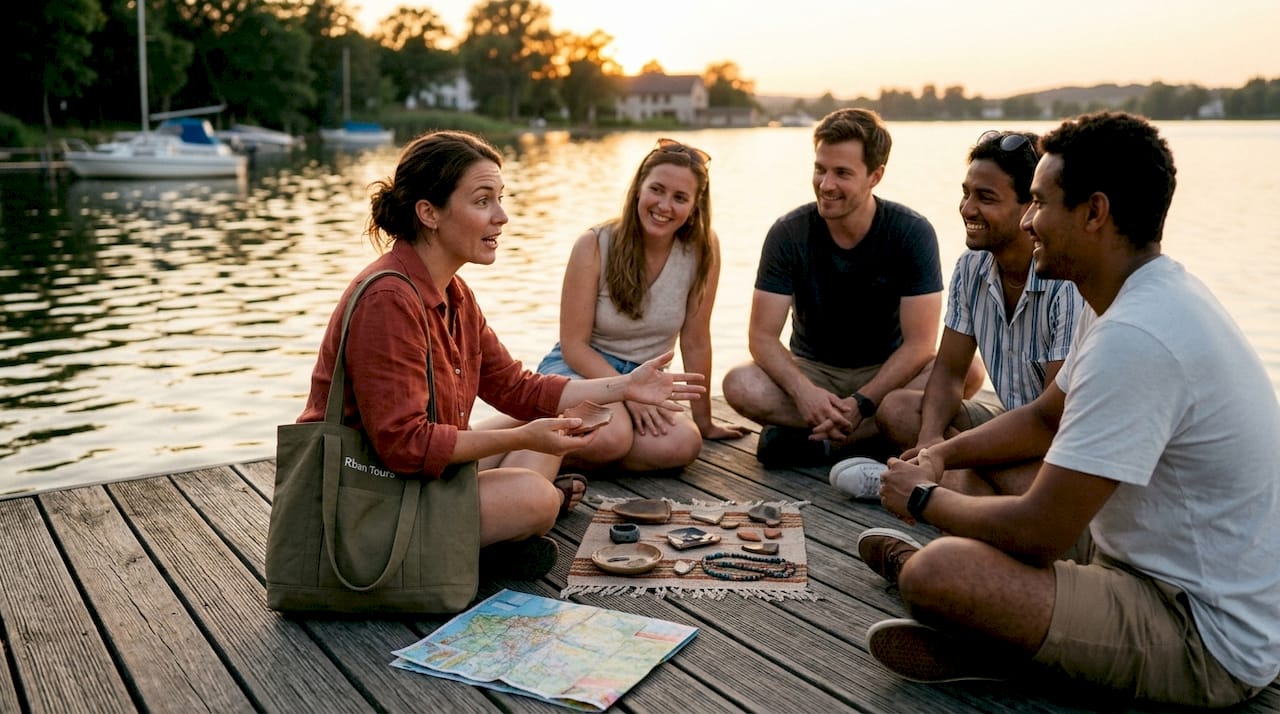
A well-designed tour behaves like a small, complete universe with its own mood, rules, rhythm, and emotional promise. That strong emotional intention shapes what guests feel, what they notice, and what they remember long after they return home.
Here is how those design principles show up in practice:
Design Element | What It Does | Example in Practice |
Thematic consistency | Keeps every stop connected to the central story | An architecture tour in Barcelona links Gothic Quarter details to Modernisme without losing the thread |
Sensory cues | Builds memory anchors through smell, texture, and sound | A street food tour in Mexico City uses flavor sequences to map neighborhood identity |
Orchestrated pacing | Balances intense moments with quieter reflection | A craft workshop in Kyoto follows a focused technique session with a silent tea break |
Narrative transitions | Moves between locations as chapters, not transfers | A guide in Hanoi frames each district as a different era of the city’s life |
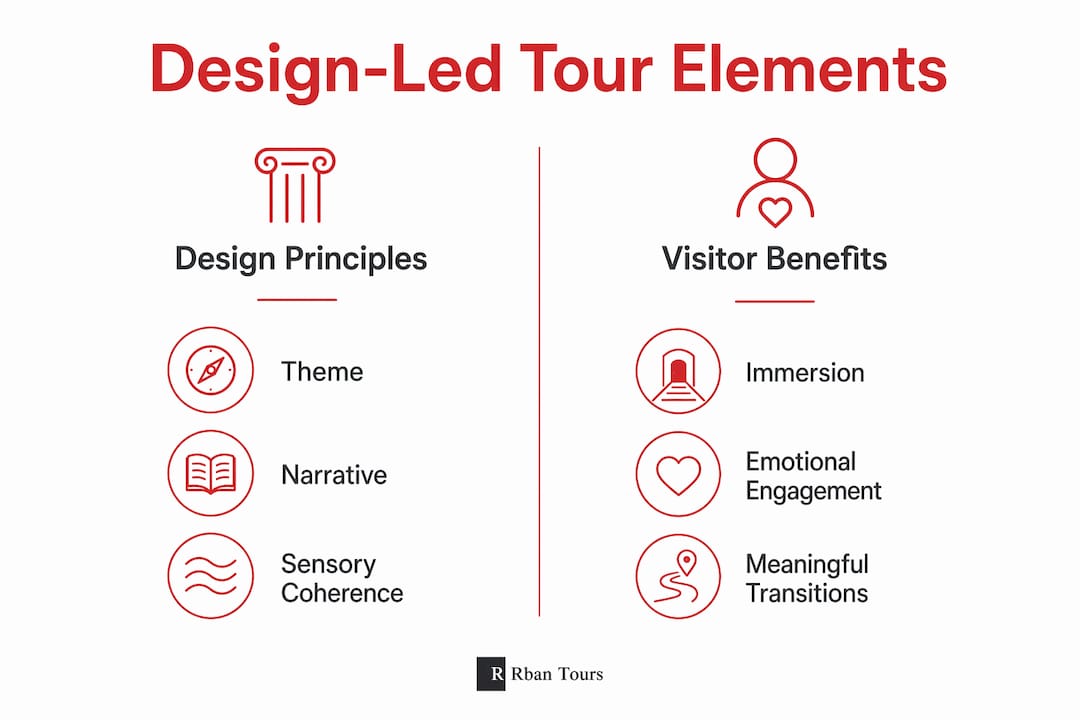
Premium tours in 2026 emphasize narrative clarity, host quality, pacing, transparency, and sensory coherence for better guest experience and value. These criteria are not luxury extras. They are the baseline for what a well-designed tour should deliver.
Pro Tip: Pay attention to how a tour handles transitions between locations. A design-led experience will frame each move as part of the story. A conventional tour will just put you back on the bus.
The most immersive design-led tours balance high and low intensity segments to maintain emotional engagement without fatigue. That balance is what separates a tour that leaves you energized from one that leaves you drained.
How to select and get the most from a design-led tour
Choosing the right design-oriented travel experience takes a little research, but the payoff is significant. Here is what to look for and how to prepare.
Look for a clear, stated theme. The best operators can tell you exactly what lens their tour uses. Rbantours, for example, builds experiences around themes like vintage culture, street food, and creative workshops, each with a distinct identity and purpose.
Prioritize small group sizes. Small group travel unlocks deeper social and cultural connection. Groups over 20 start to lose the flexibility that makes design-led tours work.
Research the guide’s background. The best guides are locals with deep subject knowledge, not generalists with a script. Ask operators how their guides are selected and trained.
Choose companies committed to community. Look for operators who work with local artisans, family-run venues, and neighborhood businesses. That commitment shows up in the quality and authenticity of the experience.
Prepare mentally for depth. Travelers on design-led tours are encouraged to engage in slower, more focused explorations that often require mental preparation and yield high cultural insight. Some participants report needing a vacation after these trips. That is not a warning. It is a sign the experience was real.
Engage actively. Ask questions. Talk to your fellow travelers. The social dimension of a small group tour is part of the design. Use it.
Personalized, theme-focused tours consistently increase traveler engagement and satisfaction. The more you bring to the experience, the more you leave with.
Key takeaways
Design-led tours deliver richer, more memorable travel because they treat every sensory detail, story, and transition as part of a single, coherent experience.
Point | Details |
Theme over coverage | Design-led tours focus on one clear lens, creating depth rather than a list of visited sites. |
Small groups matter | Groups of 10–20 people allow flexibility, intimacy, and genuine cultural engagement. |
Design creates memory | Sensory cues, pacing, and narrative structure make experiences stick long after the trip ends. |
Local impact is built in | Choosing design-led operators supports local communities and sustainable tourism practices. |
Preparation amplifies the experience | Mental readiness and active participation unlock the full depth these tours are designed to deliver. |
What we have learned from building these experiences
We have spent years designing tours across Barcelona, Mexico City, Japan, Vietnam, and Italy, and the most honest thing we can tell you is this: the travelers who get the most from design-led experiences are the ones who let go of the idea that more is better.
Most people arrive with a list. They want to see the cathedral, the market, the viewpoint. We understand that impulse. But the travelers who leave genuinely changed are the ones who spent two hours in a single workshop, or followed a street food guide through three blocks they would never have found alone, or sat with a local artisan long enough to understand why the craft matters.
The conventional travel industry has trained us to measure a trip by how much ground we covered. Design-led tourism asks a different question: how deeply did you connect? That shift is uncomfortable at first. Slower pacing can feel like you are missing out. It is not. You are trading breadth for understanding, and that trade is almost always worth it.
We also want to be honest about intensity. Design-led tours are structured as narrative arcs where pacing and emotional flow are intentionally varied, and that often leads to intense days requiring real mental energy. Some guests are surprised by how much they feel. That is the point. Travel that does not challenge you a little is just tourism.
The tours we are most proud of are the ones where guests come back and say they finally understood a city, not just visited it.
— Rban
Discover immersive design-led tours with Rbantours
Rbantours creates curated, design-led experiences across Barcelona, Japan, Mexico City, Vietnam, and Italy, each built around a specific theme and guided by local experts who know their city from the inside out.
[
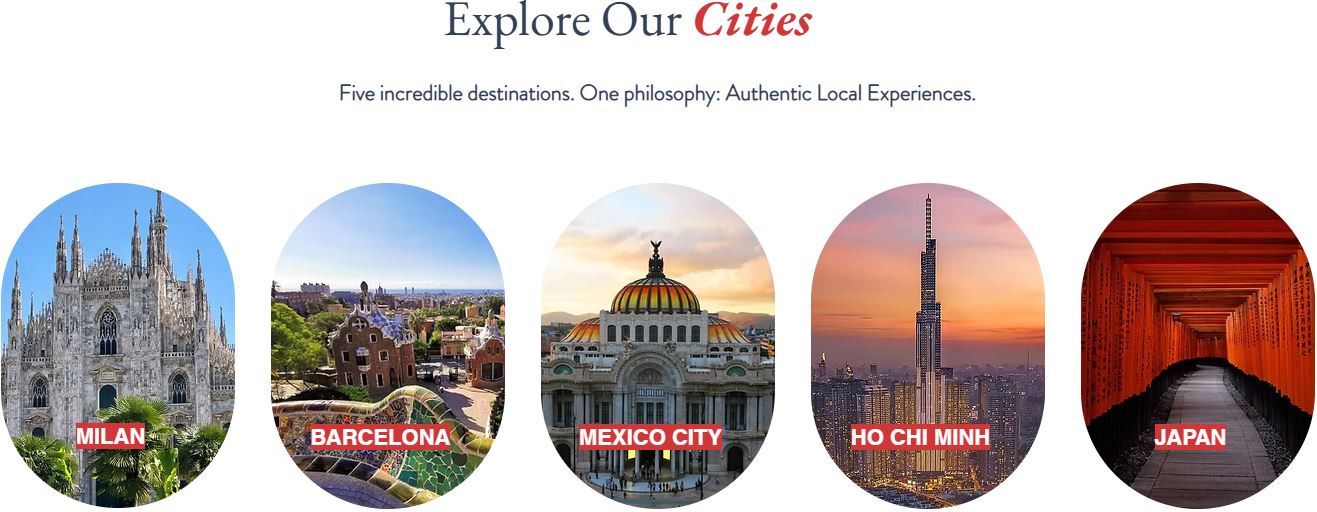
Whether you are drawn to Barcelona’s creative energy, the layered cultural depth of Japan, or the vibrant pulse of Mexico City, every Rbantours experience is designed to move you beyond the surface. Small groups, expert storytellers, and a genuine commitment to local community mean you leave with more than photographs. You leave with a real understanding of the places you visited. Explore the full range of Rbantours experiences and find the one that speaks to you.
FAQ
What is the meaning of design-led tours?
Design-led tours are travel experiences intentionally structured around a central theme, narrative arc, and sensory coherence to create authentic, human-centered connections with a destination. The approach prioritizes depth of engagement over the number of sites visited.
How are design-led tours different from regular guided tours?
Regular guided tours typically prioritize broad coverage of landmarks, while design-led tours focus on a specific theme, use storytelling and sensory cues, and maintain small group sizes of 10–20 people to allow flexibility and deeper cultural engagement.
Are design-led tours worth the investment?
Yes. Guests prioritize tours with emotional coherence and storytelling that go beyond simple transport and access, and design-led tours consistently deliver that. The richer memories and cultural understanding you gain represent lasting value.
What group size is best for a design-led tour?
Groups of 10–20 people are the standard for design-led tours. That size preserves the intimacy and flexibility that allow guides to adapt pacing, answer questions, and create genuine moments of connection.
How do i prepare for a design-led tour?
Arrive with curiosity rather than a checklist. Be ready for a slower, more focused pace that requires mental presence. Engaging actively with your guide and fellow travelers deepens the experience significantly.
Recommended
Comments