
Why Flexible Tours Matter for Modern Travelers
- Rban Tours

- Jun 28
- 8 min read

Flexible tours are expertly planned travel experiences built with intentional adaptability, and they are the most effective way to reduce stress while deepening your connection to a destination. Understanding why flexible tours matter starts with one clear fact: 91% of modern travelers want itineraries that include customization with 20–30% free time built in. That number reflects a fundamental shift in how people want to travel. Rigid schedules no longer serve the modern traveler who craves both security and the freedom to follow a city’s rhythm. The industry term for this approach is adaptable itinerary design, and it combines pre-booked anchors with open windows that invite spontaneous discovery. Rbantours has built its entire philosophy around this balance, creating curated experiences that feel structured enough to trust and open enough to breathe.
Why do flexible tours reduce stress and improve traveler well-being?
Flexible tours reduce traveler stress by giving you a sense of control without locking you into an exhausting sequence of obligations. Travelers using flexible plans report 40% less stress than those following rigid schedules. That gap is significant. It means the difference between arriving at a museum feeling rushed and arriving because you genuinely want to be there.
The numbers behind rigid itineraries are striking. 73% of travelers identify overpacked schedules as a primary cause of trip stress. An overpacked day turns a vacation into a checklist. You stop absorbing the texture of a place and start racing through it.
Psychological research on perceived agency explains why flexibility works so well. When you feel in control of your pace, your brain interprets the experience as positive rather than pressured. Flexible tours give you that agency without requiring you to plan everything from scratch. The structure is already there. You simply decide how to move within it.
Overpacked schedules cause burnout, especially on trips longer than five days
Pacing freedom lets you linger at a street market or rest after a long walk
Perceived control directly improves mood and memory formation during travel
Adjusting plans in real time prevents the frustration that derails entire days
Pro Tip: If you feel tired mid-trip, that is a signal your itinerary is too dense. Build at least one completely open afternoon into every three days of travel.
What features define a well-designed flexible tour itinerary?
A well-designed flexible itinerary is not a loose collection of vague ideas. Genuine flexibility requires superior planning and preparation for contingencies like weather, local events, or personal energy levels. The paradox is real: the more adaptable a tour feels, the more thought went into building it.
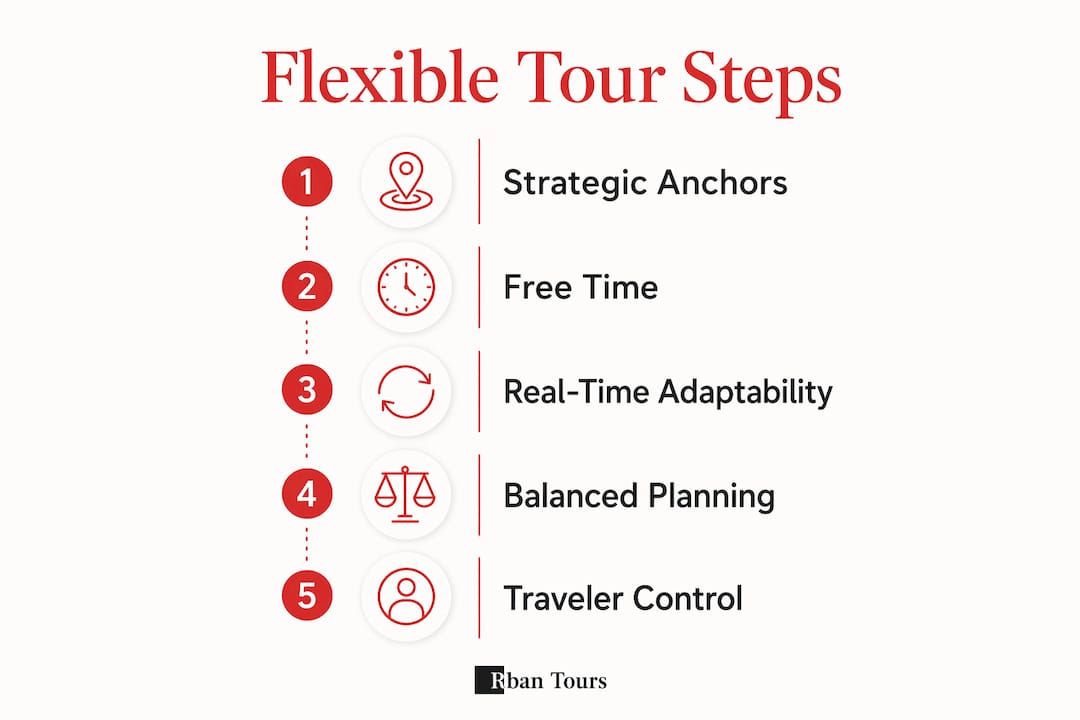
Strategic anchors
Strategic anchors like timed tickets and booked flights form the skeleton of a flexible itinerary. These are the non-negotiable commitments that hold your trip together. Everything else is built around them with room to shift. Think of a dinner reservation at a rooftop restaurant in Barcelona or a morning tea ceremony in Kyoto. Those moments are fixed. The hours surrounding them are yours.
The 20–30% free time rule
The Globus Wish List Survey of over 25,000 travelers confirmed that the ideal itinerary reserves 20–30% of total time for unplanned exploration. On a seven-day trip, that translates to roughly one and a half to two full days of open time. Most travelers underestimate how much they need this. That open time is where the best memories get made.
Real-time adaptability
A well-designed flexible tour accounts for conditions you cannot predict. Rain in Vietnam changes everything. A local festival in Mexico City changes everything. Adaptable itineraries include backup options and alternative routes so that a disruption becomes a detour rather than a disaster.

Here is how structured flexibility compares to the two extremes:
Approach | Structure level | Spontaneity | Stress risk |
Rigid group tour | Very high | Very low | High |
Flexible itinerary | Moderate | High | Low |
Fully unplanned travel | None | Very high | Moderate to high |
The flexible itinerary sits in the sweet spot. It gives you confidence without rigidity.
Identify your anchors first: flights, key reservations, and timed entry tickets
Build open blocks of two to four hours around each anchor
Research two or three backup options for each planned activity
Leave at least one full day per week with no fixed commitments
Reassess your plan each morning based on energy and conditions
Why do travelers prefer flexible tours over rigid group tours?
Rigid itineraries increase stress and make travelers vulnerable to delays, cancellations, and the frustration of missing something because the bus left at 9 a.m. sharp. Flexible tours solve this by treating your time as a resource you manage, not a schedule you obey.
80% of travelers find their favorite experiences through unplanned opportunities that only exist inside flexible itineraries. A conversation with a ceramics artist in a side street. A neighborhood bakery that opens at 7 a.m. and sells out by 8. These moments do not appear on any group tour manifest. They appear when you have the time and freedom to notice them.
The advantages of adaptable travel go beyond spontaneity:
Deeper local immersion: You move at the city’s pace, not a tour operator’s schedule
Individual energy management: You rest when you need to, push when you want to
Authentic discovery: Flexibility shifts the focus from chasing destinations to deeply experiencing them
Shoulder season access: 16% of American travelers actively seek less-crowded destinations by using flexible timing to travel outside peak periods
Cost efficiency: Flexible timing lets you book accommodations and transport when prices drop
The shift away from rigid group tours also reflects a broader cultural change. The new travel trend values slower, more authentic experiences achievable through flexible timing and itinerary adjustment. Travelers in 2026 are not trying to see everything. They are trying to feel something.
Rbantours designs every experience around this principle. Whether it is a personalized city tour through Barcelona’s Gothic Quarter or a street food walk in Mexico City, the structure serves the experience rather than constraining it.
How can travelers practically prepare to maximize flexible tour benefits?
Preparation is what makes flexibility possible. Without it, open time becomes anxiety rather than freedom. The goal is to arrive at each destination with enough information to make good decisions on the fly.
Pro Tip: Book your anchors at least three weeks in advance, then deliberately leave the surrounding time unscheduled. Resist the urge to fill every gap.
Here is a practical framework for building your own adaptable itinerary:
Book the essentials early: Flights, accommodation, and one or two key experiences form your anchors
Use luggage storage services: Local luggage storage frees you to explore without dragging bags between stops, a simple change that dramatically expands your range
Rely on local transport options: Metro cards, bike rentals, and walking routes give you the mobility to pivot without depending on a tour bus
Use apps for real-time guidance: City apps and maps let you find alternatives instantly when a plan changes
Include buffer days: One rest day per five days of travel prevents the fatigue that kills enjoyment in the final stretch
The mental shift matters as much as the logistics. Over-planning transforms vacations into stressful checklists rather than enjoyable experiences. When you give yourself permission to wander, you stop measuring the trip by what you completed and start measuring it by how it felt. That is the real benefit of adaptable travel. You return home rested rather than depleted.
Rbantours builds this philosophy into every experience. The role of flexibility in city tours is not a feature. It is the foundation.
Key takeaways
Flexible tours reduce stress, deepen local connection, and create more memorable travel by combining pre-planned anchors with intentional open time.
Point | Details |
Flexibility reduces stress | Travelers with adaptable plans report 40% less stress than those on rigid schedules. |
Free time is not wasted time | Reserving 20–30% of your itinerary for unplanned exploration produces the most memorable moments. |
Anchors enable freedom | Pre-booking key experiences gives you a secure structure that makes spontaneity feel safe. |
Preparation makes it work | Genuine flexibility requires more planning upfront, not less, to handle real-time changes. |
Authentic experiences require space | 80% of travelers find their favorite moments through unplanned opportunities inside flexible itineraries. |
Why I think rigid itineraries are the most overrated thing in travel
We have spent years designing tours across Barcelona, Mexico City, Vietnam, Japan, and Italy. The single most consistent feedback we hear is not about a specific site or meal. It is about a moment nobody planned. A street musician in a courtyard. A market stall that turned into a two-hour conversation. A rainstorm that forced everyone into a tiny café and became the story of the whole trip.
Rigid itineraries eliminate those moments by design. They treat time as something to fill rather than something to inhabit. We used to build tighter schedules because we thought travelers wanted more. They do not. They want better.
The shift we made at Rbantours was to stop measuring a tour’s quality by how many stops it included and start measuring it by how deeply travelers felt each one. That required us to build in breathing room, to trust the city, and to trust the traveler. The data backs this up, but honestly, we knew it before we saw any survey. We felt it ourselves the first time we stopped rushing and started listening to a place.
My honest recommendation: if your next trip feels like a to-do list, cut it in half. Add one open afternoon. See what happens. The city will meet you there.
— Rban
How Rbantours brings flexible touring to life
Rbantours designs every experience with the balance of structure and spontaneity that modern travelers actually want. Each tour is built around a curated core with room for you to move, linger, and connect on your own terms.
[
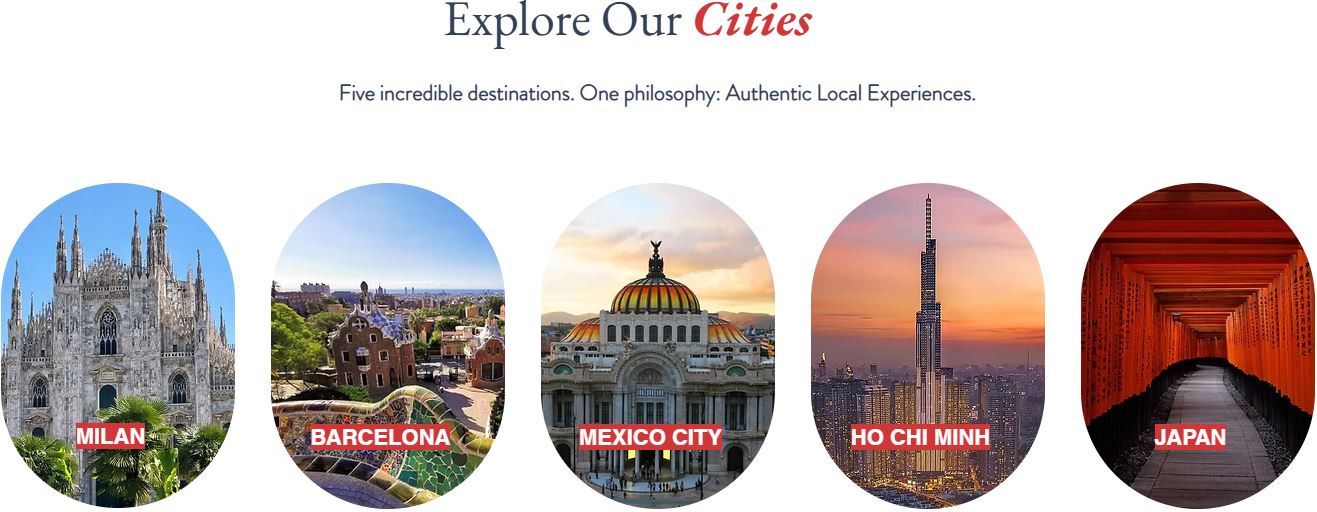
From Barcelona’s cultural experiences to immersive walks through Mexico City’s creative neighborhoods, Rbantours pairs expert local knowledge with the freedom to follow your curiosity. Every itinerary includes strategic anchors and open windows so you arrive informed and leave inspired. If you are ready to travel in a way that feels alive rather than scheduled, explore Rbantours’ guided experiences and find the one that fits how you want to move through the world.
FAQ
What is a flexible tour exactly?
A flexible tour is a planned travel experience with pre-booked anchors and intentional open time built in. It combines structure with adaptability so travelers can adjust pacing, stops, and activities based on real-time conditions and personal preference.
How much free time should a flexible itinerary include?
The ideal flexible itinerary reserves 20–30% of total time for unplanned exploration, according to a Globus Wish List Survey of over 25,000 travelers. On a seven-day trip, that equals roughly one to two full days of open time.
Are flexible tours more expensive than rigid group tours?
Flexible tours can actually cost less because adaptable timing lets you travel in shoulder seasons when accommodation and transport prices drop. The 16% of American travelers who actively seek less-crowded destinations use flexible timing as their primary cost-saving tool.
Why do unplanned moments feel more memorable than planned ones?
Research shows that 68% of travelers identify unplanned moments as their most memorable travel experiences. Spontaneous discoveries engage curiosity and emotion more intensely than scheduled activities, which creates stronger memories.
How do I start building a flexible itinerary?
Book your flights, accommodation, and one or two key experiences as anchors, then leave the surrounding time open. Use local luggage storage, city transport options, and real-time apps to stay mobile and responsive as your trip unfolds.
Recommended
Comments