
Why prefer personalized tours for immersive city travel
- Rban Tours

- May 16
- 8 min read
There is a stubborn myth about city tours: that they are all roughly the same experience, just with different accents and different buses. They are not. The difference between a standard tour and a truly personalized one is the difference between watching a city through glass and actually touching its pulse. As travelers shift away from one-size-fits-all itineraries toward experiences that reflect who they actually are, the question of why prefer personalized tours becomes less philosophical and more urgent. This guide breaks it down, honestly and specifically.
Table of Contents
Key Takeaways
Point | Details |
Personalization trend | Travelers increasingly seek tours that reflect their personal interests and values, not just standard sights. |
Technology enables customization | AI and data analytics make it easier for tour providers to tailor experiences to individual preferences. |
Benefits of personalized tours | Flexibility, relevance, comfort, and cultural immersion set personalized tours apart from fixed itineraries. |
Trust and transparency | Travelers want clear communication on how their data and preferences are used in personalizing tours. |
Future of travel | Personalized tours represent the future by aligning travel with self-expression and meaningful cultural connection. |
The rising trend toward ultra-personalized journeys
Not long ago, “customized travel” meant upgrading your hotel room or choosing a window seat. Today, it means something far deeper. Travelers are treating their trips as a form of self-expression, a way of saying something true about their values, curiosities, and sense of identity. According to travel industry data, this shift toward self-expression in travel is one of the defining trends reshaping how people experience international cities.
Think about what that actually looks like in practice. Someone who is obsessed with mid-century architecture does not want to spend two hours at a famous cathedral just because it is on every itinerary. A food-focused traveler wants to stand in a local market and talk to a vendor, not be herded through a tourist restaurant. The demand for personalized travel experiences is growing because people finally have the language and the options to ask for what they actually want.
Here is what this shift looks like across different traveler profiles:
The cultural deep-diver wants to spend more time in one neighborhood than most tours spend in an entire city
The wellness traveler needs a pace that is gentle, restorative, and free from rushed transitions
The creative explorer gravitates toward design districts, artisan workshops, and street art that tells a local story
The fantasy-inspired adventurer wants to follow the footsteps of a story, a film, or a personal obsession
“Personalization is no longer a niche request. It is a baseline expectation for the modern traveler who sees a trip not as a checklist but as an extension of who they are.”
What makes this shift significant is that it is not driven by luxury. It is driven by meaning. Travelers at every budget level are asking for tours that feel like them, not tours designed for everyone and therefore suited to no one.
How technology enables tailored city tours
Having seen the demand for personalized tours, let’s examine how technology makes this customization achievable. The honest answer is that the technology itself is not the star. It is the infrastructure that makes the magic possible behind the scenes.
AI and data analytics now allow tour providers to understand traveler preferences at a level of detail that was impossible ten years ago. What kind of neighborhoods excite you? Do you prefer walking or riding? Do you want to meet locals or observe from a respectful distance? These inputs shape experiences that feel genuinely tailored rather than generically “customized.” Personalization has become a default expectation, supported by AI-powered planning that adjusts every detail from pacing to group size.

Providers using technology for personalized tours are building systems that remember your preferences, flag potential accessibility needs, and surface options aligned with your travel style before you even think to ask. The result is a tour that feels less like a product and more like a conversation.
Key ways technology shapes the experience:
Preference mapping to understand pace, interests, and comfort thresholds before the tour begins
Dynamic itinerary adjustments that respond to real-time factors like weather, crowd levels, or a traveler’s energy
Curated recommendations based on your past travel behavior and stated curiosities
Flexible group sizing that preserves intimacy and keeps the experience from feeling like a crowd
The best providers use these tools to inform their human guides, not replace them. A good algorithm can identify that you love street food and design. A great guide can take that information and craft a narrative around it that you will still be telling people about three years from now. Read about what makes a city tour genuinely memorable and you will see that data alone never makes the list.
Pro Tip: Before booking any personalized tour, ask the provider exactly which preferences they collect and how those inputs shape your itinerary. A good answer builds trust. A vague answer tells you everything you need to know.
Key benefits of personalized tours over traditional ones
Understanding the enabling role of technology, now let’s explore the tangible advantages that customized travel experiences actually deliver to culturally curious travelers.
The most obvious benefit is flexibility, but it runs deeper than just choosing your start time. Personalized tours offer something standard itineraries structurally cannot: autonomy, relevance, comfort, and genuine cultural immersion. Those four words carry real weight.
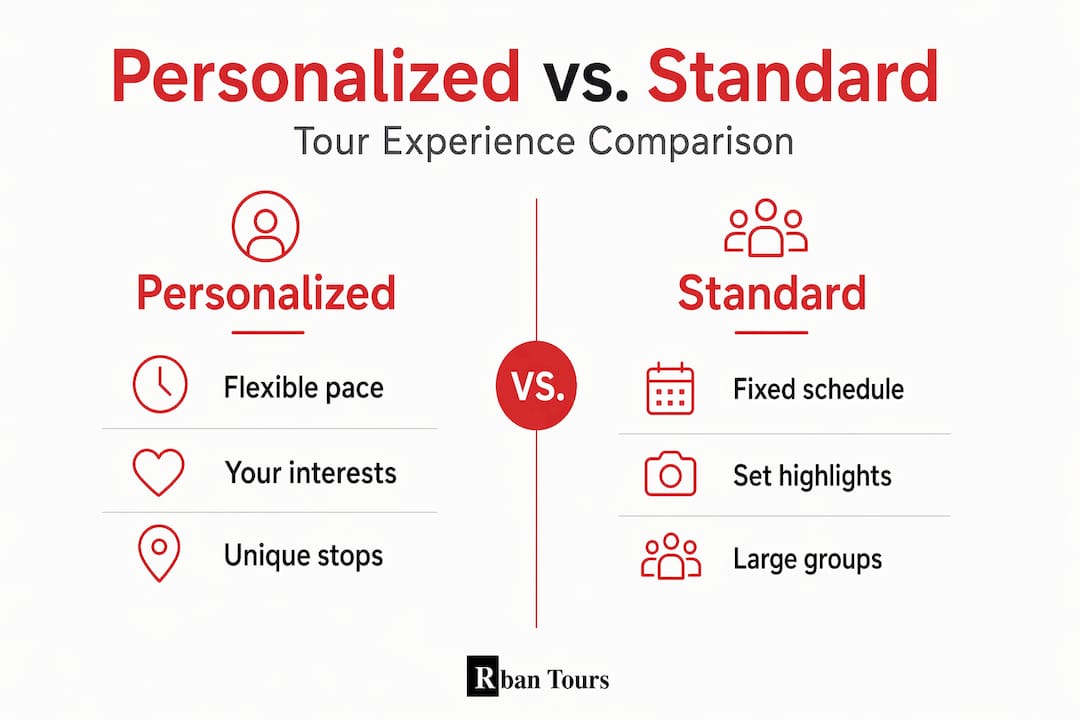
Feature | Personalized tour | Standard group tour |
Itinerary flexibility | High, shaped by your interests | Fixed, predetermined route |
Pace | Adjustable to your energy | Set by the group average |
Cultural depth | Tailored to your curiosities | Broad, general coverage |
Group size | Small or private | Often 20 to 40 people |
Local storytelling | Specific to your focus | Generic narrative |
Accessibility | Factored in by design | Often an afterthought |
Here is a sequence that shows how personalization elevates the experience at each stage of a city tour:
Before the tour: Your preferences shape the itinerary, so you arrive knowing the day was designed with your interests in mind
At the first stop: Instead of a rehearsed speech, your guide responds to what you notice and what you ask
In between stops: The route itself reflects your curiosity, not the most efficient path between landmarks
At the unexpected moment: A personalized tour leaves room for discovery, the alley your guide knows, the local they want you to meet
After the experience: You remember it as yours, not as something you shared with 35 strangers
The advantages of bespoke travel are particularly visible in how traveler satisfaction compares to standard tours. People do not just rate personalized experiences higher. They describe them differently. The language shifts from “it was good” to “it changed how I see this city.”
Want to see how this plays out in a specific destination? Explore the real benefits of local tours and you will find concrete examples of what this difference feels like on the ground.
Choosing a personalized tour provider: what to look for
With the benefits clear, let’s consider how to select the right personalized tour provider. Not every company that says “personalized” actually delivers it. The word has become marketing shorthand for many operators who still run largely fixed experiences with a few optional add-ons.
Here is what to look for when evaluating a provider seriously:
Transparent data practices: Travelers increasingly demand clarity on how their personal preferences are collected and used. A trustworthy provider explains this upfront, without prompting.
Real customization, not cosmetic choices: Can you change the neighborhood focus? Can you request a slower pace? Can you add a stop that matters to you specifically? If the only options are “morning” or “afternoon,” that is not personalization.
Respect for cultural and personal needs: The best providers ask about dietary restrictions, mobility needs, and cultural sensitivities as a matter of course, not as an afterthought.
Human expertise at the center: Technology can inform the experience, but local knowledge and authentic storytelling are what make it resonate. Look for guides who are genuine insiders, not just people who have memorized a script.
Evidence of flexibility: Ask to see example itineraries. Look for variation. A provider who can only show you one version of a tour is not actually offering customization.
Pro Tip: Ask your prospective provider for a past example of how they adapted a tour for a specific traveler request. The specificity and enthusiasm of their answer will tell you more than any brochure.
You can browse a range of curated, flexible tour formats on the Rban Tours blog to get a feel for what genuine personalization looks like in practice across multiple cities.
Why personalization is the future and why standard tours are losing relevance
Here is something we believe with conviction, shaped by years of designing experiences across cities on multiple continents: standard tours are not failing because they are poorly run. Many are exceptionally well-organized. They are losing relevance because they were designed for a version of travel that no longer reflects why most people actually go anywhere.
The traveler who once accepted a fixed itinerary because “it covered all the highlights” is the same traveler who now wonders why they spent forty-five minutes at a monument that meant nothing to them personally. The highlights were someone else’s highlights. The story was someone else’s story.
What personalization does, at its best, is align the journey with the person taking it. When you walk through a neighborhood and your guide is speaking to your specific curiosity, something different happens. You do not just absorb information. You connect to the place. That connection is what people carry home. It is the soul of the experience.
We also want to name something that often gets lost in the conversation about future-focused personalized travel: technology is a tool, not the answer. We have seen what happens when providers lean too hard on AI-generated itineraries and lose the human thread that makes a tour actually breathe. The algorithm can tell you someone loves jazz. Only a knowledgeable local guide can take you to the bar where jazz is still played the old way, introduce you to the musician who has been there for thirty years, and give you a moment you could not have planned.
Standard tours sacrifice that for efficiency. They have to. Their model depends on volume, not depth. Personalized tours, by design, choose depth. And increasingly, that is what travelers are choosing too.
Explore personalized tours with Rban Tours
You now know exactly why prefer personalized tours over standard offerings, so the natural next step is finding a provider who actually delivers on that promise.
[
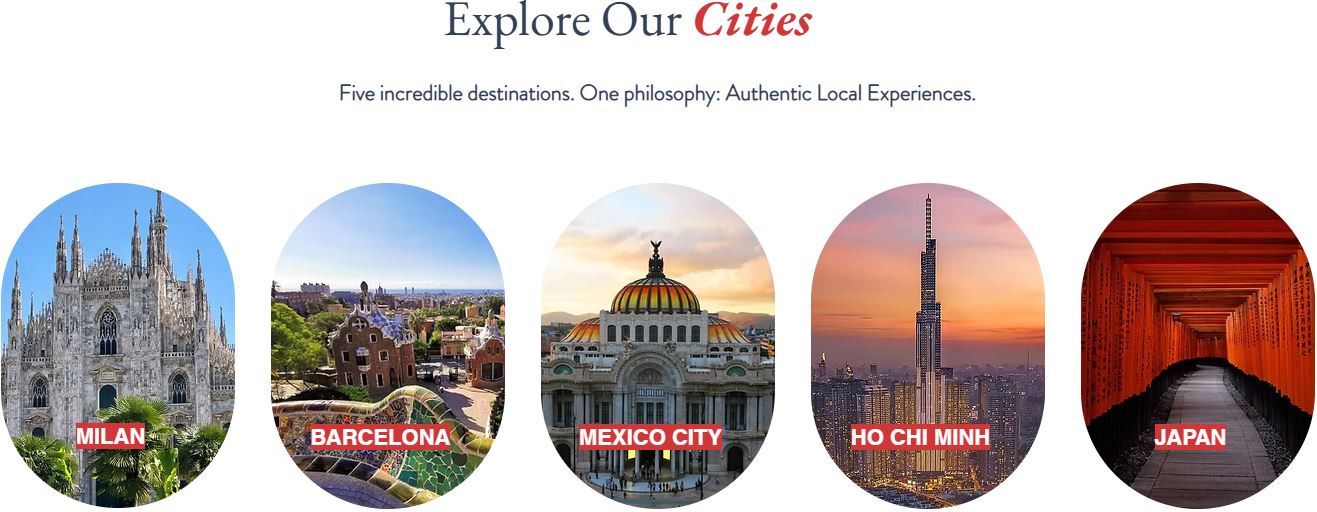
At Rban Tours, we design every experience around the rhythm of the city and the curiosity of the traveler in front of us. Our Barcelona experiences blend street culture, local storytelling, and creative energy into tours that feel personal because they are. Whether you are drawn to a walking cultural tour through neighborhoods most visitors never find, or a curated food and design exploration, our guides craft narratives shaped by your interests. Explore the full range of Barcelona tours and discover what it feels like to experience a city on your own terms.
Frequently asked questions
What makes a personalized tour different from a standard group tour?
A personalized tour shapes the itinerary, pace, and stops around your specific interests, while standard tours follow a fixed route designed for a general audience. The result is that personalized tours deliver deeper cultural immersion, greater comfort, and more memorable moments.
How does technology enhance personalized tours?
AI and data analytics allow providers to map your preferences and adjust recommendations before and during the tour. AI-driven personalization matches experiences to your habits and interests in ways that static itineraries simply cannot.
Are personalized tours more expensive than standard tours?
Personalized tours can carry a higher price point due to the customization involved, but most travelers find the investment worthwhile. Travelers willingly pay more for experiences that genuinely align with their lifestyle and personal values.
How can I ensure my privacy when booking a personalized tour?
Choose providers who clearly explain what information they collect and how it shapes your experience. Travelers expect transparency on data usage as a condition of trust, and a good provider will welcome that conversation openly.
Recommended
Comments