
Milan Creative Workshops: Your Guide to Hands-On Fun in 2026

Milan runs a genuinely rich calendar of beginner-friendly creative workshops, from ceramics and watercolor to printmaking and bookbinding, with most sessions welcoming total newcomers and built for a social afternoon or evening. The fastest way in: pick a 2 to 3 hour workshop or a short multi-week course near Navigli or a converted industrial space like BASE, check the calendar, and book directly, or let a curated experience with Rban Tours handle the logistics for you.
TL;DR:
Most workshops in Milan cost around €50 to €70 for a two or three-hour session, with additional fees for firing, glazing, or memberships required by associations.
Navigli remains the main neighborhood for evening art classes, frequently paired with aperitivos, while BASE Milano hosts seasonal weekend workshops in a converted industrial space.
Workshops range from social watercolor and paint-and-sip events to more technical printmaking and bookbinding classes, suitable for beginners and skill-builders alike.
Confirm details like group size, materials included, and membership requirements before booking, as many studios are inside unmarked industrial buildings requiring precise entrance instructions.
Opt for a curated booking service for group or corporate events to avoid disorganization and ensure seamless planning, especially when visiting Milan for multiple creative experiences.
Table of Contents
What Kinds Of Creative Workshops Can You Book In Milan?
Milan’s workshop scene splits into two energies: the social, low-stakes session and the technical, skill-building class. Both matter, and knowing which one you want saves you from booking the wrong afternoon.
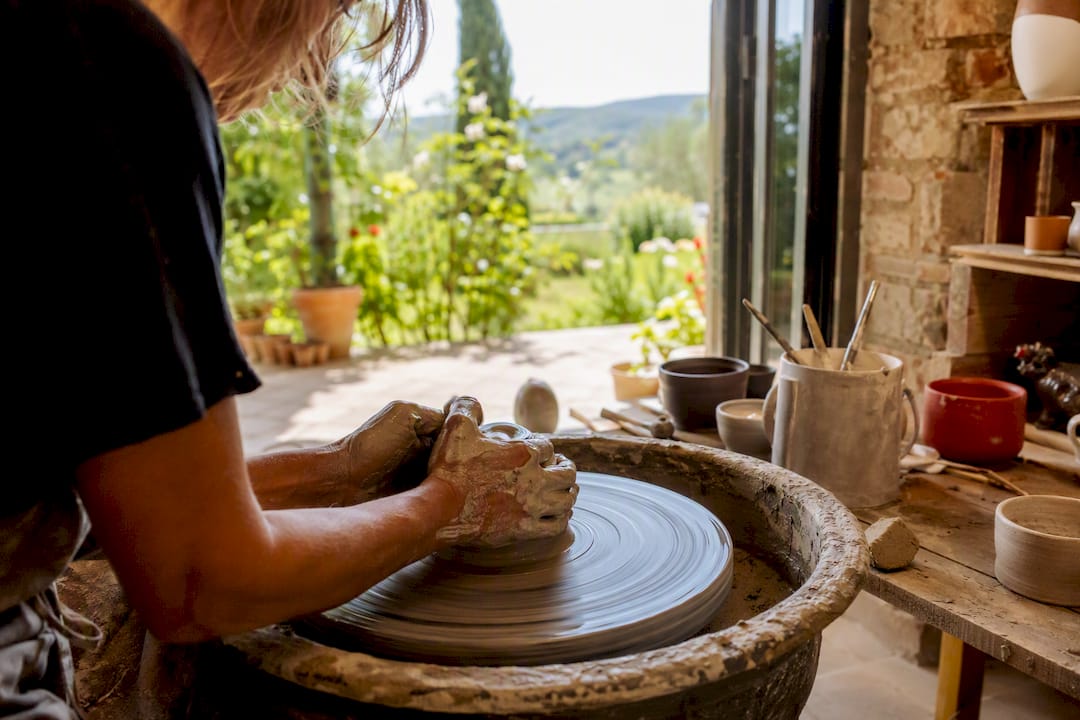
Ceramics workshops usually start with handbuilding for beginners (coiling, pinching, slab work) before graduating to the wheel. Glazing and firing add time after the session ends, since kilns need days to complete a cycle, so don’t expect to walk out with a finished mug.
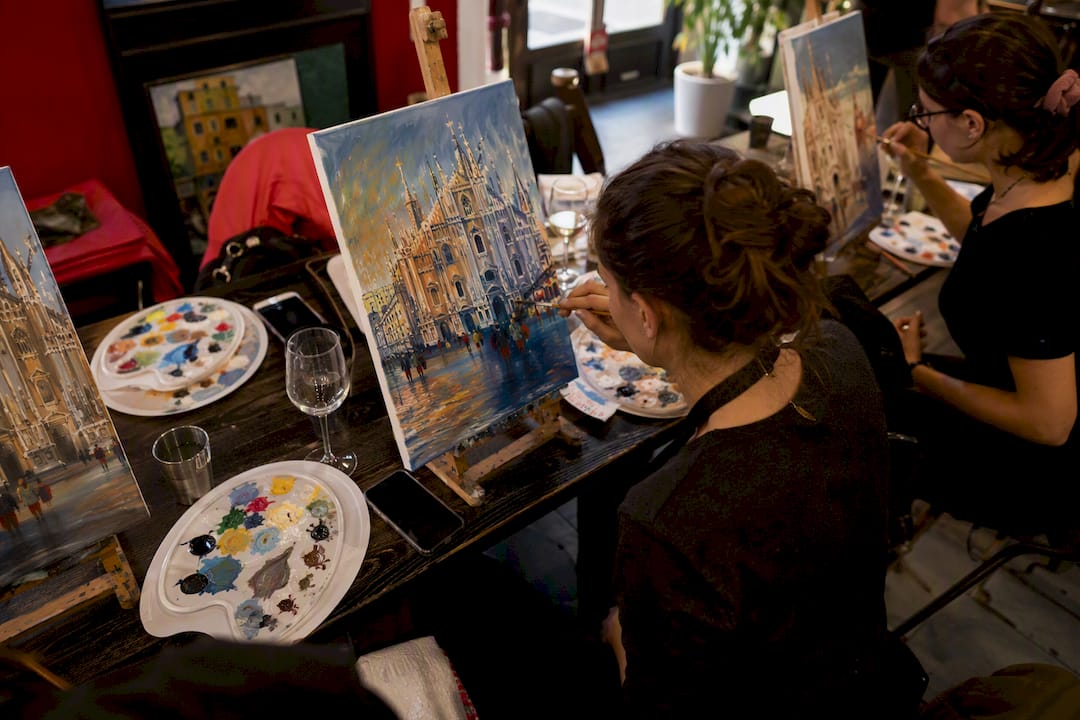
Paint & Sip and watercolor sessions are the most social format going. Instruction is loose, the mood is relaxed, and many events pair brushes with a glass of wine or a light aperitivo. Studios like Art Lab Milano frame these sessions around process rather than product, which takes the pressure off anyone worried about “not being artistic.”
Printmaking and bookbinding (legatoria) lean more technical. These are usually shorter, focused workshops or structured multi-session classes, and BASE Milano’s legatoria events are a solid example of a compact, weekend-friendly format with real skill payoff.
Collage, macramé, candle-making, and terrarium building round out the take-home-friendly end of the spectrum. These sessions run fast, need little prior skill, and suit groups who want a finished object by the end of the night.
Ceramics: best for patient learners who don’t mind a delayed pickup
Paint & Sip: best for social groups, birthdays, first dates with low pressure
Printmaking and bookbinding: best for people who want a tangible skill
Collage, macramé, terrariums: best for quick group activities or corporate icebreakers
Where Do These Workshops Actually Happen In Milan?
Most creative workshops cluster around a handful of neighborhoods, and knowing the geography helps you plan a realistic evening. Navigli remains the densest hub for evening art classes and aperitivo-style sessions, largely because the canal-side bars and restaurants make a natural pairing with a two-hour painting class. The area around BASE Milano, a converted industrial complex in Tortona, hosts festival-style weekend workshops and design-forward events that rotate seasonally.
Beyond those two anchors, several kinds of hosts run the actual programming:
Cultural centers like Fabbrica del Vapore, which lists a directory of partner labs running recurring creative sessions
APS associations (Associazioni di Promozione Sociale), which often require light membership formalities
Independent ateliers run by working artists out of studio space
Event companies that program one-off workshops inside converted factories or courtyards
One practical note: many Milan studios sit inside former industrial buildings with minimal street signage, tucked behind a courtyard door or an unmarked entrance. Confirm your entrance instructions when you book. A booking confirmation that mentions “citofono” (the intercom) or a specific courtyard number is normal, not a red flag.
What Do Milan Creative Workshops Typically Cost?
Pricing in Milan is refreshingly predictable once you know the standard bands. Il Laboratorio Artistico’s published fee structure offers a useful benchmark: a 2 hour workshop runs around €50, and a 3 hour session lands closer to €70. Multi-week adult courses follow their own cycle pricing, usually billed per block of sessions rather than per class.
What’s usually included: instructor time, basic materials, and in social formats like Paint & Sip, a drink or light snack. What’s often extra: ceramics firing fees, since kilns run on their own schedule and studios frequently bill glazing and firing as a separate line item from the workshop fee itself.
The other cost variable catches first-timers off guard: the tessera associativa, or membership card. Because many studios operate as APS associations rather than commercial businesses, Italian law effectively requires a small annual membership fee before you can enroll in programming. It’s a bureaucratic quirk of how cultural associations are structured here, not a hidden upsell, but it does add a few euros to your first booking that repeat attendees won’t pay again that year.
A quick pricing snapshot: A single 2 hour workshop typically costs around the common fee charged in local association-run workshops. A slightly longer session costs more, with an additional modest membership fee if the host is an association, and possibly separate firing fees for ceramics projects.
How Do You Pick The Right Workshop In Milan?
Choosing well comes down to matching your actual goal, not just the workshop’s photos, to the format on offer. A few criteria separate a great afternoon from a wasted one:
Define your objective first. Do you want a relaxed social outing or an actual skill you’ll practice again? Paint & Sip covers the former; a multi-week ceramics course covers the latter.
Check the group size. Smaller groups (often capped at 8 to 12 for hands-on formats) mean more individual instructor attention.
Ask about instructor background. A working artist teaching their own medium tends to give sharper, more specific feedback than a generalist facilitator.
Match the format to your schedule. Evening 2 hour sessions suit a single free night; weekend multi-session courses need a real time commitment.
Confirm what’s included before you pay. Materials, refreshments, and any firing or finishing fees should be spelled out, not implied.
When you message a studio or check a booking page, ask directly: Are materials included in the price? Is a tessera associativa required, and how much is it? What’s the maximum number of participants? What’s the cancellation policy if I can’t make it?
Pro Tip: Vague workshop descriptions (“creative afternoon, all levels”) without a materials list or a stated group size are usually a sign the studio hasn’t finalized logistics. Ask before you pay, not after.
If a studio can’t answer basic questions about capacity or fees in a straightforward way, treat that as a signal to look elsewhere. Legitimate hosts, from Laboratori delle Arti to smaller independent ateliers, tend to answer these questions in a single message.
What Should You Expect On The Day Of Your Workshop?
Good workshop days start before you even arrive. Show up 10 to 15 minutes early, especially if the studio sits inside a courtyard or converted factory space where finding the right door takes a minute. Confirm entrance details in advance rather than guessing at street level once you’re standing outside.
What to wear and bring:
Clothes you don’t mind getting paint, clay, or glue on
Your membership card (tessera associativa) if you’ve already registered as a member
A phone for photos, though ask the instructor before photographing other participants’ work
How the session usually flows: expect roughly 10 to 15 minutes of setup and introductions, followed by the bulk of instruction time, a short break for social formats like Paint & Sip, and a final stretch for finishing touches. Ceramics sessions end differently, since your piece won’t be finished the day you make it. Budget for a return trip or a mailed pickup once firing and glazing are done.
Rban Tours’ Take: Why Curated Booking Beats Cold-Searching Milan’s Studio Scene
We think Milan’s creative workshop scene rewards curiosity, but it punishes disorganization. The city has dozens of ateliers, associations, and pop-up events, and half the challenge isn’t the craft itself, it’s finding the right studio, confirming the fees, and showing up at the correct courtyard door.
That’s exactly where a curated approach earns its place. When you’re traveling, hosting a bachelorette group, or planning a corporate team event, you don’t want to be the one chasing down tessera associativa details or double-checking a legatoria studio’s cancellation policy. We build relationships with local creatives and venues precisely so the group experience feels effortless from the first message to the last brushstroke.
— Rban
Book A Curated Creative Workshop In Milan With Rban Tours
Rban Tours runs the alternative to hunting through scattered studio calendars and hoping a workshop description tells you the full price. We handle small-group Paint & Sip sessions, private creative workshops, and full corporate creative events in Milan, with materials, instructor, and logistics sorted before you arrive.
[

This fits travelers who want a single, simple booking rather than five emails to five different ateliers, plus groups and companies planning a team outing where reliable timing and a fixed headcount actually matter. If you’re weaving a workshop into a bigger Milan visit, our guide to planning cultural experiences like a local pairs well with a booking here. Check available dates and request a custom quote for groups on our Milan tours and experiences page.
Where To Check Milan Workshop Calendars Directly
A few local pages are worth bookmarking if you want to browse and book on your own timeline. Fabbrica del Vapore’s creative labs directory lists partner organizations running recurring sessions. Laboratori delle Arti covers painting, drawing, ceramics, and art therapy for adults. BASE Milano’s event listings show short-format weekend workshops like bookbinding. Always check each page for the current tessera associativa requirement and session capacity before you commit, since both details shift by studio and by season.
Sources
Recommended
Comments