
Market First Mexico City Culinary Experiences for Italians

The best esperienze culinarie della città del Messico center on markets, not restaurants: market and street-food walking tours, hands-on cooking classes that start with a shopping trip, and mezcal or pulque tastings that explain the drink’s cultural roots. Market-first experiences deliver more authenticity because vendors, not menus, hold the city’s real culinary story. Book a small-group or private version of one of these before you land, since the good ones fill up fast.
TL;DR:
Market visits offer authentic insights by allowing vendors to explain ingredients and preparation methods, especially at La Merced and Mercado de San Juan.
Street-food tours provide the most efficient way to explore multiple neighborhoods and tastes within three to six hours, making them ideal for limited schedules.
Bilingual support is common, but verifying language and dietary accommodations at booking ensures a smooth experience for non-Spanish speakers or restricted diets.
Private experiences typically include vendor introductions, tastings, and cultural storytelling, often with customizable options for families or celebrations.
Booking early and using reputable providers like Rban Tours or Casa Jacaranda helps secure small-group or private tours with clear itineraries and confirmed inclusions.
Table of Contents
What Types of Culinary Experiences Does Mexico City Offer?
Every format teaches you something different about the city, and picking the right one depends on how much you want to cook versus taste.
Street-food walking tours: three to four hours, multiple stops, built around tastings at taco stands, tortillerías, and bakeries. Expect a steady walking pace and a guide who explains what you’re eating before you eat it.
Market tours: slower and more ingredient-focused. A good guide introduces you to specific vendors, walks you through a tortilla demonstration, and explains why one chili differs from another.
Cooking classes: some start with a market visit and shopping list, others work from ingredients already prepped. The hands-on format, where you cook rather than watch, teaches far more about technique.
Mezcal and pulque tastings: framed around production history and ritual, not just flavor. Etiquette matters here. Sip slowly, and let the host guide the pairing.
Fine-dining experiences and supper clubs: worth choosing for an anniversary dinner or a final night, less so for learning the cuisine’s fundamentals.
If your trip only allows one splurge, a street-food tour covers more ground per hour than almost any other format.
Which Neighborhoods and Markets Should You Base Your Plans Around?
Mexico City’s culinary geography breaks into distinct zones, and knowing which one suits your interest saves you from crossing town twice in one day.
Roma and Condesa: contemporary street food, wine bars, and small independent restaurants. Best for an evening stroll between tastings.
Centro Histórico: the classic taco route, dense with tortillerías and century-old market stalls.
Coyoacán: home-style cooking classes and a slower, residential pace, good for families.
La Merced: the city’s largest traditional market, known for street-food staples and produce stalls that have operated for generations.
Mercado de San Juan: specialty ingredients, exotic meats, and imported goods, popular with chefs sourcing for restaurants.
Mercado de Sonora: herbs, folk remedies, and traditional ritual items, an eye-opening stop even if you buy nothing.
Xochimilco: canal-side food stalls and a completely different, waterborne rhythm to eating.
Visit markets in the morning, when stalls are freshest and crowds are thinner. Metro and authorized taxis connect these neighborhoods reliably, though moving around like a local takes a bit of local knowledge about which routes to avoid at rush hour.
What Should You Expect When You Book a Culinary Experience?
Most tours and classes fall into predictable patterns once you know what to look for.
Duration: street-food and market tours generally run three to six hours; cooking classes tend toward three to four hours including the market visit.
Price bands: expect a moderate per-person range for group tours, rising for private or chef-led sessions. Ask for the exact figure at booking, since it varies by group size and season.
Language: confirm bilingual support directly with the operator before paying, especially if your Italian group has limited English or Spanish.
Dietary needs: declare allergies or restrictions at booking, not on arrival. Vegetarian and vegan adaptations are common when hosts know in advance.
Group size: private options run smaller and more flexible; small-group tours typically cap between six and twelve travelers.
Pro Tip: Ask whether the price includes a full meal or just tastings. Some listings market “seven tastings” that add up to a full lunch, others leave you hungry by 2 p.m.
How Do You Choose and Book an Authentic Culinary Experience?
Skip the vendor-by-vendor comparison shopping and run every option through the same short checklist instead.
Does the host have documented local expertise, not just a tour license?
Does the itinerary include an actual market visit, with named stops?
Are tastings or a full meal explicitly included, and how many?
Is the group size stated upfront, with a private option available?
Is bilingual support confirmed in writing, not just implied?
Can the operator accommodate a declared dietary restriction?
Before you pay, ask the operator directly: where exactly does the tour meet, how do you get between stops, what’s on the tasting menu, how are allergies handled, and what’s the cancellation policy if your flight changes. A clear framework for evaluating culinary experiences treats these questions as the baseline, not extras.
Watch for red flags: vague inclusions (“tastings vary”), no named vendor contacts, or a “market experience” that turns out to be a single restaurant meal with a market photo in the listing. Listings that name specific stops, such as seven tastings across tortilla makers and bakeries, tend to deliver what they promise more reliably than vague marketing copy.
For payment, book with a credit card that carries EU consumer protections, request a receipt immediately, and reconfirm language and dietary arrangements by email rather than trusting a phone call. Local hosts consistently point to one signal above all others: an experience that explains the why behind an ingredient or a habit teaches you more than one that just lets you taste it.
How Rban Tours Builds Culinary Experiences in Mexico City
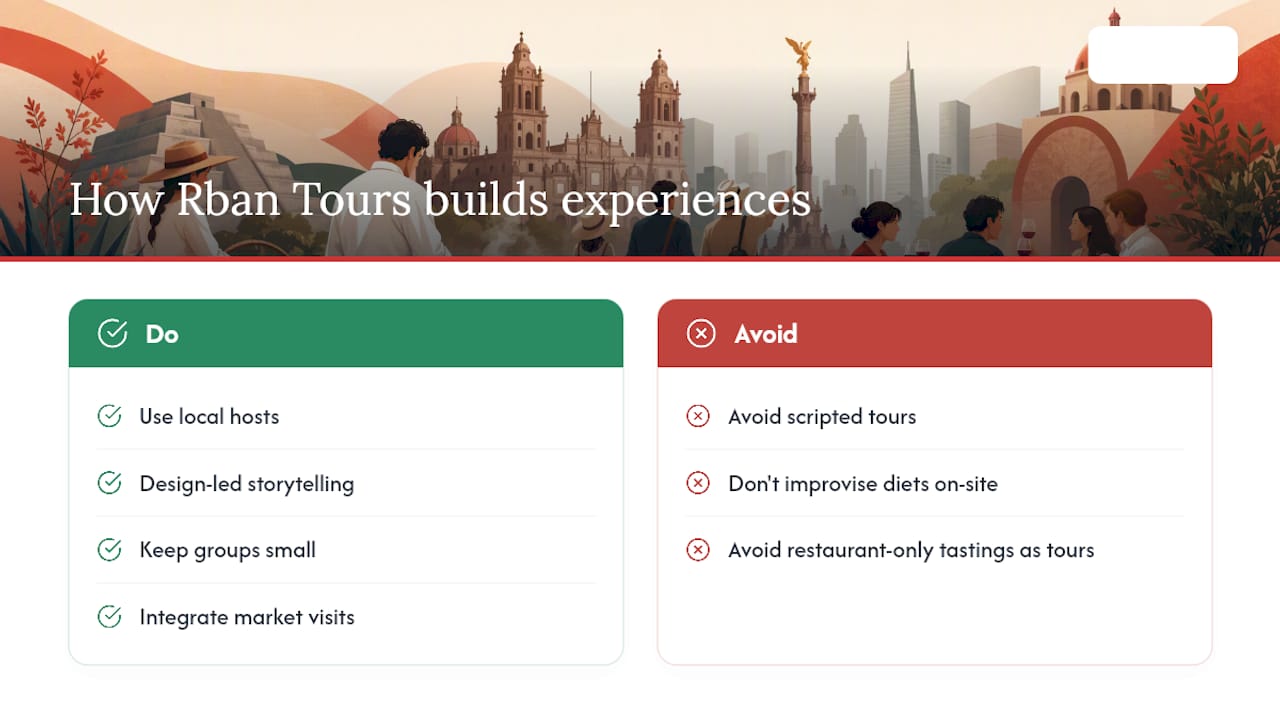
Rban Tours approaches Mexico City the way it approaches every destination in its collection: through local hosts, design-led storytelling, and relationships with vendors that took years to build, not a script read from a clipboard. Our walking and cultural tour moves through the city’s food culture with the same eye for atmosphere and human connection that shapes our experiences from Barcelona to Ho Chi Minh City.
Groups stay small, hosts generally offer bilingual support, and dietary needs are usually handled at booking rather than improvised on the spot. Market visits are built into the route rather than bolted on as an afterthought. That structure reflects what makes the strongest experiences elsewhere in this guide work: a market walk paired with genuine vendor introductions, not a restaurant tasting dressed up as a cultural tour.
Markets Teach What Menus Cannot
A menu tells you what a dish is called. A market vendor tells you why it tastes the way it does, and that difference is the entire point of eating well in Mexico City. If your schedule allows only two bookings, pair a market walk with one hands-on cooking class. The walk gives you context; the class gives you the muscle memory of sazón, the cook’s own touch, which no menu description will ever capture for you.
— Rban
Book a Curated Culinary Experience With Rban Tours
Rban Tours gives you a direct route into Mexico City’s food culture without the guesswork of comparing a dozen unfamiliar listings from your hotel Wi-Fi. Where other options ask you to piece together a market visit here and a cooking class there, our walking and cultural tour bundles vendor introductions, tastings, and local storytelling into one bilingual, small-group itinerary built specifically around authenticity.
[
Private and customizable versions are often available for families, couples celebrating, or groups wanting their own pace and specific questions answered. Bookings typically include confirmation of language support and dietary accommodations upfront to avoid improvisation on the day. Check current dates and reserve your spot on the walking and cultural tour page before the slots you want fill up.
Where to Check Details or Book
Casa Jacaranda for a market-plus-hands-on cooking class in a historic house setting.
A market and street-food Airbnb experience as a benchmark for tasting counts and duration.
A cooking class with a market visit for a chef-led, hands-on session.
Sources
FAQ
How Long Do Mexico City Food Tours Usually Last?
Most street-food and market tours run three to six hours, while cooking classes that include a market visit typically last around three to four hours.
Are Culinary Tours in Mexico City Available in English or Italian?
Bilingual support, usually English and Spanish, is common but should be confirmed directly with the operator before booking; Italian-specific guides are rare, so English fluency is the safer assumption.
Can I Request Vegetarian or Allergy-Friendly Options?
Yes. Operators like Casa Jacaranda and most cooking-class listings accommodate dietary restrictions when you declare them at the time of booking rather than on arrival.
Which Market Should I Visit First for an Authentic Experience?
La Merced offers the widest range of street-food staples and traditional produce, making it a strong first stop before more specialized markets like San Juan or Sonora.
Is It Better to Book a Private or Small-Group Culinary Experience?
Small-group tours suit solo travelers and couples who want a lower cost and a social pace, while private bookings offer more flexibility for families or groups with specific dietary or scheduling needs.
Recommended
Comments