
Explore Mexico City like a local: your insider guide


Mexico City has a way of pulling you in fast. The colors, the noise, the smell of fresh tortillas drifting from a corner taquería — it hits all at once. But most visitors spend their days circling the same handful of plazas and museums, never quite touching the city’s real pulse. The truth is, CDMX (Ciudad de México) rewards those who slow down, wander deliberately, and engage with the people who actually live here. This guide is built for exactly that kind of traveler: someone who wants more than a highlight reel, and is ready to experience the city the way locals do every single day.
Table of Contents
Key Takeaways
Point | Details |
Wander off main roads | The most rewarding Mexico City experiences happen in quieter, local neighborhoods. |
Blend design and daily life | Combine architecture, art, and food for a deeper cultural connection. |
Connect through rituals | Sharing community activities and meals builds authentic memories. |
Prep with local tools | A few key apps, sensible planning, and some Spanish open unexpected doors. |
Guided tours boost immersion | Local experts provide insider access to creative and cultural hotspots. |
What you need before you start: a local explorer’s kit
To prepare for going beyond the guidebook, let’s cover the tools and essentials you’ll need for your adventure.
Good preparation is the difference between a frustrating first day and a fluid, joyful one. Mexico City is enormous — one of the largest urban areas on the planet — and navigating it without a plan can feel overwhelming. The right tools make everything easier.
Essential apps and tools
Google Maps (downloaded offline): Use Google Maps to identify and wander lesser-known neighborhoods surrounding parks (parques), markets (mercados), and pedestrian streets. Offline maps are a lifesaver when data is spotty.
Metro CDMX app: The metro system is cheap, fast, and used by millions of locals daily. A digital metro map helps you plan cross-city routes confidently.
A local safety app: Apps like Citizen or local equivalents give real-time neighborhood alerts, which is useful for solo travelers especially.
WhatsApp: Most local vendors, guides, and guesthouses communicate through WhatsApp. Download it and keep it active.
Physical essentials
Item | Why it matters |
Comfortable walking shoes | You will cover 10+ kilometers on foot in a single good day |
Reusable water bottle | Tap water is not safe to drink; refill at filtered stations |
Small bills and coins | Many mercados and street vendors do not accept cards |
Light rain jacket | Afternoon showers are common, especially June through September |
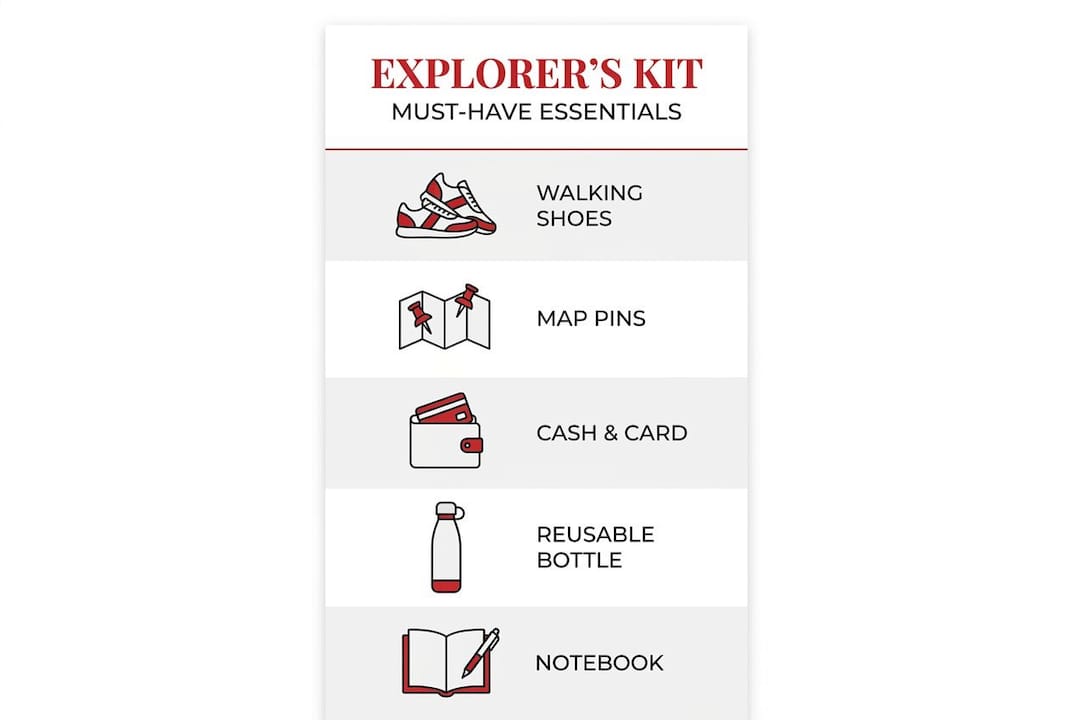
A small notebook | Jot down names of dishes, vendors, and streets you love |
Pro Tip: Before you leave your accommodation each morning, drop pins in Google Maps for three or four neighborhoods or markets you want to explore. Give yourself permission to drift between them rather than sticking to a rigid itinerary. The best moments in Mexico City almost always happen in the spaces between the plan.
One more thing: avoid the main tourist avenues as your primary routes. Paseo de la Reforma and Avenida Insurgentes are useful for orientation, but the real city breathes in the side streets, the callejones (alleyways), and the quiet colonias (neighborhoods) that most visitors never enter.
How to pick and navigate authentic neighborhoods
With your kit ready, the next step is deciding where and how you’ll wander off the tourist path.
Mexico City is divided into four broad quadrants: Norte (north), Este (east), Sur (south), and Oeste (west). Select metro stations across the city’s four quadrants for diverse immersion — each sector has its own character, pace, and social texture. Here’s how to approach neighborhood selection step by step.
Step-by-step metro exploration
Buy a rechargeable metro card (tarjeta) at any station for a few pesos.
Choose a station in the neighborhood you want to explore and ride during off-peak hours (9:30am to 12pm or 2pm to 5pm).
Exit the station and walk two blocks in any direction away from the main avenue.
Look for a local market, a park, or a mural and use it as your anchor point.
Follow foot traffic and noise — locals know where the good stuff is.
Neighborhood comparison: where to go and why
Neighborhood | Vibe | Best for | Safety level |
Condesa | Leafy, design-forward, café culture | Architecture walks, brunch, galleries | High |
Roma Norte | Creative, bohemian, gallery-dense | Art spaces, street food, nightlife | High |
San Rafael | Gritty, authentic, less visited | Local markets, murals, real CDMX life | Moderate |
Coyoacán | Historic, artsy, community-rooted | Casa Azul, plazas, weekend markets | High |
Santa María la Ribera | Underrated, residential, charming | Kiosco Morisco, local cafés, real neighbors | Moderate |
We love sending people to Santa María la Ribera in particular. It has the warmth of Coyoacán without the tourist density, and the Kiosco Morisco (a stunning Moorish-style pavilion in the central park) is one of the city’s most beautiful and underappreciated landmarks.
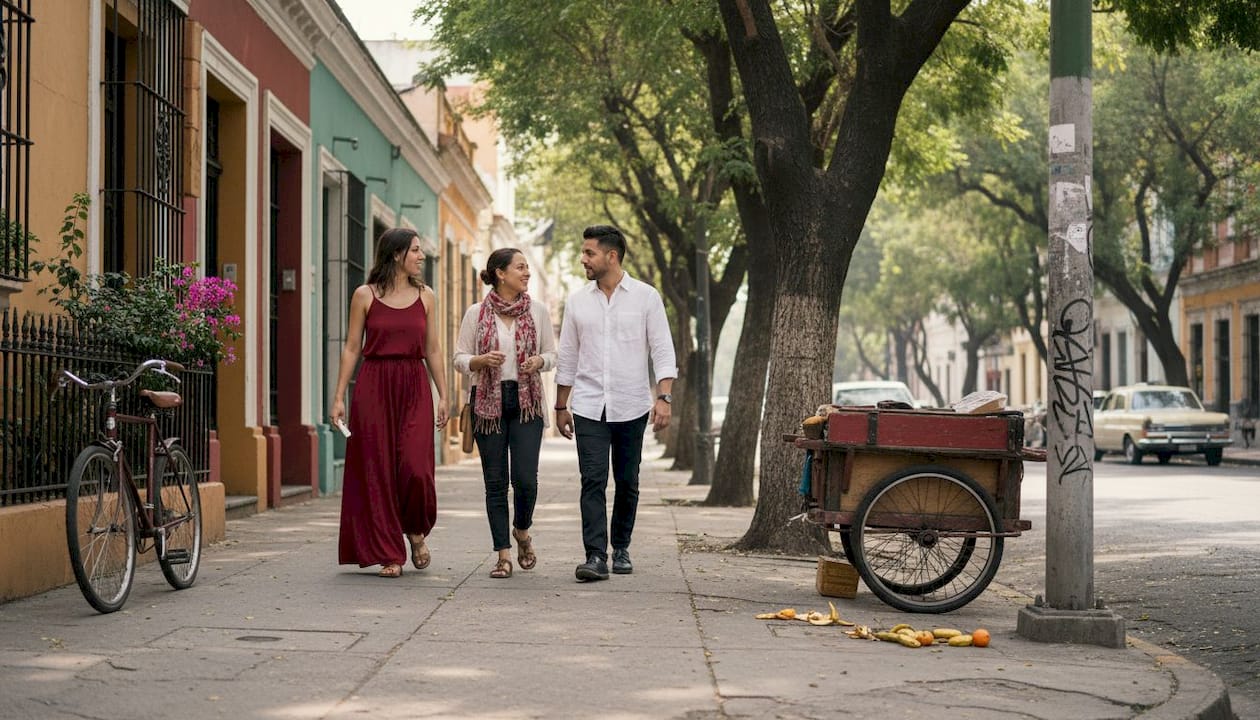
Pro Tip: Start every neighborhood session at a market or central park, then follow your senses along pedestrianized streets. Murals and community centers are excellent orientation points — they signal where the neighborhood’s creative energy is concentrated. For a curated starting point, our curated CDMX tours are designed around exactly this kind of neighborhood-first logic.
Design-led cultural immersions: architecture, art, and homeware experiences
Now that you’ve picked your neighborhoods, here’s how to deepen your immersion with culture, art, and crafts.
Mexico City is one of the great design capitals of the world. That’s not an exaggeration. The city holds a remarkable density of modernist architecture, living craft traditions, and a contemporary gallery scene that rivals cities twice its size.
Essential design stops
Luis Barragán’s houses: Visit Luis Barragán sites including Casa Pedregal, Gilardi House, and Casa Estudio for modernist architecture that integrates nature, light, and color in ways that feel almost spiritual. These are not just buildings — they are experiences.
Roma/Condesa gallery corridor: This stretch is home to over 50 galleries and design studios, ranging from established contemporary spaces to tiny experimental rooms tucked behind iron gates.
Casa Azul (Frida Kahlo Museum): Located in Coyoacán, this is one of the most emotionally resonant museums in Latin America. Go early to avoid crowds.
Perla Valtierra and Atlawa: Two of the city’s finest artisan shops for ceramics and homewares, both rooted in Mexican craft traditions but presented with a sharp design sensibility.
Booking tips that save you frustration
Barragán houses require advance reservations — sometimes weeks ahead. Book directly through their official channels as soon as your travel dates are confirmed. Many of the best gallery visits and private studio tours also benefit from advance contact. A quick email or WhatsApp message to a gallery before you arrive can open doors that stay closed to walk-in visitors.
The best design experiences in Mexico City are not passive. They ask something of you. They invite you to slow down, to look carefully, and to think about how objects, spaces, and light carry meaning.
After a morning of architecture or gallery hopping, blend your exploration with a stop at a local taquería. Blending art walks with taquerías creates a grounded cultural connection that keeps the experience from feeling like a checklist. If you want to add a hands-on creative layer to your visit, our Paint & Sip experiences offer a relaxed, social way to engage with the city’s creative energy. For those drawn to fashion and material culture, our vintage shopping tours take you through the city’s best secondhand and designer resale spaces.
Blend in and connect: food, community, and daily rituals
Art and objects are just a start — you’ll only truly feel the city by entering into its rhythms and rituals.
Mexico City’s daily life happens in the in-between spaces: parks, markets, and casual eateries where strangers become neighbors for an hour.
Food etiquette tips for eating like a local
At a taquería, order confidently and eat standing at the counter if that’s how it’s set up — sitting at a table when the counter is full reads as awkward to regulars.
In a panadería (bakery), use the tray and tongs provided to select your own bread — never handle items directly.
At a mercado, greet the vendor with a simple “buenos días” before asking about prices. It signals respect and often leads to better service.
Don’t ask for substitutions at street food stalls. Trust the cook’s setup — it’s usually optimized for flavor.
Tip generously at small eateries. Even a few pesos matter to vendors operating on thin margins.
A morning-to-night rhythm worth following
7:00am: Café de olla (spiced, pot-brewed coffee) at a neighborhood plaza or market stall.
9:00am: Wander a local mercado — Mercado de Medellín in Roma or Mercado Jamaica for flowers and energy.
1:00pm: Comida corrida (a set lunch menu) at a neighborhood fonda. This is the main meal of the day for most locals.
4:00pm: A quiet hour in a park — Parque México in Condesa is perfect for people-watching.
7:00pm: Mezcal or craft beer at a neighborhood bar, not a tourist-facing rooftop.
9:00pm: Tacos al pastor from a street cart, followed by a slow walk home.
Beyond tacos, push yourself to try tlayudas, enfrijoladas, sopa de lima, and chiles en nogada when in season. Each dish carries a regional story that adds texture to your understanding of Mexican culture. A guided food tour can help you navigate these flavors with context and confidence. For evenings, our bar hopping routes are designed around the neighborhoods where locals actually drink — not the spots that show up first in travel magazines.
Troubleshooting common mistakes: local etiquette and safety reminders
Even well-prepared travelers can hit bumps — here’s how to navigate them like a seasoned local.
The most common mistake we see is staying glued to the main tourist avenues. Exit busy streets immediately to smaller roads for authentic daily life. The moment you step off Avenida Álvaro Obregón or Avenida Amsterdam and go two blocks in any direction, the city changes completely. Quieter, more personal, more real.
Common mistakes and how to fix them
Only carrying large bills: Many street vendors and mercado stalls cannot make change for 500-peso notes. Always carry coins and 20-peso bills.
Rushing between sights: Mexico City is not a city to sprint through. Schedule fewer stops and linger longer at each one.
Ignoring neighborhood context: Some areas that look rough on a map are perfectly safe and full of life. Others that look polished can feel sterile. Ask your accommodation host for current, specific advice.
Photographing people without asking: Always ask before photographing vendors, performers, or community members. A smile and “¿Puedo tomar una foto?” goes a long way.
Skipping the siesta window: Many small shops close between 2pm and 4pm. Plan around it rather than fighting it.
Safety checklist for night exploring
Stay in well-lit, populated streets.
Use Uber or authorized taxis rather than hailing cabs off the street.
Keep your phone in a pocket, not in your hand.
Let someone know your general plan for the evening.
Trust your instincts — if a street feels wrong, it probably is.
Pro Tip: Smile and ask vendors or locals for suggestions in simple Spanish. Even a broken “¿Qué recomienda usted?” (What do you recommend?) opens conversations that guidebooks never could. People here are generous with their knowledge when they feel respected.
Why the best souvenirs are local relationships, not Instagram photos
We’ve taken a lot of travelers through Mexico City over the years, and the ones who leave most transformed are rarely the ones who visited the most sites. They’re the ones who sat long enough at a market stall to learn the vendor’s name. Who joined a neighborhood basketball game by accident. Who ended up at a quinceañera because a local family waved them in from the street.
Too many travelers treat cities as content. They move through spaces with their phones raised, collecting images instead of moments. The photo exists, but the memory is thin. What lasts — what you actually carry home — is the feeling of belonging somewhere, even briefly.
Mexico City is extraordinarily generous to travelers who show up with curiosity rather than a camera roll to fill. The city has a layered, complex soul, and it reveals itself slowly to those who are patient. Meaningful stories come from shared moments in real neighborhoods, not from standing in front of a famous mural for thirty seconds before moving on.
Our insider-led CDMX tours are built around this philosophy. We design experiences that put human connection at the center, because we believe that’s where travel actually lives.
Experience Mexico City like a local with Rban Tours
Ready to put these principles into action with local experts? Discover these curated experiences.
We built Rban Tours because we believe the best version of travel is one where you feel genuinely part of a place, not just passing through it. In Mexico City, that means walking with guides who grew up in these neighborhoods, eating at spots that don’t have English menus, and making things with your hands alongside local creatives.
Our walking and cultural tours take you through the city’s most alive and authentic corners, with storytelling that gives every street and building a voice. Our Paint & Sip workshops offer a creative, social way to connect with Mexico City’s artistic culture in a relaxed setting. And across all of our CDMX experiences, we work with local partners who care deeply about their communities and their craft. When you book with us, you’re supporting that ecosystem directly.
Frequently asked questions
Is it safe to explore Mexico City’s neighborhoods on foot like a local?
With basic precautions and by sticking to walkable, well-frequented neighborhoods, both locals and travelers regularly explore on foot; smaller roads away from busy avenues are often safer and more authentic than tourist corridors, and avoiding deserted areas at night keeps risk minimal.
Do I need to speak Spanish to connect with locals in Mexico City?
Basic Spanish helps enormously, but many locals in creative and hospitality areas are used to visitors and genuinely appreciate enthusiastic effort — even a few simple phrases signal respect and open real conversations.
How do I access Luis Barragán’s private houses?
You must reserve visits well in advance, as Barragán sites limit guest numbers and require guided tours — booking weeks ahead is strongly recommended.
What’s the best way to discover non-touristy local food?
Exploring markets, taquerías, and bakeries outside the main avenues and following locals’ lunch habits — particularly the comida corrida at a neighborhood fonda around 1pm — quickly leads to the most authentic and satisfying flavors.
Are there local workshops or creative experiences visitors can join?
Yes — many galleries, studios, and curated tours offer workshops, art walks, and short courses, especially in Roma, Condesa, and Coyoacán, where the creative community is most active and welcoming to curious visitors.
Recommended
Comments