
Barcelona Bike Routes for Italians: 10 km Seafront to 81 km Ronda Verda

The best bicycle itineraries in Barcelona for visitors are the seafront promenade from Barceloneta to the Fòrum for beginners, the Eixample Modernisme loop for Gaudí lovers, Carretera de les Aigües for panoramic views, the Ronda Verda for full-day riders, the Besòs river path for a car-free nature escape, and Montjuïc for short, steep viewpoints. Rent a standard city bike for the flat routes; consider an e-bike for Montjuïc or Collserola. Wear a helmet if you’re under 16, stick to bike lanes, and always lock your bike when you stop.
TL;DR:
The Carretera de les Aigües offers panoramic views but requires a gravel or mountain bike due to its earth surface.
The Ronda Verda covers 72 to 81 kilometers with mixed surfaces and elevation, ideal for full-day cycling challenges.
The seafront promenade is flat, traffic-free, and suitable for beginner riders or families, typically covering 10 to 14 kilometers.
An e-bike is recommended for routes involving hills, such as Montjuïc or Carretera de les Aigües, to manage elevation comfortably.
Guided bike tours with local hosts provide flexible stops and insider knowledge, offering a richer experience than solo riding.
Table of Contents
Which Itinerari in Bici a Barcellona Should You Actually Ride?
Barcelona rewards cyclists in a way few European capitals do. The city has built out a genuine network of dedicated lanes, and many central streets now sit inside “zone 30” areas where bicycles get priority over cars. That infrastructure means you don’t need to be an experienced urban cyclist to enjoy a full day on two wheels here. You just need to pick the right route for your legs, your time, and what you actually want to see.
Here’s the shortlist that covers nearly every kind of traveler:
Seafront promenade (Barceloneta to Fòrum): flat, wide, and traffic-free for most of its length. Perfect if you want an easy first ride or you’re traveling with kids.
Eixample Modernisme loop: a near-flat sightseeing route weaving past Gaudí’s greatest hits. Ideal for architecture lovers who want culture more than cardio.
Carretera de les Aigües: a scenic ridge trail above the city with sweeping views over Barcelona and the Mediterranean. This one demands a gravel or mountain bike because of its compacted-earth surface.
Ronda Verda: the full circuit around Barcelona’s edges, built for riders who want a proper day-long challenge rather than a casual pedal.
Besòs river path: quiet, green, and almost entirely free of traffic. A good pick if you’ve had enough of crowds and want nature instead.
Montjuïc loop: short in distance but sharp in gradient, with some of the best lookout points over the port and the city skyline.
Each route solves a different problem. If you’re short on time, the seafront or the Eixample loop delivers maximum payoff for minimal effort. If you came to Barcelona partly for the views, Carretera de les Aigües and Montjuïc are worth the extra sweat. And if you’d rather skip the tourist density altogether, the Besòs path gives you long stretches where it’s just you, the water, and some herons.
Architecture-focused travelers consistently gravitate toward the Eixample loop, while riders chasing open air and quiet tend to prefer Besòs or the Collserola trails. Neither choice is objectively better. It depends entirely on what kind of Barcelona you came to find.
Route Specs: Distance, Difficulty, Surface, and Access
Numbers matter here more than most guides admit. A route described as “moderate” can mean very different things depending on whether you’re comparing flat asphalt to a rolling gravel climb, so here’s what each itinerary actually demands from you and your bike.
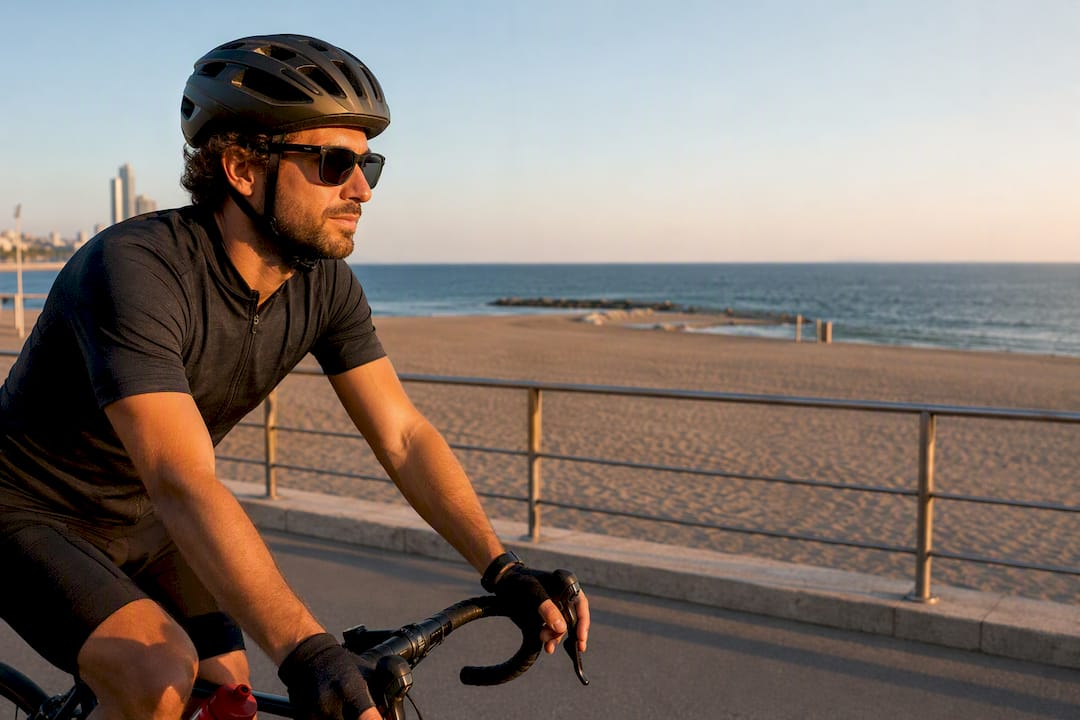
Seafront promenade (Barceloneta to Fòrum) This route runs roughly 10 to 14 kilometers one way, entirely flat, on continuous dedicated asphalt bike lanes. Budget 45 minutes to an hour each way at tourist pace, longer if you stop for photos at Bogatell or Mar Bella beaches. Any city or rental bike works fine. You can reach the starting point on foot from most central hotels, or hop the Metro to Ciutadella Vila Olímpica.
Eixample Modernisme loop Around 13 to 15 kilometers of near-flat city streets connecting Casa Batlló, La Pedrera, and the Sagrada Família area. Expect 90 minutes to two hours with stops. Surface is entirely asphalt, so a standard city bike or e-bike both work well. No special transport access needed since the loop starts and ends in the city center.
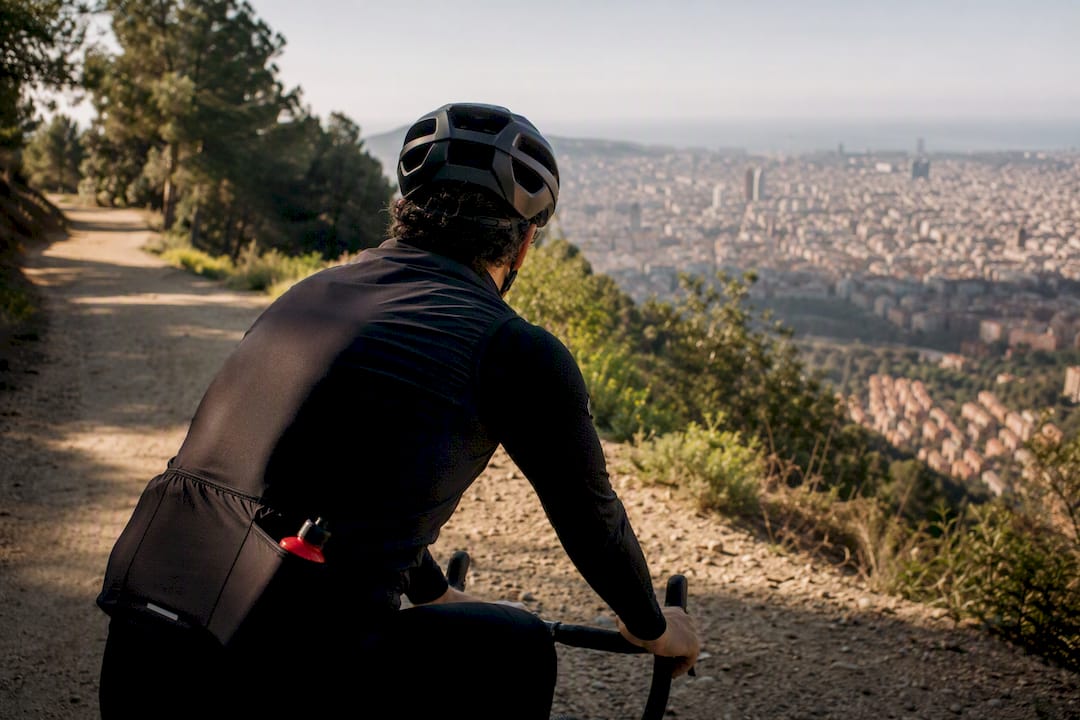
Carretera de les Aigües This is where equipment choice actually matters. The trail sits above the city in the Collserola hills, and its compacted-earth surface makes narrow-tired road bikes uncomfortable and occasionally unsafe on the looser sections. A gravel or mountain bike is the right call, and you should respect the shared-use speed limits since runners and walkers use the same path. You can reach the trailhead via the Funicular de Vallvidrera or FGC train, both of which allow bikes on board in limited numbers per cabin.
Ronda Verda The full signposted circuit runs 72 to 81 kilometers depending on the variant you choose, with 775 to 900 meters of accumulated elevation. This is a genuine full-day commitment, not a half-day add-on. Surface alternates between asphalt and packed trail, so a gravel or hybrid bike handles it best. Most riders break it into sections and use FGC or regional train stations along the route as escape hatches if legs or weather give out.
Besòs river path A flat, mostly paved corridor running north from the city along the riverbank. Distances vary depending on how far you push, but a there-and-back ride of 15 to 20 kilometers is common. Minimal elevation, standard city bike is fine, and access is straightforward by Metro to the northern stations near the river mouth.
Montjuïc loop Short in distance, under 10 kilometers total, but the climbs are real. Expect noticeable gradients on the ascent toward the castle and the Olympic stadium area, with asphalt throughout. An e-bike takes the sting out of the climb if you’re not used to hills. The funicular up Montjuïc also carries bikes on request, which is a smart shortcut if you want the views without the grind.
Quick fact: Barcelona’s cycling network spans roughly 200 kilometers of dedicated lanes, which is why so many of these routes connect seamlessly without forcing you onto busy traffic streets.
Along the seafront and Besòs routes, you’ll find plenty of kiosks and beach bars for water and quick bites. Carretera de les Aigües and the Ronda Verda have far fewer services, so carry water and snacks before you set out.
Choosing the Right Bike and Gear Before You Ride
Your route dictates your bike, not the other way around. Get this wrong and you’ll spend your ride fighting the terrain instead of enjoying it.
Choose an e-bike for Montjuïc, Carretera de les Aigües, or any version of the Ronda Verda. The elevation gain on these routes turns a pleasant ride into a grind on a standard bike.
Stick with a standard city bike for the seafront promenade, Eixample loop, and Besòs path. All three are flat enough that extra battery weight just slows you down.
Check the essentials before you leave the shop: brakes that respond immediately, gears that shift cleanly, and a working lock. Typical rental prices in Barcelona fall in the €12 to €18 per day range, and a shop that skips this check with you is a shop to avoid.
Skip Bicing if you’re a tourist. The city’s bike-share system is built for residents with subscription requirements that make it impractical for short visits. Tourist rental shops or a guided tour cover the gap easily.
Helmets are mandatory in Spain for riders under 16, and strongly recommended for everyone else even though adults aren’t legally required to wear one. Always lock your bike, even for a five-minute coffee stop, and carry a basic repair kit if you’re heading onto Carretera de les Aigües or the Ronda Verda, where a flat tire can leave you stranded far from a shop.
Pro Tip: If you’re unsure which bike to rent, ask the shop specifically which routes you’re planning. A good rental shop in Barcelona will steer you toward a gravel bike the moment you mention Collserola, no explanation needed.
Sample Itineraries You Can Follow Today
Three ready-made plans, built around how much time you actually have.
Two-hour highlights loop: Start at Plaça Catalunya, ride through the Eixample past Casa Batlló and La Pedrera, swing toward the Sagrada Família, then loop back through El Born. Keep a relaxed pace with photo stops. Return your bike where you started, or drop it near El Born if your rental shop allows it.
Half-day combo: Ride the seafront promenade from Barceloneta to the Fòrum in the morning, stop for lunch near Bogatell beach, then either continue north toward the Besòs river path for a quiet finish or head inland toward Montjuïc for sunset views if you still have energy left.
Full-day plan: Take the FGC train up to Peu del Funicular, ride the length of Carretera de les Aigües for the views, then either continue onto a Ronda Verda section or use the funicular back down when you’ve had enough climbing. Build in a two-hour buffer since the terrain slows most riders more than expected.
For a longer stay, you can stitch several of these together into a multi-day plan that mixes cycling with other neighborhood exploring.
What Local Hosts Wish Every Visitor Knew
Small details make or break a bike day in Barcelona, and they’re rarely the ones written on a map. Meeting at Plaça Catalunya or El Born works well because both sit close to bike lanes heading in every direction, and both are easy to find even if it’s your first morning in the city. Spring and early autumn offer the best combination of light traffic and mild temperatures, while July and August mean heat that makes anything past 11 a.m. uncomfortable on routes without shade.
Riding with a small group and a local host changes the tempo entirely. You stop where locals actually stop, not where a map app tells you to, and someone who speaks your language can explain why a street is pedestrian-only before you accidentally ride into it.
A few words go a long way in an emergency: “¿ayuda, por favor?” gets attention fast, and knowing “prohibido” (forbidden) helps you recognize restricted zones before a local has to correct you.
Why I’d Choose a Guided Ride Over Going Solo
There’s something genuinely different about feeling Barcelona’s rhythm from a bike seat, the sea breeze on the promenade, the sudden hush of Collserola’s pine trees, the clatter of El Born’s narrow streets. Maps can get you there, but they can’t tell you which corner has the best light at 6 p.m. or why locals avoid a particular crossing. That’s where a small guided group earns its place: less time second-guessing directions, more time actually noticing the city around you.
— Rban
Ride Barcelona With a Local Host Who Knows the Best Corners
Rbantours turns everything in this guide into a done-for-you afternoon: no route planning, no guessing which bike to rent, no wondering if you missed the best viewpoint. The 2h Bicycle Tour pairs you with a local host who picks the pace, points out the spots most visitors ride straight past, and keeps the group small enough that you’re never just a number on a tour bus.
[

Every ride includes a local host who speaks your language, flexible stops based on what the group actually wants to see, and a format built for small groups rather than crowds of forty. Booking runs through simple WhatsApp support, so there’s no clunky checkout process standing between you and a bike saddle. Check available dates and reserve your spot on the Barcelona experiences page before your travel dates fill up.
Sources
Confirm surface conditions and closures shortly before you set out, since parks and shared trails change seasonally.
FAQ
Can You Actually Cycle Around All of Barcelona?
Yes. The city’s network of dedicated lanes and zone 30 streets connects the coast, the center, and the hills well enough that most visitors can ride between neighborhoods without touching heavy traffic. The seafront promenade and Eixample loop cover the flattest, easiest ground for a first-timer.
What’s Considered One of Europe’s Most Scenic Bike Routes?
Opinions vary, but many cyclists rank Carretera de les Aigües among the standout urban ride in Europe for its panoramic views over Barcelona and the sea. Its compacted-earth surface means a gravel or mountain bike handles it far better than a road bike.
What Should Visitors Watch Out for in Barcelona?
Watch for pickpocketing in crowded tourist zones like Las Ramblas, and always lock your bike even for short stops since bike theft is common in busy areas. On shared paths like Carretera de les Aigües, keep speeds down around runners and walkers.
Where Can You Find Organized Bike Tours in Barcelona?
Rbantours runs a 2h Bicycle Tour through Barcelona with a local host, small groups, and flexible stops based on what the group wants to see. It’s a straightforward option if you’d rather skip route planning and just show up ready to ride.
Is Bicing a Good Option for Tourists?
Not usually. Bicing is built primarily for residents with subscription requirements that make short-term tourist use impractical. Rental shops or a guided tour are simpler routes to a bike for most visitors.
Recommended
Comments