
Small Group Travel Benefits Worth Knowing in 2026


Most travelers have been there. You book a tour, arrive at the meeting point, and suddenly you’re one of forty strangers following a flag through a museum while the guide shouts over the crowd. Or you go the other route, plan everything solo, and spend half the trip sorting out logistics instead of living the experience. Small group travel benefits solve both of those problems at once. It gives you the cultural depth and social connection of traveling with others, without the noise and rigidity of mass tourism. Here’s exactly why it works, and how to make it work for you.
Table of Contents
Key takeaways
Point | Details |
Personalized support at scale | Small group operators maintain ratios as low as 1:2, giving you genuine attention without the price of a private tour. |
Deeper cultural access | Small groups unlock after-hours venues, local meals, and off-the-beaten-path experiences that large tours simply cannot access. |
Built-in social connection | Manageable group sizes create the right conditions for real friendships, not just polite small talk. |
Significant cost savings | Small group travel delivers most private travel perks at roughly half the cost, making quality experiences far more accessible. |
Smarter operator selection | Vetting for specialization, guide quality, and authentic local engagement separates transformative trips from forgettable ones. |
Small group travel benefits that change how you experience a city
The core promise of small group travel is simple: more of what matters, less of what doesn’t. What makes it deliver on that promise is the structure underneath.
Specialized operators maintain guest-to-crew ratios as low as 1:2 for activities that require close support. That means if your group has six people, there may be three crew members attending to your experience. Compare that to a standard large-group tour where one guide manages thirty people and you quickly understand why the quality of attention is so different.
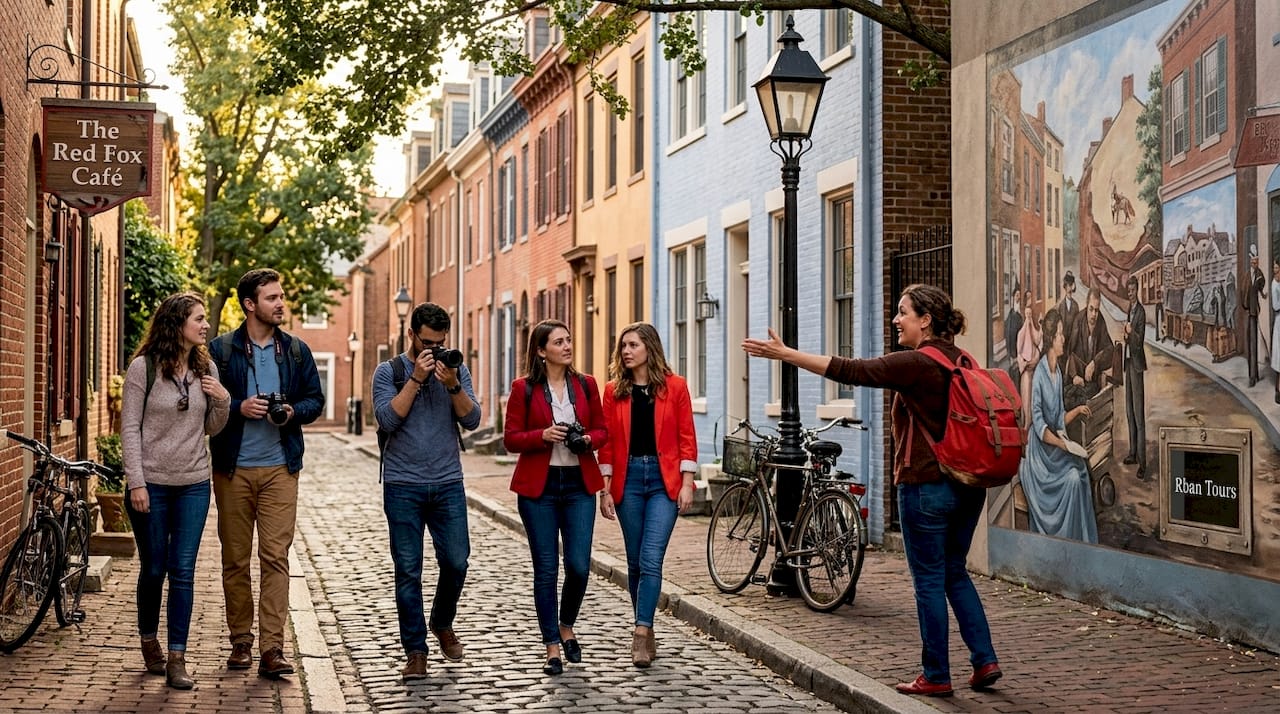
Beyond the ratio, dedicated guides do the heavy lifting you’d otherwise carry alone. They navigate permit requirements, handle language barriers, coordinate transport between neighborhoods, and anticipate the small problems before they reach you. Tour leaders manage evolving entry requirements and shifting local schedules so you never have to open a translation app mid-meal or miss a reservation because the booking system was only in Japanese.
Here’s what a well-run small group tour typically handles for you:
Airport and in-city transfers coordinated in advance
Accommodation selected for location, character, and quality
Restaurant reservations at places that don’t advertise to tourists
Entry tickets, permits, and timed slots for popular sites
Daily briefings so you always know what’s coming next
Pro Tip: When evaluating operators, ask specifically about their guide-to-guest ratio and whether guides are local specialists or generalists. A local guide who has spent ten years in a single city will give you a fundamentally different experience than someone who rotates between destinations.
Cultural immersion you can’t get on your own
This is where the advantages of small group travel become genuinely hard to replicate. Size matters when it comes to access. A group of eight can be invited into a local family’s home for a cooking lesson. A group of forty cannot.
Small group tours open doors to private access like after-hours museum visits, exclusive local experiences, and spaces that rarely appear on any itinerary you’d find on a travel blog. In cities like Barcelona or Mexico City, this might mean entering a neighborhood ceramics studio before it opens to the public, or sharing a meal at a family table in a home that’s been hosting guests for three generations.
The texture of these experiences is different, too. You’re not moving past things. You’re stopping, asking questions, and receiving real answers. Expert guides share local knowledge that transforms a street corner from scenery into story. They provide context that makes history feel present and traditions feel relevant rather than performative.
“Small group travel breaks the stereotype of rigid tours by offering more freedom and curated local experiences tailored to traveler interests.” — NZ Herald
What makes this work practically is the balance that modern small group tours build in between curated experiences and deliberate free time. You might spend a morning with a guide learning the rhythm of a local market, then have two hours in the afternoon to wander on your own terms. That combination, structured discovery plus personal freedom, is the heartbeat of genuinely immersive travel.
The social side: connections that actually last
One of the most underrated small group travel perks is the social dynamic. The benefits of traveling in groups go well beyond safety and shared logistics. They extend into the kind of human connection that solo travel, by its nature, makes harder to find.
Think about what actually forms a friendship: shared experience, proximity over time, and a reason to keep talking. Small group travel provides all three. You’re navigating the same city together, reacting to the same unexpected moments, and laughing at the same things. The bonds that form during a week of shared discovery tend to outlast the trip itself.
Matched interests from the start. Unlike random encounters on solo trips, small group travelers typically select experiences based on shared passions, whether that’s food, art, architecture, or street culture. That common thread makes conversation easy and connection faster.
Group size that actually works. Optimal social dynamics emerge in groups sized for genuine interaction, large enough to meet a diverse range of people, small enough that everyone knows everyone’s name by day two.
Safety and confidence, especially for solo travelers. Groups reduce vulnerability for solo travelers in unfamiliar places. There’s a practical layer of security in knowing someone always knows where you are.
Shared memories that compound. Photos are easier to take when someone else is in them. Stories are better when someone else lived them with you.
Pro Tip: If you’re traveling solo and concerned about group fit, look for operators who specify the demographic range of their typical traveler. Age range, travel style, and even interests are often listed. Choosing well here makes a significant difference in how naturally the group clicks.
Cost effectiveness and what you actually get
Let’s be direct about money. Small group travel is not the cheapest option. It costs more than booking a budget hostel and figuring it out yourself. But the comparison that actually matters is not solo budget travel. It’s private travel.
Small group touring delivers most of the exclusivity and personalization of a private tour at approximately 50% of the total cost. Group rates for accommodation, transport, and activities make that possible. The savings are real, and they come without meaningful sacrifice in quality.
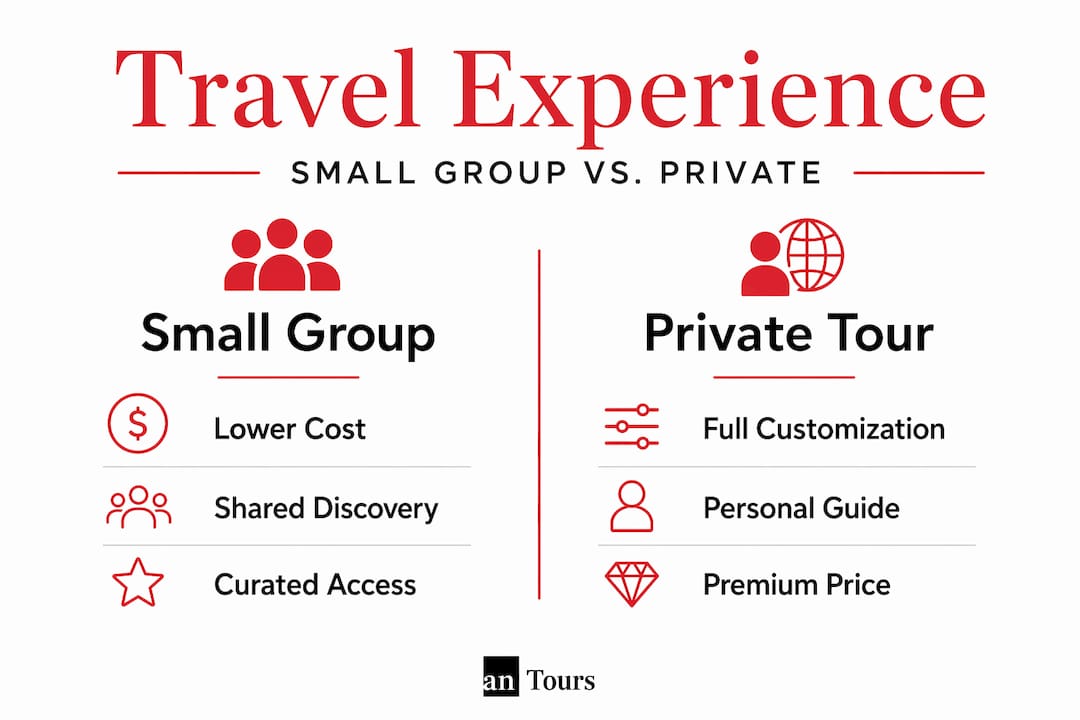
Travel Type | Cost Level | Cultural Access | Personalization | Logistics Handled |
Large group tour | Low | Limited | Minimal | Yes |
Solo independent | Medium | Self-directed | Full | No |
Small group tour | Medium-High | High | Strong | Yes |
Private tour | High | Highest | Full | Yes |
What you also get with small group travel that solo travel rarely provides: transparent, upfront pricing with inclusions clearly defined. You know before you book what is covered. No surprise entry fees, no scramble to find a restaurant that accepts cards, no afternoon spent trying to book a sold-out experience on the day you arrive.
The value equation tips further when you factor in time. Planning a two-week trip through Vietnam or Japan from scratch takes real effort. That time has a cost even if it doesn’t show up on a credit card statement.
How to choose the right small group tour
Knowing why choose small group travel is one thing. Knowing how to choose well is what separates a transformative trip from a mediocre one. Operators vary widely in quality, price, and the kind of experience they actually deliver.
Here’s what to look for before you commit:
Group size cap. Ask for the maximum number of participants, not just the typical number. A tour that caps at twelve feels very different from one that caps at twenty-eight.
Itinerary flexibility. Good operators build in breathing room. Look for language like “free afternoon” or “optional add-ons” rather than fully packed, back-to-back schedules every day.
Guide credentials. Seek out guides who live in the destination year-round, speak the local language fluently, and have a track record you can verify through reviews.
Included services. Confirm what’s actually included: airport transfers, emergency support, all accommodation, and which meals are covered.
Operator focus. Niche operators who specialize in a region or experience type consistently outperform generalist operators who run tours everywhere.
Pro Tip: Prioritize operators who partner with local artisans, family-owned restaurants, and neighborhood creatives. This signals an operator who genuinely invests in the destination rather than just passing through it. It also means your spending stays in the local economy, which matters more and more to conscious travelers.
You can explore how personalized tours work in practice to get a clearer picture of what thoughtful itinerary design looks like before you book.
My honest take on small group travel
I’ve traveled solo, I’ve joined large group tours, and I’ve experienced the small group format across very different destinations. My honest view: nothing else comes close for the specific combination of depth, ease, and human connection.
What surprised me most was how the social intimacy changed the experience of the destination itself. When you’re genuinely talking with the people around you, when someone in your group points out something you missed, or a conversation over dinner opens up a new layer of the city you’re in, the place becomes more alive. Solo travel gives you freedom. Small groups give you meaning.
The structure-versus-freedom tension that worries many travelers before they book? It dissolves quickly once you’re in it. The best operators understand that you don’t want to be led everywhere. You want a foundation. And from that foundation, you go where you want.
The one thing I’d push back on is the assumption that all small group tours deliver this. They don’t. I’ve seen small group tours that simply replicated large tour dynamics at a smaller scale. The operator matters enormously. Vetting carefully, reading real reviews, and looking at how an operator talks about the local community tells you almost everything you need to know.
Rethink what you think you know about group travel. The format has evolved. Done well, it’s the best way to unlock deeper travel connections without giving up the quality and freedom modern travelers expect.
— Rban
Experience small group travel with Rbantours
If what you’ve read resonates, Rbantours has built an entire approach around exactly these principles. We design small group experiences that bring the pulse of a city directly to you, whether that’s a walking cultural tour in Barcelona, a street food exploration in Mexico City, or a creative workshop that puts you in the same room as the people who actually make a neighborhood feel the way it does.
[

Our guides are local creatives and cultural insiders, not just escorts with microphones. Our group sizes stay intimate, our itineraries stay flexible, and every experience is designed to feel like something you’ll still be talking about a year from now. If you’re ready to feel the real rhythm of a city, explore our curated Barcelona experiences or browse our Mexico City tours and find the one that fits how you want to travel.
FAQ
What are the main small group travel benefits?
Small group travel offers personalized attention from expert guides, access to exclusive local experiences, meaningful social connections, and streamlined logistics, all at a significantly lower cost than private travel.
How many people is considered a small group tour?
Most small group tours cap at between eight and twenty participants, with the best operators keeping groups at twelve or fewer to maintain an intimate, high-quality experience for everyone.
Is small group travel safe for solo travelers?
Yes. Groups reduce vulnerability for solo travelers by providing built-in awareness, companionship, and security, making unfamiliar destinations feel far more approachable and manageable.
How does small group travel compare in cost to private tours?
Small group travel delivers most of the exclusivity and personalization of private travel at approximately 50% of the cost, making it the most efficient way to access high-quality, curated travel experiences.
What should I look for when choosing a small group tour operator?
Look for operators who cap group sizes, employ local specialist guides, offer itinerary flexibility, and actively partner with the local community. Operators vary significantly in quality, so reading verified reviews and checking for niche specialization is time well spent.
Recommended
Comments