
What Defines Unique Experiences in Travel and Events

A unique experience is one that departs from expectation in a locally anchored, personally meaningful way — irreproducible elsewhere, felt in the body, and remembered long after it ends. Three qualities consistently separate the memorable from the merely pleasant:
Local character: rooted in a specific place’s culture, cuisine, or creative community
Departure from expectation: a moment that surprises the mind and triggers stronger memory encoding
Personalization: shaped around who you are, not who the average visitor is
Sensory richness: engaging more than one sense simultaneously
Irreproducibility: impossible to replicate in another city or context
Meaningfulness: connected to something that matters to you personally
Use this guide as a design tool. If you’re building or evaluating an experience, the checklist in Section 3 and the measurement framework in Section 5 are your fastest entry points.
Table of Contents
What researchers actually say about uniqueness and memorable moments
Academic and practitioner research converges on three psychological pillars that make a consumption experience feel special: uniqueness, meaningfulness, and authenticity. Uniqueness covers rarity and personalization. Meaningfulness involves symbolism and self-transformation. Authenticity signals genuine human sincerity rather than manufactured performance. When all three are present, an experience crosses from pleasant into unforgettable.

Novelty is the engine underneath all three. In tourism research, novelty is defined as the degree to which an experience departs from expectation — not simply “newness” in the abstract. That departure triggers dopamine release and stronger memory encoding, which is why a surprising moment at a street market in Mexico City stays with you while a perfectly comfortable hotel room fades within weeks. Strong emotions from novel experiences create vivid memories through the secretion of neurochemicals including dopamine, and novelty is now recognized as one of the main dimensions underlying experience memorability.
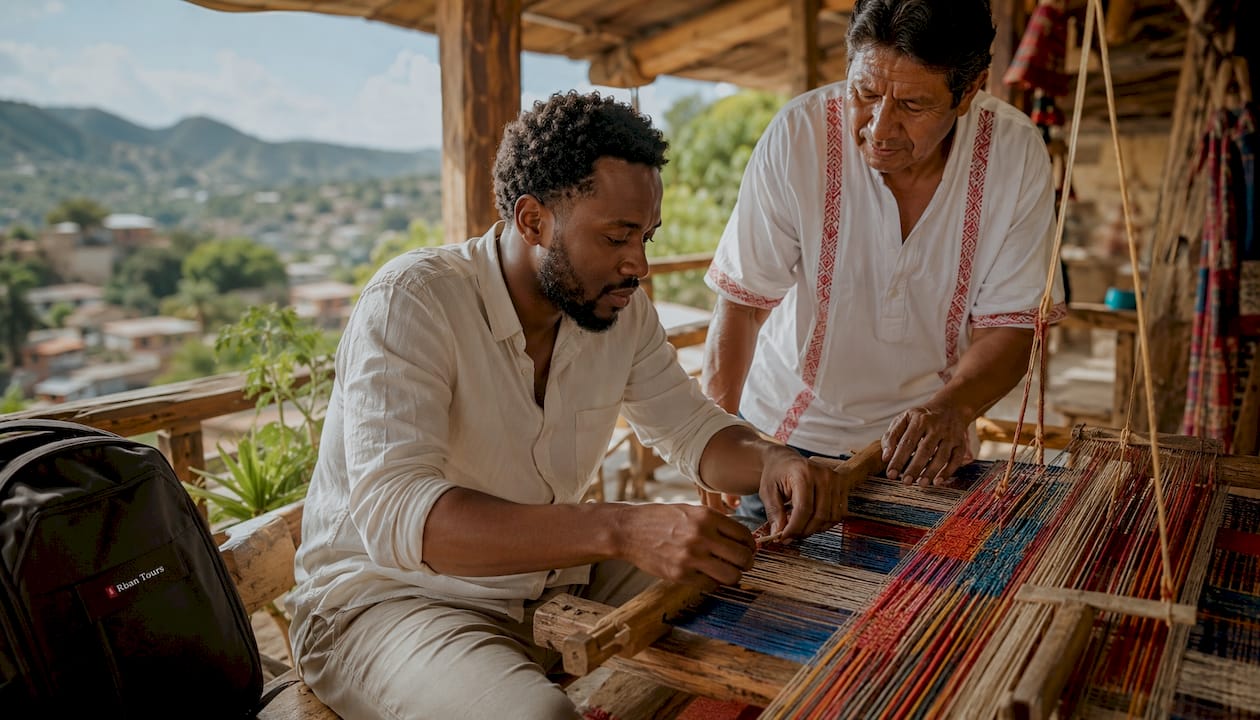
Experiences also fall on an ordinary-to-extraordinary continuum. Extraordinary experiences — infrequent, departure-heavy — tend to produce stronger enduring memories. Yet the research adds a nuance most designers miss: as people age, ordinary experiences can yield equal happiness. Context and life stage shape what registers as “unique” for a given participant, which means designers cannot rely on spectacle alone.
Destination identity attributes — nature, cultural heritage, culinary traditions — are the raw material of irreproducibility. An olive grove in Puglia, a salt flat in the Yucatán, a covered market in Barcelona: these are anchors that no other place can replicate. Designers who build from these assets are working with the grain of what makes experiences feel genuinely unique rather than against it.
Core design principles that make experiences feel genuinely unique
Every principle below has a practical counterpart. Think of this as a working checklist you can copy into a creative brief.
Design Principle | What It Means in Practice | Travel / Event Example |
Local character | Root the experience in place-specific assets: cuisine, craft, architecture, community | A cooking class taught by a neighborhood grandmother, not a hotel chef |
Immersion and flow | Remove distractions; give participants a clear role that requires active engagement | A guided market walk where guests negotiate, taste, and choose ingredients |
Personalization | Shape the experience around the participant’s profile, not the average visitor | Pre-arrival questionnaire that adjusts the itinerary to dietary and cultural interests |
Storytelling and narrative framing | Give the experience a beginning, middle, and end with emotional stakes | A tour framed as “following the route of a historic textile merchant” |
Novelty balanced with familiarity | Anchor the new in something recognizable so the mind can process and appreciate it | A jazz workshop that starts with a song the guest already knows |
Multisensory design | Engage smell, touch, sound, and taste alongside sight | A ceramics session with local clay, ambient music, and a shared meal at the end |
Social connection | Build moments of genuine human exchange, not just parallel consumption | Small-group format (6–10 people) with a shared challenge or creative task |
Ephemerality and exclusivity | Limit availability; make the moment feel unrepeatable | A single-night supper club in a private courtyard, offered twice a year |
Sustainability and ethical authenticity | Ensure local partners benefit; avoid extractive or performative “local” elements | Revenue-sharing with artisan cooperatives; no staged folk performances |
Novelty vs. familiarity deserves its own note. Research shows that pure novelty can overwhelm while a familiar anchor helps the mind process and appreciate what is new. The most interesting experiences sit at the intersection of the known and the unknown. A participant who has never tried natural wine but loves food will engage more deeply with a natural wine tasting that starts from flavor vocabulary they already have.
Pro Tip: Design for purposeful friction. Experiences that require mild effort, adaptation, or multisensory engagement encode more durably in memory than passive ones. A guest who kneads dough, navigates an unfamiliar neighborhood, or learns three words in a new language will remember the moment far longer than one who simply watches. Effort is not a flaw in the design — it is the mechanism.
Operational mini-checklist for designers:
[ ] Does the experience use at least one irreplaceable local asset (person, place, or ingredient)?
[ ] Is there a narrative arc with a clear emotional peak?
[ ] Have you built in at least one moment of mild surprise or expectation violation?
[ ] Does the format require active participation rather than passive observation?
[ ] Is the group size small enough for genuine social exchange?
[ ] Have you engaged at least three senses deliberately?
[ ] Does the pre-arrival communication set an accurate and evocative expectation?
How to design a unique experience from brief to pilot
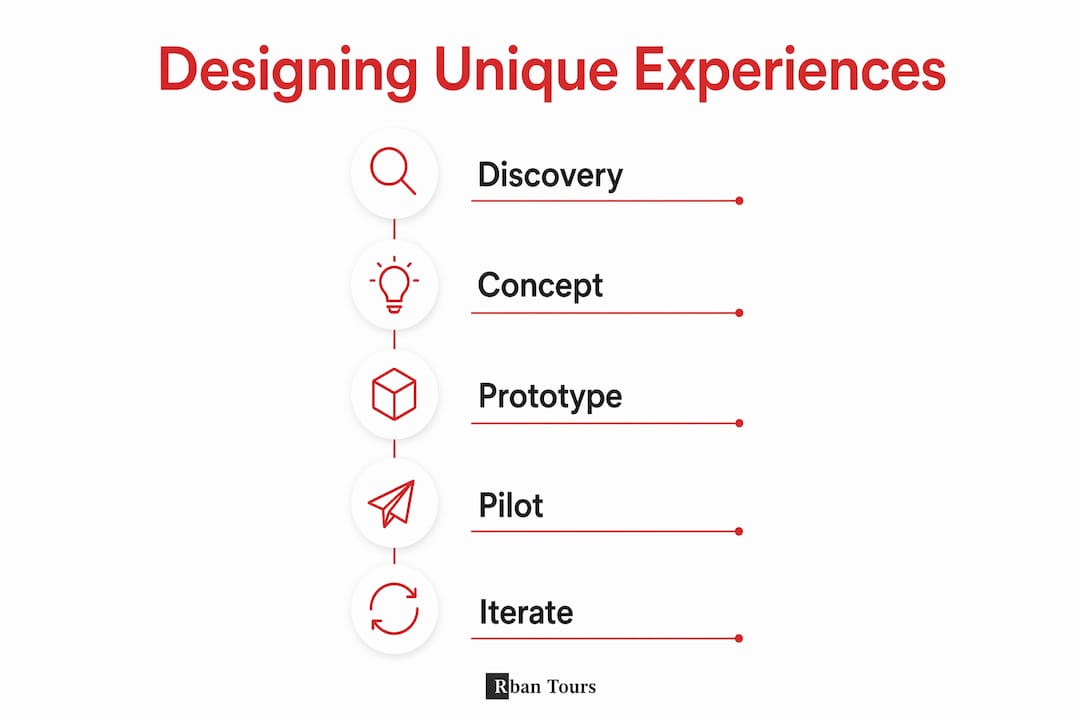
A well-designed experience doesn’t emerge from a single brainstorm. It moves through five phases, each with its own deliverables and decision points.
1. Discovery
Start by defining the “why” before the “what.” Meaningful travel is shifting from where to why — designers who begin with the participant’s purpose (seeking happiness, meaning, or psychological richness) build more resonant experiences than those who start with a destination or activity type. Deliverables: participant persona, purpose statement, local asset inventory. Timeline: one to two weeks. Cost shape: low (research and conversations).
2. Concept
Translate the purpose into a narrative and a sensory blueprint. What is the story the participant will tell afterward? Which local partners, venues, and materials will carry the experience? This is also the moment to set expectation framing. Pre-arrival narrative and high-quality visuals shape perceived uniqueness before anyone arrives — if the concept cannot be communicated compellingly in a 200-word description and three images, it needs more development. Deliverables: concept narrative, partner shortlist, visual mood board. Timeline: one to two weeks.
3. Prototype
Run a low-fidelity version with a small, trusted group (friends, colleagues, or a handful of early guests). The goal is to identify where energy drops, where confusion enters, and whether the emotional peak lands where you intended. Deliverables: run-of-show, feedback notes, revised narrative. Timeline: one day to one weekend. Cost shape: moderate (materials, partner fees, hospitality).
4. Pilot
Open to a small paying group. Keep the group size tight (6–12 participants) so you can observe closely and gather rich qualitative feedback. This is your first real signal on whether the experience reads as unique to strangers. Deliverables: post-experience survey, facilitator debrief, photo and story assets. Timeline: one to four weeks after prototype.
5. Iterate
Use pilot feedback to sharpen the narrative, adjust pacing, and refine the sensory moments. One or two iterations typically move an experience from “good” to genuinely memorable. Deliverables: updated run-of-show, revised pre-arrival assets, partner agreements. Timeline: ongoing.
Key questions to ask local partners before committing:
What aspect of this place do most visitors never see?
What would you want a close friend to experience here?
What is the one thing we should never do or say in this context?
How do you want your community to benefit from this experience?
Risk checklist:
[ ] Have you avoided overpromising in the pre-arrival narrative?
[ ] Is the experience achievable in the time and budget you’ve communicated?
[ ] Have you briefed local partners on the participant’s expectations?
[ ] Do you have a contingency for weather, cancellations, or logistical delays?
[ ] Have you confirmed that the “local” elements are genuinely local, not sourced for performance?
For a deeper look at how boutique tour design translates these phases into operational practice, the contrast with standard travel formats is instructive.
How to measure whether your experience actually felt unique
Measurement is where most operators fall short. Subjective impressions are real signals — you just need the right instruments to capture them.
Quantitative signals to track:
Repeat booking rate (the clearest single indicator that an experience delivered on its promise)
Social shares with original captions (not just reposts — original language signals genuine emotional response)
Net Promoter Score adapted for experience quality: “How likely are you to describe this experience to a friend in detail?”
Photo and video output per participant (a proxy for peak moments)
Qualitative signals that matter more:
Story frequency: how often do participants reference the experience in conversation weeks later?
Memory cues retained: do participants keep a physical object, a recipe card, a phrase from the guide?
Richness indicators: are post-experience descriptions specific (“the smell of the leather workshop”) or generic (“it was great”)?
Survey questions you can copy directly into a post-experience form:
“Describe this experience in three words.”
“What moment surprised you most?”
“What will you remember about this in six months?”
“Did this experience change how you think about [city/craft/culture]? How?”
“Would you have found this experience anywhere else? Why or why not?”
Question 5 is the most direct test of irreproducibility — the core of what defines uniqueness.
Timing matters significantly. Immediate post-experience surveys capture emotional intensity. A follow-up at 48–72 hours captures what has consolidated into memory. A third touchpoint at three months reveals what has genuinely lasted. The gap between the immediate and the three-month response is your most honest measure of whether the experience created durable meaning or only momentary pleasure.
Understanding guest experience design at a hospitality level adds another layer: the signals that indicate a guest felt genuinely seen (unprompted thank-you notes, specific staff mentions, return inquiries) are often more reliable than any survey score.
Three experiences that show these principles working in practice
Transformative travel: a solo immersion in a living craft tradition
Context: A traveler books a five-day residency with a family of natural dye artisans in Oaxaca, Mexico. No tour group, no fixed itinerary. The participant works alongside the family, sources plant materials from a local market, and produces a small textile to take home.
Principles applied: local character, immersion, purposeful friction, ephemerality, meaningfulness.
What made it irreproducible: the specific family, their knowledge, and the regional plant palette exist nowhere else. The experience creates what researchers describe as self-discontinuity — a temporary loosening of the participant’s habitual self-narrative that enables genuine reflection.
Pitfall avoided: the operator resisted the temptation to add a “market tour” and a “cooking class” to fill the schedule. Depth over breadth preserved the emotional coherence of the experience.
Small-group cultural tour: reading a city through its food
Context: A group joins a local-led walking tour through a neighborhood market, guided by a chef who grew up in the area. The tour includes several stops, a shared meal prepared from market ingredients, and a conversation about how the neighborhood has changed over time.
Principles applied: local character, social connection, storytelling, multisensory design, novelty balanced with familiarity.
What made it irreproducible: the guide’s personal history with the neighborhood, the specific vendors, and the meal prepared that morning from whatever was freshest. No two iterations of this tour are identical.
Pitfall avoided: keeping the group at eight prevented the experience from becoming a lecture. Every participant had a role — choosing an ingredient, asking a vendor a question, contributing to the shared meal.
Creative workshop: a Paint & Sip session with a local artist
Context: Twelve guests gather in a studio space in Barcelona for a two-hour painting session led by a local artist. The session is framed around a specific neighborhood the artist has painted for a decade. Guests leave with their own work and a short written note from the artist about the place.
Principles applied: social connection, storytelling, multisensory design, personalization (each canvas is unique), ephemerality.
Measurable outcome: participants consistently describe the written note as the most memorable element — a small, low-cost detail that transformed a pleasant activity into a personal artifact.
Pitfall avoided: the artist’s framing prevented the session from feeling like a generic craft activity. The neighborhood narrative gave the painting a subject, which gave participants something to think about while they worked.
How Rbantours applies these principles operationally
Rbantours builds each experience from the destination outward, starting with the question: what does this city know that no other city does? That question drives partner selection, narrative framing, and the sensory details that give each experience its specific texture.
How the operational model works:
Local partner selection: Rbantours collaborates with local creatives, artisans, chefs, and venue owners who have genuine roots in the neighborhood. Partners are chosen for depth of knowledge, not just availability. The role of local guides in shaping authentic moments is central to every program.
Pre-arrival narrative: before guests arrive, Rbantours sends curated materials that set an accurate and evocative expectation — images, a short story about the neighborhood or craft, and a note about what to wear, bring, or leave behind. This pre-arrival framing is not marketing; it is the first act of the experience itself.
Sensory and story-driven design: each experience is built around at least one emotional peak moment — a reveal, a shared creation, a conversation with a local that guests could not have scripted. The sensory environment (sound, smell, texture, taste) is considered at the design stage, not added as an afterthought.
Small-group format: Rbantours keeps group sizes tight to preserve the conditions for genuine social exchange and personalized attention.
Feedback and iteration: post-experience surveys and facilitator debriefs feed directly into the next iteration of each program.
Operational checklist (mapped to design principles):
[ ] Local partner briefed on participant expectations and narrative arc
[ ] Pre-arrival assets sent at least 48 hours before the experience
[ ] Emotional peak moment identified and protected in the run-of-show
[ ] Group size confirmed at 12 or fewer
[ ] At least three senses engaged by design
[ ] Post-experience survey deployed within 24 hours
[ ] 48–72 hour follow-up scheduled
Across destinations including Barcelona, Mexico City, Italy, Vietnam, and Japan, Rbantours applies this framework to experiences as different as vintage shopping tours and street food explorations — each one rooted in the specific pulse of its city.
Key Takeaways
Unique experiences are defined by the convergence of local irreproducibility, expectation-departing novelty, and personal meaning — and all three can be designed for deliberately.
Point | Details |
Uniqueness has three pillars | Uniqueness, meaningfulness, and authenticity work together; remove one and the experience flattens. |
Novelty requires a familiar anchor | Pure novelty overwhelms; pair surprising elements with something the participant already knows. |
Pre-arrival framing is part of the experience | Narrative and visuals sent before arrival shape perceived uniqueness before anyone shows up. |
Measure at three time points | Immediate, 48–72 hours, and three months post-experience reveal what genuinely lasted versus what faded. |
Rbantours as a design model | Rbantours builds from local partners and pre-arrival storytelling outward, applying these principles across multiple international destinations. |
Why the “why” matters more than the “where” right now
Here is what we think most experience designers are still getting wrong: they optimize for spectacle when they should be optimizing for purpose. The research on meaningful travel is pointing clearly in one direction — travelers in 2026 are asking “why am I going?” before they ask “where?” Designers who answer the “why” first, then build the experience around that answer, consistently produce moments that participants describe as transformative rather than merely enjoyable.
The practical implication is counterintuitive: the most memorable experiences are often the smallest ones. A two-hour session with a local ceramicist who teaches you one technique properly will outlast a three-country itinerary in memory. The reason is psychological richness — diverse, unusual, reflective moments that require genuine engagement encode more durably than passive sightseeing, however beautiful the backdrop.
Our suggestion: before your next design sprint, run a single low-cost experiment. Choose one element of an existing experience and replace it with something that requires the participant to do rather than observe. A tasting becomes a blending session. A guided walk becomes a neighborhood photography brief. A cooking demonstration becomes a hands-on prep station. Run it with six people over a weekend. Survey them immediately, then again at 72 hours. The gap between those two responses will tell you more about what uniqueness actually means to your audience than any focus group.
See these principles in action with Rbantours
If you’ve been thinking about what it would feel like to experience a city the way its most curious residents do, Rbantours is the place to start. Every experience we design begins with a local partner who knows something the guidebooks don’t — a ceramicist in Barcelona’s Gràcia neighborhood, a street food vendor who has worked the same corner of Mexico City for twenty years, a vintage dealer with an eye for the stories behind the objects.
[
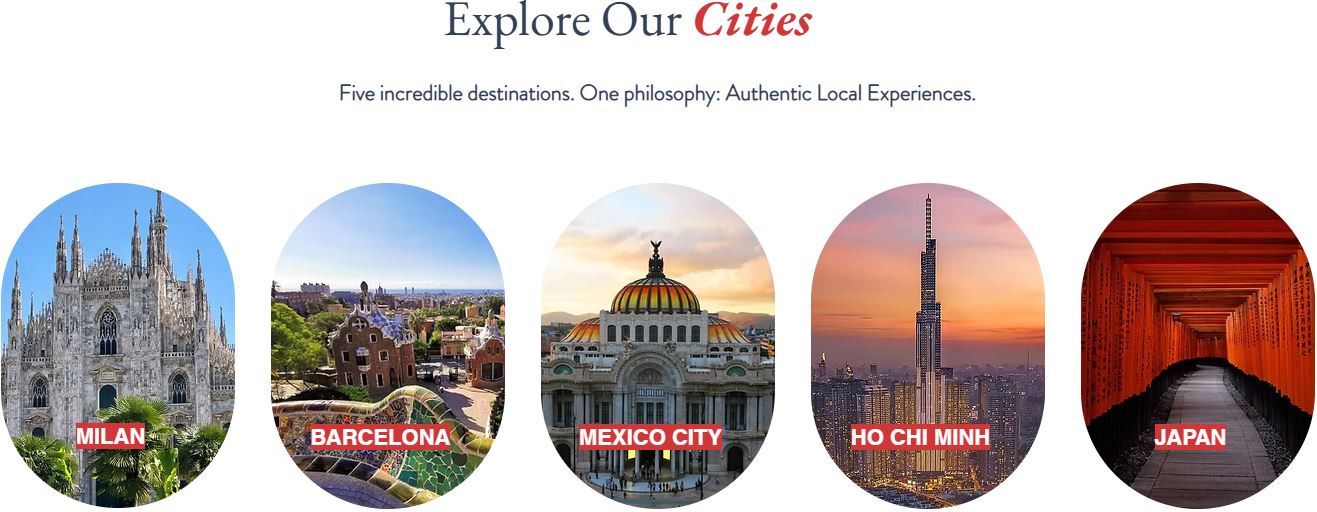
The walking and cultural tours are the clearest expression of the design principles in this guide: small groups, local guides, narrative framing, and at least one moment that surprises you. If you’re drawn to creative workshops, the Paint & Sip experience puts the multisensory and social connection principles to work in a two-hour session that leaves you with something tangible. Browse the full range of experiences and find the one that fits your “why.”
Useful sources and further reading
These are the primary sources behind the research in this guide, annotated for quick reference.
The Experience of Novelty and the Novelty of Experience — Frontiers in Psychology. The definitive review of novelty as a cognitive appraisal dimension in tourism. Covers dopamine, memory encoding, and the distinction between trip-level and event-level novelty. Essential for the psychology of what makes an experience memorable.
What Makes Consumption Experiences Feel Special? — Journal of Consumer Research. Multimethod investigation establishing the three-pillar framework (uniqueness, meaningfulness, authenticity) and the role of purposeful friction in memory durability. The strongest academic grounding for the design principles in this guide.
Consumer Expectations in the Context of Unique Tourism Products — Academica Turistica. Practitioner-facing research on how pre-arrival narrative and high-quality visuals shape perceived uniqueness. Directly supports the pre-arrival framing argument and the importance of local character.
Unique Destination Attributes as a Basis of Tourism Experience — Academica Turistica. Qualitative research identifying the destination identity attributes (nature, cultural heritage, culinary tradition) that supply irreproducibility. Useful for the local-asset-led design argument.
Happiness from Ordinary and Extraordinary Experiences — Journal of Consumer Research. Empirical work on the ordinary-to-extraordinary continuum and how age and context affect what participants value. Nuances the “more spectacular = more memorable” assumption.
Familiarity and Novelty Balance in Experience Design — PMC / Psychological research. Research showing that optimal interest comes from pairing novelty with a familiar anchor. Supports the “calibrated novelty” design principle and the psychological richness argument.
Travel Doesn’t Just Relax You — It Breaks Your Identity — Psychology Today. Practitioner-facing analysis of self-discontinuity and transformational travel. Useful for the meaningfulness pillar and the Oaxaca case study.
The New Trend in Travel: Start with Why, Not Where — The Seattle Times. Accessible summary of the shift from destination-led to purpose-led travel. Supports the editorial perspective section and the “why before where” design argument.
What Is Guest Experience? A Guide for Hospitality Pros — Wild Foodz by Hotel Entree Brugge. Industry-level guidance on guest experience design, including the qualitative signals (unprompted thank-you notes, specific staff mentions) that indicate genuine memorability. Useful complement to the measurement section.
Recommended
Comments