
The Role of Authentic City Guides in Deep Travel

Authentic city guides are defined as locally rooted cultural interpreters who translate a destination’s living heritage, social rhythms, and unspoken norms into meaningful encounters for travelers. They are not simply escorts with microphones. The best guides act as cultural mediators, a term used in academic tourism research to describe professionals who facilitate intercultural dialogue between visitors and host communities. Programs from UNESCO to the Philippines Department of Tourism now recognize this mediating function as the foundation of quality guiding. When you travel with a skilled local guide, you are not just seeing a city. You are reading it.
How authentic city guides serve as cultural mediators
The role of authentic city guides goes far beyond pointing at landmarks. A 2025 journal study confirms that guides function as intercultural communicators, actively managing cultural differences, reducing misunderstandings, and translating social expectations that no travel app can replicate. This means the guide standing beside you in a Hanoi alley or a Barcelona market is performing a sophisticated act of cultural translation in real time.
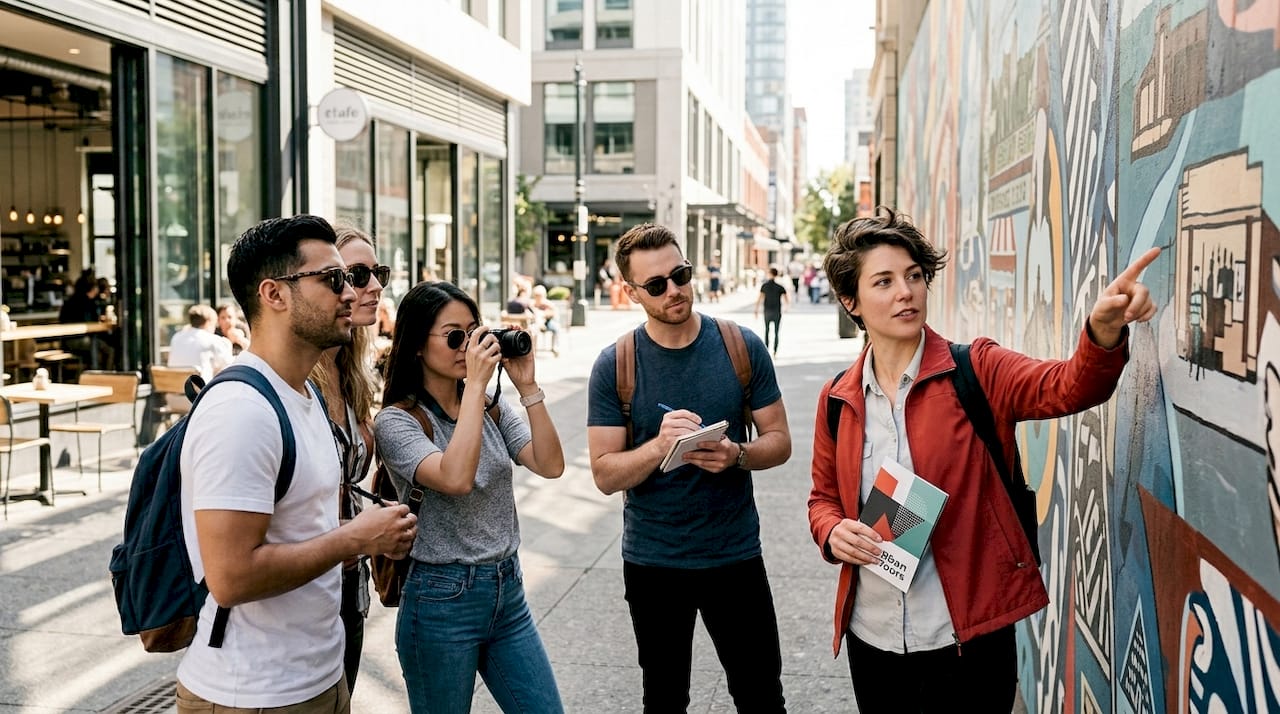
Intercultural competence and emotional intelligence are the core skills that separate a great guide from a good one. A guide with these skills recognizes when a traveler’s behavior might inadvertently offend a local host, steps in gracefully, and reframes the moment as a learning opportunity rather than an awkward correction. The authenticity experience is relational in nature, meaning how a cultural encounter is mediated matters as much as the content of the encounter itself.
Here is what skilled cultural mediation looks like in practice:
Reading the room: Guides adjust their narrative tone and depth based on the group’s cultural background and emotional cues.
Translating norms: They explain why locals behave in certain ways, turning potential confusion into genuine curiosity.
Managing stereotypes: Guides actively counter oversimplified narratives about a culture, replacing them with layered, human stories.
Creating dialogue: The best guides invite conversation between travelers and locals rather than delivering a one-way lecture.
Pro Tip: When evaluating a guide before booking, ask one question: “What is something most tourists misunderstand about this city?” A guide with strong intercultural skills will give you a specific, thoughtful answer. A guide without them will give you a rehearsed fact.
What is value-based interpretation and why does it matter?
Value-based interpretation is the practice of connecting visitors to the deeper social, ethical, and emotional meanings embedded in a place, rather than simply recounting historical dates or architectural facts. UNESCO’s Learning Landscapes initiative promotes this approach as the gold standard for heritage sites, emphasizing participatory co-creation and capacity-building for guides and interpretive agents worldwide. The shift is significant: it moves the guide from lecturer to co-author of the visitor’s experience.
This approach transforms heritage into a catalyst for shared stewardship, not just passive observation. When a guide in Kotor, Montenegro explains why a particular city wall matters to the community living beside it today, not just to the Byzantine emperor who built it, the traveler leaves with something more durable than a photograph. They leave with a sense of responsibility toward the place.
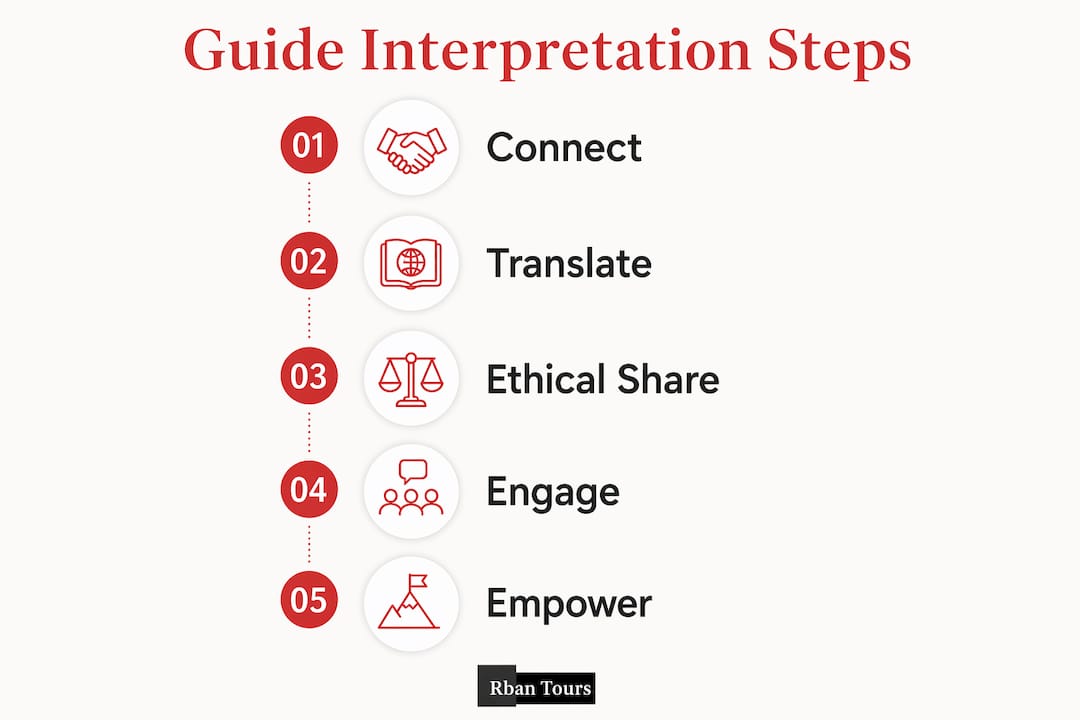
The practical shift from scripted tours to dialogic storytelling involves several key changes:
Moving from monologue to conversation, inviting travelers to share their own cultural references
Centering local community voices in the narrative, not just official historical accounts
Framing heritage as a living, evolving story rather than a fixed museum exhibit
Using ethical storytelling that respects what communities choose to share and what they protect
“Value-based interpretation transforms heritage into a catalyst for shared stewardship, not just passive observation.” — UNESCO Learning Landscapes
UNESCO’s 2024 workshops in Kotor trained 12 interpretive agents in participatory strategies, with full implementation planned for 2025. That number is small, but the model is designed to scale through guide-educator networks, where each trained agent trains others.
How does negotiated authenticity shape what guides can share?
Authenticity in city tours is not an unlimited resource. It is ethically bounded and actively negotiated between guides, local communities, and travelers. Ethnographic research in Northern Vietnam demonstrates that heritage performances are choreographed to maintain what researchers call “symbolic autonomy,” meaning communities decide which cultural aspects are visible to outsiders and which remain protected. This is not deception. It is cultural self-determination.
Travelers should adjust their expectations accordingly. Local communities ethically control what is shared, and skilled guides mediate those boundaries with sensitivity. A guide who respects these thresholds is actually more authentic than one who promises total access. The following table clarifies the distinction between staged and genuine experiences within this framework.
Experience type | What it means for travelers |
Choreographed cultural performance | A community-sanctioned presentation that preserves symbolic autonomy while offering genuine cultural insight |
Unrestricted access tour | Often a commercial product with no community oversight, risking exploitation of cultural heritage |
Guide-mediated dialogue | A negotiated encounter where the guide facilitates respectful exchange within community-set boundaries |
Scripted historical tour | Information delivery without cultural mediation, missing the relational depth of authentic guiding |
A guide’s credibility hinges on managing these community-set boundaries respectfully. When you travel with a guide who occasionally says “that part of the ceremony is private,” trust them. That boundary is a sign of integrity, not a limitation of the tour.
What training programs are shaping the next generation of guides?
Professional development is the engine behind authentic guiding. In May 2026, the Philippines Department of Tourism partnered with the Tampakan Local Government Unit to run a seminar that trained guides on sustainable practices and cultural narratives, equipping them with storytelling skills and eco-tourism knowledge. This kind of government-backed training signals a global recognition that guiding is a profession, not a side gig.
The most effective training programs share a common architecture:
Storytelling and narrative design: Guides learn to build emotionally resonant stories around a place, not just recite facts.
Sustainable tourism principles: Training covers how to minimize environmental and cultural impact during tours.
Eco-interpretation techniques: Guides learn to connect natural environments to cultural identity in ways that inspire conservation.
Intercultural communication skills: Workshops address how to manage cultural stereotypes and facilitate respectful cross-cultural exchange.
Community co-creation methods: Guides are trained to involve local knowledge holders in tour design, not just use them as props.
UNESCO’s interpretive planning framework emphasizes that guiding authenticity is engineered upstream through capacity-building, meaning the quality of your tour experience is largely determined before you ever meet your guide. A 2023 diploma program in the Colombian Amazon trained 40 participants as archaeology-tourist guides over three months, creating a cohort of local guide-educators who now train others. That multiplier effect is how sustainable cultural tourism actually scales.
Pro Tip: Look for guides affiliated with national tourism boards, UNESCO-recognized programs, or local cultural organizations. These affiliations signal that the guide has completed structured training, not just accumulated years of informal experience.
How can you choose and benefit from authentic local guides?
Choosing the right guide is the single most important decision you make before a city tour. The benefits of traveling with local guides extend well beyond cultural insight. Skilled guides improve your safety by knowing which neighborhoods to avoid at which hours, increase your economic impact by directing spending to local vendors, and open doors to experiences that no booking platform lists.
Here is what to look for when selecting a guide:
Community ties: The guide lives in the city, not just works in it. They know the baker, the muralist, and the family that has run the corner restaurant for three generations.
Specific knowledge: They can speak to the neighborhood’s current social dynamics, not just its 18th-century history.
Ethical framing: They acknowledge what is off-limits and explain why, rather than promising unrestricted access.
Personalization: They ask about your interests before the tour begins and adapt the experience accordingly.
Language of connection: They introduce you to locals rather than simply narrating about them from a distance.
Personalized, community-linked tours consistently outperform generic group tours on every measure of visitor satisfaction. When guides co-create narratives with local communities, travelers receive experiences grounded in lived reality rather than tourism industry templates. Exploring cities like a local means engaging with the city’s pulse as it actually beats today, not as it was curated for a brochure.
Key takeaways
Authentic city guides are cultural mediators whose value lies in intercultural competence, ethical storytelling, and community partnership, not simply local knowledge.
Point | Details |
Guides as cultural mediators | Skilled guides translate norms, manage misunderstandings, and create genuine dialogue between travelers and locals. |
Value-based interpretation | UNESCO-backed methods shift tours from fact delivery to participatory, ethically grounded storytelling. |
Negotiated authenticity | Communities set boundaries on what is shared; guides who respect these limits are the most trustworthy. |
Professional training matters | Programs like the Philippines DOT seminar and UNESCO workshops directly shape the quality of your tour experience. |
Choosing the right guide | Look for community ties, specific local knowledge, ethical framing, and a willingness to personalize the experience. |
What we have learned from years of guiding people through cities
The conversation about authentic guiding has shifted in ways that most travelers have not caught up with yet. For years, the industry treated guides as information dispensers. The better ones memorized more facts, spoke more languages, and kept larger groups moving on schedule. That model is not wrong exactly. It is just incomplete.
What we have seen, working across destinations from Mexico City to Milan to Vietnam, is that the guides who create genuinely memorable experiences are the ones who treat the tour as a conversation rather than a presentation. They are not performing the city for you. They are inviting you into it. That distinction sounds subtle, but it changes everything about how a traveler leaves a place feeling.
The concept of negotiated authenticity used to frustrate me when I first encountered it in academic literature. It felt like a polite way of saying travelers cannot have full access. Now I see it differently. A guide who tells you “this part of the ceremony is not for visitors” is giving you something more valuable than access. They are giving you an honest picture of how the community actually relates to its own culture. That honesty is the heartbeat of real travel.
We also believe strongly that training is not a one-time credential. The cities we work in are alive. Their stories change. A guide who completed a certification five years ago and stopped learning is already behind. The guides we respect most are the ones who are still curious, still asking questions of their own communities, still finding new layers in streets they have walked a thousand times.
If you are serious about immersive travel, seek guides who are connected to ongoing professional development, whether through national tourism bodies, UNESCO-affiliated programs, or local cultural organizations. Your experience will be richer for it, and so will theirs.
— Rban
Experience cities the way they were meant to be felt
At Rbantours, we design every experience around one belief: the best way to know a city is through the people who live it every day. Our walking and cultural tours are led by guides who are deeply embedded in their communities, trained in cultural storytelling, and committed to responsible, sustainable travel.
[
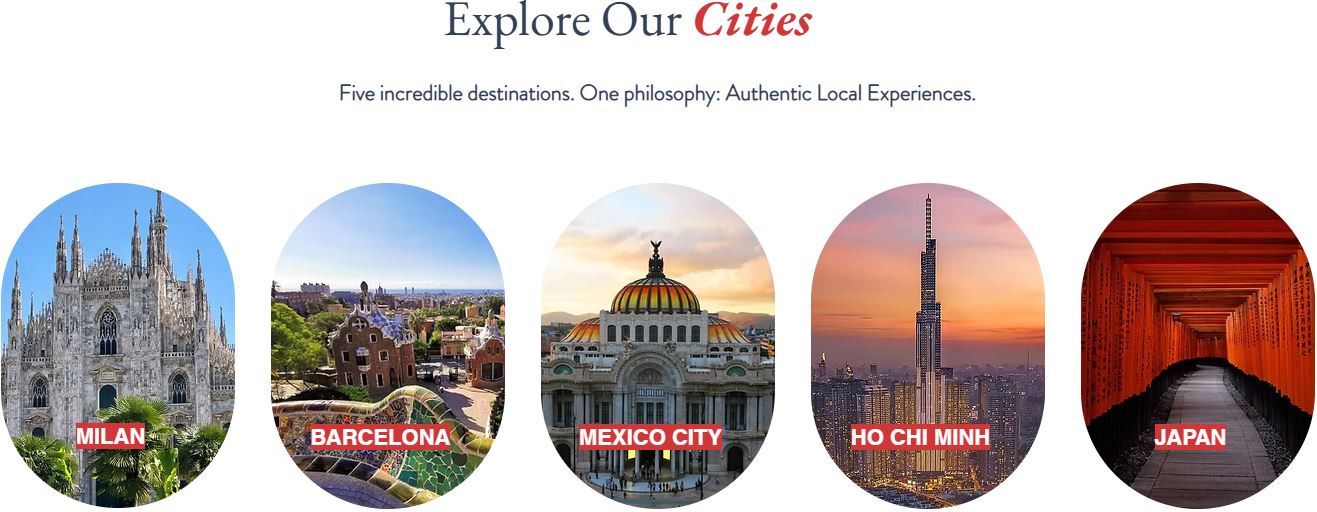
Whether you are discovering the creative energy of Mexico City through our CDMX tours or uncovering Milan’s hidden rhythm through local-led experiences, every Rbantours itinerary is built around genuine connection. We work with local creatives, community partners, and cultural organizations to make sure what you experience reflects the city as it actually is. Curious about what that looks like in practice? Explore our tours and find the experience that speaks to you.
FAQ
What makes a city guide truly authentic?
An authentic guide is defined by community ties, intercultural communication skills, and a commitment to ethical storytelling rather than scripted performance. Research confirms that authenticity is relational, meaning how a cultural encounter is mediated matters as much as the content itself.
What is negotiated authenticity in tourism?
Negotiated authenticity refers to the ethically bounded process by which local communities decide which cultural aspects are shared with visitors. Ethnographic research in Northern Vietnam shows that heritage performances are choreographed to preserve symbolic autonomy while still offering genuine cultural insight.
How do I choose a city guide for a cultural tour?
Look for guides with documented community ties, affiliations with national tourism boards or UNESCO-recognized programs, and a willingness to personalize the experience. Guides trained through structured programs consistently deliver richer, more ethically grounded tours than those without formal development.
Why is professional training important for local guides?
Training programs focused on storytelling, sustainable tourism, and intercultural competence directly shape the quality of the visitor experience. UNESCO’s capacity-building framework establishes that guiding authenticity is engineered through upstream preparation, not improvised on the day of the tour.
Do authentic guides improve the local economy?
Yes. Guides who are embedded in their communities direct traveler spending toward local vendors, artisans, and family-run businesses. Community-linked tours also support sustainable tourism models that benefit host populations over the long term.
Recommended
Comments