
Group Tour Tips That Actually Improve Your Experience


Group tour tips are practical strategies that help you maximize enjoyment, manage shared dynamics, and arrive home with friendships intact rather than frayed. Traveling in groups is one of the most social and rewarding ways to see the world, yet it demands a specific set of skills that solo travel never teaches you. From budgeting for tips to reading the room when personalities clash, the difference between a trip you rave about and one you quietly regret often comes down to preparation. We have pulled together the most experience-driven advice, drawing on insights from EF Tours, Rick Steves community forums, and platforms like WeRoad, to give you a real edge before you board that bus.
1. Master your group tour budget before you leave home
Budgeting is the single most overlooked part of group travel planning, and it is the one that causes the most friction mid-trip. The sticker price of your tour is never the full cost. Budget 15 to 20 percent above the tour price to cover tips, optional excursions, and meals not included in the package. That buffer prevents the uncomfortable moment when someone in your group realizes they are out of cash on day four.
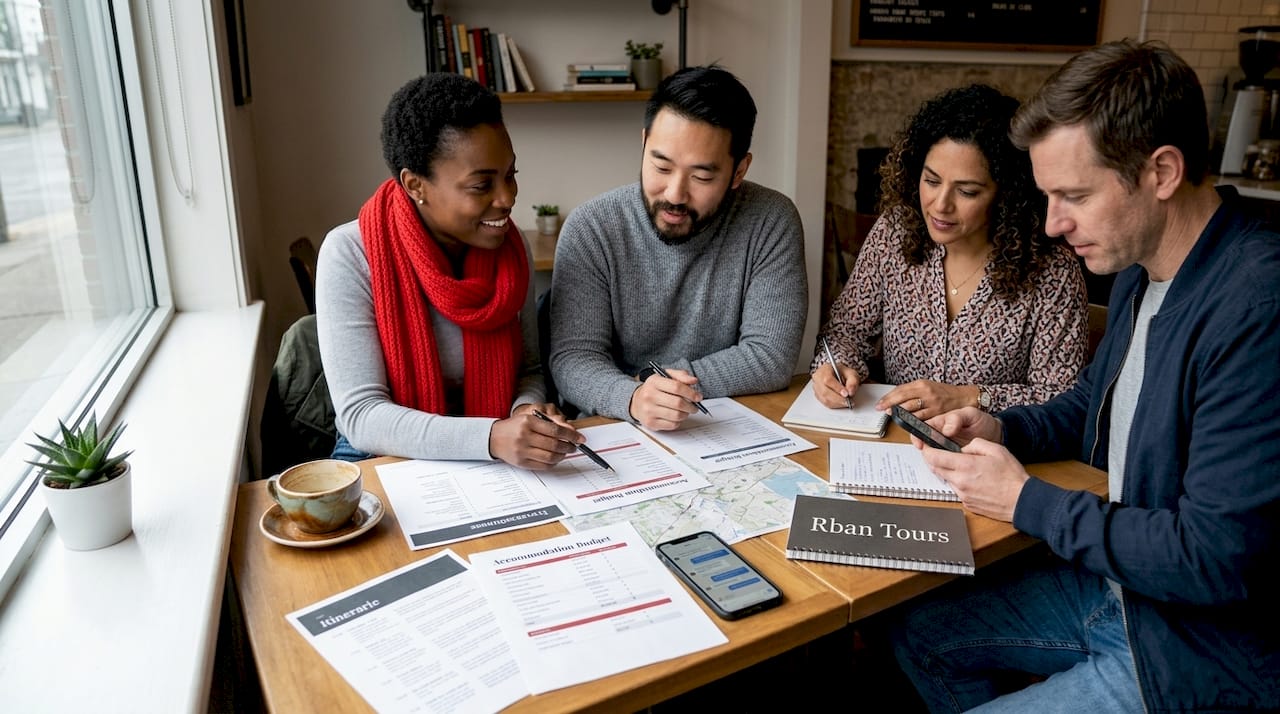
Tips alone add up faster than most people expect. EF Tours recommends budgeting roughly $10 per traveler per day to cover your tour director, bus driver, and local guides. On a nine-day tour, that is $90 per person in tips alone. Knowing this number before you pack means you arrive prepared, not scrambling.
Here is a quick breakdown of standard tipping amounts for group tours:
Recipient | Suggested Daily Tip |
Tour director | $6 (approx. 4 Euros) per person |
Bus driver | $3 (approx. 1 Euro) per person |
Local guide | $1 to $2 per person |
Total daily estimate | $10 per person per day |
Pro Tip: Collect tip money from your group before the tour begins. Collecting funds in advance eliminates last-minute stress and keeps the group’s energy focused on the experience, not logistics.
2. Carry cash in local currency for tipping
Cards are convenient at home, but they are often useless on a moving bus or at a remote local site. Carrying cash in local currency is the standard practice for tipping on group tours because many drivers and local guides simply cannot process card payments. Some tour leaders exchange cash on behalf of the group before departure to simplify the process entirely. This is one of those small logistics decisions that pays off every single day of the trip.
Exchange your currency at a reputable bank or currency exchange before you depart, not at the airport where rates are typically worse. If you are traveling across multiple countries, ask your tour operator which currencies you will need and in what approximate amounts. Being the person in your group who has the right change at the right moment is a quiet act of leadership that everyone appreciates.
3. Use pre-trip group chats to build rapport early
The social chemistry of a group tour is largely set before anyone boards a plane. Platforms like WeRoad add travelers to WhatsApp groups before trips begin so introductions and coordination happen naturally in the weeks leading up to departure. Groups typically range from 8 to 15 travelers, and early digital connection strengthens bonds that make the in-person experience far richer.
Use your pre-trip chat to share arrival times, ask about dietary preferences, and coordinate airport transfers if relevant. You will arrive already knowing names and faces, which removes the awkward first-day ice-breaking and lets you get straight to the good stuff. This is one of the best group travel advice moves you can make without spending a single dollar.
Pro Tip: Pin a shared document in your group chat with key logistics: meeting points, emergency contacts, and the tip collection plan. Google Sheets works well for this and keeps everyone on the same page.
4. Hold a pre-trip meeting to align expectations
Group meetings before travel clarify expectations, responsibilities, and budgets in ways that prevent conflicts from surfacing mid-trip. This is especially true for friend groups or family tours where assumptions run deep and conversations about money feel uncomfortable. Getting it all on the table before departure is the most respectful thing you can do for everyone involved.
Cover these key points in your pre-trip meeting:
Budget transparency: Share the full cost breakdown including tips, optional excursions, and any meals not covered by the tour.
Shared responsibilities: Decide who manages the tip fund, who tracks shared expenses, and who is the point of contact with the tour operator.
Ground rules: Agree on punctuality expectations, how to handle disagreements, and what happens if someone wants to skip an activity.
Tools: Use Splitwise for shared expense tracking, WhatsApp for daily communication, and Google Sheets for itinerary notes.
When everyone enters the trip with the same information, the group dynamic starts from a place of trust rather than guesswork.
5. Pack light to protect the whole group’s schedule
Packing light is not just personal preference on a group tour. It is a form of group etiquette. Travelers must carry their own bags between stops on most tours, and oversized luggage creates bottlenecks at transfers that delay the entire group. One person struggling with a 30-kilogram suitcase on a cobblestone street in Barcelona affects everyone’s timing and energy.
The practical rule is to pack for the physical demands of the itinerary, not for every possible scenario. Review the tour’s daily activities and pack accordingly. A walking-heavy cultural tour through Vietnam or Japan requires very different gear than a design-led workshop experience in Mexico City. Choose a carry-on sized bag where possible, and use packing cubes to stay organized without overpacking.
“The best-packed bag is the one you barely notice carrying. It keeps you present in the moment instead of managing your luggage.”
6. Respect the schedule like it is a shared commitment
Punctuality on a group tour is not about personal discipline. It is about respect for every other person in your group. When one traveler is consistently late to the bus, it erodes goodwill and creates tension that lingers for days. The schedule exists because guides, venues, and drivers coordinate around it, and delays have a cascading effect that shortens everyone’s experience.
Build a personal buffer into every departure time. If the bus leaves at 9:00 a.m., be at the meeting point by 8:50 a.m. This small habit signals to your group that you are a reliable travel companion, which matters more than you might think when you are spending 10 days with strangers. The small group travel benefits of intimacy and flexibility only work when everyone pulls their weight on timing.
7. Understand how guides manage group dynamics
A skilled guide does far more than narrate history. They read the room, manage energy, and protect the group’s collective experience. Highly trained guides address disruptive behavior privately and early, before it affects group morale. This quiet intervention is one of the most underappreciated skills in group travel facilitation, and it is why choosing a tour with experienced local guides matters so much.
As a traveler, your role is to support that dynamic, not undermine it. If someone in your group is creating friction, trust your guide to handle it. Avoid public confrontations, which almost always make things worse. The role of local guides in shaping a positive group atmosphere is something we at Rban Tours take seriously in every experience we design.
8. Embrace flexibility and protect your solo time
Being flexible, patient, and respectful of different personalities is the core skill of group travel. Not every activity will excite you. Not every meal will suit your taste. The travelers who enjoy group tours most are those who approach the unexpected with curiosity rather than resistance. Grace and humor go further than any itinerary.
Most well-designed group tours build in free time, and you should use it intentionally. Step away from the group for an hour to explore a neighborhood at your own pace. Sit alone at a café and absorb the city’s rhythm. These solo moments do not diminish the group experience. They recharge you for it. Knowing when to split into smaller sub-groups for optional activities is a sign of a mature travel group, not a fractured one.
9. Know the group tour etiquette rules that guides won’t always say out loud
Group tour etiquette covers the unspoken social contract that keeps shared travel enjoyable. A few rules that experienced travelers follow instinctively:
Do not monopolize your guide’s attention during group time. Save detailed personal questions for breaks.
Keep your voice at a considerate level in shared spaces, especially during early morning departures.
Avoid complaining publicly about the itinerary. If something genuinely needs addressing, speak to your guide privately.
Be mindful of dietary or mobility needs within your group and factor them into shared meal decisions.
Tip generously and on time. It signals respect for the people who make your experience possible.
These are the behaviors that deepen travel connections and turn a group of strangers into a travel community worth staying in touch with long after the trip ends.
Key takeaways
Successful group tours depend on preparation, clear communication, and mutual respect far more than the destination itself.
Point | Details |
Budget beyond the sticker price | Add 15 to 20 percent above tour cost for tips, excursions, and uncovered meals. |
Collect tips before departure | Pre-collecting cash in local currency removes stress and keeps logistics clean. |
Build group rapport early | Use WhatsApp or similar tools to introduce the group and share logistics before day one. |
Pack light as a group courtesy | Oversized luggage delays transfers and affects the entire group’s schedule. |
Trust your guide on group dynamics | Skilled guides manage disruptive behavior privately; support that process rather than escalating it. |
What group travel has taught us about showing up well
There is a version of group travel advice that focuses entirely on logistics, and it misses the point. The real skill is showing up as a generous travel companion. Not the loudest, not the most opinionated about the itinerary, but the one who reads the energy of the group and responds to it thoughtfully.
We have seen it repeatedly across our experiences in Barcelona, Mexico City, and beyond. The travelers who get the most out of a group tour are not the ones with the most detailed packing lists. They are the ones who stay curious, stay flexible, and genuinely invest in the people around them. Group chemistry is not luck. It is a choice made repeatedly throughout the trip.
The “I’ll do me, you do you” philosophy sounds liberating in theory, but in practice, group travel rewards a slightly different mindset. It rewards the traveler who notices when someone is struggling and slows down. Who laughs when the plan changes instead of sulking. Who tips well, shows up on time, and asks the guide a question that opens up a conversation the whole group benefits from.
Group travel is a skill, and like any skill, it improves with practice and self-awareness. The insider secrets of memorable city tours are rarely about the sights. They are about the quality of attention you bring to the experience and the people you share it with.
— Rban
Discover curated group experiences with Rban Tours
If these tips have you thinking about your next group adventure, we would love to show you what thoughtfully designed group travel actually feels like.
[

At Rban Tours, we design every experience around authentic local connection, creative energy, and the kind of group chemistry that makes a trip unforgettable. Our Barcelona group experiences pair expert local guides with curated cultural moments, from street food explorations to design-led workshops that bring cities to life in ways a standard tour never could. For those drawn to the pulse of Latin America, our Mexico City tours offer the same depth of local immersion with a distinctly vibrant energy. Browse our full range of walking cultural tours and find the experience that fits your group’s spirit.
FAQ
How much should I budget for tips on a group tour?
Budget approximately $10 per person per day to cover your tour director, bus driver, and local guides. On a nine-day tour, that totals roughly $90 per traveler in tips alone.
When should I collect tip money from my group?
Collect tip funds before the tour begins to eliminate last-minute stress and keep logistics clean during travel days. Cash in local currency is strongly preferred over card payments.
What tools help with group travel planning?
Google Sheets, Splitwise, and WhatsApp are the most practical tools for organizing group trips. Use Splitwise to track shared expenses, WhatsApp for daily coordination, and Google Sheets for itinerary and budget notes.
How do guides handle difficult group members?
Skilled guides address disruptive behavior privately and early, before it affects the wider group. As a traveler, trust your guide to manage these situations rather than intervening publicly.
How many people are typically in a group tour?
Group tours commonly range from 8 to 15 travelers, a size that builds strong pre-trip rapport and allows guides to manage dynamics effectively while still offering a social, shared experience.
Recommended
Comments