
How to Plan Cultural Experiences in Milan Like a Local

Most travelers leave Milan feeling like they saw the city but never felt it. They stood before the Duomo, queued for The Last Supper, and walked the Galleria Vittorio Emanuele II. And yet, something was missing. Knowing how to plan cultural experiences in Milan means understanding that the city’s real pulse lives in its neighborhoods, its seasonal events, its aperitivo rituals, and its contemporary art spaces. This guide gives you a practical, layered framework to build a Milan itinerary that moves you from tourist to participant.
Key Takeaways
Point | Details |
Pre-book fixed anchors early | Reserve The Last Supper and Duomo concerts months ahead since they sell out fast. |
Structure days by theme | Group art, design, and neighborhood exploration into separate days to avoid rushing and overload. |
Use seasonal events strategically | Programs like Estate al Castello add free, high-quality cultural depth to any summer itinerary. |
Balance landmarks with local life | Mix major institutions with aperitivo culture, Navigli evenings, and off-the-map neighborhoods. |
Stay flexible between anchors | Pre-book only the highest-demand experiences and leave room for spontaneous local discoveries. |
How to plan cultural experiences in Milan: your starting point
Before you open a single booking app, you need to understand Milan’s cultural architecture. The city operates on two registers simultaneously. There is the classical layer: the Duomo, Castello Sforzesco, Leonardo da Vinci’s Last Supper, and the Pinacoteca di Brera. And then there is the living layer: design studios, contemporary art foundations, canal-side food markets, and free outdoor concert seasons.
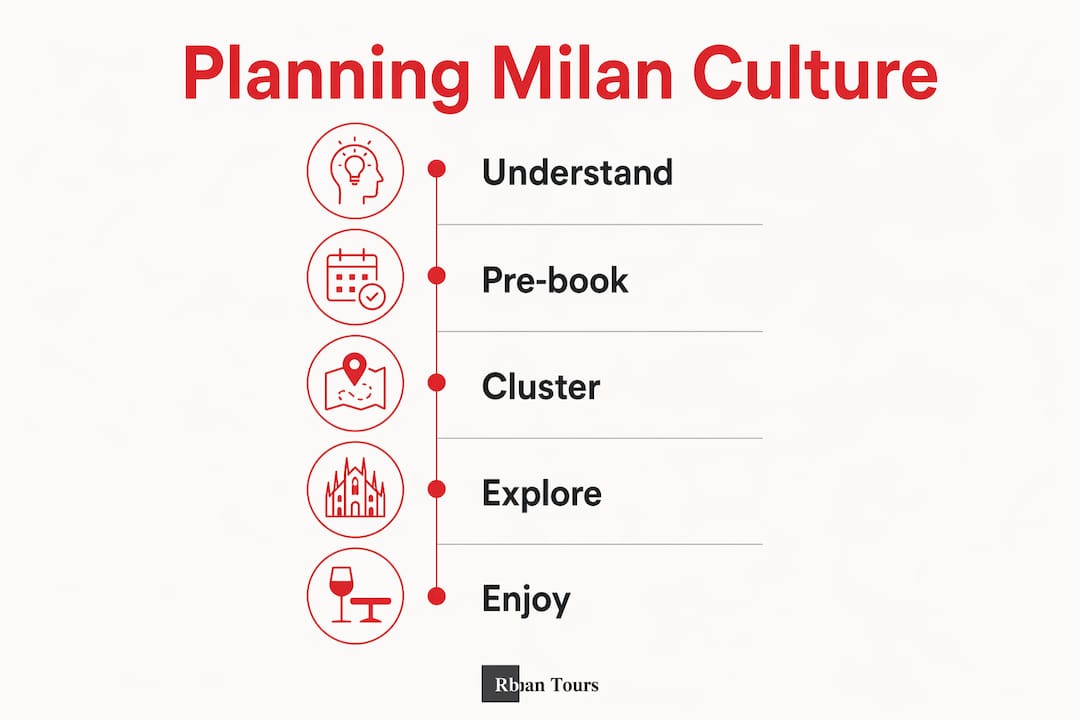
Most travelers only plan around the first layer. That’s the gap worth closing.
Here are the foundational resources and considerations to have in place before you start building your itinerary:
Seasonal programming: Milan’s cultural calendar is anchor-worthy. Estate al Castello 2026 runs from June through September and offers 70 events including music, cinema, theater, and comedy, many with free admission. If you’re visiting in summer, this becomes a cornerstone of your planning.
Contemporary art windows: Fondazione Prada is not just a gallery. It’s a statement. Cao Fei’s multimedia exhibition DASH runs April to September 2026, making it an ideal anchor for travelers seeking contemporary immersion alongside historic sites.
Ticketing logistics: The Last Supper requires reservations often months in advance. The Duomo also hosts free concerts, but free admission requires early reservations and strict entry windows. Treat these as the fixed pins your flexible itinerary wraps around.
Neighborhood logic: Plan around clusters. Brera and the Duomo area sit close enough to combine. Fondazione Prada and the Navigli district anchor a southern arc. Isola and Porta Venezia are your deep-local neighborhoods for a slower half-day.
Pro Tip: Use the Comune di Milano’s official cultural calendar (comune.milano.it/cultura) alongside Google Maps to cluster experiences geographically before worrying about scheduling. Proximity planning saves hours.
Resource | Best used for |
Comune di Milano cultural calendar | Free and public events, seasonal programs, outdoor concerts |
Duomo official site | Concert reservations, cathedral access, religious events |
Fondazione Prada website | Exhibition dates, tickets, and special programming |
Lonely Planet Milan guide | Thematic itinerary structure and neighborhood orientation |
Building your multi-day Milan itinerary
The single biggest mistake travelers make is treating Milan as a checklist. A well-paced 3 to 5 day itinerary that separates experiences by theme gives you depth and breathing room. Here’s how to think about it day by day.
Day one: historic art and architecture. Start at the Duomo, not just to see it, but to understand it. Book the rooftop access for a perspective most visitors skip. From there, walk to Castello Sforzesco and its free courtyard. Pinacoteca di Brera rewards an unhurried afternoon. Close at a Brera wine bar at aperitivo hour, around 6 to 8 p.m.
Day two: modern design and contemporary culture. Milan invented the idea that design is culture. Visit the Triennale Design Museum in the morning, then head south to Fondazione Prada. The building itself, designed by Rem Koolhaas, is worth the trip even without an exhibition. Add a walk through the Tortona design district if you want to feel the city’s creative energy at street level.
Day three: neighborhood life and social culture. Leave the institutions behind. Spend the morning in Porta Venezia, where Art Nouveau architecture meets Milan’s most multicultural neighborhood. Walk north to Isola for lunch at a local trattoria. End your day in the Navigli district, where the canal-side aperitivo ritual is not optional. It’s the city’s social heartbeat.
Day four (if you have it): fashion, vintage, and culinary culture. Explore the Quadrilatero della Moda not as a shopper but as a cultural observer. Then pivot toward a Milanese pastry experience or a local food market. Eating in Milan is a cultural act, not just a meal.
Pro Tip: Stay near a metro hub like Cadorna or Centrale. Lodging close to transit lets you cluster geographically different experiences without losing 40 minutes each direction to commuting.
Approach | Best for | Trade-off |
Thematic day structure | Deep immersion into one cultural register | Requires more upfront planning |
Landmark-first itinerary | Covering high-profile sites quickly | Risks surface-level engagement |
Neighborhood-led exploration | Authentic local rhythm and discovery | May miss key institutions |
Integrating seasonal events into your cultural plan
Milan’s seasonal calendar is one of its most underused planning resources. Most travelers research permanent attractions and ignore temporary programming. That’s a mistake.
Estate al Castello 2026 concentrates music, comedy, theater, and open-air cinema in a single iconic setting: the courtyard of Castello Sforzesco. Rather than planning separate evenings around each type of event, use this program to pick themed nights that match your interests, a jazz evening, a contemporary theater night, or a film screening under the stars.
Here’s how to work seasonal events into your schedule without overloading it:
Check event dates before booking flights. If you can align your travel dates with a specific concert or exhibition opening, do it. It gives your trip an emotional anchor beyond the generic tourist route.
Reserve early for free events. Free does not mean easy to access. Duomo events like the Bach Mass in B minor are free but require mandatory reservations. Entry opens from 18:45 for a 19:30 event. Arriving late means missing the experience entirely.
Mix free and ticketed. Build a cultural “stack”: one major ticketed institution like Fondazione Prada plus one free seasonal event per day. This gives you high-quality exposure without event fatigue or budget strain.
Look for multilingual programs. Many of Milan’s contemporary venues and tour operators offer bilingual content. Prioritize experiences where language won’t create distance between you and the material.
The broader principle here is one that experiential travel research supports: meaningful cultural travel is about sequencing experiences for emotional resonance, not just variety. A perfectly chosen evening at Castello Sforzesco stays with you longer than three rushed museum visits.
Local gems and neighborhoods worth your time
The best way to experience Milan’s culture is to resist the instinct to optimize every hour. Some of the city’s richest cultural texture lives in places that never make the top-ten lists.
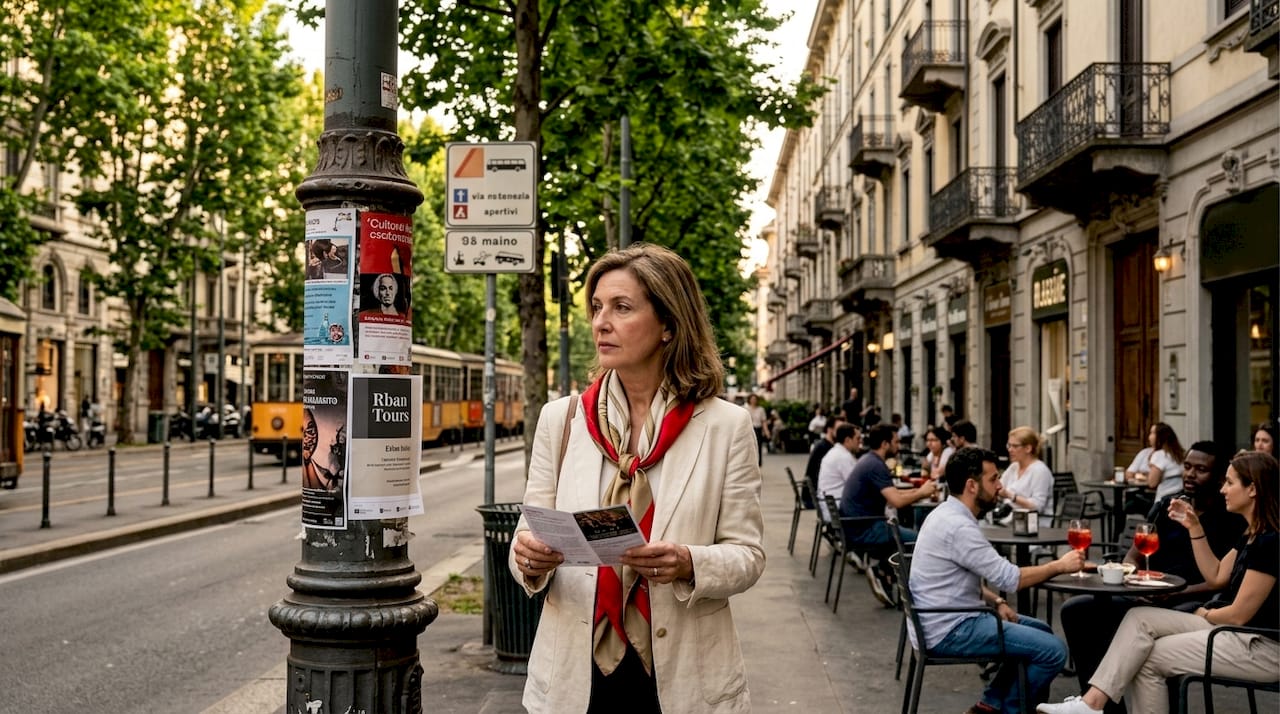
Porta Venezia is Milan’s most visually layered neighborhood. Art Nouveau palaces line the boulevards, and the area’s growing multicultural community gives it an energy that feels genuinely lived-in. Walk it in the late morning when locals are out.
Isola sits just north of the Garibaldi skyscraper district and couldn’t feel more different. Independent galleries, vintage shops, and neighborhood bars exist side by side. It’s the kind of place where local tour insights make a real difference. Knowing which bar has been there for 40 years versus which opened last month changes your reading of the neighborhood entirely.
Chinatown around Via Paolo Sarpi offers a slice of cultural Milan that many international travelers completely overlook. The street life, food stalls, and community events here tell a story about the city’s evolution that the Duomo cannot.
“The soul of Milan does not live in its monuments. It lives in the hour before dinner, when the whole city pauses, pours something cold, and remembers how to be present.”
When weighing guided tours versus self-exploration, consider this: self-exploration is rich for sensory absorption, but local expertise adds a layer of meaning you cannot get from a map. Understanding the types of tours available helps you decide where you need a storyteller and where you’re better off wandering alone. For neighborhoods like Isola or the Navigli, a short guided introduction followed by personal exploration is often the ideal format.
Common pitfalls and how to avoid them
Planning a Milan trip well means protecting yourself from the most predictable mistakes. Here are the ones that matter most:
Overbooking kills depth. Three to four meaningful experiences per day is a ceiling, not a floor. A 3-day Milan itinerary built around thematic days consistently outperforms rushed multi-site crawls in terms of what travelers actually remember.
Not booking The Last Supper early enough. This is non-negotiable. Tickets sell out months ahead. Book it first, then build everything else around it.
Treating free events as low-stakes. Free Duomo concerts have strict arrival windows. Plan to arrive 30 minutes early, build buffer time, and don’t schedule anything immediately after.
Choosing tourist-facing “cultural” experiences. Some tours and restaurants near the Duomo market themselves as authentic Milanese experiences while delivering something designed for maximum throughput. Ask who your guide is, where they’re from, and what neighborhood they actually live in.
Skipping the evenings. Milan’s cultural life accelerates after 6 p.m. The aperitivo hour, canal-side walks, and late gallery openings are not extras. They are the experience.
Pro Tip: Download the app “Milano Weekend” for real-time updates on pop-up events, gallery openings, and neighborhood markets. Pair it with Google Maps saved lists to keep your flexible options organized without overcommitting.
What I’ve learned from watching travelers discover Milan
I’ve seen travelers arrive with color-coded spreadsheets and leave feeling like they missed something. And I’ve seen travelers arrive with almost nothing planned who walked away completely changed. The difference was almost never the itinerary itself.
What actually matters is the mindset you bring. Experiential travel works when you treat each experience as something to inhabit, not document. Milan rewards this completely.
My honest observation: the travelers who connect most deeply with Milan are the ones who let the city interrupt their plans. They sit longer than expected at a neighborhood bar. They follow the sound of live music into a courtyard. They ask the person next to them at Estate al Castello how long they’ve been coming.
Structure matters. Planning matters. But leave enough white space in your schedule for the city to surprise you. That gap between one plan and the next is where Milan actually lives.
— Rban
Experience Milan the way it was meant to be lived
If you’ve read this far, you already understand that a great Milan trip is built, not stumbled into. At Rbantours, we design exactly that kind of experience.
[
Our walking cultural tours are led by locals who know the difference between a neighborhood and a postcard of one. We take you into the Navigli, through Isola, and into the corners of Milan that reward curiosity. For something more intimate, our dinner in a Milanese apartment puts you at a real table in a real home, sharing food and conversation with people who live here. Explore the full range of Milan experiences we offer and find the ones that fit your rhythm.
FAQ
How far in advance should I book The Last Supper?
Book at least 2 to 3 months ahead, as tickets sell out consistently. Treat it as your first itinerary anchor and plan everything else around it.
What is Estate al Castello and is it worth planning around?
Estate al Castello is a city-run summer program offering 70 cultural events including concerts, theater, and cinema at Castello Sforzesco from June to September, many free. It’s one of the best ways to experience Milan’s culture in a relaxed, local setting.
Which Milan neighborhoods offer the most authentic local culture?
Porta Venezia, Brera, Isola, and the Navigli district each offer distinct cultural textures well beyond the tourist center. Pair a short guided introduction with personal exploration for the richest experience.
Should I use guided tours or explore Milan independently?
Both have real value. Group tours with local guides add context and stories you won’t find on a map, while independent time in a neighborhood lets you absorb its rhythm at your own pace. The best itineraries combine both.
What is the best time of year for cultural activities in Milan?
Spring (April to June) and early fall (September to October) offer the fullest cultural calendar with comfortable weather. Summer adds the bonus of outdoor programming like Estate al Castello, though the city is warmer and busier.
Recommended
Comments