
Milan Cultural Activities List: Your 2026 Insider Guide

Milan doesn’t just have culture. It breathes it. From centuries-old cathedrals to raw industrial art spaces, the city layers history and creative energy in ways that genuinely surprise even frequent visitors. But that richness also creates a real challenge: a milan cultural activities list can run pages long, and not every experience delivers the same depth. This guide cuts through the noise and focuses on the activities worth your time, your attention, and sometimes your advance booking.
Table of Contents
Key takeaways
Point | Details |
Book free events early | Many free Milan cultural events require advance reservations due to limited capacity. |
Mix iconic and offbeat | Pairing famous attractions with lesser-known programs gives you a fuller picture of the city. |
Plan around major fairs | Events like miart reshape the city’s atmosphere and require strategic scheduling. |
Seek participation, not just observation | Workshops and public programs offer a depth that traditional museum visits rarely match. |
Use personalized maps | Tools like Open House Milano’s custom itinerary builder help you cover more ground efficiently. |
1. Open House Milano: architecture you can actually walk through
Most cities keep their most interesting buildings locked behind private ownership. Open House Milano flips that completely. Every May, dozens of buildings open across the city for free public visits, including spaces that are normally inaccessible: private courtyards, modernist office interiors, civic buildings, and experimental residential architecture.
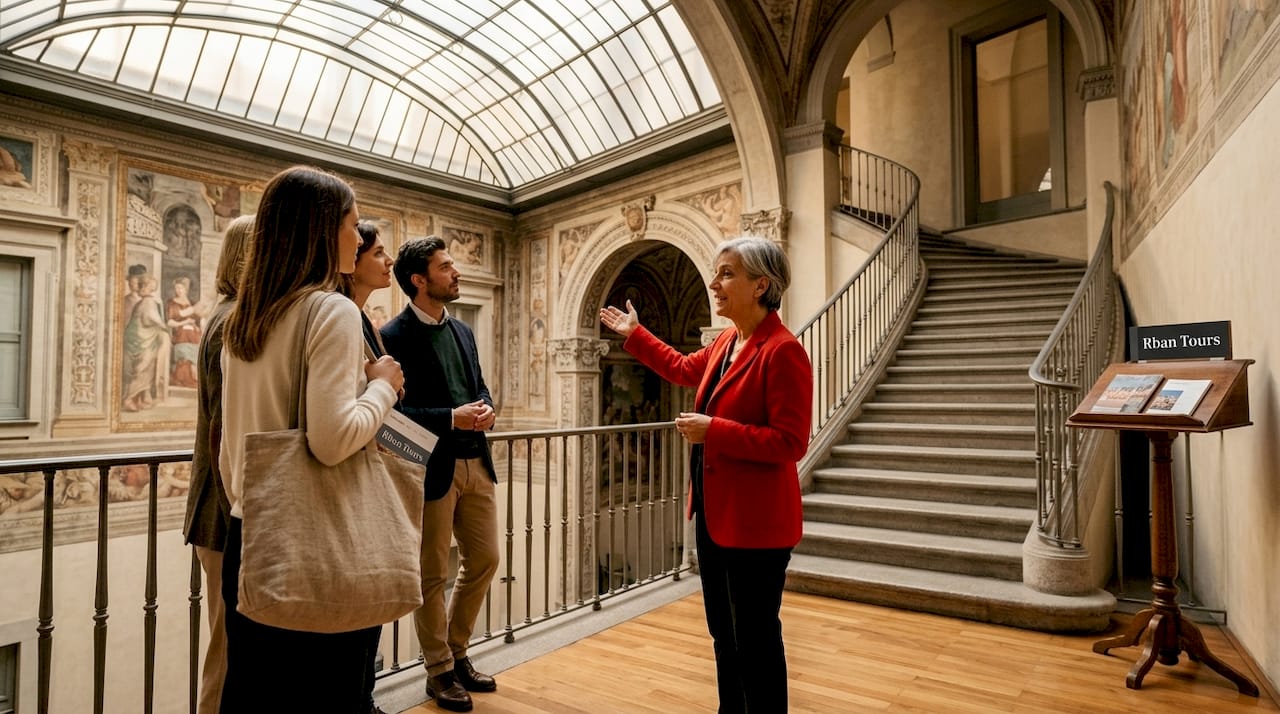
The 2026 edition runs May 23 and 24, with free access to all sites. There’s one catch: registration is mandatory. Spots fill up quickly, especially for the more architecturally significant properties.
Here’s what makes this event genuinely special:
You’re not looking at buildings from the outside. You’re inside them, often with architects or residents who explain the design decisions.
The event spans historic and contemporary Milan, so you see the city’s architectural evolution across centuries in a single weekend.
Personalized visitor maps let you sequence your itinerary based on neighborhood, building type, or personal interest, which matters in a city this size.
Pro Tip: Register for your top three choices the moment registration opens. Popular venues like converted industrial spaces and listed historic palazzi sell out within hours.
2. Sacred music at Milan’s Duomo and Church of San Gottardo
There’s something about hearing Renaissance polyphony inside a Gothic cathedral that resets your entire nervous system. The Duomo di Milano’s Schola Cantorum Venerandae Fabricae runs a 2026 sacred music concert season with 10 free concerts focusing on repertoire from the Renaissance through the Baroque period.
Performances take place at two venues: the Milan Cathedral itself and the intimate Church of San Gottardo in Corte, a small Gothic church tucked inside the Palazzo Reale complex that most visitors walk right past.
Key details to know before you go:
Admission is free, but advance booking is required for every performance due to strict capacity rules.
The two venues offer very different sonic experiences. The cathedral produces a reverberant, overwhelming sound. San Gottardo is more intimate and focused.
Concerts typically run 60 to 75 minutes with no intermission.
Programming rotates across the season, so checking specific concert dates rewards those planning around particular composers or periods.
Hearing sacred music in the actual space it was written for is one of those Milan cultural experiences that no city tour can replicate. Don’t skip this because it’s free. Reserve immediately.
3. Pirelli HangarBicocca: contemporary art in a former factory
If you’ve never been to Pirelli HangarBicocca, prepare to recalibrate your sense of scale. The museum occupies 15,000 square meters of a former industrial site in the Bicocca district, making it one of the largest contemporary art spaces in Europe. Admission is free.
But what separates HangarBicocca from a typical free museum is its public programming. The space regularly runs workshops, artist talks, and educational courses that put you in direct conversation with the work and the people who make it. Dedicated facilitators guide visitors through exhibitions, transforming what could be a passive gallery walk into an active exchange.
The permanent installation by Anselm Kiefer, “The Seven Heavenly Palaces,” fills a massive turbine hall with seven concrete towers that feel both ancient and post-apocalyptic. It genuinely shifts your understanding of what sculpture can do at architectural scale.
Pro Tip: Check the public program calendar before your visit rather than just showing up for the exhibition. A guided discussion or workshop on the same day turns a two-hour visit into a genuinely formative experience.
For travelers trying to plan diverse Milan tours across multiple interests, HangarBicocca pairs naturally with a morning in the Brera district.
4. miart and Milano Art Week: the city’s biggest art moment
Each spring, Milan’s art world converges on a single week that transforms the entire city into an extended gallery. miart, Milan’s flagship contemporary art fair, anchors the week at Fiera Milano, but the energy radiates far beyond the fair itself.
Milano Art Week expands the programming city-wide with gallery openings, performances, panel talks, and artist-led events happening simultaneously across neighborhoods. The fair itself is organized across seven curatorial sections spanning established galleries, emerging artists, historical works, and experimental formats.
A few things worth knowing:
Aspect | miart | Milan Art Week |
Venue | Fiera Milano | City-wide venues |
Access | Ticketed | Mix of free and ticketed |
Focus | Gallery booths, sales, awards | Openings, talks, performances |
Best for | Serious collectors and art professionals | All cultural travelers |
Festival-day demand significantly affects hotel availability and museum attendance during this week. Book accommodations at least two months in advance if you’re planning to visit during Art Week. For accommodation ideas that keep you close to the action, the SwappaHome Milan guide covers local options worth exploring.
5. Turandot at Teatro alla Scala
La Scala is one of those institutions whose reputation can make it feel unapproachable. It isn’t. The 2026 production of Turandot runs in April with 10 performances, commemorating the 100th anniversary of the opera’s original premiere. The production features a new staging and includes pre-show educational talks that provide real context for first-time opera audiences.
Even if opera isn’t your usual scene, attending La Scala is a cultural encounter with Milan’s identity. The theater opened in 1778 and has defined European operatic culture for nearly 250 years. Sitting inside it during a live performance is its own kind of historical participation.
Tickets sell out quickly for this anniversary run. Check the official La Scala website early and consider the pre-show talks as essential rather than optional. They genuinely change how you hear the music.
6. Cooking workshops: pizza, gelato, and the craft of Italian food
Food is one of the most direct paths into a culture. In Milan, you’ll find cooking workshops that go well beyond tourist demonstrations. Pizza-making classes taught by Neapolitan-trained pizzaiolos, hands-on gelato workshops where you learn the actual chemistry of emulsification, and pasta-making sessions focused on regional Lombard traditions all give you something to take home beyond photographs.
The best workshops are small-group, use market-fresh ingredients, and include a meal at the end. That last part matters more than it sounds. Eating what you made, with the people you made it with, is when the cultural exchange actually happens.
Pro Tip: For an even deeper food experience, a dinner in a Milanese apartment hosted by a local puts you inside the domestic rhythms of the city in a way no restaurant can.
When asking how to find creative workshops in Milan, start with curated providers who vet their instructors and limit group sizes. The advantages of creative workshops in Milan go beyond skill-building: you leave with stories, connections, and a sensory memory of the city.
7. Vintage shopping tours and the design culture of Milan
Milan’s reputation as a design capital isn’t just about fashion week and showrooms. The city has a thriving vintage economy rooted in mid-century furniture, archival fashion, and artisan objects that tell the story of Italian manufacturing at its peak.
A structured vintage tour in Milan takes you through markets and shops that most visitors never find, guided by someone who knows which dealers are worth trusting and which items carry genuine provenance. This is one of the best Milan cultural workshops in the sense that the city itself becomes the classroom.
The Navigli district on Saturday morning and the Brera design shops on a weekday afternoon are the two rhythms worth building your vintage exploration around.
My take on getting the most out of Milan’s cultural scene
When I think about what separates a truly memorable Milan trip from a forgettable one, it almost always comes down to the balance between planned and unplanned. The people who book every hour of every day often miss the texture of the city. But the people who show up with no reservations miss the best free concerts and the sold-out architectural tours.
Here’s what I’ve seen work, again and again: anchor your trip around two or three reservation-required events, then let everything else breathe. Book the Duomo concert. Register for Open House. Get your La Scala ticket. Then leave room for the accidental discovery, the neighborhood that pulls you in, the aperitivo that turns into a three-hour conversation with someone local.
I’ve also found that the advantages of creative workshops in Milan go deeper than most people expect. When you make something with your hands in a city, even something as simple as a plate of pasta, you stop being a tourist and start being a participant. That shift changes everything about how you see and remember a place.
The other thing I’d push back on: treating the free events as lesser experiences. Some of the richest cultural events in Milan carry no admission price at all. The Schola Cantorum concerts. HangarBicocca on a quiet Tuesday. Open House’s hidden courtyards. Free doesn’t mean optional. It often means unmissable.
— Rban
Explore Milan’s culture with Rbantours
[
At Rbantours, we’ve spent years learning which Milan cultural experiences actually stay with you and which ones fade the moment you leave the airport. Our walking and cultural tours are built around exactly that question: what will you still be talking about six months from now?
We work with local creatives, musicians, chefs, and designers to create experiences that feel true to the city’s actual rhythm, not a curated version of it. Whether you’re drawn to the best Milan cultural workshops, the full range of Milan tours across design, food, and history, or a single perfect afternoon with someone who knows these streets, we can help you build it. Your Milan experience should feel like yours.
FAQ
What are the best free cultural events in Milan?
Pirelli HangarBicocca offers free year-round admission with public programs, and the Schola Cantorum Venerandae Fabricae runs 10 free sacred music concerts at the Duomo in 2026. Open House Milano also provides free access to private architectural spaces each May.
How do I book creative workshops in Milan?
Look for curated experience providers who limit group sizes and use professional instructors. Booking through a local specialist like Rbantours gives you vetted options across cooking, design, and cultural workshops with logistical support included.
When is the best time to visit Milan for cultural events?
Spring is the most culturally active season, with Open House Milano in May, miart and Milan Art Week in April, and the La Scala spring season running through June. Fall brings strong programming at contemporary art spaces.
Do I need to book free events in advance in Milan?
Yes. Many free Milan cultural attractions, including Duomo concerts and Open House visits, require mandatory advance reservations. Capacity is strictly controlled, and popular events fill up weeks ahead.
What makes Milan Art Week different from miart?
miart is a ticketed international art fair held at Fiera Milano. Milan Art Week is a broader, city-wide program of openings, talks, and performances, many of which are free, that runs simultaneously across galleries and cultural venues throughout the city.
Recommended
Comments