
Eat Mexico City Street Food in Three Shifts for Italian Travelers
- Rban Tours

- 3 days ago
- 11 min read
To eat Mexico City like a local, build your day around three shifts: morning tamales, midday comal and market stands, and late-night trompo tacos al pastor. Add tlacoyos and a cup of esquites whenever you pass a busy stand, stick to vendors with long lines and visible cooking, carry small cash, and a full day of eating well runs about 300 to 400 Mexican pesos.
TL;DR:
Most street food is best enjoyed during specific times: tamales and quesadillas in the morning, tacos al pastor in the evening, and elote year-round.
Vendors with high turnover and visible cooking in busy locations are safer bets for hygiene and quality, regardless of neighborhood.
Starting with one taco al pastor and pacing your order helps avoid overeating and ensures you experience the full flavor range.
Street food etiquette involves paying after eating, sharing small portions, and exchanging friendly greetings with fellow diners.
Guided tours offer expert insights, language support, and curated stops to ensure authentic, safe, and well-sequenced street-food experiences.
Table of Contents
What street food should you actually eat in Mexico City?
The best introduction to Mexico City’s street food scene starts with understanding that different dishes belong to different moments of the day. Get the order wrong and you will miss half of what makes this cuisine so alive.
Tacos al pastor are the city’s signature dish, and watching one made is half the pleasure. Pork marinated in a blend of dried chiles and achiote spins slowly on a vertical trompo, the same rotisserie technique Lebanese immigrants brought to Mexico in the early 20th century. A skilled taquero shaves off thin, crispy edges with a long knife, tucks them into a small corn tortilla, and often crowns the taco with a sliver of caramelized pineapple straight off the top of the spit. Expect to pay roughly 10 to 25 pesos per taco, and order at least three or four since portions are small by design.
Here is a practical rundown of what to try and how to order it:
Tacos al pastor: available from late afternoon through the small hours; ask for “con todo” (with everything) to get onion, cilantro, and pineapple included.
Tamales and atole: sold mostly in the morning from carts and bicycles, often announced by a distinctive steam-whistle cry; a tamal costs a few pesos and pairs naturally with a cup of hot atole, a thick corn-based drink.
Tlacoyos: an oval-shaped blue or white corn masa cake stuffed with beans, fava paste, or cheese, then grilled on a comal and topped with salsa, onion, and crumbled cheese. Food historians trace the snack back to pre-Hispanic markets, where it fed workers long before the conquistadors arrived.
Quesadillas: a quirk that surprises most travelers, especially Italians who expect melted cheese by default. In much of Mexico City, “quesadilla” refers to the fried or grilled masa pocket itself, and cheese is an optional extra you have to request. If you want cheese, always ask for “con queso.”
Sopes and pambazo: sopes are thick masa bases griddled then piled with beans, meat, and cream; pambazo is a bread roll dipped in guajillo chile sauce, fried, and stuffed with potato and chorizo.
Torta de chilaquiles: a breakfast sandwich built from crispy tortilla chips simmered in salsa, stuffed inside a roll, often with fried egg or shredded chicken added.
Elote and esquites: grilled or boiled corn on the cob (elote) or served off the cob in a cup (esquites), dressed with mayonnaise, lime, chili powder, and crumbled cheese, most common in late summer and early autumn when corn is at its sweetest.
Suadero and quesabirria: suadero is beef brisket simmered slowly then griddled crisp, prized for its tender, slightly fatty bite; birria, traditionally a goat or beef stew, shows up in taco form as quesabirria, dipped and fried with cheese, then served alongside a cup of its own rich broth, or consomé, for dunking.
Start light. Order one or two tacos al pastor before committing to a full round, taste the salsa on the side rather than dousing everything at once, and let the vendor guide portion size. Locals rarely order more than they can eat standing at the counter.
Where should you go for the best street food?
Mexico City’s street-food geography breaks down by neighborhood personality as much as by dish. Some areas favor a relaxed evening stroll between stands, others reward an early market visit.
Roma and Condesa: leafy, walkable neighborhoods with a mix of longstanding taco stands and newer vendors, ideal for an evening crawl and comfortable for first-time visitors from Italy who want an easy introduction.
Centro Histórico: the historic core, packed with lower-cost daytime vendors, market stalls, and some of the oldest taquerías in the city; best explored before early evening.
Narvarte: a residential area with genuinely everyday tacos, lower prices, and far fewer tourists, a solid pick if you want to eat where locals actually eat.
Coyoacán: known for its central market and a slower, plaza-centered food culture, good for combining a street-food stop with sightseeing.
Mercado de San Juan: famous for exotic ingredients and a strong concentration of prepared-food stalls worth grazing through.
Mercado Jamaica: primarily a flower market, but its food corners serve some of the freshest antojitos in the city at midday.
The city’s own interactive street-food map crowdsources many of these recommendations from residents, which is worth checking before you commit to a neighborhood. Recent travel roundups consistently point to Roma, Condesa, Centro Histórico, and Narvarte as the priority zones, and that consensus holds up on the ground.
When is the best time to eat street food in Mexico City?
Street food in Mexico City runs on shifts, and showing up at the wrong hour means missing entire categories of food.
Breakfast, 6:00 AM to 10:00 AM: tamale carts and commuter-focused stands dominate, along with quesadillas and tortas aimed at people heading to work.
Lunch typically covers the late morning through mid-afternoon period: comal stands and market stalls take over, serving tlacoyos, sopes, and the day’s fresh esquites.
Night shift often starts in the evening and can go past midnight: this is prime time for tacos al pastor, suadero, and quesabirria, when trompo stands fire up and stay busy well past midnight.
Weekends bring longer lines and a wider variety of vendors, especially around markets, while weekdays tend to move faster and feel less crowded. Corn-based specialties like elote and esquites peak in flavor during late summer, though vendors sell them year-round. Planning your day around these windows, rather than wandering and hoping something is open, is the single biggest difference between a frustrating outing and a genuinely great one, a point Nomado Travel’s own guidance backs up directly.
How do you eat street food safely in Mexico City?
Safety in Mexico City street food comes down to observation more than luck. The busiest stands are busy for a reason: high turnover means fresh ingredients and less time for anything to sit out.
Follow the line. A stand with a constant flow of local customers and a visible trompo or comal in action is a far better signal than any app rating, a heuristic Lonely Planet leans on heavily in its own coverage.
Stick to bottled or purified water, and be cautious with ice unless the stand clearly uses filtered water for it.
Carry small peso notes. Most vendors run cash-only, and the custom is to pay after you finish eating, not before, as multiple travel guides confirm.
If you keep a vegetarian diet, ask directly. Many beans and comal surfaces are cooked with lard or share space with meat, so cross-contact is common even in vegetarian-labeled dishes.
Start with one or two tacos, taste the salsa before adding more, and pace yourself between stops rather than loading up at the first stand you see.
Pro Tip: Order your first taco “sin mucho picante” (not too spicy) if you are unsure of your tolerance. Salsas here are typically quite spicy, and you can always ask for more on the side once you know what you are dealing with.
What are two ready-made street-food itineraries?
A little structure turns a random walk into a proper crawl. These two routes work whether you are traveling solo or with a group, though groups should expect stops to run slightly longer.
Night crawl, Roma/Condesa (about 2 to 3 hours, roughly 200 to 300 pesos per person): start at a trompo stand for two tacos al pastor, walk fifteen minutes to a second stand for suadero, then finish with quesabirria and its consomé at a third stop, switching flavor profiles as you go.
Full-day sampler (a moderate budget per person): begin with tamales and atole from a morning cart, head to a market like Mercado de San Juan for a midday tlacoyo or sope, then close the day with tacos al pastor in the evening. Budget short taxi or metro hops between stops to keep the pacing relaxed rather than rushed.
Groups of four or more should call ahead or expect longer waits at popular stands, while solo travelers can move faster and squeeze in an extra stop.
Why does a guided street-food tour add real value?
Street food rewards confidence, and confidence comes from knowing which stand to trust before you are standing in front of it — a lesson detailed in how to enjoy local food experiences like a pro. That is where a curated experience earns its place, layering storytelling and local context onto every stop rather than leaving you to decode a menu board alone.
A guided walk solves the practical friction points: language support when a vendor only speaks Spanish, pre-vetted stands chosen for both flavor and hygiene, and flexibility for dietary restrictions worked out in advance rather than negotiated on the spot. Our own breakdown of how a Mexico City food tour comes together, and our guide to exploring the city like a local, both go deeper into how these stops get chosen and sequenced.
How did Mexico City’s street food traditions develop?
Street food in Mexico City did not appear alongside modern tourism. Its roots reach back to pre-Hispanic market culture, where vendors sold grilled masa snacks like tlacoyos to workers moving through the central markets of the Aztec capital. Spanish colonization introduced new ingredients and cooking methods, but the practice of eating prepared food on the street, standing up, among neighbors and strangers alike, never disappeared.
The 20th century brought new layers. Lebanese immigrants arriving in central Mexico introduced the vertical spit that became the trompo, transforming shawarma technique into what we now know as tacos al pastor. Waves of internal migration from rural states into the capital carried regional dishes like birria into the city’s food stalls, where they adapted to local tastes and ingredients.
What makes this history matter for a visitor is simple: nearly every dish on a modern taco stand’s board carries a lineage, whether indigenous, immigrant, or regional. Eating street food here is not just refueling between sights. It is tasting layers of migration and adaptation that shaped the city itself, and in 2024 that legacy earned formal recognition when one taco stand received a Michelin star, the first time street-level Mexican cooking reached that stage internationally.
How do vendors handle food preparation and quality?
Most successful stands operate on visible, rapid turnover rather than hidden kitchens. Meat sits on an open trompo or comal in full view, salsas get made in small batches throughout the day rather than sitting for hours, and busy vendors restock ingredients multiple times during a single shift.
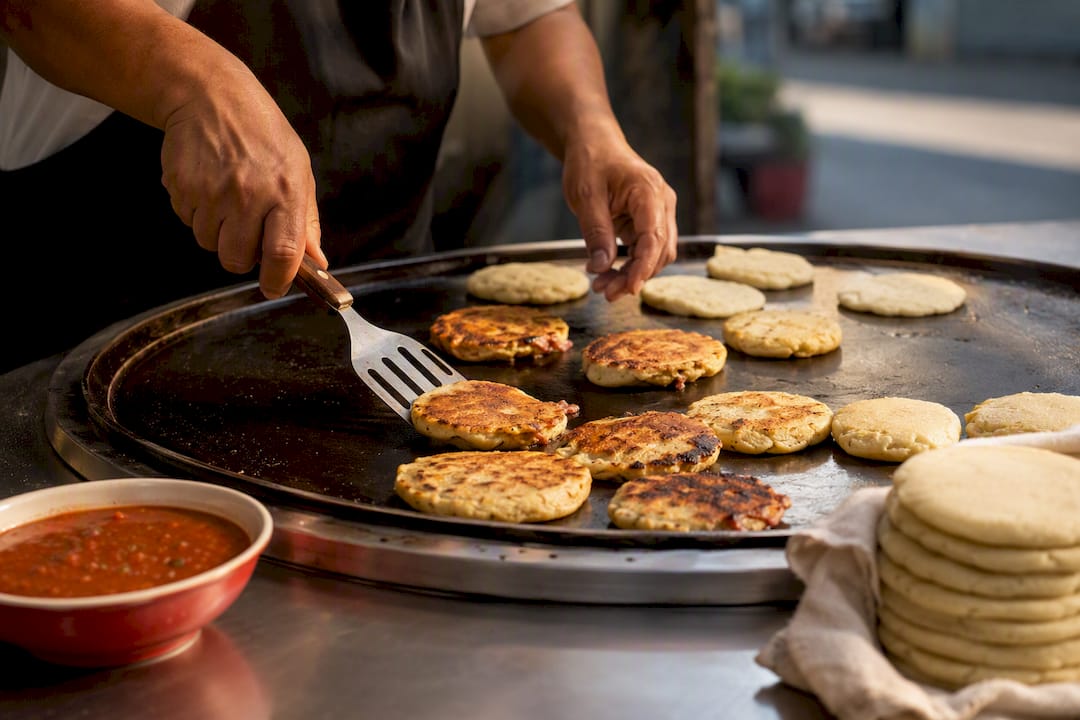
This visibility is part of what makes the “follow the line” heuristic work so well. A stand that cannot keep up with demand either runs out of food, a good sign, or lets ingredients sit too long, a bad one you can usually spot by watching how often the cook restocks the comal. Vendors who specialize in one or two items, rather than a sprawling menu, tend to execute those dishes with more consistency simply because they are cooking the same thing hundreds of times a day.
Hygiene standards vary by vendor rather than by neighborhood, which is exactly why the busy-stand rule matters more than location. A quiet stand in an upscale area is not automatically safer than a crowded one in Centro Histórico. What matters is turnover, visible cooking, and how the vendor handles raw ingredients versus finished food, details you can usually judge within thirty seconds of watching.
What are the etiquette basics for eating street food?
Eating street food in Mexico City follows unwritten rules that locals absorb without thinking, and getting them right makes the experience smoother.
Payment happens after you eat, not before, which surprises many Italian travelers used to paying at a counter first. Order, eat standing or at a shared counter, then settle up when you are done. Portions are meant to be small and multiple. Ordering one taco at a time and coming back for more is completely normal and often preferred over asking for five at once.
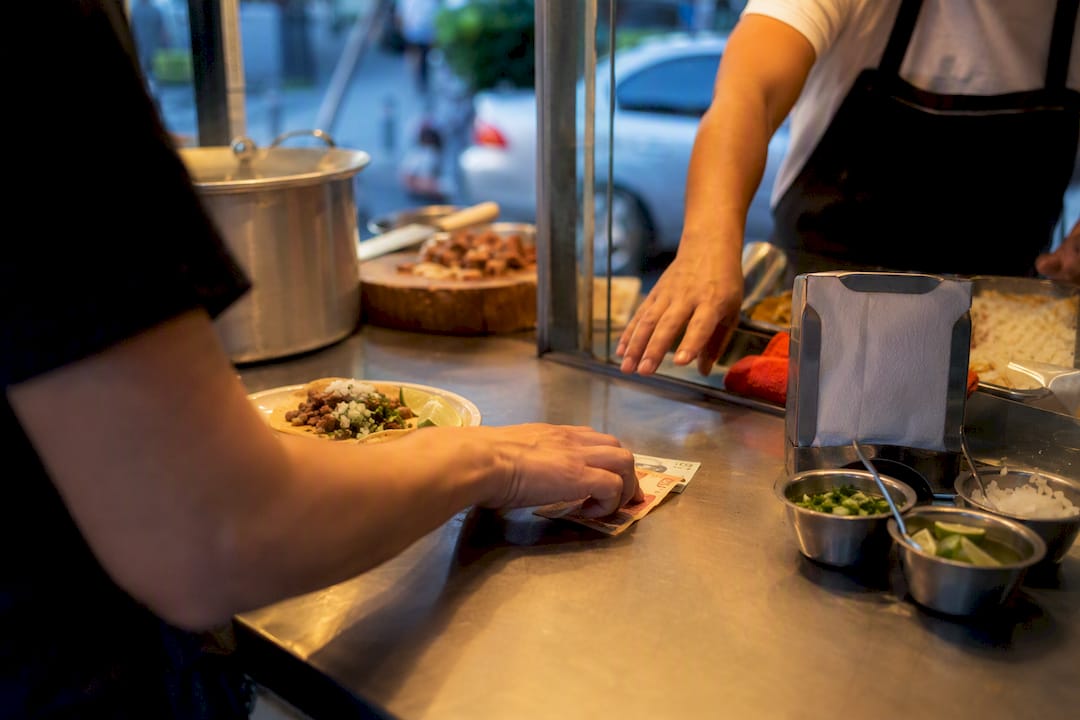
Sharing space at a stand is part of the ritual. Strangers stand shoulder to shoulder at the same counter, and a brief nod or “buen provecho” (enjoy your meal) to a neighbor is common courtesy. Napkins and toppings usually sit in a shared container on the counter. Help yourself, but take only what you will use.
Tipping is not automatic at street stands the way it is at sit-down restaurants, though rounding up to the next note is appreciated. Street food here functions as a genuinely social ritual, a daily rhythm of eating among neighbors, and treating it that way rather than as a quick tourist stop is what turns a meal into a real slice of the city’s routine.
Can you eat street food if you have dietary restrictions?
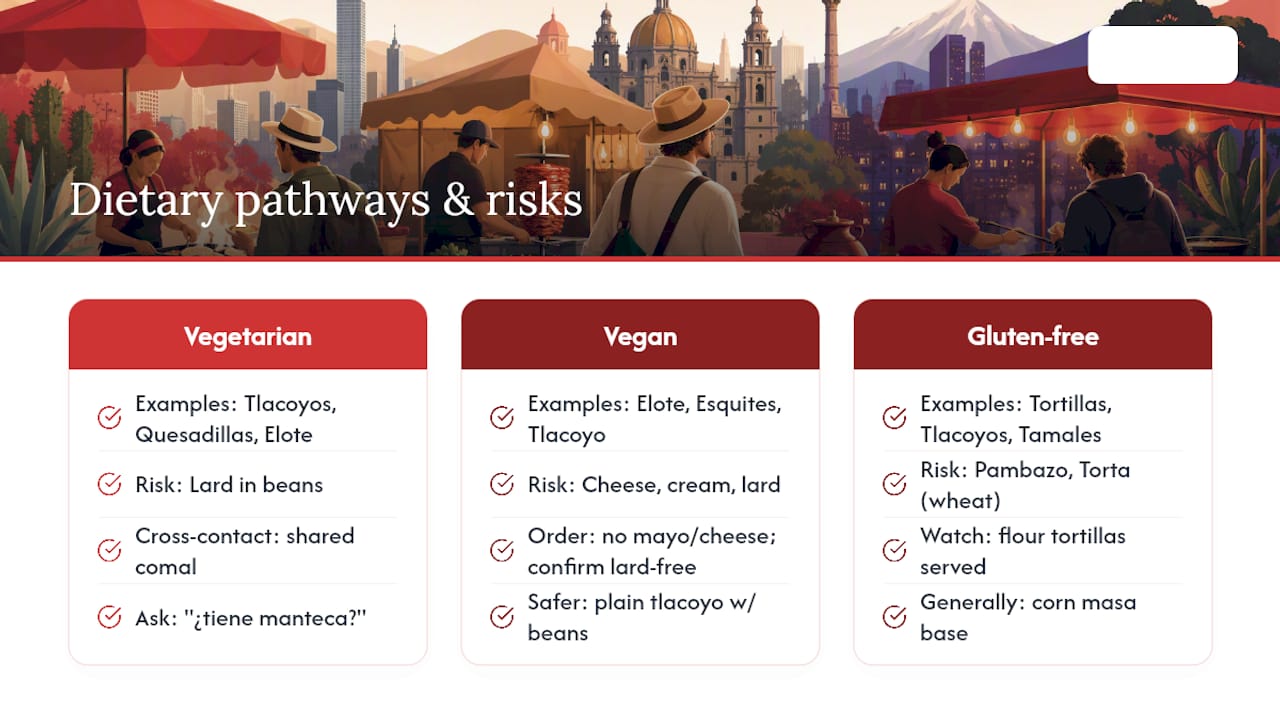
Vegetarian options exist, but they take some navigation. Tlacoyos, quesadillas without meat, and elote or esquites are naturally meat-free choices, though beans are frequently cooked with lard and shared comal surfaces mean cross-contact with meat is common even in vegetarian-presented dishes. If avoiding lard matters to you, ask directly, “¿tiene manteca?” (does it have lard?), before ordering.
Vegan travelers face a tougher path, since cream, cheese, and lard appear across most antojitos by default. Esquites and elote can usually be requested without mayonnaise or cheese, and a plain tlacoyo with bean or fava filling, ordered without cheese and confirmed lard-free, is often your safest bet.
Gluten-free travelers are generally well served, since corn masa forms the base of most street food, tortillas, tlacoyos, sopes, and tamales included. The exceptions to watch are pambazo and torta sandwiches, both built on wheat bread rolls, and any dish served alongside flour tortillas rather than corn ones.
Cross-contact remains the biggest limiting factor for any restriction, since most stands cook everything on the same shared surface. Clear, direct questions before ordering matter more than any menu label.
The unglamorous truth about eating well in Mexico City
Most street-food advice for travelers leans too hard on lists of dishes and not hard enough on timing and sequence. The conventional wisdom, “try tacos al pastor,” is not wrong, it is just incomplete. What separates a mediocre day of eating from a genuinely great one is showing up at the right stand during the right shift, in the right order, so your palate and your stomach are both ready for what comes next.
We think Italian travelers in particular underestimate how much the quesadilla quirk alone can derail a first meal. Ordering confidently, knowing to ask for “queso,” knowing that tamales disappear by midmorning, and knowing that payment comes after the meal is worth more than any ranked list of must-try dishes. Prioritize sequencing and observation skills over chasing a checklist, and the rest of the experience tends to fall into place on its own.
— Rban
Book a guided street-food walk through Mexico City
Reading a guide gets you far, but standing in front of an unfamiliar stand, unsure whether to order the quesadilla with or without cheese, is a different experience entirely. Small-group walking food experiences through Mexico City with a local host who handles the language, picks the stops, and paces the crawl so you taste tacos al pastor, tlacoyos, and quesabirria in the right order without the guesswork are available.
[

These tours feature small groups, on-the-ground translation for menu boards and vendor questions, and stops curated around dietary needs when flagged in advance. Pricing varies by group size and route length. Check availability and book your spot on the walking and cultural tour page to lock in a route before your trip.
Sources
Recommended
Comments