
Eat Tokyo Street Food in One Day: Italian Travelers' Route with Guide
- Rban Tours

- Aug 30
- 9 min read
Start with takoyaki in Tsukishima’s Monja Street, karaage at Ameyoko, and yakitori smoking over charcoal near Tsukiji Outer Market. If you’re new to Tokyo, a guided tasting walk gets you past the language barrier and into stalls locals actually trust. If you’ve traveled Asia before and like figuring things out, Tsukiji, Asakusa, and Ameyoko alone will fill a full day of eating well.
TL;DR:
Visiting markets early in the morning, especially Tsukiji before 10 am, ensures the freshest seafood and shortest lines for street food.
A guided tour offers insights into vendor histories and local customs that self-guided exploration often misses.
Expect to spend roughly ¥500 to ¥800 per snack, with a full afternoon tasting five items costing around ¥3,000 to ¥5,000.
Food allergies are common at street stalls, so choosing freshly cooked items and carrying an allergy card helps mitigate risks.
Neighborhood clusters like Tsukiji, Asakusa, and Ameyoko are each best explored during specific times, such as mornings for markets and evenings for izakaya alleys.
Table of Contents
What Street Food Should You Try in Tokyo?
Tokyo’s street food scene rewards curiosity more than any single “must eat” list can capture, but a handful of dishes show up again and again for good reason. Each one tells you something different about how Tokyo eats on the move, from smoky grills to griddle batter that takes real skill to flip.
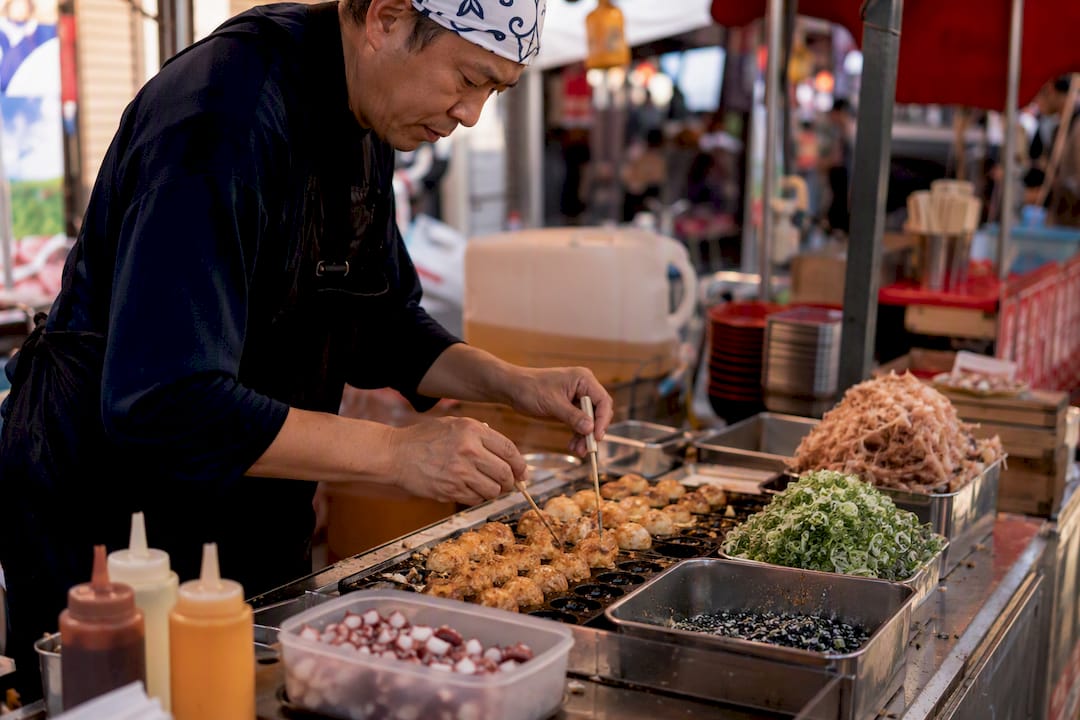
Takoyaki are golf ball sized batter balls filled with diced octopus, cooked on a special molded griddle until the outside crisps and the inside stays molten. Vendors top them with tangy takoyaki sauce, Japanese mayo, and bonito flakes that curl in the steam. Takoyaki trays of six are typically sold at market stalls and dedicated takoyaki counters across the city, with prices varying by vendor.
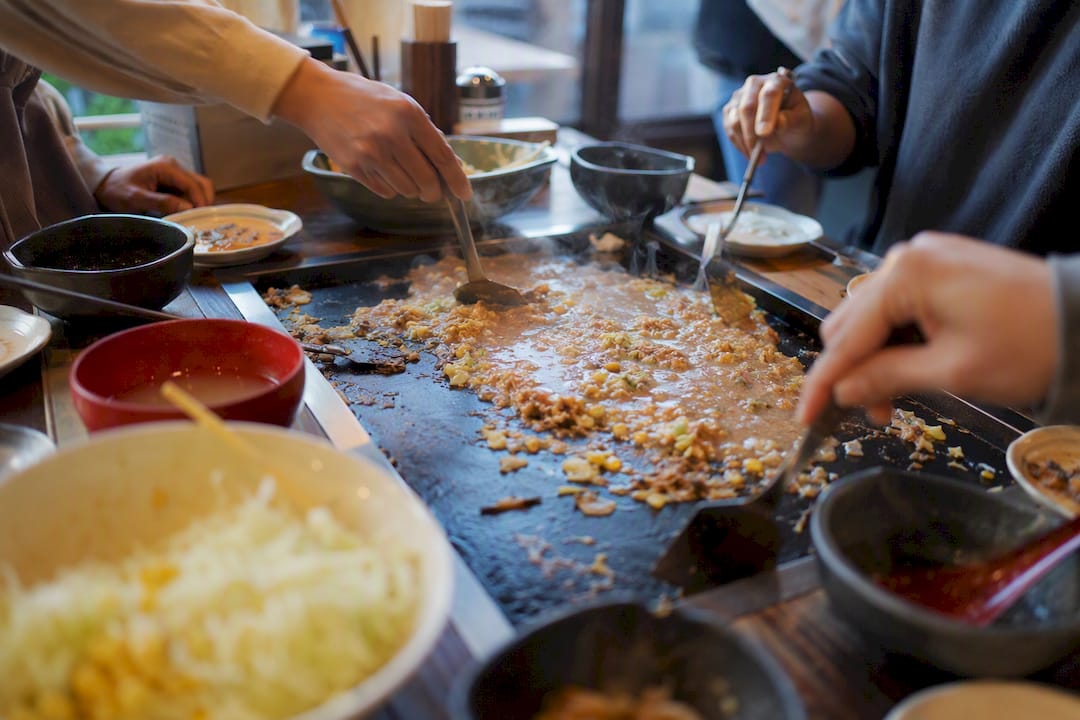
Monjayaki, a Tokyo specialty most closely associated with Tsukishima’s Monja Street, looks like okonomiyaki’s looser, runnier cousin. You cook it yourself on a tabletop griddle, scraping up crispy bits with tiny metal spatulas as it sets. It’s messier and more social than most street snacks, which makes it a fun stop for groups.
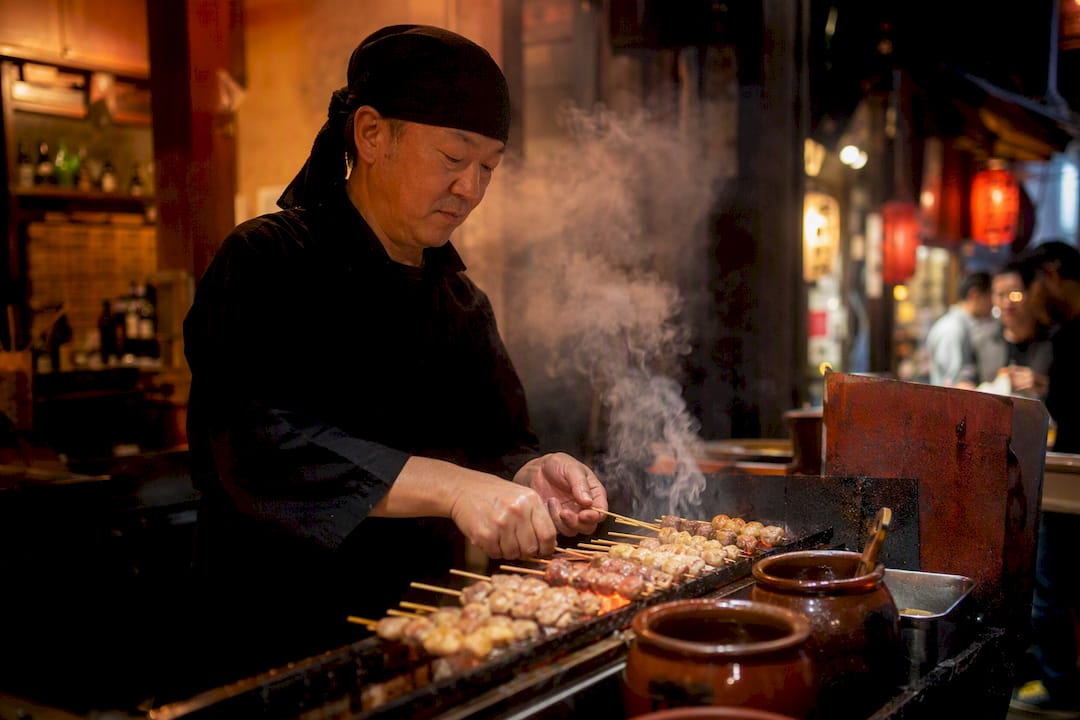
Yakitori, skewered chicken grilled over charcoal, ranges from simple salted thigh meat to skin, cartilage, and liver for adventurous eaters. Yakitori stalls and standing bars offer skewered chicken in various cuts, commonly ordered in small portions.
Karaage, Japan’s version of fried chicken, gets marinated in soy, ginger, and garlic before frying, giving it a deeper flavor than Western fried chicken. Karaage is commonly available at street stalls, convenience stores, and festival yatai, with prices varying by location.
Taiyaki, a fish-shaped waffle cake usually filled with sweet red bean paste, custard, or chocolate, makes a good afternoon treat near temples and shopping streets, running roughly ¥200 to ¥350 each.
Other snacks worth flagging:
Yakisoba and udon stir-fry snacks, sold from portable griddles at festivals and markets, cost around ¥500 to ¥700 a serving.
Dango and tanghulu style skewers, sweet rice dumplings or candied fruit on a stick, run ¥300 to ¥500 and show up heavily around festival season.
Where Do You Find the Best Street Food in Tokyo?
Tokyo’s street food doesn’t line a single continuous strip the way Bangkok’s or Osaka’s does. It clusters around markets, shrine approaches, and festival grounds, which means knowing which neighborhood matches which craving matters more here than almost anywhere else in Asia.
Tsukiji Outer Market: go before 10am for the freshest seafood, grilled skewers, and tamagoyaki stalls; crowds build fast after mid-morning, and the nearest stations are Tsukiji or Tsukijishijo.
Nakamise-dori, Asakusa: the approach to Senso-ji temple is lined with ningyo-yaki (small cakes), senbei, and age manju stalls; it’s touristy and busy nearly all day, so early morning or after 6pm is calmer.
Ameya Yokocho (Ameyoko), Ueno: a market alley built for grazing, with karaage, seafood skewers, and cheap produce stalls packed shoulder to shoulder; best visited in the afternoon when vendors are in full swing.
Tsukishima Monja Street: dozens of monjayaki restaurants line one street near Tsukishima Station, more of a sit-down griddle experience than grab-and-go, and best enjoyed at dinner time.
Ueno Park: during cherry blossom season, food stalls multiply along the park’s paths, serving yakitori, taiyaki, and beer to picnicking crowds.
Takeshita Street, Harajuku: leans sweet and Instagram-friendly, with crepes, cotton candy, and colorful soft serve rather than savory street classics.
Department store food basements (depachika): reliable year round, cleaner and more predictable than open-air stalls, and a smart fallback on rainy days or when you want to sit somewhere.
Market stalls, izakaya alleyways, and festival yatai each behave differently. Markets like Tsukiji run on early hours and daytime trade. Izakaya alleys near Yurakucho or Shinjuma come alive after dark. Festival yatai only appear on specific dates, so timing decides whether you see them at all.
When Is the Best Time to Eat Street Food in Tokyo?
Morning belongs to the fish markets. Tsukiji Outer Market hits its stride between 7am and 10am, when seafood is freshest and lines are shorter than the midday rush. Afternoons and evenings shift the mood toward yakitori stands and izakaya alleys, where charcoal smoke and beer replace the market’s brisk pace.
Weekends bring heavier crowds everywhere, especially Ameyoko and Asakusa, but they also bring more vendors setting up shop. Cherry blossom season, typically late March into early April, packs Ueno Park with extra food stalls catering to hanami picnickers. Local festivals matter even more: events like the Kurayami Matsuri near Fuchu draw temporary yatai rows that vanish once the festival ends.
Pro Tip: Check ward-level event calendars and market holiday schedules before you go. Tsukiji closes on some Wednesdays and Sundays, and a stall you saw on social media might only exist during a specific matsuri weekend.
How Do You Order Street Food Like a Local?
Ordering at a Tokyo food stall follows a rhythm most Italians will pick up within a day or two, even without speaking Japanese.
Join the line quietly and check whether there’s a ticket machine, common at ramen counters and some yakitori stalls, or a direct order-at-the-counter system.
Point at the display or photo menu if your Japanese is limited. Most vendors are used to gesture-based ordering from tourists.
Eat near the stall or in a designated standing area. Walking down the street while eating is considered impolite in most neighborhoods.
Dispose of your own trash. Bins are scarce, so many vendors expect you to hand back skewer sticks or trays.
Move along once you’ve finished to keep the line moving for the next customer.
Cash still rules at small stalls, though cards and mobile payments are increasingly accepted at larger shops and department store basements. Carry ¥1,000 and ¥500 notes for smaller purchases. Tipping isn’t expected anywhere in Japan, including street food stalls, and attempting to leave one can confuse vendors.
Budget roughly ¥500 to ¥800 per snack, meaning ¥3,000 to ¥5,000 covers a generous afternoon of tasting four or five different items. If you’re sharing between two people, say “hanbun zutsu” (half each) or simply hold up two fingers when ordering. Most vendors are happy to split a portion if you ask before they start cooking.
What’s a Good One-Day Street Food Route in Tokyo?
A single day can cover four distinct neighborhoods if you move with purpose and skip long sit-down meals.
8:00am, Tsukiji Outer Market: start with grilled seafood skewers and tamagoyaki while the market is fresh and uncrowded. Budget ¥1,500.
10:00am, transit to Asakusa: about 20 minutes by subway. Walk Nakamise-dori for ningyo-yaki and age manju before the midday tourist crush. Budget ¥800.
1:00pm, Ueno via train (10 minutes): wander Ameyoko for karaage and seafood snacks, then rest in Ueno Park if the weather’s good. Budget ¥1,200.
6:00pm, Tsukishima (25 minutes by subway): sit down for monjayaki as the sun sets, a good anchor for dinner rather than a quick bite. Budget ¥2,000.
If you’re vegetarian, skip karaage and seafood-based takoyaki in favor of vegetable tempura and dango, both widely available at the same markets. If a stall is closed, most neighborhoods have a backup within a five minute walk, and depachika basements are a dependable fallback anywhere in the city.
Why a Guided Street Food Tour Changes the Experience
Self-guided routes work, but they miss something a good local guide adds instantly: context. A guide can point out which Tsukishima monja shop has been run by the same family for three generations, or why a particular Ameyoko stall only sells one item because that’s what its founder perfected decades ago. That kind of vendor history rarely surfaces in a guidebook, and it’s exactly what turns a food crawl into something closer to cultural immersion.
Small-group food tours in Tokyo typically combine tastings across market stalls, izakaya alleys, and specialty shops in a single outing, with a guide handling ordering, translation, and pacing so you’re not standing in line figuring out a ticket machine. Rbantours builds its Japan experiences around exactly this kind of storytelling and local access, curating walks through Tokyo’s food culture rather than just pointing you toward famous names.
If you’re visiting Tokyo for the first time, or you want the less obvious neighborhoods that don’t show up on influencer maps, a guided tour saves real time and adds real depth. If you’ve done Tokyo before and know your way around a subway map, self-guided exploration with a good route plan works just as well.
How Do You Handle Food Safety and Allergies at Street Stalls?
Shellfish, soy, and egg show up constantly in Tokyo street food, from takoyaki’s octopus to tamagoyaki’s egg base, and cross-contact risk is real at small stalls using shared griddles. Choose freshly cooked items over anything sitting out, and favor packaged snacks from depachika basements when you’re unsure about an ingredient. Carry a translated allergy card, since English is limited at many stalls. Avoid raw seafood from open-air vendors unless the stall clearly specializes in it and has visible turnover, and when in doubt, ask for the item well done rather than risk it.
Where Can You Learn More Before You Go?
For deeper reading, start with CN Traveller’s local guide to Tokyo street food and the neighborhood breakdown from Get Lost in Japan. To book a guided tasting, visit Rbantours’ Japan page.
Taste Tokyo the Way Rbantours Curates It
Rbantours is the alternative to piecing together a street food day from scattered blog posts and guesswork. In Tokyo, that means a guided walk where someone who actually knows the vendors leads you straight to the good takoyaki stand, explains why Tsukishima’s monjayaki tradition matters, and handles ordering so you spend your afternoon eating instead of decoding menus.
[
Our walking and cultural tours are built around exactly the kind of neighborhood storytelling this guide has walked you through, from Ameyoko’s market alleys to Tsukiji’s early morning stalls. It suits travelers who want the authentic version of Tokyo food culture without spending half a trip mapping out train transfers between markets. If a curated street food afternoon sounds better than a solo scramble, check available dates for Rbantours’ Japan experiences and reserve your spot before your trip fills up.
Rban’s Take on Tokyo’s Street Food Culture
Most guides treat Tokyo street food like a checklist: eat takoyaki here, snap a photo there, move on. That approach misses what actually makes Tokyo’s food scene distinct from Bangkok or Taipei. Tokyo doesn’t hand you street food on every corner. It makes you find it, inside a market, along a temple approach, tucked into a single dedicated street like Tsukishima. That scarcity is the point, not a flaw.
The conventional wisdom says self-guided exploration is always cheaper and just as good. It’s cheaper, sure. But “just as good” assumes you know which Ameyoko stall has been perfecting one dish for decades and which one is coasting on foot traffic. A guide with real vendor relationships closes that gap in a way no map app can. For first-time visitors especially, that difference shows up in every stop of the day, not just the ones you happened to research beforehand.
Where we’d push back on ourselves: if you’ve traveled Japan before and enjoy the friction of figuring things out, do it solo. Tsukiji, Asakusa, and Ameyoko are forgiving enough for confident travelers. But if this is your one shot at Tokyo, don’t spend it guessing.
— Rban
Sources
Recommended
Comments