
The Role of Food in City Tours: A Cultural Guide

Food is the most direct gateway to a city’s identity, and the role of food in city tours goes far beyond tasting. Culinary experiences in city tours are now recognized by researchers and travel designers alike as the primary medium through which travelers connect emotionally with a destination. Hilton’s 2025 Trend Report found that 64% of travelers prefer unique local experiences over traditional fine dining, and 66% are excited specifically by street food. These numbers signal a fundamental shift in how people want to explore cities. At Rbantours, we’ve built our entire philosophy around this truth: a meal shared in the right place, with the right story, changes how you see everything around you.
How do culinary experiences shape tourist satisfaction in city tours?
The connection between food and traveler satisfaction is not intuitive. It is measurable. Research on gastronomic walking tours in Ubud, Bali, shows that cultural storytelling by guides scored a mean satisfaction rating of 4.67 out of 5, while direct interaction with local culinary actors scored 4.50. These are the highest-rated elements of the entire tour experience, ranking above the food itself. The implication is clear: food works as a cultural medium only when paired with narrative.
Studies from Kashmir Valley reinforce this further. Culinary heritage experience there drives tourist satisfaction with a strong statistical effect (β=0.470, p<0.001), and that satisfaction then mediates cultural identity perception and destination attachment. Travelers who eat with context do not just enjoy a meal. They form a bond with the place.
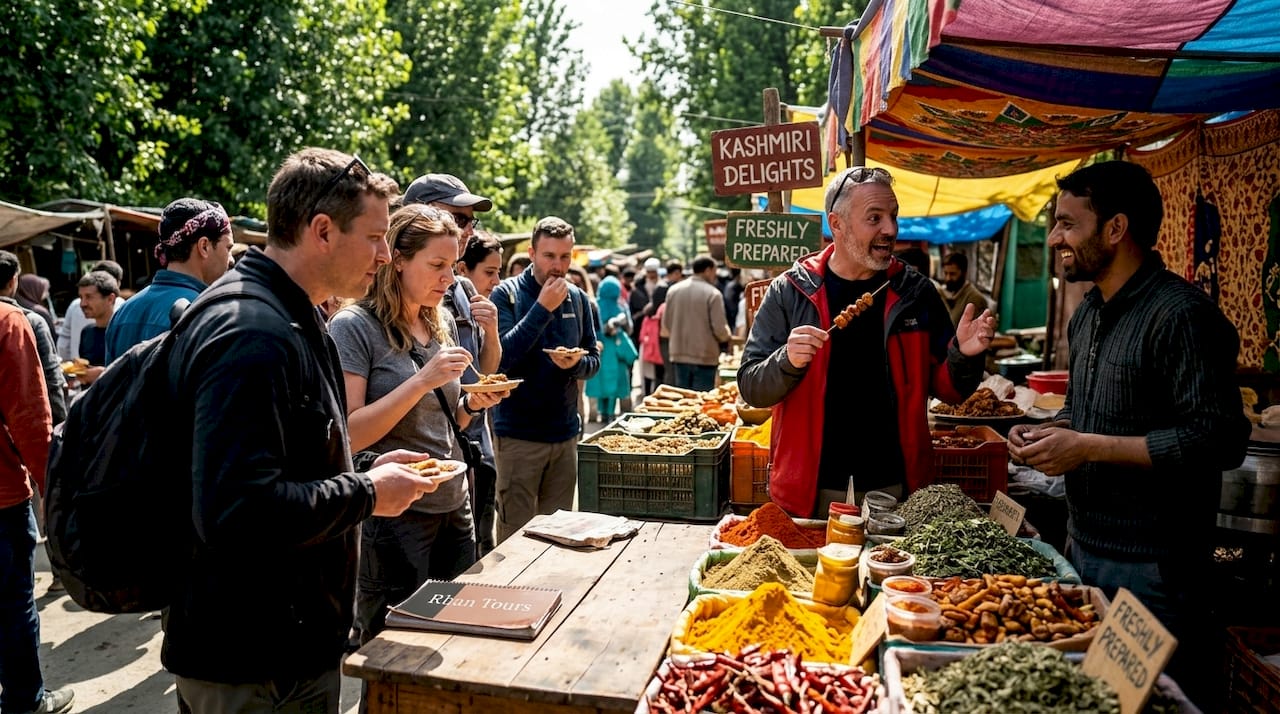
This is what separates a food tour from a restaurant crawl. The difference lies in the quality of the story being told around each dish. When a guide explains why a particular spice entered a regional cuisine, or how a street snack reflects a community’s migration history, the tasting moment becomes an act of cultural understanding.
Key factors that elevate culinary city tours include:
Guide-led cultural narration connecting each dish to local history or identity
Direct interaction with food producers, vendors, or chefs who carry living knowledge
Sequenced stops that build a coherent picture of the city’s food culture progressively
Emotional prompts that invite travelers to reflect on what makes a dish distinctively local
Pro Tip: When booking a food tour, ask specifically whether the guide has personal ties to the neighborhood. Guides who grew up eating these foods tell stories that no amount of research can replicate.
What threatens the authenticity of food in city tours?
Authenticity is the most fragile element of any culinary city experience. Research on Banjar ethnic gastronomy identifies over-commercialization and flavor homogenization as the primary threats to sustainable gastronomic tourism. When tour operators prioritize volume over depth, local dishes get simplified, sanitized, and stripped of the cultural context that made them worth tasting in the first place.
The risks are not abstract. They follow a predictable pattern:
Over-commercialization turns authentic vendors into performance spaces, where food is staged for tourists rather than prepared for community consumption.
Flavor homogenization occurs when local recipes are adjusted to meet perceived international palates, erasing the very distinctiveness that travelers came to experience.
Environmental vulnerability threatens the local ecosystems that supply rare, region-specific ingredients, particularly in areas with fragile agricultural traditions.
Infrastructure gaps in emerging gastronomy destinations limit the ability to market, scale, or sustain food tourism without losing quality. Research from Masvingo Province, Zimbabwe, shows that marketing and infrastructure shortcomings prevent even richly endowed food cultures from realizing their tourism potential.
“Protecting authenticity by safeguarding local ecosystems and narratives prevents flavor homogenization, which is a critical challenge for sustainable and meaningful food tourism development.” — Banjar gastronomy research, 2026
The most resilient food tours are those designed in partnership with local communities, not just inspired by them. When vendors, farmers, and neighborhood residents have a stake in the tour’s integrity, they become its best protectors.
How do social media and digital trends influence food-led city exploration?
Digital culture has permanently altered how food influences city exploration. Travelers no longer discover a city’s food scene only through guidebooks or word of mouth. They follow TikTok videos, AI-generated itineraries, and hyper-local online reviews to find the exact dumpling shop on the exact street corner. A single piece of viral content can redirect thousands of visitors toward a neighborhood that no traditional tour operator had ever included in a route.
The numbers are striking. A Shanghai neighborhood dumpling shop’s TikTok content surpassed 200 million views, driving measurable inbound tourism to that specific location. This is not a marketing campaign. It is organic cultural magnetism, amplified by digital reach.
For tour designers and travelers alike, this shift has real implications:
Hyper-local venues now carry more cultural credibility than established tourist restaurants, because social media audiences reward specificity and discovery.
AI-assisted itinerary planning is directing travelers toward food stops based on sentiment analysis of reviews, not just star ratings.
Digital reputation has become a form of cultural authentication, where community-generated content signals that a food experience is genuinely local.
The risk, of course, is that viral attention can overwhelm the very intimacy that made a place special. The best food tours stay ahead of this by building relationships with vendors before they become famous, not after.
What makes an authentic food-led city tour truly effective?
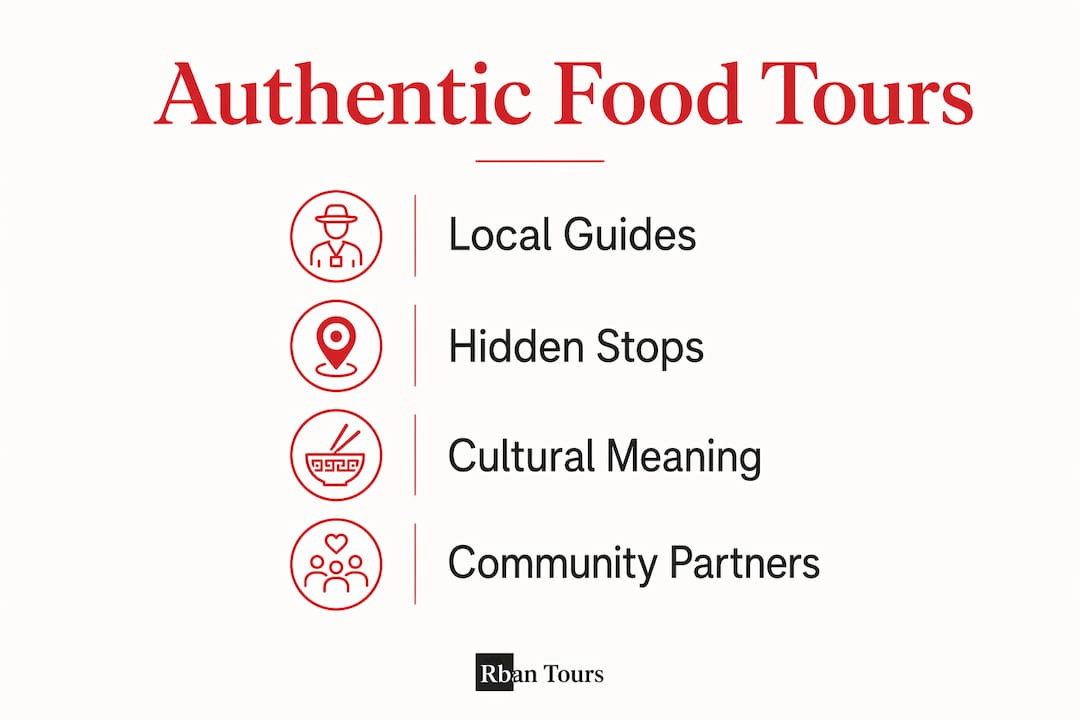
Designing a food tour that delivers genuine cultural meaning requires more than selecting popular dishes. Optimal tour sequencing builds understanding progressively, starting with everyday foods that establish local norms before introducing heritage or ceremonial dishes. This structure gives travelers the context to appreciate what they are eating, rather than encountering a famous dish cold.
The table below compares the elements of a surface-level food tour against a culturally embedded one:
Element | Surface-level tour | Culturally embedded tour |
Stop selection | Popular or highly rated venues | Neighborhood vendors with community ties |
Guide role | Logistics and logistics only | Cultural narrator with personal knowledge |
Dish framing | Name and ingredients | Origin, ritual significance, and local identity |
Route logic | Geographic convenience | Narrative arc from everyday to heritage |
Community involvement | None | Vendors, producers, and local residents engaged |
The gastronomic identity model developed in recent research identifies three dimensions that make food tours culturally meaningful: cultural heritage, authenticity and promotion, and socioeconomic grounding. Tours that address all three dimensions create experiences that travelers remember and return for.
Local guides are the connective tissue of this entire structure. They translate not just language but meaning, helping travelers understand why a dish matters to the people who make it, not just what it tastes like.
Pro Tip: The best food tours include at least one stop that is not on any public list. If every venue on your tour has a Google Maps rating, you are probably on a tourist circuit, not a cultural one.
How do food tours generate real socioeconomic benefits for local communities?
The importance of cuisine in travel extends well beyond the traveler’s experience. When food tours are designed with local ecosystems in mind, they become engines of grassroots economic development. Research from Masvingo Province demonstrates that gastronomy tourism creates employment at the community level, supports cultural heritage preservation, and opens pathways for local entrepreneurship, particularly in regions where conventional tourism infrastructure is thin.
Benefit | How food tours deliver it |
Employment creation | Direct income for vendors, guides, and food producers |
Heritage preservation | Demand for traditional recipes incentivizes their continuation |
Entrepreneurship | Small food businesses gain visibility and a reliable customer base |
Cultural pride | Community members see their food recognized as valuable and distinctive |
Visitor spending distribution | Revenue flows to neighborhoods rather than centralized hotel districts |
The condition for these benefits to materialize is stakeholder cooperation. When tour operators, local government, and community vendors align around shared goals, food tourism becomes a sustainable system rather than an extractive one. Traveling with locals is not just a richer experience for the traveler. It is a more equitable one for the community.
Key takeaways
Food transforms city tours from sightseeing into cultural understanding, and the depth of that transformation depends entirely on the quality of the narrative, the authenticity of the vendors, and the coherence of the route design.
Point | Details |
Food as cultural medium | Culinary experiences work best when paired with guide-led storytelling, not served in isolation. |
Satisfaction drivers | Cultural narration and interaction with food actors score higher than the food itself in traveler surveys. |
Authenticity threats | Over-commercialization and flavor homogenization are the primary risks to meaningful food tours. |
Digital amplification | Viral content on platforms like TikTok now directs travelers toward hyper-local food venues at scale. |
Community impact | Well-designed food tours create employment, preserve heritage, and support local entrepreneurship. |
Why food will always be the heart of how we experience cities
We have run food experiences across Barcelona, Mexico City, Japan, and Vietnam, and the pattern holds everywhere. The moments travelers talk about most are never the famous landmarks. They are the grandmother’s tamale recipe explained through three generations of family history, or the fermented soybean paste that tastes like nothing you have ever had and everything about where you are.
What the research confirms, we have felt firsthand. Culinary heritage activates emotional outcomes in a multi-stage process: satisfaction leads to identity perception, which leads to attachment, which leads to the desire to return. That is not a marketing funnel. That is how human memory works. A flavor becomes a place, and a place becomes a reason to come back.
The pressure to commercialize is real, and we feel it too. There is always a temptation to add a stop because it photographs well or because a sponsor relationship makes it convenient. We resist that because we have seen what happens when food tours lose their soul. Travelers notice. They leave feeling fed but not moved.
The cities we love most are the ones where food still carries the full weight of local identity. Our job is to protect that weight, not reduce it.
— Rban
Taste the city the way locals do
If this article has made you hungry for something more than a restaurant reservation, you are exactly who we design our experiences for. At Rbantours, our food-led city tours are built around the principles explored here: authentic vendors, local guides with real neighborhood knowledge, and routes that tell a story from the first bite to the last.
[
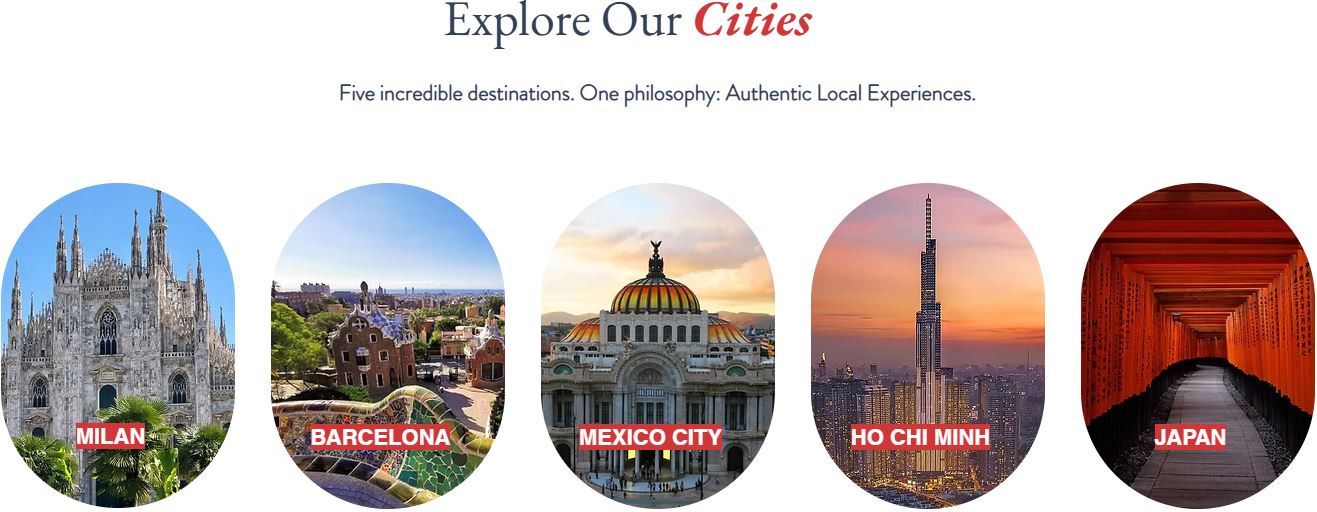
Whether you are drawn to the street food culture of Barcelona, the layered culinary traditions of Mexico City, or the precision and ritual of Japanese food culture, we have an experience designed to connect you with the pulse of each city through its food. These are not tourist circuits. They are invitations to eat, listen, and belong, even if just for an afternoon.
FAQ
What is the role of food in city tours?
Food serves as a cultural narrative tool in city tours, connecting travelers to a destination’s history, identity, and community. Research shows that guide-led culinary storytelling and interaction with local food actors are the highest-rated elements of the tour experience.
Why do culinary experiences increase traveler satisfaction?
Culinary heritage experiences drive satisfaction by activating emotional attachment and cultural identity perception, which in turn increases the likelihood of revisiting a destination. Food works because it is personal, sensory, and tied to living community memory.
How do I find an authentic food tour in a city?
Look for tours led by guides with personal ties to the neighborhood, stops at non-listed local vendors, and routes that explain the cultural context of each dish, not just its ingredients. Avoid tours where every stop has a polished tourist presence.
Can food tours benefit local communities?
Yes. When designed with community involvement, food tours create grassroots employment, support heritage preservation, and generate income for small food businesses that would otherwise have no tourism visibility.
How has social media changed food tourism in cities?
Platforms like TikTok now direct travelers toward hyper-local food venues at a scale that outpaces traditional guidebooks. A single viral video can transform an unknown neighborhood vendor into a destination, reshaping city tour routes in real time.
Recommended
Comments