
The Role of Personalization in Tours That Transforms Travel

Most travelers assume personalization means choosing a window seat or picking a preferred cuisine. In reality, the role of personalization in tours reaches much deeper. It shapes how you perceive a destination’s authenticity, how much you trust your guide, and whether a city’s pulse actually gets under your skin or stays at arm’s length. This article unpacks the psychology, the technology, and the practical strategies behind travel personalization, revealing why customized travel experiences are the difference between a trip you recount for years and one you barely remember.
Table of Contents
Key Takeaways
Point | Details |
Personalization builds trust | Tailored experiences reduce privacy anxiety and increase perceived value, directly driving loyalty. |
Context-aware adaptation wins | Real-time, situational personalization outperforms static preference-based itineraries for cultural satisfaction. |
Empathy is a design feature | AI guides with warmth and social cues sustain traveler engagement beyond a single interaction. |
Co-creation deepens connection | Travelers who communicate preferences and shape their own tours report higher satisfaction and loyalty. |
Authenticity is the real prize | Culturally grounded storytelling, not attraction selection, is what makes a personalized tour truly memorable. |
The role of personalization in tours and your psychology
Personalization is not just a convenience layer on top of a tour. It is a psychological stimulus that changes how your brain processes the entire experience. A 2025 study applying an extended S-O-R model found that personalization significantly enhances perceived value and trust while actively reducing privacy concerns, all of which shape travelers’ behavioral intentions. That is a meaningful chain of effects from a single design choice.
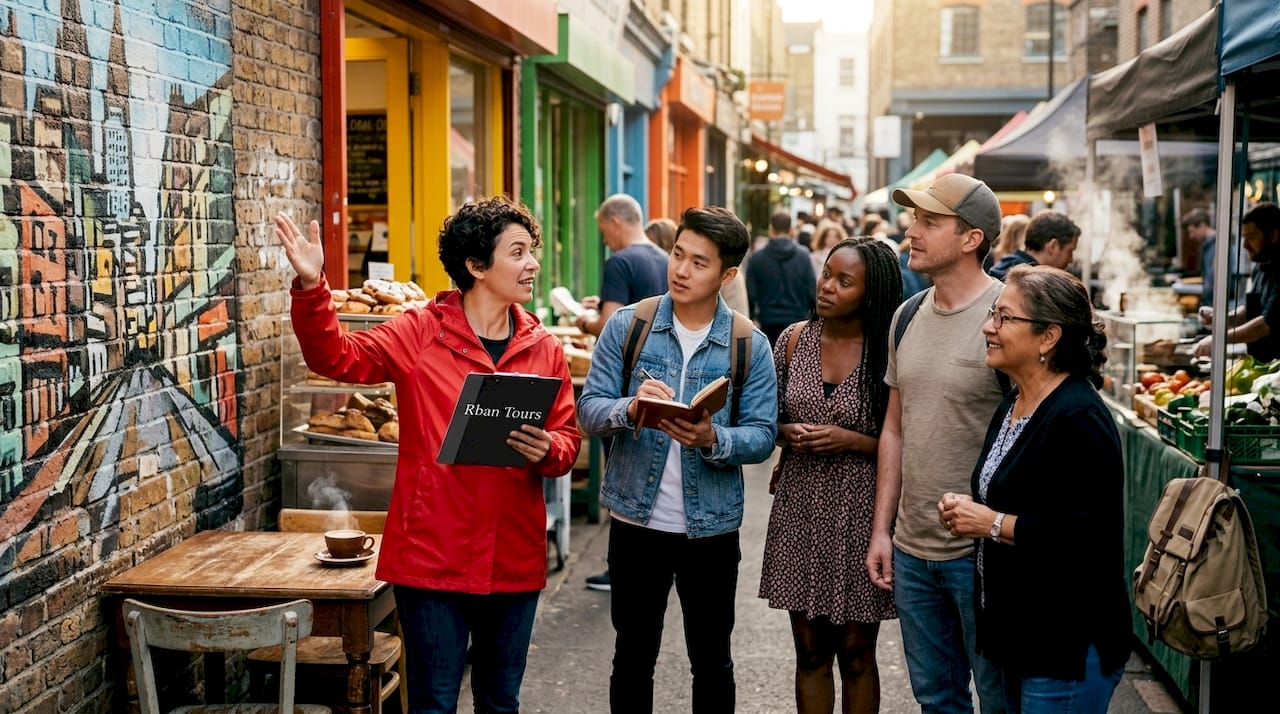
When a tour feels made for you, your brain assigns it higher value. You trust the source more. You are more willing to follow recommendations, spend more time at a site, and return to the same provider. A trust-based study in Marrakech confirmed that trust, driven by AI personalization, influences loyalty even more powerfully than satisfaction alone in some cases. Think about what that means: a traveler can enjoy a tour and still not come back, but one who trusts it almost certainly will.
The psychological benefits of tailored tours include:
Perceived value: Feeling that the experience was made for you increases its worth in your mind, independent of the actual cost.
Reduced cognitive load: Personalized recommendations remove the paralysis of too many choices, letting you fully absorb the experience.
Trust elevation: Transparent personalization signals that a provider understands your needs without exploiting them.
Behavioral loyalty: Travelers who feel seen are statistically more likely to re-engage with a brand and recommend it to others.
Pro Tip: When evaluating a tour provider, ask how they use your preferences after the booking. Providers who revisit your inputs during the tour itself, not just at sign-up, are practicing the kind of adaptive personalization that actually builds trust.
Context-aware personalization and cultural authenticity
Here is where things get genuinely exciting. Most personalization in tourism stops at preferences: your interests, your pace, your dietary needs. But the most powerful form of customization responds to your immediate context. That includes where you are standing, how crowded the street is, what time of day it is, and what just happened five minutes ago on the tour.
A 2025 Springer study with nearly 2,000 participants at Pompeii and Paestum found that context-aware recommender systems achieved over 90% visitor satisfaction by adapting to the real-time environment rather than relying solely on pre-set preferences. That number is remarkable. It tells us that dynamic personalization is not a luxury feature. It is the standard that serious cultural tourism should be measured against.
This kind of adaptive approach also deepens the perception of cultural authenticity. A 2026 MDPI study showed that AI-enabled cultural storytelling increases perceived authenticity and positively shapes destination image and visit intention. The key insight? Personalized narratives grounded in cultural meaning matter far more than simply routing someone to their preferred attraction type. The story about the place changes how real the place feels.
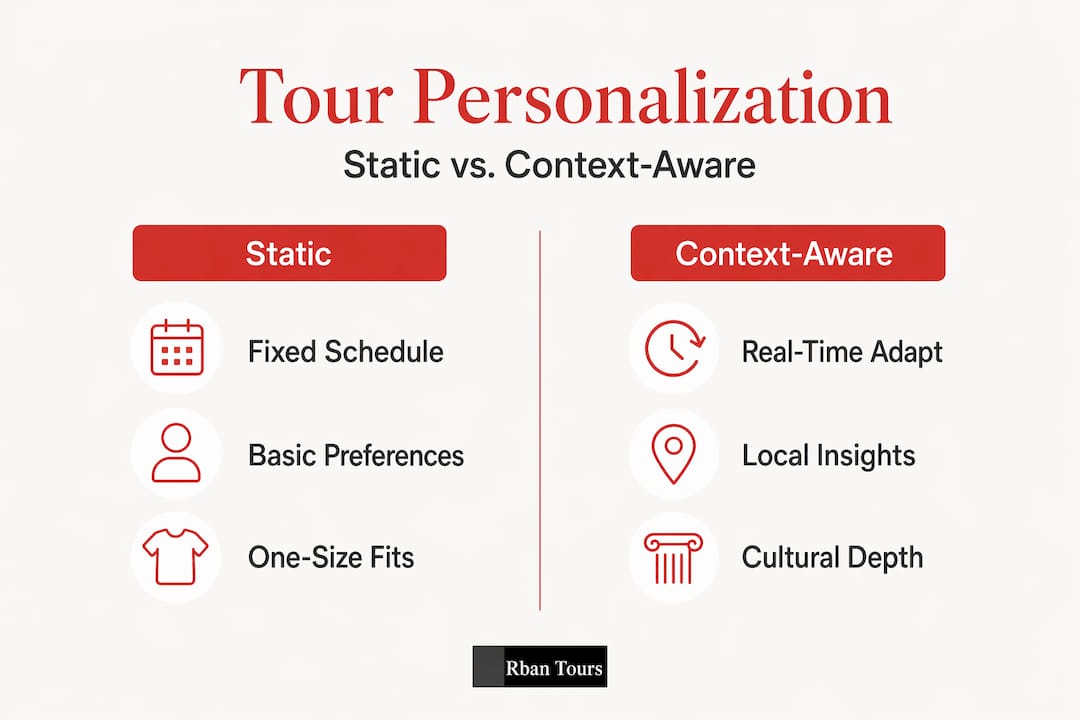
Here is a clear comparison of what separates static itinerary personalization from the context-aware approach:
Feature | Static itinerary personalization | Context-aware adaptive personalization |
Timing of adjustment | Before the tour begins | In real time, throughout the tour |
Data used | Stated preferences at booking | Location, crowd levels, weather, mood signals |
Cultural storytelling | Fixed narrative for all visitors | Narratives shift based on surroundings and moment |
Satisfaction driver | Matching stated interests | Responding to the current experience |
Authenticity impact | Moderate | High, because the story fits the moment |
Pro Tip: Ask your tour provider whether guides adapt their storytelling based on what you are observing in real time. A guide who pivots the narrative when you linger at a doorway or ask an unexpected question is delivering context-aware personalization, even without technology.
Empathetic digital touchpoints and lasting engagement
Technology has entered the tour experience in a significant way. AI chatbots, virtual guides, and digital assistants now accompany travelers through heritage sites, city neighborhoods, and cultural landmarks. But not all digital personalization is created equal. The difference between a tool travelers abandon after one use and one they return to lies in something surprisingly human: warmth.
A 2026 mixed-methods study published in npj Heritage Science identified warmth and anthropomorphism as key predictors of whether travelers continue using AI guide services. Perceived social warmth, competence, and a sense that the tool genuinely “gets” you are what sustain engagement, not just the accuracy of the information provided. This is the social dimension of personalization in tourism, and it is often overlooked.
What does empathetic design look like in practice? These are the principles that distinguish digital touchpoints worth returning to:
Conversational tone over clinical output: AI guides that respond in natural, warm language feel like companions, not search engines.
Memory across interactions: A system that recalls your preference from earlier in the tour, or from a previous visit, signals genuine attentiveness.
Pacing sensitivity: Effective personalization recognizes when you want depth and when you want brevity, adjusting accordingly.
Cultural humility: The best digital guides present local knowledge with nuance, acknowledging complexity rather than flattening it into talking points.
Emotional acknowledgment: When a place carries weight, history, or complexity, personalized digital tools should honor that rather than pivot immediately to the next attraction.
A meta-analysis of 40 studies on value co-creation in tourism found that the strongest links in personalization’s effect are satisfaction (r=0.64) and loyalty (r=0.61). The warmth of the interaction is a design lever that directly moves these outcomes.
How to personalize your tours for richer cultural connection
Understanding the science is one thing. Knowing how to actually seek out and shape personalized travel experiences is another. The importance of customized tours is clearest when you understand that you play an active role in making them work. The best experiences are co-created, not just delivered.
Here is how to approach any tour with personalization in mind:
Communicate your “why” before you book. Do not just list interests. Tell the provider what you are hoping to feel or understand. “I want to grasp daily life in this neighborhood” is more useful than “I like architecture.”
Ask about the guide’s flexibility. A truly personalized tour can change direction based on your reactions. Confirm that the guide is empowered to do this, not locked into a script.
Flag your pace and energy level. Some travelers want to cover ground; others want to sit with a single street for an hour. Both are valid. A good personalized tour accommodates either.
Request local storytelling, not landmark lists. The best indicators of a high-quality customized experience are the stories that do not appear in any guidebook. Ask if the guide has personal connections to the neighborhood.
Debrief after the experience. Providers who ask for specific feedback, not just a star rating, are building the kind of adaptive relationship that improves over time.
Personalized travel itineraries that match your pace, goals, and curiosity deliver something a fixed tour simply cannot: the feeling that the city was showing itself to you specifically. That sensation is what turns a trip into a story worth telling. Research from Amadeus confirms that travelers willingly pay more for genuinely personalized hospitality, which speaks to how deeply this kind of experience is valued.
Pro Tip: Before any cultural tour, spend ten minutes writing down one question you genuinely want answered about the destination. Share it with your guide at the start. This single act shifts the dynamic from passive audience to active co-creator, and the best guides will build the entire experience around your question.
My take on personalization and what it actually takes
I’ve watched hundreds of travelers move through cities we care deeply about, and the ones who light up are almost never the ones with the longest itineraries. They are the ones whose guide noticed them slow down in front of something unexpected and said, “Let me tell you what’s behind that door.”
That moment is personalization at its purest. Not an algorithm. A human being paying attention and responding in real time. What I’ve learned is that the technology and the frameworks matter, but they only amplify what already has to be present: genuine curiosity about the person in front of you.
I’ve also seen the flip side. Tours built around stated preferences that felt hollow because the narrative never changed regardless of who was there. The itinerary was technically customized. The experience was not. The difference is cultural grounding. Traveling with locals who have a personal relationship with a neighborhood creates something no preference engine can replicate on its own.
My honest view is that the best travel personalization strategies combine three things: a guide with real cultural authority, a format flexible enough to follow the traveler’s curiosity, and a provider willing to listen before the tour even begins. When those three align, what you get is not a customized tour. You get a conversation with a city.
— Rban
Experience the city on your own terms with Rbantours
The insights in this article reflect what we build every single day. At Rbantours, personalization is not a feature we bolt on at the end. It is the foundation of every experience we design, from the streets of Barcelona to the markets of Mexico City.
[
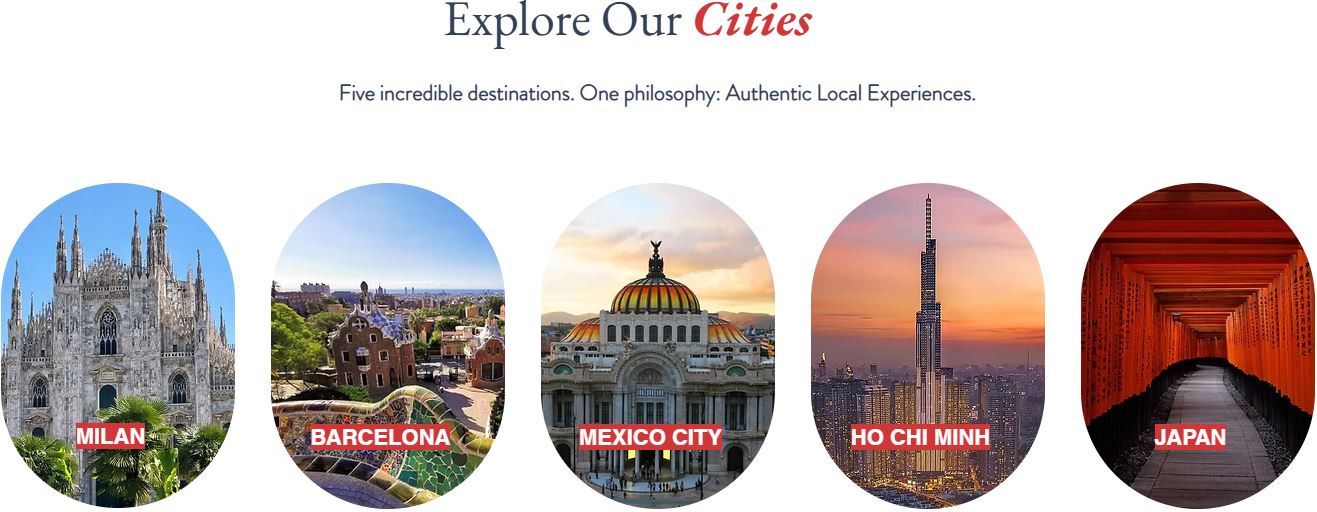
Whether you are craving an immersive Barcelona cultural experience shaped around your curiosity or looking for a walking cultural tour that responds to what you discover in real time, we build experiences that feel genuinely made for you. Our guides are local insiders with deep creative and cultural roots. Our formats flex around your pace, your questions, and your sense of wonder. Explore what personalized city discovery looks and feels like at Rbantours, and find the experience that speaks to where you are right now.
FAQ
What is the role of personalization in tours?
Personalization in tours shapes how travelers perceive authenticity, build trust, and connect with local culture. Research shows it increases perceived value and loyalty beyond simple preference matching.
How does context-aware personalization differ from standard customization?
Standard customization adjusts a tour based on pre-stated preferences, while context-aware personalization responds to real-time conditions like location, crowd levels, and mood. Studies show the adaptive approach achieves over 90% satisfaction at cultural heritage sites.
Why does warmth matter in AI-powered tour guides?
Travelers engage more deeply and return more often when digital guides feel warm and socially aware. Perceived warmth and anthropomorphism are key continuance predictors in heritage tourism AI studies.
What makes a personalized travel itinerary worth paying more for?
A genuinely personalized itinerary matches your pace, your cultural curiosity, and your unstated goals, not just your listed interests. Research confirms that travelers show willingness to pay premiums when they perceive true personalization rather than surface-level customization.
How can I tell if a tour is truly personalized before booking?
Ask whether the guide adapts the narrative in real time and whether the provider invites you to share your “why” before the tour begins. Providers who practice transparent, adaptive personalization will welcome these questions rather than deflect them.
Recommended
Comments