
Mindful Tourism: How to Travel Consciously and Well
- Rban Tours

- 4 days ago
- 9 min read
Mindful tourism is the practice of traveling with deliberate, present-moment attention combined with ethical choices that respect local communities, cultures, and environments. It matters because research consistently shows that this quality of attention produces richer experiences, stronger memories, and measurably more pro-environmental behavior, while directing real economic benefit to the places you visit.
We think of it as the difference between seeing a city and actually feeling its pulse. The same street in Milan can be a backdrop for selfies or a living story you carry home for years. The choice is entirely in how you show up.
Key Takeaways
Mindful tourism produces richer experiences, stronger memories, and more ethical travel choices when travelers pair deliberate attention with local engagement and low-impact decisions.
Point | Details |
Definition | Mindful tourism combines present-moment attention with ethical, low-impact choices that benefit local communities. |
Research backing | A systematic review of 25 studies found positive links between mindfulness and satisfaction, pro-environmental behavior, and destination loyalty. |
Pre-trip foundation | Set a one-sentence intention, book fewer activities, and establish phone-free windows before you arrive. |
Italy in practice | Use regional trains, support local artisans and markets, and ask hosts about sourcing and community partnerships. |
Avoid the performance trap | One photo per site and one journal entry per day protects the internal attention that makes mindful travel real. |
Table of Contents
What is mindful tourism, and what principles guide it?
Conscious travel, the term often used interchangeably with mindful tourism in academic literature, is built on a specific set of values that go beyond “leave no trace.” It asks travelers to bring the same quality of attention to a city neighborhood that a meditator brings to a breath: curious, non-judgmental, and fully present.
Six core principles define it in practice:
Presence. You engage with what is in front of you rather than curating content for later. At a Venetian fish market, that means watching the vendors, smelling the salt air, and asking a question, not composing a flat-lay shot.
Respect. You learn the behavioral norms before you arrive. In Florence’s basilicas, that means covered shoulders and lowered voices, not because a sign demands it, but because you understand why it matters.
Local economic benefit. You direct spending toward small producers, family-run trattorias, and independent artisans rather than international chains. Local cuisine is one of the most direct entry points: asking where ingredients come from turns a meal into a cultural exchange.
Low-impact choices. You consider transport, accommodation, and consumption patterns. Regional trains in Italy, for instance, connect most major cities with far less environmental cost than flying.
Reciprocity. You give something back, whether that is time, attention, a fair price, or a genuine conversation with a host.
Curiosity over consumption. You prioritize depth over volume. Two neighborhoods explored slowly beat ten cities photographed quickly.
Each principle reinforces the others. Presence makes respect feel natural. Curiosity leads you to local vendors. Low-impact transport slows your pace and opens unexpected encounters.
What does the research say about the benefits of mindful tourism?
The evidence base is growing, and the findings are consistent enough to take seriously, even if causality is not yet fully established.
A systematic review of 25 studies drawn from 670 records found a positive association between mindfulness and tourist outcomes: greater satisfaction, more memorable experiences, stronger destination loyalty, and higher rates of pro-environmental behavior. The authors are careful to note that most studies are cross-sectional, meaning the field still needs longitudinal work to confirm that mindfulness causes these outcomes rather than simply correlating with them.
Research signal: A systematic review of 25 tourism studies found that mindful travelers consistently reported higher satisfaction, more memorable experiences, and greater pro-environmental behavior, though the authors call for more longitudinal research to confirm causality.
Separately, an exploratory study on mindfulness training and tourist experience found that training shifted travelers away from “collecting moments” toward deeper engagement with places and people. That shift has practical implications: travelers who arrive with even a brief mindfulness practice tend to prefer experiences over accumulation.
The urgency behind all of this is real. UNWTO data confirms that international tourism volumes returned to near pre-pandemic levels by 2024, placing renewed pressure on destinations already managing over-tourism. The WTTC’s environmental analysis documents tourism’s measurable footprint across carbon, water, and land use, making low-impact choices not just personal preference but collective responsibility.
Survey-based research from mindful tourism contexts also suggests psychological benefits: enhanced self-awareness and eudaimonic well-being, the kind of deep satisfaction that comes from meaning rather than pleasure alone.
How does mindful tourism differ from sustainable and responsible travel?
These three terms share goals but emphasize different things. Conflating them leads to fuzzy practice.
Focus | Mindful tourism | Sustainable tourism | Responsible tourism |
Core emphasis | Quality of attention and presence | Systems, metrics, and environmental impact | Behavior, ethics, and accountability |
Traveler action | Slow down, engage deeply, choose local | Reduce carbon, support certified businesses | Follow codes of conduct, avoid harm |
How it’s measured | Personal experience quality, satisfaction | Carbon footprint, resource use, certification | Compliance with ethical standards |
Mindful tourism is the inner dimension of conscious travel. Sustainable tourism is the systemic dimension. Responsible tourism is the behavioral dimension. A truly conscious traveler works across all three, but mindful tourism is the foundation: without presence and genuine curiosity, the other practices become checklists rather than values.
A manifesto published in the International Journal of Emerging Trends in Management argues that embedding consciousness at the heart of tourist experience management is what aligns traveler intentions with actual actions, bridging the gap between knowing what is right and doing it.
How to plan a mindful trip before you leave
Pre-trip decisions shape everything that follows. These steps take less than an hour and change the entire texture of a trip.
Set a clear intention. Ask yourself: what do I actually want from this trip? Rest, learning, connection, creative inspiration? Write it in one sentence and keep it somewhere visible during packing.
Research local customs and etiquette. For Italy, this means understanding regional differences, not just national stereotypes. Milanese pace differs from Sicilian pace. Dress codes vary by site and season.
Choose lower-impact transport. Italy’s Trenitalia and Italo networks connect Milan, Florence, Rome, Naples, and Venice with fast, affordable regional trains. Flying between Italian cities is rarely necessary and always higher-impact.
Book fewer activities. Leave at least one unscheduled half-day per destination. The best moments in any city are rarely the ones you booked.
Set device rules before you go. Decide on phone-free windows, for example, no screens during meals or for the first hour after arrival in a new place.
Pack light. A lighter bag means more freedom to walk, take local transit, and stay flexible. It also reduces the temptation to treat the trip as a logistics exercise.
Pro Tip: Write your trip intention as a single sentence: “On this trip, I want to feel [X] and learn [Y].” Read it the morning you arrive. It takes 10 seconds and recalibrates your attention before the day begins. Mindful.net recommends this as one of the most effective pre-trip practices for staying present.
Staying present once you arrive: in-destination practices
Pacing is the single most underrated tool in mindful travel. When you book fewer activities, you create space for the city to surprise you. One museum visited slowly, with time to sit and look, produces more lasting memory than four museums photographed and exited.
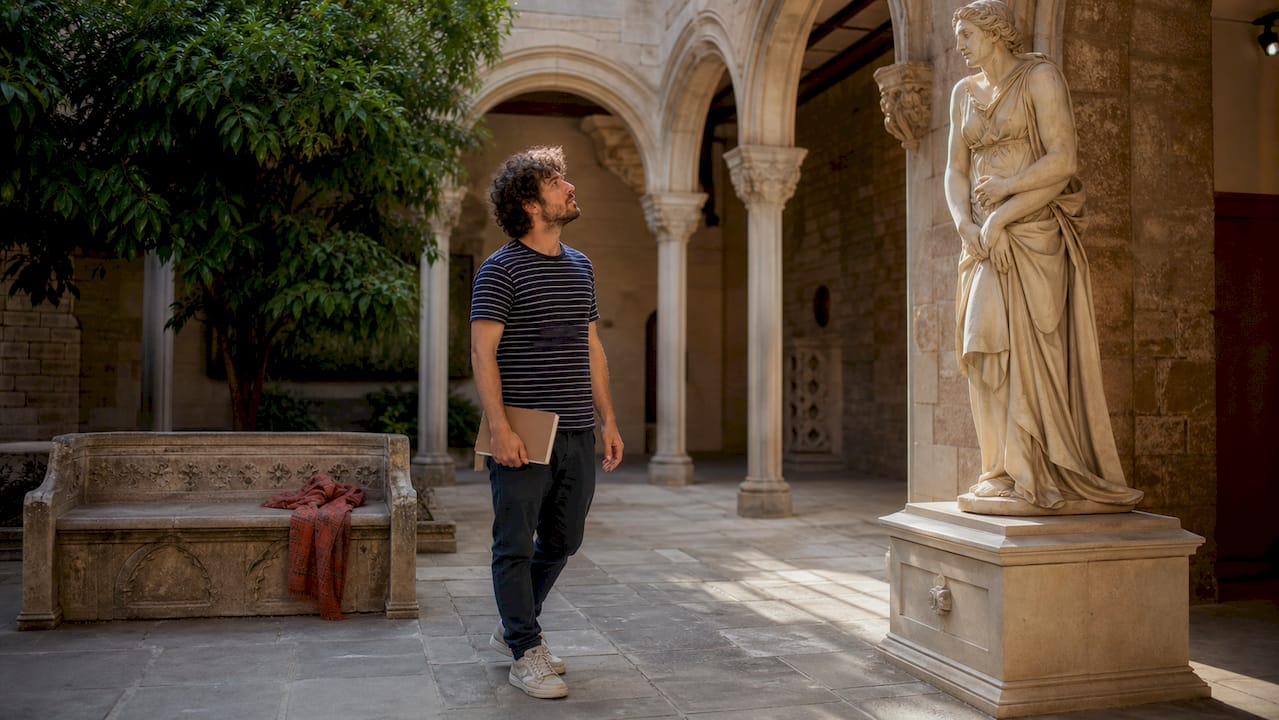
A simple sensory grounding exercise works anywhere, on a train platform, in a piazza, or waiting for an espresso:
This 30-second practice, adapted from Mindful.net’s traveler guidance, interrupts the autopilot mode that turns travel into a blur of checked boxes.
For cultural interactions, a few practical rules:
Ask before photographing people, always. A nod or a gesture costs nothing and changes the entire dynamic.
Support street vendors and market sellers with cash when possible. It keeps money local and the exchange personal.
Match the energy of the space. A quiet church calls for quiet. A loud market invites engagement. Reading the room is a form of respect.
Learn five words in the local language. In Italy, grazie, prego, permesso, buongiorno, and scusi open more doors than any translation app.
Common myths about mindful tourism, and how to move past them
Mindful tourism carries a reputation for being expensive, slow, or reserved for wellness retreats. None of that holds up.
“It requires a retreat or a remote destination.” Not at all. Micro-practices of 3–7 minutes, a breathing exercise during a train ride or a phone-free window at dinner, are enough to shift the quality of a city trip. Milan works just as well as the Dolomites.
“It means traveling slowly or doing nothing.” Mindful tourism is about the quality of attention, not the pace. You can visit three cities in a week mindfully if you arrive with intention and engage genuinely at each stop.
“It’s only for solo travelers.” Groups can travel mindfully. It just requires agreeing on a few shared rules: one phone-free meal per day, a shared intention for the trip, time for individual wandering.
“It costs more.” Local trattorias, regional trains, and neighborhood markets are almost always cheaper than tourist-facing alternatives. Mindful choices and budget-friendly choices frequently overlap.
The performance trap. Documenting mindfulness for social media reduces internal attention and erodes the experience itself. A practical rule: one photo per site, one journal entry per day. The research on this is clear: the moment you start performing presence for an audience, you lose it.
What mindful tourism looks like on the ground in Italy
Italy is one of the most visited countries in the world, and that pressure is visible at its most iconic sites. Mindful tourism here is not abstract; it has a specific texture.
At heritage sites: The Colosseum, the Uffizi, and the Duomo in Milan all have conservation rules that exist for real reasons. Touching frescoes, ignoring crowd-flow signs, or arriving without a timed ticket contributes to physical degradation. Booking in advance, following site guidance, and spending time reading interpretive materials rather than rushing to the next photo opportunity are all forms of respect with measurable impact.
Supporting local artisans and food producers: Italy’s mercati (markets) and botteghe (artisan workshops) are where the country’s living culture actually resides. Asking vendors about their craft, buying directly from producers at farmers’ markets, and choosing restaurants that name their suppliers on the menu are all practices that keep money circulating locally.

Transport: Italy’s rail network is genuinely excellent. The Frecciarossa offers fast connections between major cities such as Milan and Rome. Regional trains reach smaller towns that reveal a more authentic rhythm of Italian life than the major tourist circuits.
Rbantours’ approach in Milan illustrates what this looks like as a designed experience. Rather than routing guests through the standard landmarks, Rbantours builds walking and cultural tours around neighborhood rhythms: local markets, independent workshops, and the kind of off-the-beaten-path encounters that only a local host can unlock. The experience is designed around local hosts who share their own relationship with the city, turning the tour into a conversation rather than a commentary track.
When booking any experience in Italy, these questions are worth asking:
Where does the food come from, and are producers named?
Does the guide live in this neighborhood, or are they brought in for tourist groups?
Are any proceeds shared with local community partners or artisans?
How many people are in the group? (Smaller is almost always more mindful.)
Why mindful travel feels personal to us
We have seen what happens when travelers arrive with genuine curiosity rather than a checklist. The conversations go longer. The meals taste different. People leave with stories instead of screenshots.
Research on local, participatory experiences confirms what we observe in practice: depth of engagement produces stronger, more lasting memories than breadth of coverage. When mindfulness training shifts travelers from collecting moments to inhabiting them, as the exploratory research suggests, the entire architecture of a trip changes. You stop optimizing for content and start optimizing for connection.
That is the soul of what we do at Rbantours. Every experience we design, from a street food walk in Milan to a Paint & Sip workshop, is built around the belief that meaning in travel comes from connection, not consumption. Mindful tourism is not a niche practice. It is simply good travel, done with intention.
Ready to experience Milan mindfully?
[
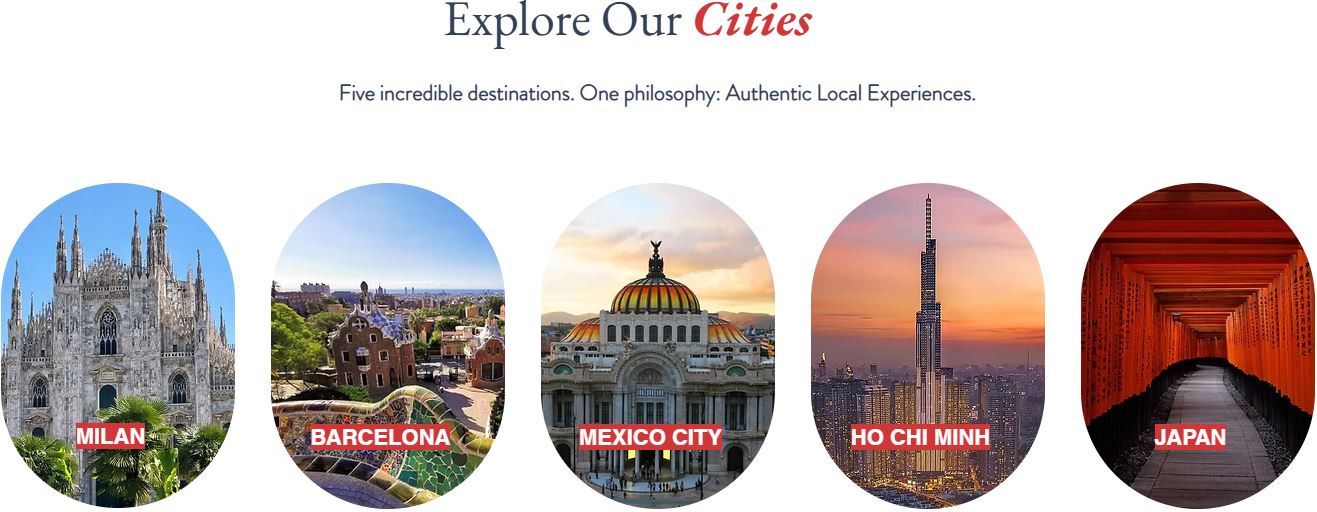
Rbantours designs city experiences that put you inside the heartbeat of Milan rather than outside looking in. Our walking and cultural tours are led by local hosts who know the neighborhoods, the vendors, and the stories that don’t appear in any guidebook. Small groups, real encounters, and a pace that lets you actually feel the city.
Book your Milan experience with Rbantours and discover what conscious travel feels like in practice.
Sources
These primary sources and research summaries are worth bookmarking if you want to go deeper on any aspect of conscious travel.
Recommended
Comments