
What makes a memorable city tour: insider secrets
- Rban Tours

- May 5
- 9 min read
Most city tours leave you with a pile of photos you’ll scroll past and a handful of facts you’ll forget by Tuesday. That’s not a travel failure. It’s a design failure. Storytelling transforms facts into emotional stories with character, conflict, and plot, and interactive elements like hands-on activities strengthen memory through active participation. The tours that genuinely stay with you — the ones you still talk about years later — share a common thread: they made you feel something. In this article, we break down exactly what separates forgettable sightseeing from truly immersive city experiences, covering emotional storytelling, authentic cultural access, sensory immersion, and the benchmarks that top-rated tours consistently hit.
Table of Contents
Key Takeaways
Point | Details |
Storytelling matters most | Emotional stories and hands-on participation create lasting tour memories. |
Authentic local connections | Meeting locals and accessing hidden spots turn tours into personalized adventures. |
Sensory-rich experiences | Tasting, creating, and engaging your senses help anchor moments in memory. |
Global benchmarks guide choices | Top-rated tours prioritize culture, interactivity, and small group dynamics. |
Emotional storytelling: The cornerstone of memorable tours
After previewing what truly unforgettable tours offer, we start with their essential core: emotional storytelling.
Facts alone don’t stick. Ask yourself what you remember from your last guided tour. Chances are it isn’t a date or an architectural detail. It’s the story a guide told about a family who survived something extraordinary, or the moment a local stranger invited your group into their kitchen. That’s the power of narrative. When information is wrapped in emotion, characters, and tension, the brain processes it differently. It roots the experience in feeling rather than filing it away as trivia.
This is why the best city tours are built around human stories, not itineraries. The rhythm of a great tour mirrors that of a great film: there’s a beginning that draws you in, a middle with texture and surprise, and a close that makes you want more. Local legends, neighborhood myths, and personal guide anecdotes become the architecture of the experience.
Active participation accelerates this even further. When you’re painting, cooking, crafting, or tasting alongside a local, you’re not just observing a city’s culture — you’re inside it. Hands-on city tours in Japan, for example, use traditional craft workshops to anchor visitors in the sensory rhythm of a neighborhood. You leave with something you made. You leave with a story you lived.
Key characteristics of emotionally engaging tours:
A guide who shares personal stories, not scripted recitations
Moments of surprise built into the route (an unexpected alley, an unannounced tasting)
Small group sizes that allow real conversation
At least one hands-on activity rooted in local tradition
Narrative arcs that connect history to the present day
Pro Tip: When choosing a tour, ask in advance whether your guide shares a personal connection to the neighborhood. A guide’s own story is the single most effective icebreaker and sets the emotional tone for everything that follows.
“The tours people remember aren’t the ones with the longest routes or the most stops. They’re the ones where something unexpected made them laugh, think, or feel connected to a place and its people.”
Interactive CDMX experiences in Mexico City show this beautifully — local artisans and chefs become co-storytellers, turning each stop into a chapter rather than a checkbox.
Authentic culture and the SPAM framework
With storytelling as a foundation, discover how authentic culture and the SPAM framework add depth to city tour experiences.
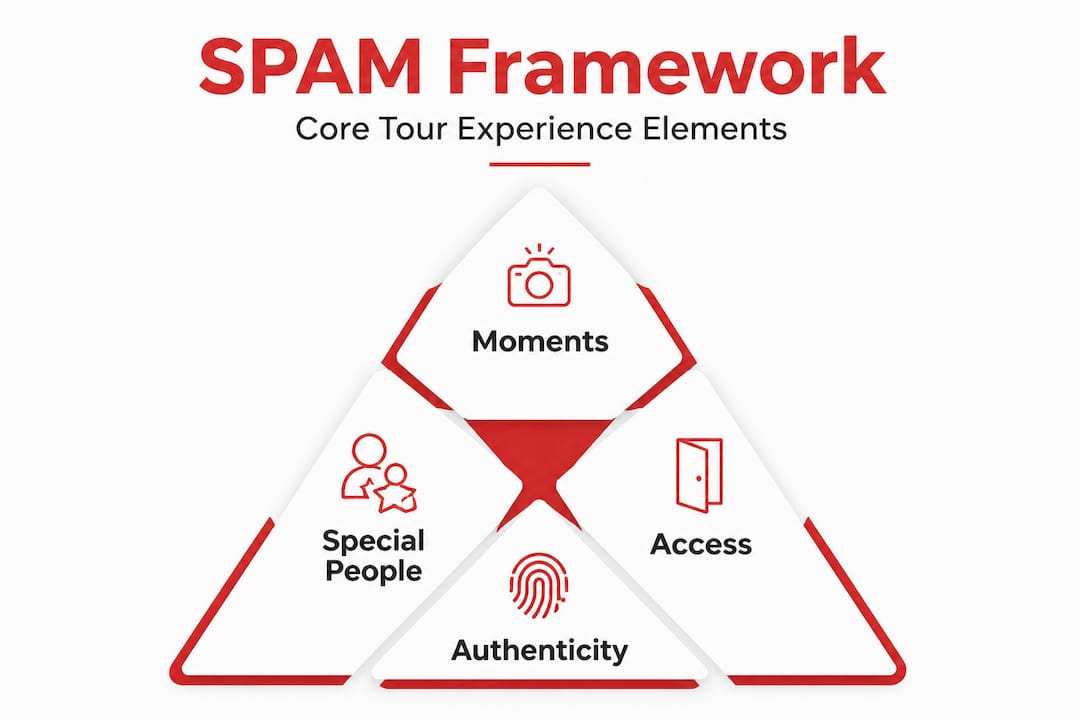
The SPAM framework is one of the most useful lenses for evaluating any city tour. It stands for Special People, Access, and Moments, and it captures what genuinely separates a good tour from a great one. SPAM creates extraordinary experiences through authentic local connections, exclusive access, and crafted emotional peaks that most standard tours simply never reach.
Let’s break each element down.
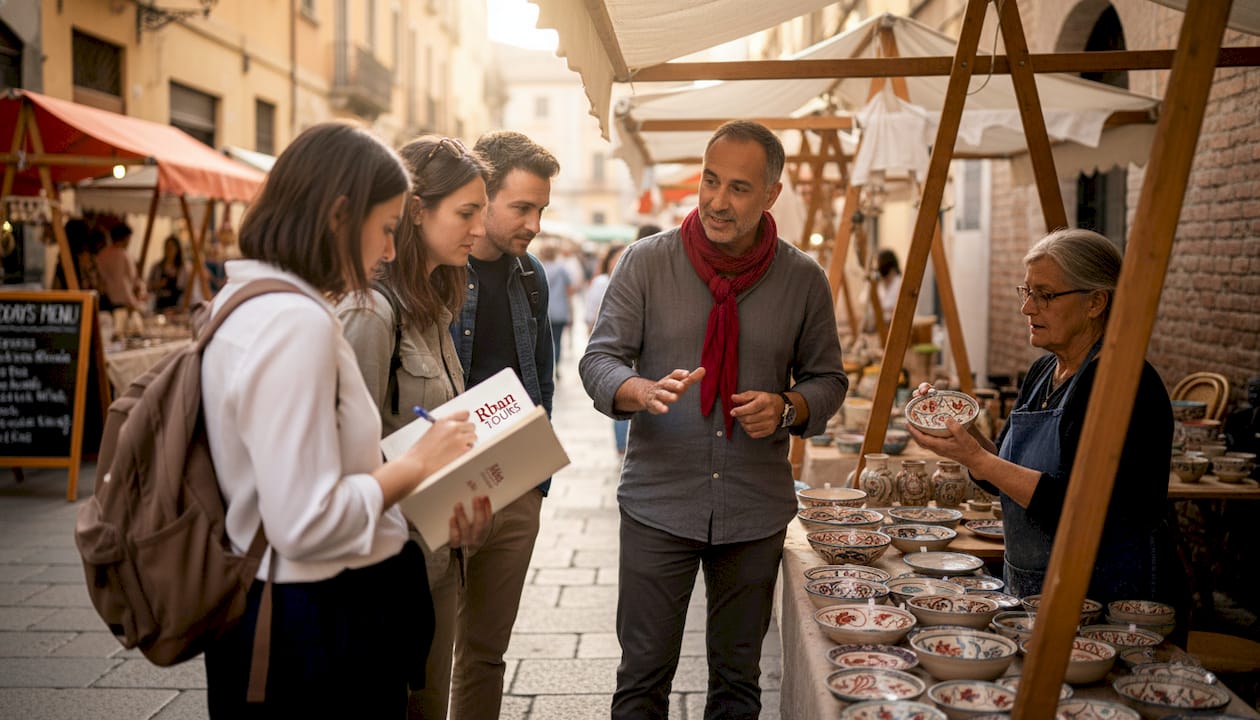
Special People means your guides and local collaborators are not just knowledgeable — they’re invested. They’re local artists, market vendors, chefs, or community historians who bring genuine warmth and authority to every interaction. These are not tour industry professionals reciting scripts. They are the city, speaking for itself.
Access means getting behind the curtain. It’s the private courtyard most tourists walk past without knowing it exists. It’s the family-run taller (workshop) that doesn’t advertise. It’s hospitality-inspired local moments where an unexpected cup of something delicious becomes a window into a culture’s values around gathering and generosity.
Moments are the emotional peaks woven intentionally into the experience. A surprise street musician serenade. A spontaneous cooking demonstration from a vendor who becomes your new favorite person on earth. These aren’t accidents — they’re crafted with care.
Tour element | Standard tour | SPAM-enhanced tour |
Guide profile | Certified, script-driven | Local creative or community insider |
Location access | Public landmarks only | Private courtyards, family workshops |
Cultural interaction | Observation from a distance | Direct participation and conversation |
Emotional high points | Incidental | Intentionally designed |
Group dynamic | Passive listening | Collaborative discovery |
Types of crafted emotional moments you might encounter on a SPAM-enhanced tour:
A rooftop reveal of a city skyline at golden hour, timed to the end of a story
A local musician playing a piece tied to a neighborhood’s history
A spontaneous market negotiation lesson from a vendor who’s been working the same stall for 30 years
A shared meal prepared together with a local family
An unexpected gift of handmade goods created during a workshop
Authentic Barcelona experiences are a perfect example of SPAM in action — from tapas tours guided by neighborhood natives to design walks led by local architects who genuinely love their city.
Sensory immersion: Engaging all five senses
To move from emotional moments to full-body engagement, let’s focus on how sensory-rich experiences seal city tours in memory.
Memory and the senses are deeply linked. The smell of a specific spice can return you to a market you visited a decade ago. The texture of handmade clay can bring back an afternoon workshop long after the photos have faded. This is not poetic coincidence — it’s how human memory works. Culinary integration, workshops, and local interactions engage senses and connect you to a city’s cultural heritage in ways that passive sightseeing simply cannot replicate.
The most memorable city tours deliberately layer sensory experiences across the journey. You don’t just see a neighborhood — you taste its flavors, hear its sounds, and touch its textures. Each layer reinforces the others, creating a richer, more durable memory.
Destination | Multi-sensory activity | Senses engaged |
Mexico City | Street food tasting and mole-making class | Taste, smell, touch |
Barcelona | Vermouth tour with local tapas crafting | Taste, sight, social |
Vietnam | Pho preparation with a market vendor | Smell, taste, touch |
Japan | Ceramics workshop in a traditional studio | Touch, sight, sound |
Istanbul | Spice bazaar walk with tea ceremony | Smell, taste, sound |
How workshops anchor memories: A three-step process
Taste — Eating or drinking something local and seasonal immediately grounds you in a place. Flavor memory is among the most persistent forms of recall. One bite of a dish prepared with a local grandmother creates a stronger memory anchor than an hour of passive listening.
Create — When you make something with your hands — pottery, a painting, a dish, a textile — you engage motor memory alongside sensory memory. The act of creating builds a personal connection that cannot be replicated by watching or reading.
Connect — The social dimension of a workshop seals the experience. Laughing with strangers over a shared mistake, receiving encouragement from a local artisan, or simply sitting together and eating what you made — these human moments are the capstone of immersive learning.
Barcelona culinary tours integrate all three of these layers consistently, making each stop a complete sensory experience rather than a brief photo opportunity.
Pro Tip: When comparing tour options, look specifically for at least one hands-on component in the itinerary. Even a 20-minute activity — a tasting, a craft session, or a cooking moment — dramatically increases how much of the day you’ll actually remember a week later.
Recognition and benchmarks: How top-rated tours stand out
Now that you understand the ingredients of memorable tours, here’s where empirical recognition and global benchmarks come in.
The world’s highest-rated tours aren’t accidental. They consistently earn recognition because they apply the principles we’ve discussed — storytelling, sensory immersion, authentic access — with real precision and care. Looking at what earns top marks from verified travelers gives you a concrete framework for choosing your next experience.
TripAdvisor’s 2026 Travelers’ Choice Awards highlight tours like the Unvanquished Tour in Porto at number one worldwide, celebrated for its emphasis on history, architecture, and local food. These experiences consistently earn ratings between 4.8 and 5.0 from thousands of verified reviewers — and the pattern across all of them is unmistakable.
Universal success factors shared by top-rated city tours:
Small group sizes — typically under 12 people, enabling genuine interaction rather than crowd management
Story-driven routes — itineraries designed around narrative arcs, not just landmark proximity
Local flavor integration — food, drink, and craft woven into the experience rather than offered as optional add-ons
Knowledgeable, personable guides — locals who love their city and communicate that love with infectious energy
Pacing that allows for discovery — room in the schedule for spontaneous conversations and unplanned moments
Clear cultural context — every stop connects to a broader story about the city’s identity and evolution
These benchmarks are not just useful for tour operators. They’re a smart checklist for any traveler doing their research. When a top-rated walking and cultural tour ticks all of these boxes, you’re looking at an experience designed to become a lasting memory rather than a forgettable afternoon.
The Porto example is instructive. The Unvanquished Tour doesn’t rely on the city’s obvious charm. It uses local storytellers, food stops, and deeply researched neighborhood narratives to create an experience that feels personal regardless of how many people have taken it before you. That’s the hallmark of truly excellent tour design.
Perspective: Why the best memories come from moments, not monuments
Building on what high-performing tours deliver, let’s consider a fresh angle most guides leave out.
Here’s something we’ve noticed across years of designing experiences in cities like Barcelona, Vietnam, Mexico City, and Japan: travelers almost never say “I’ll never forget the Eiffel Tower.” They say “I’ll never forget that street musician we stumbled upon” or “the woman who taught us how to make tortillas by hand” or “the rooftop where our guide told us about his grandfather.”
The monuments are beautiful. They deserve to be seen. But they rarely become the emotional core of a memory. The people do. The micro-moments do.
We believe modern travelers are beginning to understand this instinctively. There’s a growing appetite for what we call micro-experiences: small, intimate, highly specific moments that feel designed for you, even when they’re part of a group experience. A two-minute conversation with a local vendor. A corner café your guide has been visiting since childhood. A lane too narrow for tour buses that holds an entire world of neighborhood history.
Vietnam micro-experiences capture this perfectly. It’s not the grand overview of Hanoi or Ho Chi Minh City that people carry home. It’s the texture of a specific alley, the flavor of a specific broth, the face of a specific person who made them feel genuinely welcomed.
The travel industry is beginning to recognize this shift, with guest experience insights from the hospitality world reinforcing that personalization and emotional resonance drive satisfaction far more than scale or spectacle. We’ve always known this. It’s why we build every experience around human connection first and logistics second.
Chase moments. Chase the people. Let the monuments be the beautiful backdrop to a story you’re actively living.
Ready for your next unforgettable city tour?
You now have a clear blueprint: emotional storytelling, the SPAM framework, sensory immersion, and the benchmarks that the world’s best tours share. The only thing left is to live it.
[
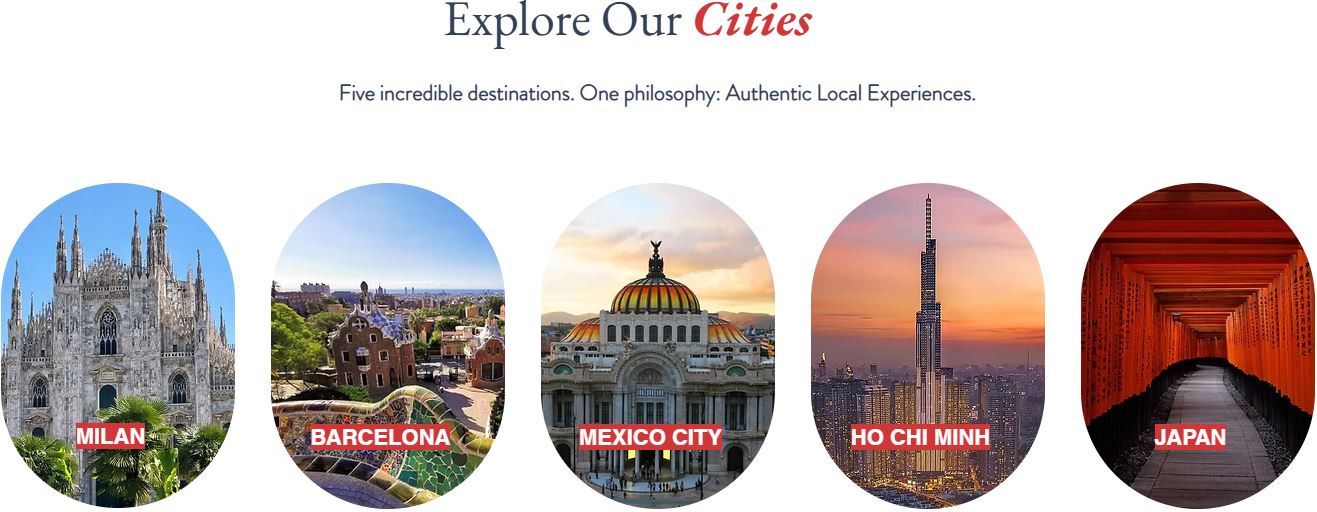
We design every Rban Tours experience with all of these elements intentionally woven in. From our Walking & Cultural Tour that puts neighborhood narratives front and center, to the vibrant sensory journeys of our Barcelona experiences and the creative energy pulsing through our CDMX experiences, each tour is built to leave you with something you’ll still be talking about long after you’re home. Browse our full lineup and find the immersive adventure that calls to you.
Frequently asked questions
What is the SPAM framework in city tours?
SPAM stands for Special People, Access, and Moments. It creates extraordinary tour experiences through authentic local connections, behind-the-scenes opportunities, and crafted emotional peaks that elevate a tour beyond standard sightseeing.
How do culinary experiences make a city tour memorable?
Culinary activities like tastings and cooking classes engage multiple senses simultaneously, creating layered memories that connect you to a city’s living cultural heritage in a deeply personal way.
What are examples of world-class city tours?
The Unvanquished Tour in Porto holds the TripAdvisor 2026 #1 ranking worldwide, recognized for its cultural immersion, local food integration, and deep historical storytelling.
Is sensory immersion really that important on a city tour?
Absolutely. Even a single hands-on interactive activity dramatically increases memory retention by engaging active participation rather than passive observation, making experiences far more durable over time.
Recommended
Comments