
What Makes a Unique Tour: Insider Secrets Revealed


Most travelers assume a unique tour simply means visiting somewhere unusual or ticking off a lesser-known landmark. That assumption misses what actually separates a forgettable trip from one you tell stories about for years. What makes a unique tour goes far deeper than geography or novelty. It lives in the way a city’s rhythm reaches you through all five senses, in the moment a local guide reveals something that no guidebook captures, and in the feeling that this experience was designed specifically for you. We built Rbantours around exactly that conviction.
Table of Contents
Key Takeaways
Point | Details |
Multisensory engagement matters | Tours that activate sight, sound, scent, taste, and touch create memories that last far longer than passive sightseeing. |
Personalization drives satisfaction | Itineraries shaped around traveler energy levels, interests, and mobility remove friction and raise the emotional value of every moment. |
Local access is non-negotiable | Authentic cultural interactions with residents and local creatives transform tours from observation into genuine connection. |
Flexibility signals quality | The best tours clearly communicate what is fixed and what can be adjusted, giving travelers confidence without vagueness. |
Reviews reveal hidden truths | Consistent praise for pacing and guide depth in traveler reviews is a stronger quality signal than overall star ratings alone. |
What makes a unique tour: the core elements
There is a gap between a tour that covers impressive sights and one that genuinely changes how you see a place. The difference comes down to a set of specific, designable qualities that the most memorable experiences share.
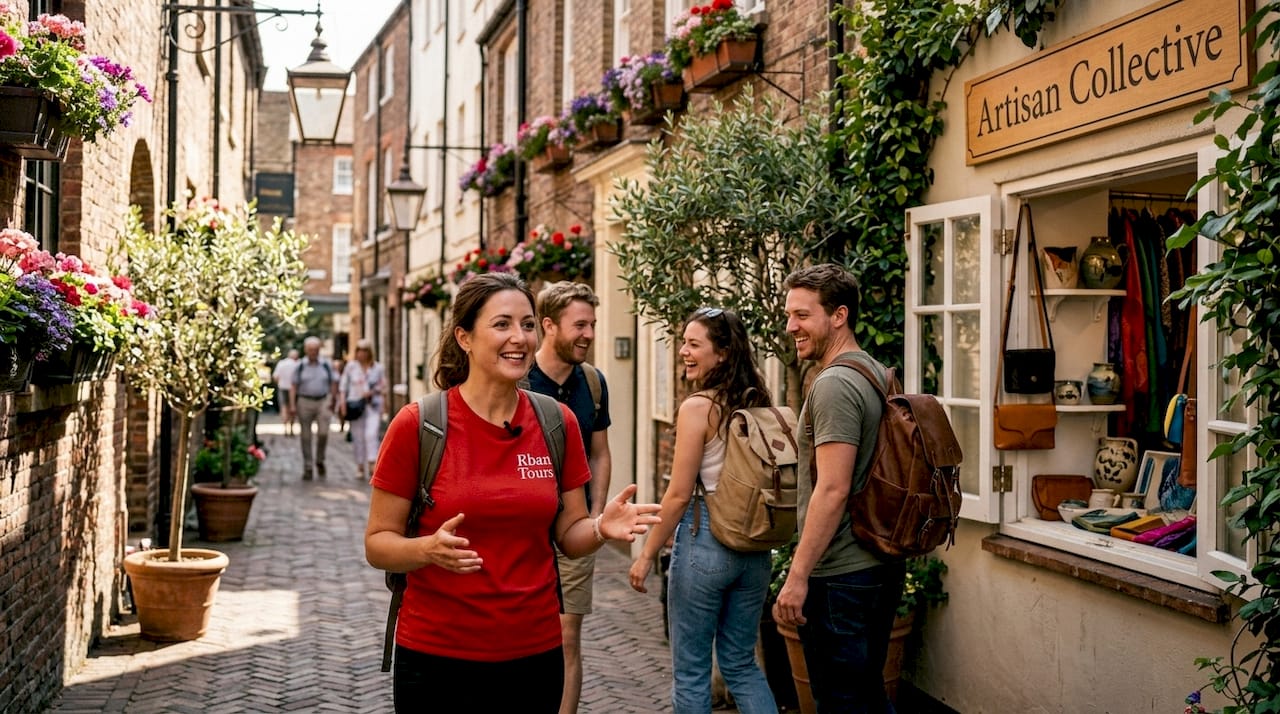
Multisensory engagement
The most powerful tours engage far more than your eyes. Multisensory experiences create deeper, longer-held memories that passive observation simply cannot match. Think about walking through a street market in Mexico City where the smoke from a comal drifts toward you, the vendor narrates the history of a mole recipe, and you grind your own spices by hand. Every sense is doing work. Every sense is anchoring a memory.
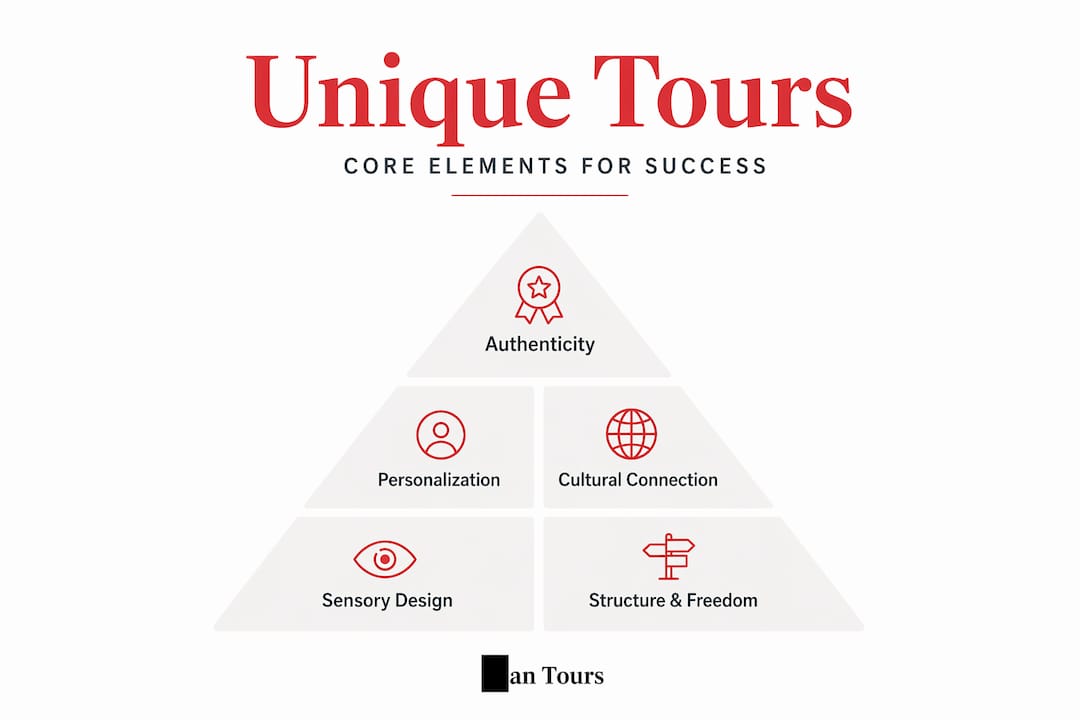
The elements that separate truly unique tours from ordinary ones include:
Multisensory design: deliberate use of sound, scent, taste, and texture alongside visual discovery
Tailored itineraries: routes and pacing shaped around the specific group, not a generic demographic
Meaningful cultural access: conversations with artisans, chefs, and residents rather than observation from a distance
Structured flexibility: a clear backbone with room to linger, explore, or adapt
Local expertise: guides who carry insider knowledge that no app or map replicates
Meaningful cultural interactions consistently produce deeper travel memories and a sense of personal connection that surface-level sightseeing cannot replicate.
Pro Tip: Before booking any tour, ask the operator specifically which local contacts or community partners are involved. A genuine answer reveals whether the experience is designed around authentic access or simply repackaged conventional sightseeing.
The balance between structure and freedom matters more than most travelers realize. Too much structure feels like a school field trip. Too little feels anxious and directionless. The sweet spot is a tour where the guide holds a clear shape but gives you room to breathe inside it.
How personalization elevates the experience
Personalization is not just about swapping one activity for another. It is about designing an experience around how people actually feel and move through the world, not how tour operators assume they do.
High-performing operators build their tours around detailed feedback, adjusting timing, pacing, and inclusions rather than applying broad demographic assumptions. That shift in design philosophy changes everything. A group of friends celebrating a milestone trip moves differently from solo travelers on a cultural deep dive. Both deserve itineraries that recognize the difference.
Here is how the best personalized tours are built:
Start with the traveler’s energy profile. Morning people and late risers experience cities differently. Great operators ask and adjust accordingly.
Anticipate friction before it happens. Long gaps between meals, unclear meeting points, and rushed transitions kill enjoyment. Thoughtful pacing removes these before they arise.
Offer specific choices, not vague flexibility. “We can add a workshop or a market visit between stops” is useful. “We can customize anything” is just noise.
Use feedback systematically. Traveler-centered planning uses signals from multiple feedback sources to continuously refine experience fit.
Be transparent about what is fixed. The strongest tours clearly communicate what cannot change alongside what can, so travelers arrive with accurate expectations.
The distinction between a tailor-made experience and a generic package is not just about cost. It is about who the tour was designed for. Generic packages are designed for an average traveler who does not exist. Tailor-made tours are designed for you, specifically, and that specificity is felt from the first moment.
Pro Tip: Read traveler reviews looking for language about pacing and guide quality, not just overall ratings. Repeated positive comments on those two factors are the clearest signal that an operator actually listens.
When you travel with locals, you gain access to a version of a city that no bus tour or travel blog reveals. Rbantours explores this idea deeply in our piece on traveling with local guides. The difference is not just informational. It is emotional.
Sensory design and why it creates lasting memories
Sensory design is one of the least-discussed but most powerful elements of what defines a great tour. Most operators think about what travelers will see. The best operators think about what travelers will feel, smell, hear, and taste.
“Integrating senses in tour design not only enhances memories but turns travel into a shared emotional journey.” — Multisensory Travel Experience
Consider what this looks like in practice:
Soundscapes: A guide who plays a recording of the original bells from a centuries-old church while you stand inside a modern version of it creates a temporal connection that no explanation alone achieves.
Scent: Spatial scent diffusion using forest notes or local botanicals evokes place identity and builds genuine emotional engagement without feeling manufactured.
Taste: A single bite of a street snack prepared by the vendor’s grandmother carries more cultural weight than an hour of explanation.
Touch: Handling raw materials in a craft workshop, kneading dough in a local kitchen, or feeling the texture of centuries-old stone all create tactile memories that photographs cannot replicate.
The key is authenticity. Sensory elements that feel staged backfire immediately. Travelers are perceptive. The goal is to enhance what is already real, not construct an artificial atmosphere. Subtle technology like calibrated audio and scent diffusion can support this when applied with restraint, amplifying the genuine character of a place rather than replacing it.
Off-the-beaten-path experiences often carry the most sensory richness precisely because they have not been sanitized for mass consumption. A neighborhood workshop, an unmarked food stall, a rooftop at sunset with a local musician. These are the moments that outlast the trip.
How to choose or design a unique tour
Knowing what makes a tour unique is useful. Knowing how to find one, or build one, is where that knowledge becomes practical.
What to evaluate | Strong signal | Weak signal |
Tour pacing | Specific timing with named rest points | “Leisurely pace” with no detail |
Local involvement | Named local partners or guides | “Locally inspired” with no specifics |
Flexibility options | Explicit choices between activities | “Fully customizable” with no structure |
Cultural depth | Workshops, tastings, or resident access | General descriptions of neighborhoods |
Review language | “Pacing was perfect,” “guide was exceptional” | High stars with no qualitative detail |
Cancellation terms | Clearly documented and transparent | Vague or buried in fine print |
When evaluating any tour, ask four direct questions. Who is the local expert guiding this experience, and what makes them qualified? What happens if a traveler needs to slow down or skip an activity? How does the operator incorporate recent feedback from previous guests? What specific cultural access does this tour provide that a traveler could not arrange independently?
Flexible tours with structured choices communicate fixed versus customizable elements clearly, including activity levels and meal plans. That transparency is not a small detail. It is the foundation of trust.
For multi-day experiences, itinerary planning requires careful attention to recovery time between high-intensity activities. Fatigue is one of the most common destroyers of travel enjoyment, and most generic tours ignore it entirely.
Balance adventure with restoration. Build in time that is genuinely unstructured, not just transit between stops. The best off-the-beaten-path experiences often happen in those unscheduled gaps when travelers wander, discover, and connect on their own terms.
For further reading on what separates generic city tours from truly memorable ones, our piece on memorable city tour secrets breaks down the specific qualities that make urban experiences resonate.
My take on what truly makes tours unique
I’ve spent years watching how people respond to travel experiences, and the pattern is consistent. Tours that earn deep loyalty are rarely the ones with the most dramatic itineraries. They are the ones that made travelers feel genuinely seen.
What I’ve noticed is that superficial uniqueness, the kind built on unusual locations or Instagram-worthy moments, fades fast. People remember it, but they don’t carry it. What they carry is the conversation they had with a ceramicist in a Kyoto workshop, the specific smell of a Barcelona market in the early morning, or the way a guide paused to let a moment breathe rather than rushing to the next talking point.
In my experience, the travel industry often prioritizes novelty over depth. New destinations, new formats, new marketing angles. But the travelers who keep coming back are not chasing novelty. They are chasing the feeling of genuine connection with a place and the people who live in it.
My honest opinion: any operator who cannot name at least one specific local partner by name, and explain why that person’s presence changes the experience, is selling geography, not culture. The soul of a great tour is human. Always.
I believe we can do better as an industry by slowing down, listening harder to what travelers actually remember, and designing experiences that serve those memories rather than our own convenience.
— Rban
Discover immersive tours with Rbantours
At Rbantours, we design every experience around the conviction that a city reveals itself through its people, its textures, its flavors, and its sounds.
[
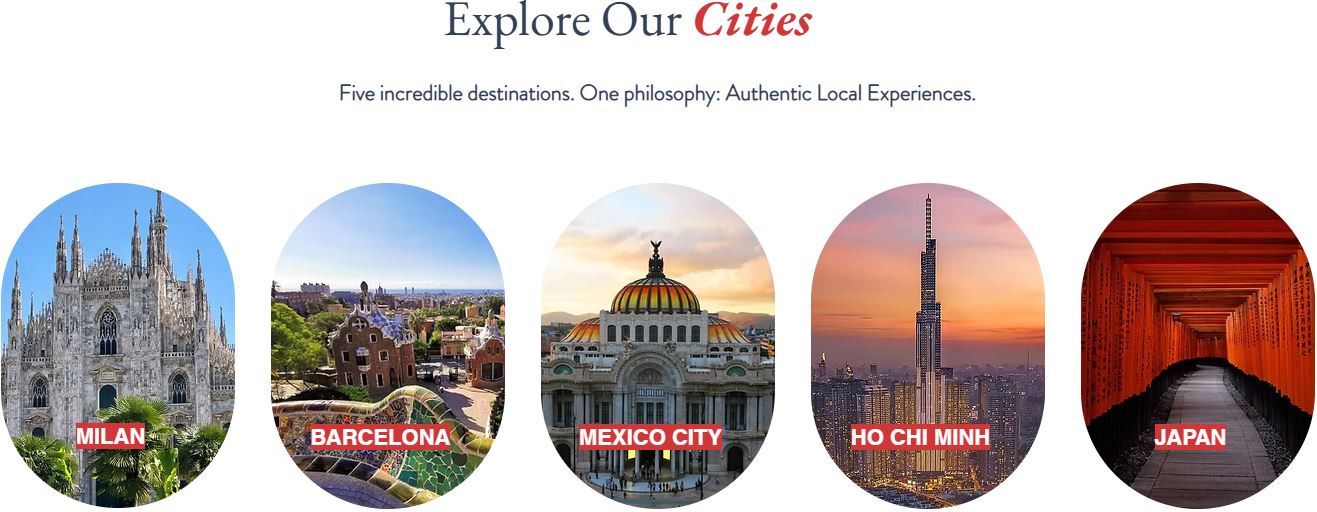
Our walking and cultural tours are built from the ground up with local creatives, guides, and community partners who bring each destination to life from the inside. Whether you are exploring Barcelona’s living culture through its markets and design studios, or diving into the creative energy of Mexico City through our CDMX experiences, each itinerary is shaped for depth, sensory richness, and real human connection. We also offer immersive workshops that combine local artistic culture with social connection. Browse our full range of experiences and find the tour that speaks to how you actually want to travel.
FAQ
What makes a unique tour different from a standard tour?
A unique tour goes beyond visiting popular sights by incorporating multisensory experiences, local cultural access, and personalized pacing that reflects how specific travelers actually want to move through a destination.
Why do unique tours attract more loyal travelers?
Tours designed around genuine connection and sensory depth create emotional memories that generic itineraries cannot match, leading travelers to seek out the same operators for future trips.
What are the key elements of a unique tour?
The core elements include multisensory engagement, tailored itineraries, meaningful cultural interactions, structured flexibility, and authentic local expertise. Together, these characteristics lift a tour from informative to genuinely memorable.
How do I evaluate whether a tour is truly unique before booking?
Look beyond star ratings and read reviews for specific language about pacing, guide quality, and cultural depth. Ask the operator directly about their local partners and how they incorporate traveler feedback into their design.
Can a tour in a well-known city still be unique?
Absolutely. Personalized city experiences in places like Barcelona, Tokyo, or Rome can feel entirely fresh when they are built around local access, sensory design, and itineraries shaped around the traveler rather than the masses.
Recommended
Comments