
Why Join Walking Tours for Authentic Cultural Travel

Walking tours are defined as guided, on-foot explorations of a city or neighborhood that combine physical movement, expert storytelling, and direct cultural immersion. They are the most direct way to feel the pulse of a destination rather than observe it from behind glass. For travel enthusiasts who want to understand a place rather than simply photograph it, the reasons to join walking tours go far beyond convenience. They connect you to the heartbeat of a city, to its people, its hidden corners, and the living stories that no bus window or travel app can deliver.
Why join walking tours instead of other tour types?
Walking tours offer cultural depth, physical engagement, and spontaneous discovery that motorized tours cannot replicate. That is the clearest answer to why so many experienced travelers choose them over bus tours, hop-on-hop-off routes, or self-guided audio experiences.
How walking tours compare to bus tours
Feature | Walking Tour | Bus Tour |
Cultural depth | High. Guides reveal micro-level stories and hidden spaces | Moderate. Covers more landmarks but at surface level |
Physical engagement | Active. Builds a mental map and sharpens presence | Passive. Limited sensory connection to the city |
Social interaction | Natural. Small groups encourage conversation | Limited. Seating arrangements reduce spontaneous exchange |
Flexibility | High. Routes adapt to group interest and pace | Low. Fixed routes and schedules |
Access to hidden spots | Excellent. Alleys, courtyards, local markets | Restricted to roads and major stops |
Comparative research confirms that walking tours offer localized, immersive insights while bus tours prioritize efficiency over intimacy. Efficiency has its place, but it rarely produces a travel memory worth retelling.
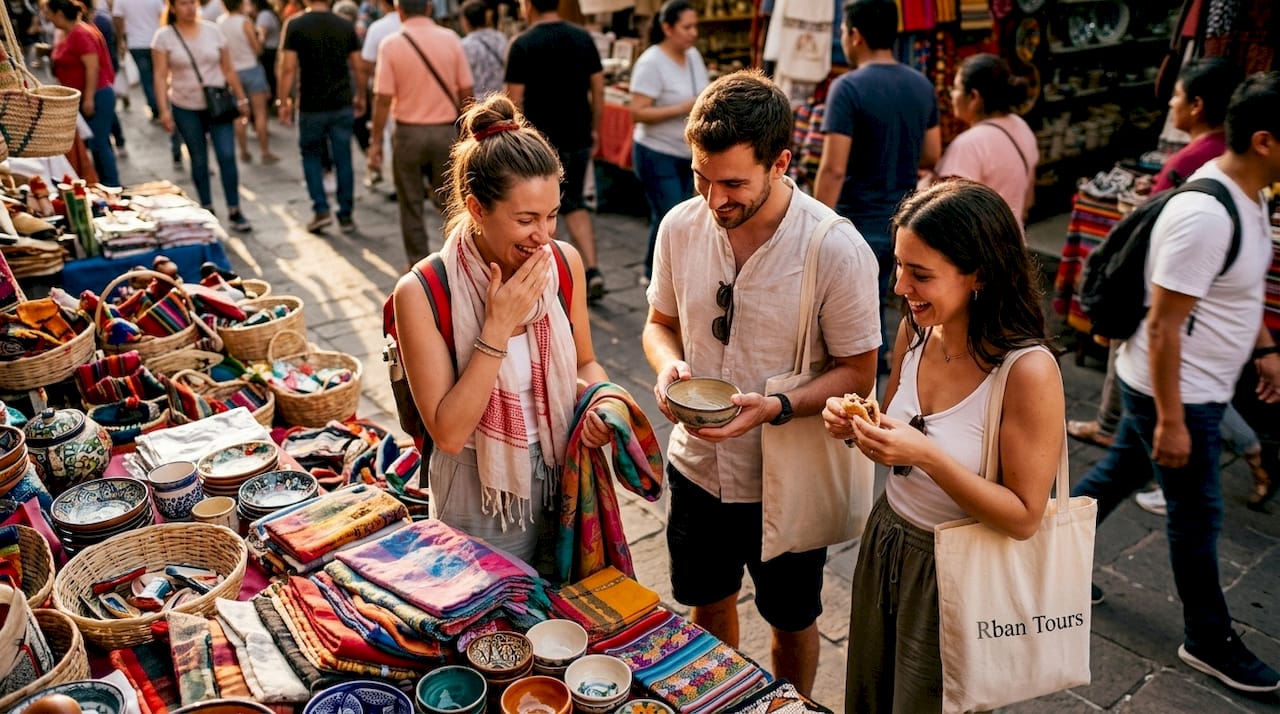
The physical act of walking itself changes how you absorb a place. Walking builds a mental map of city centers within two hours, sharpening presence and awareness in ways that passive sightseeing cannot. This means you leave a walking tour with a genuine spatial and emotional understanding of the neighborhood, not just a checklist of monuments.
The benefits of walking tours also extend to your body. Active travelers get light cardiovascular exercise woven naturally into their cultural experience. You are not choosing between health and discovery. You are getting both at once.
Pro Tip: If you are visiting a city for the first time, book a walking tour on day one. The spatial orientation and insider context you gain will make every subsequent day richer and more intentional.
How do expert local guides transform the walking tour experience?
Expert local guides are the single most important variable in the quality of a walking tour. A credentialed guide, whether a historian, architect, or a local with generational roots in the neighborhood, transforms streets and buildings into living stories.
Modern walking tours increasingly feature guides with specific credentials who offer expert narratives rather than generic scripts. This shift matters enormously. A historian walking you through Rome’s Trastevere district does not just name the church. She explains who built it, who was excluded from it, and what that tells you about power in 16th-century Rome. That context is the difference between sightseeing and understanding.
One of the most underappreciated walking tours advantages is access to unofficial histories. Guides reveal stories of indigenous peoples, minorities, and everyday residents that never appear in guidebooks or museum plaques. In cities like Mexico City, Barcelona, or Kyoto, these human-centered narratives reframe everything you see. A neighborhood stops being a backdrop and becomes a community with memory.
Tour industry experts describe this as learning to read the streets like a book, transforming each trip into a rich learning experience. That framing is accurate. A skilled guide teaches you a new visual language for the city, one you carry with you long after the tour ends.
Small group formats amplify this effect. When a tour has eight to twelve people rather than forty, the guide can respond to questions in real time, adjust the pace, and share stories that feel personal rather than rehearsed. You are not an audience. You are a participant in a conversation about place and culture.
“The best guides don’t just show you a city. They change the way you see it. After a great walking tour, you notice things you would have walked past a hundred times without understanding.” — Rban Tours
For a deeper look at what makes local expertise so transformative, the role of local guides in authentic travel is worth exploring before you book your next experience.
What practical benefits do walking tours offer for logistics and social connection?
Walking tours simplify travel in ways that most travelers do not anticipate until they experience them firsthand. The practical walking tours advantages start before the tour even begins.
No advance booking required for many tours. Tip-based free walking tours operate on a show-up basis, removing the friction of pre-planning. This is ideal for spontaneous travelers or those whose schedules shift day to day.
Economic flexibility through tip-based models. You pay what you feel the experience was worth. This structure also motivates guides to deliver genuinely excellent tours, since their income depends directly on the quality of the experience they create.
Built-in social connection for solo travelers. Walking tours foster social interaction naturally, with small groups and frequent stops encouraging conversation and short-term travel friendships. Solo travelers consistently cite this as one of the most valued aspects of the format.
City orientation from the first hour. A structured walking tour gives you a mental framework for the city. You learn which neighborhoods connect, where locals actually eat, and which streets to avoid after dark. That orientation reduces stress and makes independent exploration far more confident.
Reliable insider recommendations. Guides share restaurant names, local markets, and neighborhood bars that no travel algorithm surfaces. These are the recommendations that define a trip.
Pro Tip: For tip-based tours with large groups, arrive early. Operators sometimes split large groups to maintain quality, and the first group typically gets the most experienced guide.
What to expect from walking tours on the social side is often a surprise. Travelers who join solo regularly leave with dinner companions for the evening or contacts who share their next destination. The format creates genuine human connection in a way that independent travel rarely does by default.
Guided experiences offer depth and connection that independent travel sometimes cannot, making walking tours particularly valuable for travelers seeking meaningful engagement rather than efficient sightseeing. That is not a criticism of independent travel. It is a recognition that structure, when it is the right kind, creates freedom rather than limiting it.
How do walking tours support local communities?
Walking tours are one of the most direct ways travelers contribute positively to the places they visit. The economic and cultural impact is real and measurable.
Direct income for local guides and artisans. Community-based projects train locals to lead tours, creating sustainable employment that keeps economic benefits within the neighborhood rather than flowing to international operators.
Cultural preservation through active engagement. When guides introduce travelers to local artisans, traditional food producers, or neighborhood craftspeople, those interactions generate income and visibility for practices that might otherwise fade.
Volunteer Greeter programs prioritize exchange over profit. These community-driven programs connect visitors with passionate local volunteers who share their city purely out of pride and love for where they live. Cities like New York, Paris, and Tokyo have active Greeter networks that offer some of the most authentic urban experiences available anywhere.
Responsible tourism in practice. Choosing a locally rooted operator over a multinational tourism company keeps money in the community and signals to the broader industry that travelers value authenticity over scale.
The ethical dimension of walking tours is one of the most compelling reasons to take walking tours that rarely gets discussed openly. When you walk through a neighborhood with a guide who grew up there, you are not consuming a culture. You are being welcomed into it. That distinction shapes the entire experience, and it shapes what you leave behind as a visitor.
For travelers who want to understand how traveling with locals deepens every aspect of a trip, the connection between guide and community is the thread that holds it all together.
Key takeaways
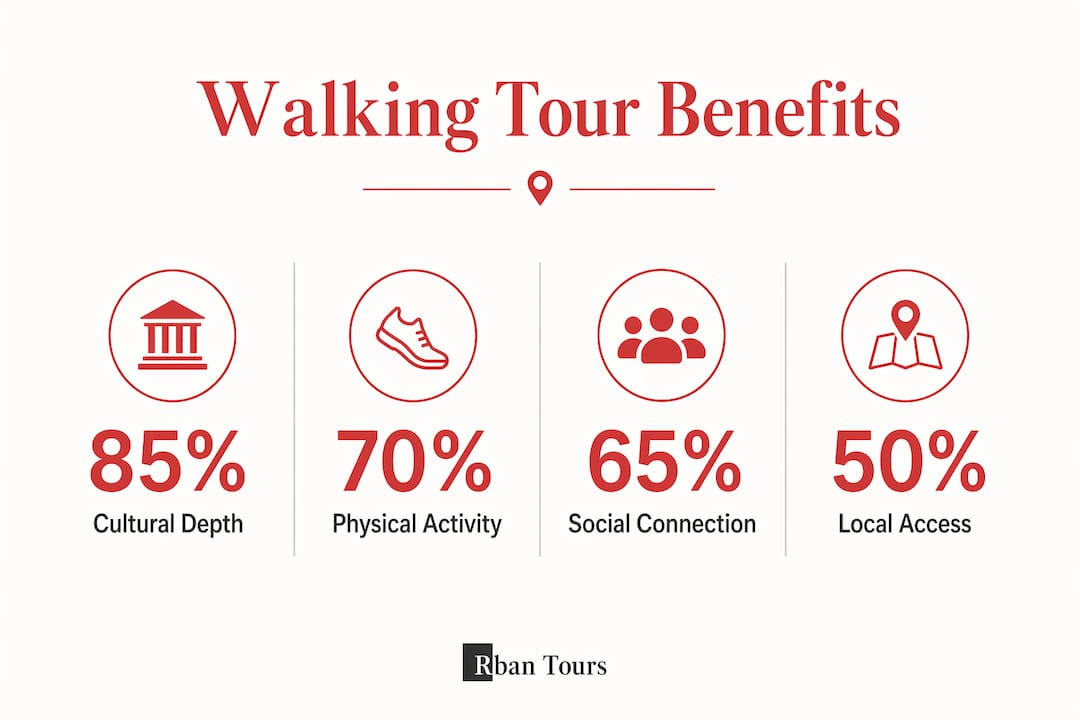
Walking tours are the most effective format for travelers who want cultural depth, social connection, and authentic local access in a single experience.
Point | Details |
Cultural depth over efficiency | Walking tours reveal micro-level stories and hidden spaces that bus tours and self-guided routes consistently miss. |
Expert guides change everything | Credentialed local guides, including historians and architects, transform streets into living narratives with social and historical context. |
Practical and flexible access | Many tip-based walking tours require no advance booking, lowering barriers for spontaneous and solo travelers. |
Social connection by design | Small group formats naturally encourage conversation, making walking tours one of the best formats for solo travelers to meet others. |
Positive community impact | Locally rooted walking tours generate direct income for guides and artisans while actively supporting cultural preservation. |
Walking tours changed how we see every city we enter
We have run and joined walking tours across Barcelona, Mexico City, Tokyo, Hanoi, and Rome. The honest truth is that no other travel format has shaped our understanding of a city the way a great walking tour does. Not a food tour, not a museum visit, not a week of independent wandering.
What surprises most people is how much a two-hour walk recalibrates your entire trip. You stop seeing a city as a collection of attractions and start seeing it as a living system with logic, history, and personality. That shift happens because of the guide, the pace, and the physical act of moving through space with intention.
The conventional wisdom says walking tours are for first-time visitors. We disagree completely. Some of our most revelatory walking tour experiences have happened in cities we had visited multiple times before. A different guide, a different neighborhood, a different lens. The city you thought you knew becomes unfamiliar again, and that is exactly the feeling worth chasing.
Our strong recommendation is to prioritize small group tours led by guides with genuine expertise, not generalists reading from a script. The difference in quality is not subtle. It is the difference between a tour you forget by dinner and a story you tell for years.
— Rban
Discover immersive walking tours with Rbantours
At Rbantours, we design walking and cultural tours that go beyond the standard route. Our expert local guides bring deep knowledge, personal stories, and genuine passion to every experience, whether you are exploring the Gothic Quarter in Barcelona, uncovering the layered traditions of Japan, or tracing the creative pulse of CDMX.
[

Every Rbantours experience is built for small groups, which means real conversation, real access, and real connection with the city and the people who call it home. No scripts. No crowds. Just the kind of walking and cultural tour that stays with you long after you have left. Browse our destinations and find the experience that fits where your curiosity is pointing next.
FAQ
What are the main benefits of walking tours?
Walking tours provide cultural depth, physical activity, social connection, and insider access to hidden locations that motorized tours cannot offer. Expert local guides add historical and social context that transforms a neighborhood into a living story.
Are walking tours worth it for solo travelers?
Walking tours are one of the best formats for solo travelers because small group dynamics naturally encourage conversation and connection. Many solo travelers leave with dinner companions or travel contacts formed during the tour.
Do I need to book a walking tour in advance?
Many tip-based walking tours operate on a show-up basis with no advance reservation required. Larger organized tours may benefit from advance booking, but the free tip-based model is specifically designed for spontaneous participation.
How long does a typical walking tour last?
Most city walking tours run between two and three hours, which is enough time to cover a meaningful neighborhood and build a solid mental map of the area. Some specialty tours, such as food or architecture-focused experiences, may run longer.
How do walking tours support local communities?
Walking tours generate direct income for local guides and artisans, fund cultural preservation efforts, and keep tourism spending within the neighborhood. Community-based programs train local residents to lead tours, creating sustainable economic and cultural benefits.
Recommended
Comments