
How to Create a Personalized Milan Itinerary

A personalized Milan itinerary is a custom travel plan that matches the city’s landmarks, neighborhoods, and experiences to your specific interests, pace, and budget. Most travelers arrive with a generic list of sights and leave feeling rushed or underwhelmed. A tailored approach changes that entirely. 99% of tourists visit only 1% of Milan’s local attractions, which means the city’s real pulse stays hidden from anyone following a standard tourist path. When you build your own plan, you stop sightseeing and start living the city.
How to create a personalized Milan itinerary: tools and prerequisites
Before you map a single route, you need three things: a clear picture of your interests, a realistic trip length, and a few practical resources. Getting these right makes every decision after them much easier.
Define your travel profile
Start by writing down what genuinely excites you. Milan rewards specificity. A traveler obsessed with Renaissance art will spend their mornings differently than someone who lives for aperitivo culture or vintage fashion. Your list might include art, architecture, food markets, street art, design, or nightlife. No category is wrong. The goal is to stop treating Milan as one undifferentiated destination and start seeing it as a city with distinct layers, each one worth your time.

Choose the right trip length
3 to 5 days is the ideal duration for a non-rushed Milan visit that covers iconic sites and authentic neighborhood life. Fewer than three days forces you to sprint. More than five, without a clear plan, leads to aimless wandering. Three days suits first-time visitors focused on the classics. Four or five days opens space for day trips to Lake Como or deeper dives into the Isola and Porta Venezia neighborhoods.
Build your planning toolkit
These resources give your custom Milan travel plan a practical foundation:
Interest list: Write down your top five priorities before opening any map or booking site.
Digital maps: Use Google Maps or Apple Maps to save pins for every attraction, restaurant, and neighborhood you want to visit.
Booking platforms: Reserve the Duomo rooftop, The Last Supper at Santa Maria delle Grazie, and La Scala tickets weeks in advance. These sell out fast.
Transit info: Download the ATM Milano app for real-time metro and tram schedules.
Budget baseline: A 3-day Milan visit costs approximately $480, but smart choices around food and transport can bring your daily spend down significantly.
Pro Tip: Create a shared Google Doc or Notion page with your saved pins, booking confirmations, and daily notes all in one place. It saves real time when you are on the ground.
Pairing your interest list with a solid map of Milan’s neighborhoods reveals natural clusters. Brera sits close to the Pinacoteca di Brera and the Castello Sforzesco. Navigli anchors the canal district and its evening energy. Knowing these geographic relationships before you arrive is the foundation of a truly tailored Milan travel itinerary.
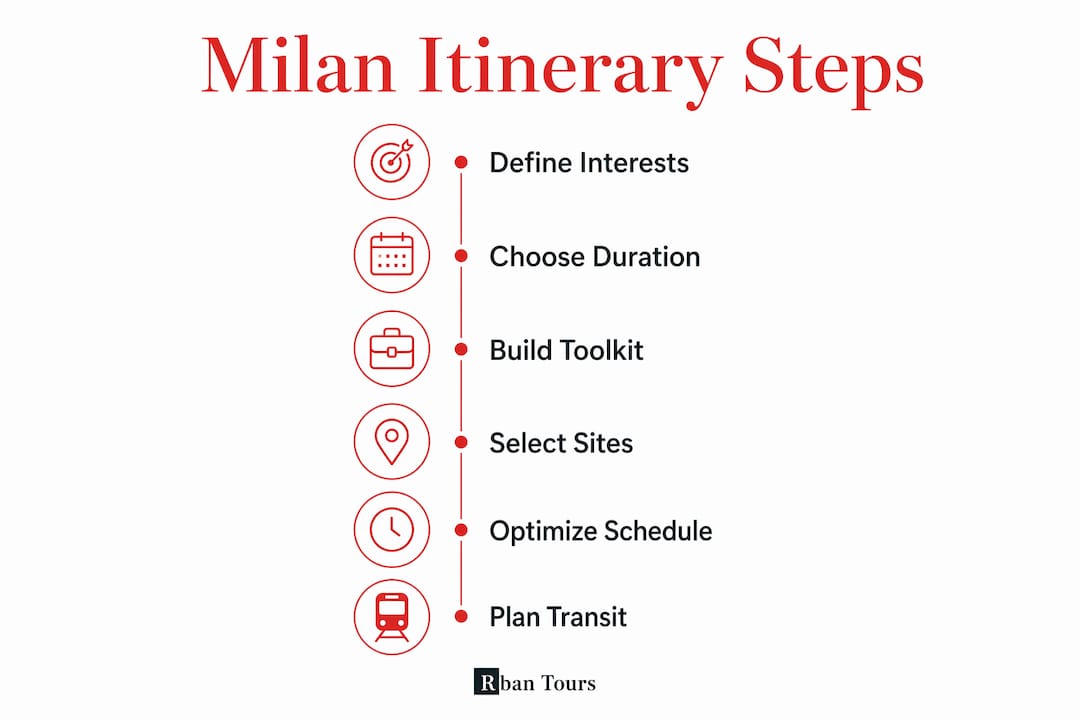
How do you select and organize Milan attractions?
The most effective approach starts with your non-negotiables and builds outward from there. Think of it as two layers: the iconic and the intimate.
Layer one: the iconic anchors
Every Milan sightseeing itinerary needs a structural backbone. These are the sites that define the city and deserve your best energy:
Duomo di Milano: Arrive early and climb the stairs rather than taking the elevator. The view is identical, and stair climbs at the Duomo cost less than the elevator ticket. Save the difference for a coffee at Caffè Zucca in the Galleria Vittorio Emanuele II next door.
The Last Supper (Cenacolo Vinciano): Book your slot at least three weeks ahead. Leonardo da Vinci’s mural is housed in the refectory of Santa Maria delle Grazie, and visits are strictly timed at 15 minutes. That brevity makes the experience more intense, not less.
La Scala: Even if you do not attend a performance, the museum inside Teatro alla Scala is worth an hour. The costume archive alone tells a century of Italian cultural history.
Pinacoteca di Brera: This gallery in the Brera neighborhood holds one of Italy’s finest collections of Northern Italian Renaissance painting. Plan 90 minutes minimum.
Layer two: neighborhood rhythm
Combining must-see landmarks with neighborhood experiences is what separates a good trip from a great one. After your morning at the Duomo, walk north into Brera’s cobblestone streets and browse its independent bookshops and design studios. On another afternoon, head to Navigli for the canal-side aperitivo culture that defines Milanese evenings. The Isola neighborhood offers street art, independent cafés, and a creative energy that feels nothing like the fashion district a few kilometers away.
Pro Tip: Picnic lunches in Parco Sempione cost a fraction of a sit-down meal and place you inside one of Milan’s most beloved green spaces, right beside the Castello Sforzesco. Buy supplies at a local alimentari and eat where Milanese families eat.
For food-focused travelers, the Mercato Metropolitano near Porta Genova and the covered market at Mercato Wagner both offer local produce, cured meats, and fresh pasta at prices that make restaurant lunches feel unnecessary. Weaving these stops into your Milan itinerary suggestions gives your days texture and saves money at the same time. You can find more ideas for this kind of authentic local experience in Milan’s neighborhoods.
How do you optimize your daily schedule in Milan?
A well-structured daily plan is the difference between a city that energizes you and one that exhausts you. The key principle is geographic clustering.
Grouping attractions by location minimizes transit time and keeps your energy reserves intact for the experiences that matter. Milan’s city center is compact. The Duomo, Galleria Vittorio Emanuele II, and La Scala form a triangle you can walk in under ten minutes. The Castello Sforzesco and Parco Sempione sit together to the northwest. Brera is a short walk from both. Build your days around these clusters, not around a checklist.
Transit that works for your budget
Milan’s metro costs €2 per ride, and tram line 9 connects several key neighborhoods efficiently. A day pass costs around €7 and pays for itself after four rides. Taxis and ride-shares are convenient but unnecessary for most sightseeing routes. Walking between clustered attractions is often faster than waiting for a vehicle.
Here is a practical daily structure that works for most travelers:
7:30–9:00 AM: Visit a major landmark before crowds arrive. Booking entry at 8:00 AM at sites like the Duomo rooftop gives you the space and light that midday visitors never get.
9:00 AM–12:30 PM: Work through your cluster of nearby attractions on foot.
12:30–2:00 PM: Lunch break. A picnic, a market, or a neighborhood trattoria. Avoid tourist-facing restaurants near the Duomo.
2:00–5:30 PM: Explore a neighborhood. Browse, sit in a café, talk to people.
6:00–8:00 PM: Aperitivo. This is not optional. Planning aperitivo time into your day is how you experience Milanese culture, not just observe it.
Pro Tip: Cap each day at three major activities. Four feels manageable on paper and brutal by 4:00 PM. Two activities plus a neighborhood wander is often the most satisfying formula.
What are the most common Milan itinerary planning mistakes?
The most frequent error travelers make is trying to see too much in too little time. A packed schedule feels productive until day two, when fatigue sets in and everything starts to blur.
“A well-structured plan gives you peace of mind and opens the door to spontaneous local discoveries. The goal is not to fill every hour. It is to protect the hours that matter most.”
Flexibility within a structured itinerary is not a luxury. It is a planning tool. When you pre-book your three or four non-negotiable experiences, everything else becomes optional. That freedom is what allows you to follow a local recommendation, linger in a neighborhood longer than planned, or simply sit in a piazza and watch the city move.
Three other mistakes consistently derail custom Milan travel plans:
Ignoring local rhythms. Many sites close on Mondays. Restaurants often close between 3:00 and 7:00 PM. Aperitivo starts at 6:00 PM, not 5:00. Build your schedule around how Milan actually operates, not how you wish it did.
Skipping the less-photographed neighborhoods. Porta Venezia, Isola, and Città Studi each have a distinct character that the Duomo district does not. Travelers who stay in the center miss the best places to visit in Milan that locals actually love.
Over-relying on restaurant meals. Milan’s food culture is extraordinary, but three restaurant meals a day burns through a budget fast. Combining a culinary approach to lodging and dining choices with market visits and picnics keeps costs down without sacrificing quality.
Key Takeaways
A personalized Milan itinerary built around geographic clusters, early starts, and a clear interest profile delivers a richer, more efficient visit than any generic tourist route.
Point | Details |
Ideal trip length | Plan 3–5 days to balance iconic landmarks with authentic neighborhood experiences. |
Geographic clustering | Group nearby attractions together each day to cut transit time and preserve energy. |
Early morning starts | Book major sites at 8:00 AM to avoid crowds and get the best light and space. |
Budget discipline | Use the metro at €2 per ride and picnic lunches to keep daily costs manageable. |
Built-in flexibility | Pre-book three to four anchors per trip, then leave the rest open for spontaneous discovery. |
What I have learned from designing Milan itineraries
After building dozens of custom Milan trips, the insight that surprises people most is this: the best moments are almost never at the landmarks. They happen in the hour after. The coffee you have while your feet recover from the Duomo stairs. The conversation that starts because you sat at the wrong table in Brera. The canal-side bar in Navigli where the bartender recommends a neighborhood you had not planned to visit.
The landmarks give your day structure. The neighborhoods give it meaning. Travelers who treat Milan as a checklist leave with photographs. Travelers who treat it as a living city leave with stories.
We have also learned that pacing is the most underrated skill in travel design. Most people build itineraries the way they build to-do lists, filling every slot. The Milanese do not live that way. The aperitivo hour exists precisely because the city values the pause. When you build that pause into your plan, you stop being a tourist and start being a temporary resident.
The other lesson: local knowledge changes everything. A single good recommendation from someone who lives in the city is worth more than a week of research. That is why we design every experience around local insiders, not just local landmarks.
— Rban
How Rbantours brings your Milan itinerary to life
Rbantours specializes in exactly the kind of travel design this article describes: experiences that combine iconic Milan with the neighborhoods, rhythms, and people that give the city its real character.
[
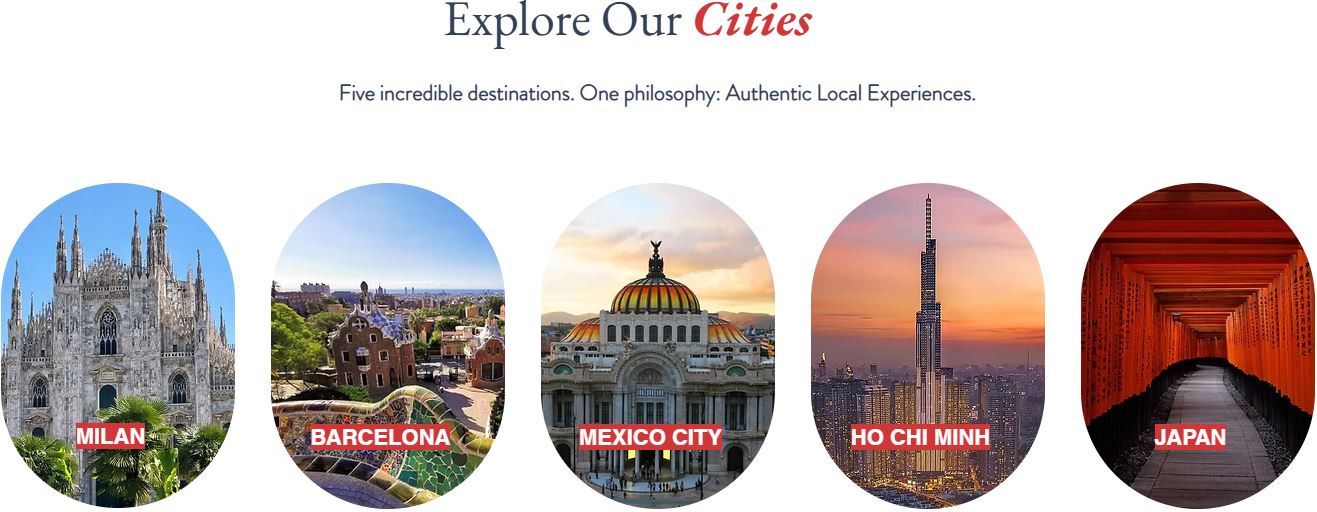
From vintage shopping tours through Milan’s design districts to walking cultural tours that move through Brera, Navigli, and Isola with a local guide, every Rbantours experience is built around your interests, not a fixed script. We work with local creatives, chefs, and neighborhood insiders to make sure what you experience is Milan as it actually lives, not Milan as it is packaged for visitors. Browse the full range of Milan tours and experiences and find the ones that fit your travel profile.
FAQ
How many days do I need for a Milan itinerary?
3 to 5 days is the recommended duration for a balanced Milan visit. Three days covers the major landmarks; four or five adds neighborhood depth and possible day trips.
What are the best places to visit in Milan?
The Duomo, The Last Supper at Santa Maria delle Grazie, Pinacoteca di Brera, Navigli canals, and the Brera and Isola neighborhoods are the strongest combination of iconic and authentic experiences.
How do I avoid crowds at Milan’s top sites?
Book entry tickets for major sites at 8:00 AM and arrive at opening time. Early visits give you better light, less noise, and more space to actually engage with what you are seeing.
What is the most cost-effective way to get around Milan?
The metro at €2 per ride and tram line 9 cover most sightseeing routes efficiently. A day pass at around €7 is the best value if you plan to make four or more trips in a single day.
How do I make my Milan itinerary feel authentic, not touristy?
Combine one or two iconic landmarks per day with time in a local neighborhood like Isola or Porta Venezia. Add a market lunch, an aperitivo stop, and at least one experience guided by someone who actually lives in the city.
Recommended
Comments