
Why Travel off the Beaten Path: Real Rewards

Traveling off the beaten path is defined as choosing lesser-known destinations that offer genuine local culture, unfiltered human connection, and experiences that popular tourist clusters simply cannot replicate. The contrast with mainstream tourism is stark: top EU markets cover just 0.16% of land yet absorb nearly 50% of all traveler reviews. That concentration tells you exactly where the crowds go and, more importantly, where they don’t. Offbeat travel, also called alternative or independent travel, delivers authentic culture, personal growth, sustainability benefits, and real budget advantages. We believe the most memorable trips happen where the guidebooks run thin.
Why travel off the beaten path for cultural and personal growth?
The cultural rewards of offbeat travel are immediate and concrete. In popular tourist destinations, locals often perform a version of their culture for visitors rather than living it openly. Step away from those clusters, and genuine interactions replace scripted experiences. A grandmother in a small Vietnamese village shares her cooking methods without a tour script. A craftsman in rural Oaxaca explains his work because he is curious about you, not because he is paid to be.
Deeper cultural connections happen offbeat because locals in less-visited places are genuinely curious about travelers. That curiosity creates spontaneous, meaningful moments that no itinerary can manufacture. Travelers who choose these paths stop checking destinations off a list and start experiencing spontaneous moments that stay with them for years.

Personal growth follows naturally. Offbeat travel demands patience, curiosity, and comfort with the unknown. Those qualities don’t develop on a resort beach or in a tourist-managed old town. The main motivation for offbeat travel is personal development through curiosity and appreciation of unpredictability. That is a fundamentally different reward than a good photo opportunity.
The mental health benefits are equally real. True relaxation comes more easily off the beaten path because the crowd-related stressors, noise, and traffic simply aren’t there. A quiet coastal town in southern Italy or a mountain village in Japan’s Gifu Prefecture offers a mental calm that the Amalfi Coast or Kyoto’s Arashiyama bamboo grove cannot provide in peak season.
Key benefits of offbeat cultural travel:
Undisrupted local traditions you witness rather than watch performed
Spontaneous conversations that become the highlight of the trip
Mental clarity from reduced noise, crowds, and sensory overload
Personal resilience built through navigating unfamiliar environments
Connections with local hosts who share knowledge no app can replicate
Pro Tip: Ask your accommodation host for one local spot they visit themselves. That single question consistently leads to the most memorable meal, view, or experience of the trip.
How does offbeat travel support sustainability and local economies?
Offbeat travel puts money where it matters most. In mass tourism destinations, a significant portion of visitor spending flows to international hotel chains, global food brands, and large tour operators. That revenue leaves the local community almost immediately. When you stay in a family-run guesthouse in a lesser-known town, eat at a neighborhood restaurant, and hire a local guide, the economic benefit stays within that community.
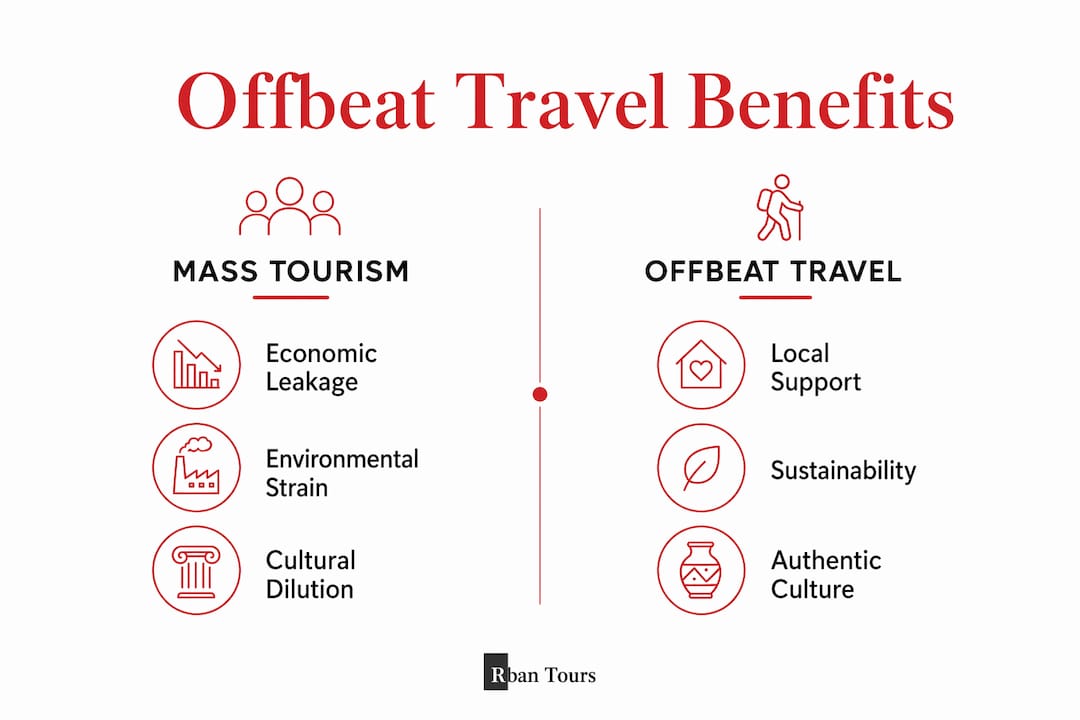
Local guesthouses and vendors benefit directly from offbeat tourism in ways that international chains simply do not replicate. This direct economic flow supports livelihoods, preserves local crafts, and gives communities a financial reason to protect their cultural heritage rather than replace it with tourist infrastructure.
The environmental argument is equally strong. Sustainability improves when tourists distribute their impact across lesser-known communities instead of saturating a handful of hotspots. Overtourism in places like Venice, Dubrovnik, and Santorini has damaged infrastructure, driven up housing costs for residents, and degraded the very experiences that made those places worth visiting. Spreading visitor traffic reduces that pressure everywhere.
Impact area | Mass tourism effect | Offbeat travel effect |
Economic flow | Revenue leaks to international chains | Money stays with local families and vendors |
Environmental pressure | Concentrated damage at hotspots | Distributed, lower-impact footprint |
Cultural preservation | Traditions adapted for tourist consumption | Authentic traditions maintained naturally |
Infrastructure strain | Overcrowding degrades local quality of life | Lighter footprint supports community stability |
Choosing boutique and smaller-scale tours is one of the most direct ways to align your travel spending with these values. The choice is not just ethical. It also produces a better trip.
What practical advantages does offbeat travel offer in cost and pacing?
Offbeat travel is genuinely more affordable. Avoiding tourist price inflation means accessing homestays, local restaurants, and transportation at prices set for residents rather than visitors. The same travel budget that buys three nights in a popular European capital can fund a week or more in a lesser-known region with richer daily experiences.
The pacing advantage is just as significant. Popular destinations require pre-booking months in advance, following timed entry windows, and moving through attractions with hundreds of other visitors. Offbeat destinations give you the freedom to wander. You can linger at a market stall, take an unplanned detour, or spend an extra day somewhere simply because it feels right.
Practical advantages of offbeat travel:
Lower accommodation costs at family-run guesthouses and local inns
Affordable, high-quality food at neighborhood restaurants untouched by tourist menus
Flexible itineraries with no timed entry requirements or advance booking pressure
Slower pace that allows genuine absorption of each place
Richer sensory experiences from local cuisine that reflects real regional identity
The budget savings also reduce travel stress in a specific way. When you are not paying premium prices for every experience, you stop treating each moment as something that must justify its cost. That mental shift changes how you travel entirely.
Pro Tip: Skip the hotel breakfast in offbeat destinations. Walk to the nearest local market or neighborhood café instead. The cost drops, the food improves, and you immediately feel the rhythm of daily life rather than the rhythm of tourism.
What mindset shifts make offbeat travel successful?
Offbeat travel requires letting go of the expectation that everything will work as planned. Language barriers and infrastructure gaps are common in lesser-known destinations. The bus may run late. The guesthouse may not have Wi-Fi. The restaurant menu may exist only in a language you don’t read. These are not failures. They are the texture of real travel.
The most important mindset shift is moving away from groupthink in destination selection. Most travelers rely on convenience and popular online reviews, which creates a feedback loop that sends everyone to the same 50 places. Successful offbeat travelers consciously move beyond those reviews toward local discovery, word of mouth, and their own curiosity.
Here is a practical framework for making that shift:
Question the top-ten list. If a destination appears on every “must-visit” roundup, ask what the less-visited region nearby offers instead.
Talk to people who live there. Locals in any city know neighborhoods, towns, and experiences that never appear in travel media.
Build flexibility into your schedule. Leave at least two days per week unplanned. The best offbeat discoveries happen when you have time to follow an unexpected recommendation.
Reframe disruptions as data. A missed connection, a closed road, or an unexpected market day are not problems. They redirect you toward something you would never have found otherwise.
Reduce dependence on review platforms. Avoiding groupthink in destination choices leads travelers to genuine hidden gems that review algorithms consistently overlook.
Trying to impose mainstream planning pace on offbeat locations causes frustration. The solution is not better planning. It is a different relationship with uncertainty. Travelers who embrace that shift consistently report their offbeat trips as the most rewarding of their lives. The authentic meaning of travel only becomes clear when you stop controlling every variable.
Key Takeaways
Offbeat travel delivers deeper cultural connection, direct economic benefit to local communities, and genuine personal growth that mainstream tourism cannot replicate.
Point | Details |
Cultural depth | Locals in lesser-known places share real traditions, not tourist performances. |
Economic impact | Spending at local guesthouses and vendors keeps money within the community. |
Budget advantage | Offbeat destinations avoid tourist price inflation, stretching your budget further. |
Mindset requirement | Flexibility and openness to unpredictability are non-negotiable for offbeat travel. |
Sustainability | Distributing tourist traffic reduces overtourism pressure on fragile environments. |
What offbeat travel has taught us about real connection
The trips that changed how we see the world were never the ones with the most famous landmarks. They were the ones where something went sideways and we had to figure it out with a stranger’s help. That stranger became a contact, a friend, or at minimum a story we still tell.
We have watched travelers arrive at a new destination with a packed itinerary and leave feeling like they only scratched the surface. We have also watched travelers arrive with almost no plan and leave feeling like they understood the place from the inside. The difference is not luck. It is willingness to be uncomfortable for long enough that the place reveals itself.
The slower pace of offbeat travel also does something specific to your thinking. Without the noise of crowds and the pressure of timed entry slots, you notice more. You notice the light at a particular hour, the way a neighborhood smells in the morning, the sound of a language you don’t speak but are starting to recognize. That noticing is where deep travel memories are made.
Our honest advice: pick one trip this year and deliberately choose the lesser-known version of your intended destination. Not the capital. The second city. Not the famous coast. The inland village. You will spend less, feel more, and come back with something that no highlight reel can capture.
— Rban
Authentic experiences curated by Rbantours
Rbantours designs every experience around the question locals actually ask: “Where do we go?” From Barcelona’s hidden neighborhoods to the backstreets of Mexico City and the quieter corners of Japan, each Rbantours experience is built with local creatives, guides, and venues that reflect the real pulse of a place.
[
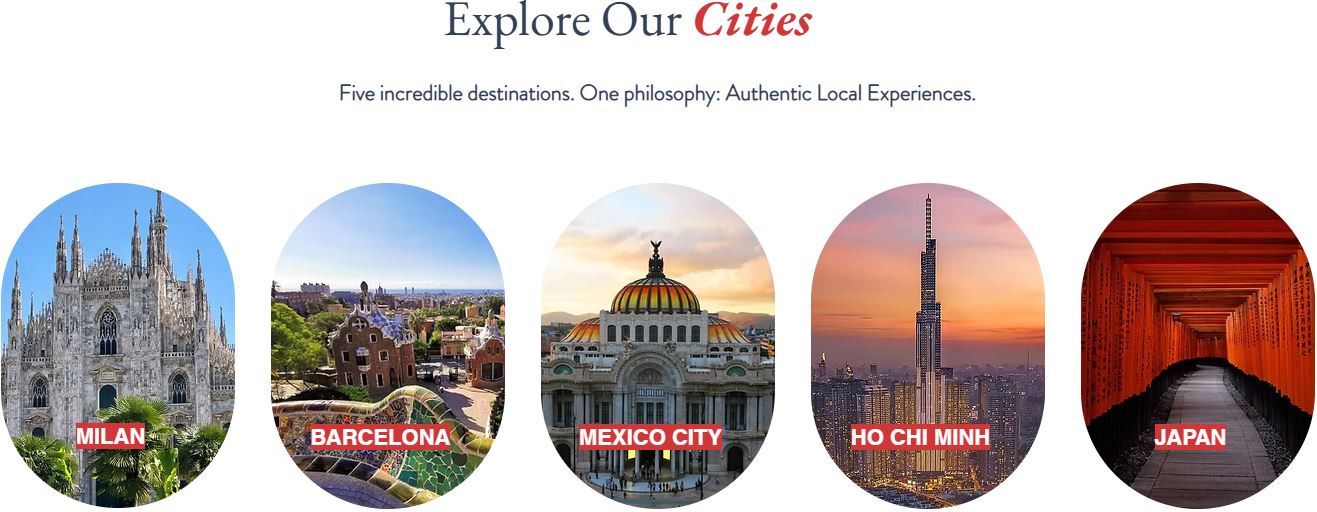
Whether you want a walking cultural tour through neighborhoods most visitors never reach or a creative workshop that connects you with local artists, Rbantours offers a range of experiences designed for travelers who want more than a postcard. Every experience is small-group, locally led, and built around genuine human connection. Browse the full collection at Rbantours and find the experience that fits where your curiosity is pointing.
FAQ
What does “off the beaten path” mean in travel?
“Off the beaten path” refers to choosing destinations and experiences that fall outside the mainstream tourist circuit. These are places with fewer visitors, more authentic local culture, and less commercial tourism infrastructure.
Is offbeat travel more affordable than visiting popular destinations?
Offbeat travel avoids tourist price inflation, giving you access to affordable homestays, local food, and transportation at prices set for residents rather than visitors. The same budget typically goes significantly further in lesser-known destinations.
How do I find genuine hidden gem destinations?
Move beyond popular review platforms and ask locals, consult regional travel writers, or research the areas surrounding well-known destinations. The most rewarding spots rarely appear in top-ten lists.
Does offbeat travel support local communities more than mainstream tourism?
Spending at local guesthouses, restaurants, and independent guides keeps economic benefit within the community rather than routing it to international chains. That direct flow supports livelihoods and cultural preservation.
What is the biggest challenge of traveling to remote or lesser-known locations?
The main challenge is accepting unpredictability. Infrastructure, language access, and services vary widely in offbeat destinations. Travelers who embrace flexibility rather than fighting it consistently find the experience more rewarding than any planned itinerary.
Recommended
Comments