
What Is Experiential Travel? A Guide for Modern Travelers

Experiential travel is defined as a form of tourism centered on active participation in meaningful, immersive activities that connect travelers directly with local culture, people, and place. Unlike standard sightseeing, it replaces passive observation with genuine engagement. You cook with a local family in Mexico City, learn a traditional craft in Kyoto, or wander a Barcelona market with someone who grew up there. As of 2026, experiential travel is the fastest-growing segment in global tourism, driven largely by Millennials and Gen Z who prioritize depth of experience over the volume of destinations visited. That shift signals something real: travelers want to feel a city’s pulse, not just photograph it.
What is experiential travel and how does it work?
Experiential travel works by replacing the tourist-observer role with active participation. You are not watching someone else’s culture from a distance. You are inside it, learning its rhythms, tasting its food, and speaking with the people who live it every day.
The industry term for this approach is “immersive travel,” and it sits at the intersection of cultural tourism, personal development, and authentic local engagement. Both phrases describe the same core idea: travel that leaves a mark on you, not just your camera roll.
At its heart, immersive travel demands three things. First, a willingness to participate rather than spectate. Second, genuine contact with local people and traditions. Third, enough time in one place to absorb something real. A two-hour bus tour does not qualify. A morning spent learning to make pasta from a Roman grandmother does.
Rbantours builds every experience around this philosophy. From vintage shopping tours in Barcelona to street food walks in Vietnam, each activity is designed to put you inside the city’s creative energy rather than outside looking in.
What are the key characteristics and activities of experiential travel?
The clearest way to understand experiential travel is to contrast it with what most people default to. Traditional tourism is organized around seeing. Experiential tourism is organized around doing.
Characteristic | Traditional tourism | Experiential travel |
Traveler role | Passive observer | Active participant |
Primary activity | Sightseeing, photography | Cooking, crafting, community engagement |
Local contact | Minimal, transactional | Deep, personal, reciprocal |
Pace | Fast, multi-city | Slow, place-focused |
Measure of success | Destinations visited | Connections made, skills gained |
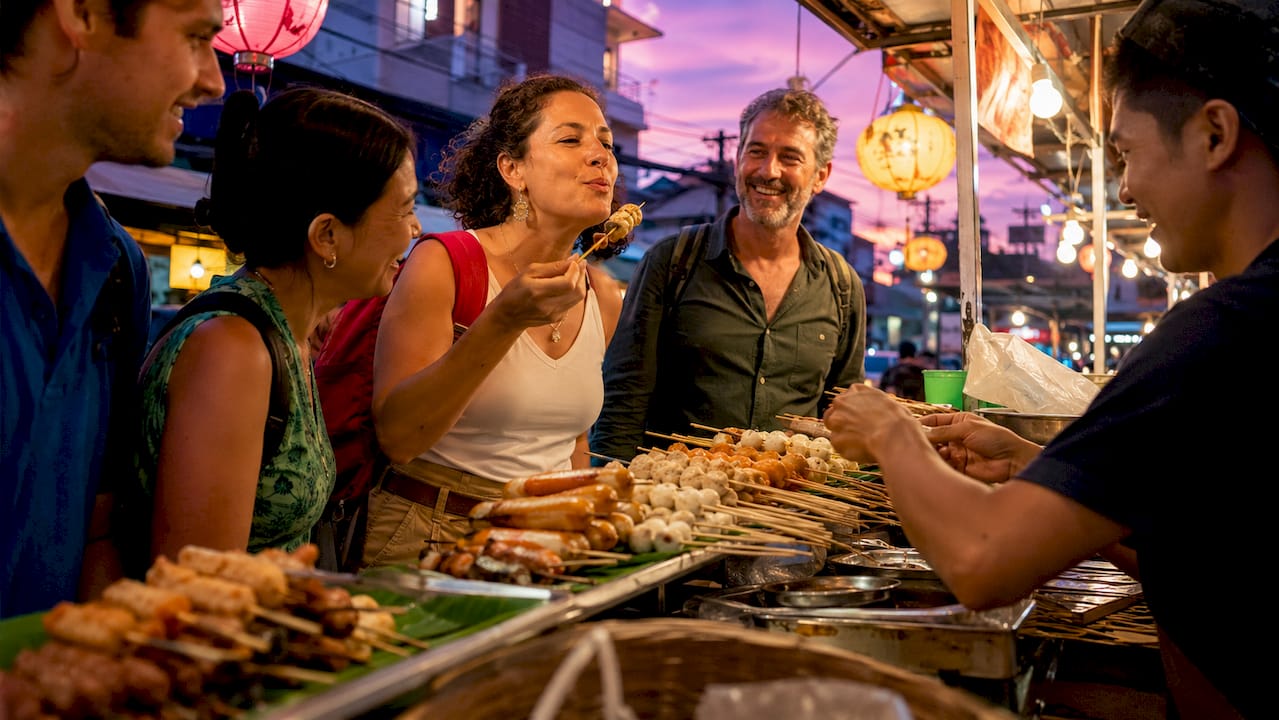
Activities that qualify as genuinely experiential include cooking classes with local chefs, traditional craft workshops, community heritage tours, language exchange meetups, local market visits with a neighborhood guide, and creative sessions like painting or music. The common thread is that you leave with a skill, a story, or a relationship you did not have before.
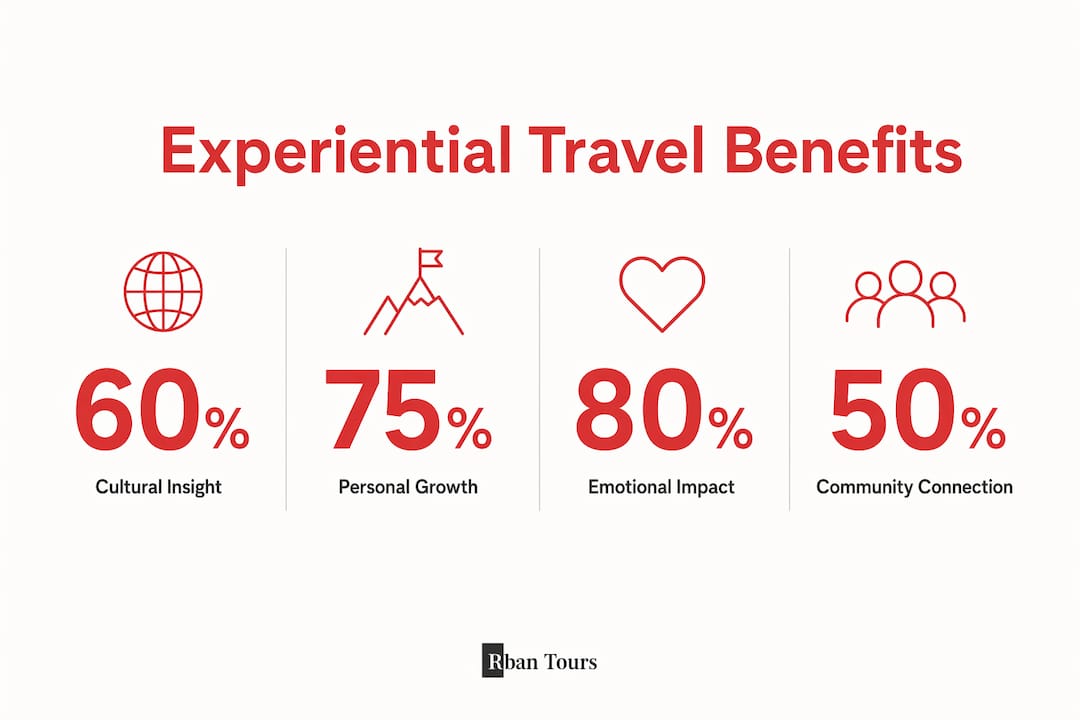
Experiential travel benefits go beyond entertainment. They include deeper cultural understanding, personal growth, and a sense of authentic connection that standard itineraries rarely produce. That depth is what separates a trip you remember for years from one you forget by the following month.
Pro Tip: When evaluating whether an activity is truly experiential, ask one question: “Am I doing something alongside locals, or am I watching them do something for me?” The first is immersive travel. The second is a performance.
What benefits does experiential travel offer beyond traditional tourism?
Immersive travel produces benefits that extend well past the trip itself. Hands-on activities like cooking, community heritage tours, and traditional arts reduce stress, build cultural empathy, and support personal growth in ways that passive sightseeing simply cannot replicate. The experience becomes part of how you see the world, not just a memory you scroll past.
The specific benefits travelers report most often include:
Cultural empathy. Spending real time with locals dismantles stereotypes faster than any documentary. You stop seeing a culture as a backdrop and start seeing it as a living, breathing community.
Stronger social bonds. Shared participation creates connection. Whether you are kneading dough next to a stranger or painting alongside a group in Barcelona, the activity becomes a social anchor.
Reduced stress and mental reset. Focused, hands-on engagement pulls attention away from daily pressures. The act of learning something new in an unfamiliar place is genuinely restorative.
Personal growth. Value in experiential travel comes from skills gained and memories created, not from the upfront price of a tour. That long-term impact is what makes the investment feel worthwhile months later.
Meaningful storytelling. You return home with something to say. Not “I saw the Eiffel Tower” but “I spent a morning with a Parisian baker who taught me how to read a croissant’s layers.”
Traveling with locals accelerates every one of these benefits. A local guide does not just show you where to go. They show you how to see.
How does experiential travel differ from sustainable and transformative travel?
These three concepts overlap, but they are not the same thing. Confusing them leads travelers to expect the wrong outcomes.
Experiential travel emphasizes emotional resonance and personal impact, while sustainable tourism focuses primarily on environmental and cultural preservation. You can have a deeply experiential trip that has no sustainability agenda, and you can take a sustainably certified tour that feels completely hollow. The goals are different.
Transformative travel goes further than experiential travel. It implies a fundamental shift in how you see yourself or the world. Experiential travel is the vehicle that can produce transformation, but it does not guarantee it. The difference is depth and intention.
Cultural tourism, meanwhile, centers on heritage sites, museums, and historical narratives. It overlaps with experiential travel when it involves active participation, but diverges when it becomes a passive tour of monuments.
Key distinctions worth keeping clear:
Experiential travel = active participation + emotional connection + local engagement
Sustainable travel = environmental and cultural responsibility as the primary lens
Transformative travel = deep personal change as the intended outcome
Cultural tourism = heritage and history as the primary focus
Pro Tip: The best trips blend all four. Book an experiential activity at a heritage site run by local artisans, and you have touched all the bases at once. Rbantours’ authentic city guides are designed with exactly that layering in mind.
How to plan experiential travel that actually delivers
Planning for immersive travel requires a different mindset than planning a standard vacation. The goal is not to fill every hour. It is to create the conditions for genuine connection.
Spend more time in fewer places. Staying 3–5 days in one location deepens your experience significantly compared to rapid multi-city itineraries. You start to recognize faces, learn the neighborhood rhythm, and move like someone who belongs there.
Use local public transport and markets. Core components of authentic immersion are cultural contact and local interaction, not expensive packages. A morning at a neighborhood market costs almost nothing and delivers more cultural texture than most premium tours.
Balance high-engagement activities with downtime. Cramming too many participative activities leads to fatigue and diminished appreciation. A hybrid itinerary, one immersive activity per day with unscheduled time around it, produces richer results.
Embrace emotional readiness. Active participation demands openness to mistakes. You will mispronounce things, burn the sauce, and misread the social cues. That is the point. Failure is part of learning, and learning is the whole experience.
Seek unscripted interactions. Strike up a conversation at a café. Ask the vendor at the market where they eat lunch. Attend a local community event. These moments cannot be packaged, and they are often the ones you remember most.
The social connection that travel builds is not a side effect. It is the product. Plan for it deliberately.
What are common misconceptions about experiential travel?
The biggest myth is that experiential travel requires expensive packaged tours. Authentic immersive experiences are achievable independently through local transport, community markets, and direct engagement with residents. The price of a tour does not determine the depth of the experience.
Other misconceptions worth addressing:
“I need a guide to have an experiential trip.” A good guide accelerates connection, but spontaneous local interactions are equally valid. The key is participation, not a booking confirmation.
“Experiential travel is a checklist of activities.” Treating experiences as boxes to tick destroys their value. The mindset matters as much as the activity itself.
“More activities mean a richer trip.” Authentic moments arise from spontaneity and unscripted interactions, not from a packed schedule. Over-curation is one of the fastest ways to kill authenticity.
“It only works in exotic destinations.” You can have a deeply immersive experience in your own country, or even your own city, if you engage with it the way a curious outsider would.
Understanding the guest experience dimension of travel also helps. Hospitality professionals increasingly design for emotional resonance, not just comfort. Recognizing that design helps you identify which offerings are genuinely experiential and which are simply well-marketed.
Key Takeaways
Experiential travel delivers lasting personal value by replacing passive sightseeing with active, local participation that builds cultural empathy, meaningful connections, and skills that outlast the trip itself.
Point | Details |
Core definition | Experiential travel centers on active participation in local culture, not passive observation. |
Depth over distance | Spending 3–5 days in fewer places produces stronger cultural immersion than rapid multi-city trips. |
Affordability | Authentic immersion requires local engagement, not expensive packaged tours. |
Mindset matters | Openness to mistakes and unscripted moments is what separates real immersion from performance tourism. |
Balance is key | Mixing one immersive activity per day with downtime prevents fatigue and deepens appreciation. |
What I’ve learned from years inside experiential travel
The phrase “experiential travel” gets used to sell a lot of things that are not actually experiential. I have seen premium tours that deliver a beautifully staged version of local life, complete with a smiling artisan and a tasting menu, but zero real contact with anyone who actually lives there. That is not immersion. That is theater with better lighting.
What we have found at Rbantours is that the most powerful moments happen in the gaps between the planned activities. The conversation that starts because you got lost. The vendor who teaches you three words in their language because you asked. The neighborhood bar you walked into because it looked interesting. These moments cannot be designed, but they can be made more likely by putting travelers in the right environments with the right attitude.
The culinary dimension of travel is a perfect example. Food is one of the fastest routes into a culture’s soul. But a food tour where you watch a chef cook is fundamentally different from one where you stand at the stove yourself, make a mess, and laugh about it with the person next to you. We always choose the second version.
My honest advice: resist the urge to fill every hour. Leave room for the city to surprise you. The best experiential travel is not the most scheduled. It is the most open.
— Rban
Experience cities the way locals do with Rbantours
Rbantours designs every activity around one principle: you should leave knowing something about a city that most visitors never find out.
[
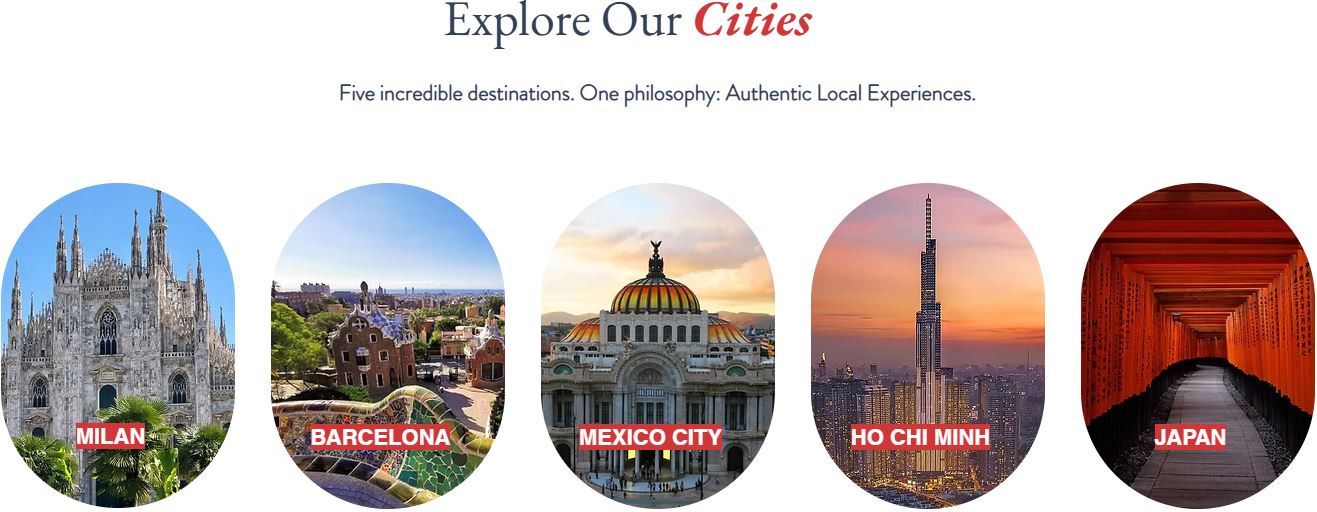
From walking and cultural tours through Barcelona’s creative neighborhoods to street food walks and Paint & Sip workshops in Mexico City, each experience puts you inside the city’s rhythm rather than outside it. We work with local creatives, neighborhood venues, and cultural insiders to build activities that feel personal, not packaged. Whether you are traveling solo, with a partner, or in a group, Rbantours offers a way to connect with a destination that goes well beyond what any guidebook can give you. Browse our Barcelona experiences and find the one that fits your curiosity.
FAQ
What is the difference between experiential travel and regular tourism?
Regular tourism centers on visiting landmarks as a passive observer. Experiential travel centers on active participation in local culture, producing skills, relationships, and memories rather than photographs.
Is experiential travel expensive?
Experiential travel does not require premium-priced tours. Local markets, public transport, and direct community engagement deliver authentic immersion at minimal cost.
What are some examples of experiential travel activities?
Common activities include cooking classes with local chefs, traditional craft workshops, neighborhood food walks, language exchanges, and creative workshops like painting or music sessions.
How long should I stay in one place for experiential travel?
Spending at least 3–5 days in a single location allows enough time to move past surface-level tourism and build genuine familiarity with a neighborhood, its people, and its rhythms.
Can I do experiential travel independently without a tour company?
Yes. Using local public transport, visiting community markets, and seeking unscripted conversations with residents are all core components of immersive travel that require no booking at all.
Recommended
Comments