
The Real Role of Local Guides in Authentic Travel

Most travelers assume a local guide is simply someone who points at things and recites facts. That assumption costs them the best part of every trip. The true role of local guides reaches far deeper than logistics or narration. A great guide reads the pulse of a place, translates its rhythms, and connects you to experiences that no app or travel blog can replicate. Understanding the full scope of what local guides do changes how you plan, what you discover, and how deeply a destination actually stays with you.
Table of Contents
Key takeaways
Point | Details |
Guides are cultural interpreters | They decode traditions, customs, and local stories that transform sightseeing into genuine understanding. |
Guided travelers spend more | Guided visitors spend roughly 20% more per trip, directly benefiting local communities. |
Safety is a core function | In high-risk environments, guides monitor health risks and manage real-time itinerary changes to protect you. |
Guides drive sustainable tourism | Certified guides actively educate travelers on conservation and minimize ecological and cultural damage. |
Finding the right fit matters | Credentials matter, but shared passion and communication style determine whether a guide truly transforms your trip. |
The role of local guides goes far beyond directions
Think of a great local guide the way you think of a great host. They are not just showing you around. They are curating an experience shaped by years of living, breathing, and loving the place you are visiting for the first time.
The responsibilities a professional guide carries on any given tour include:
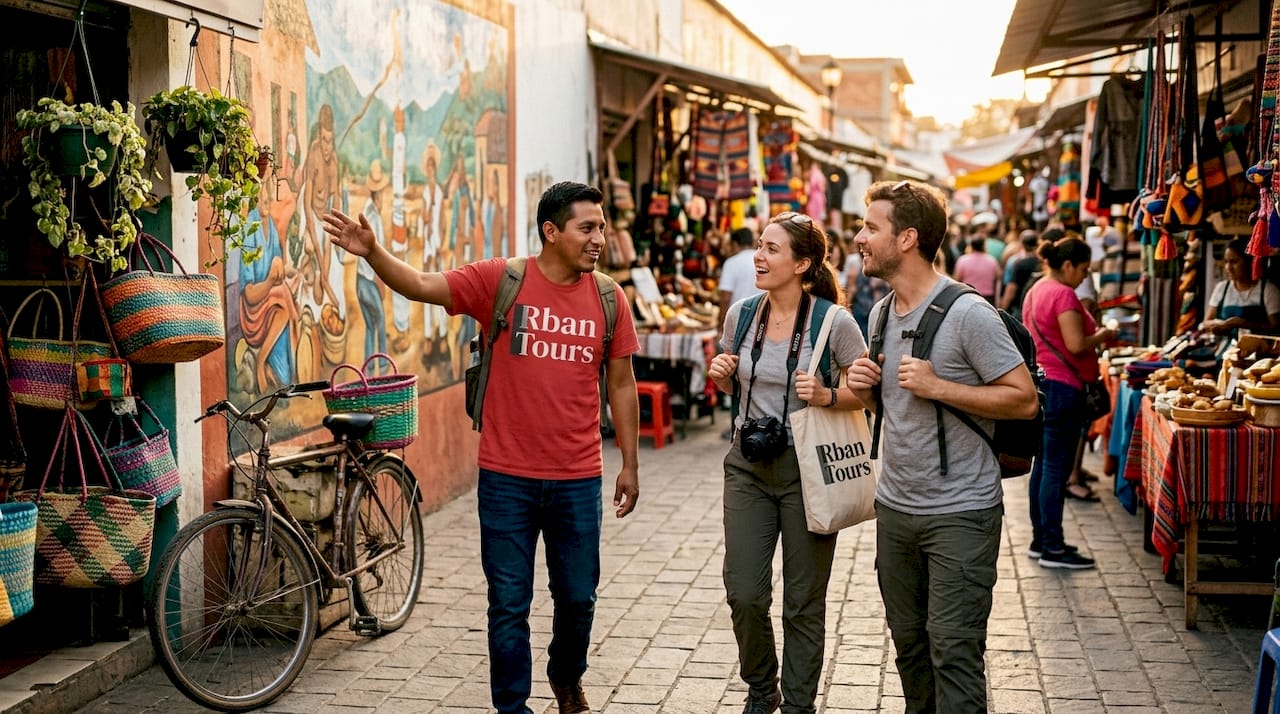
Cultural ambassador. Guides explain the history, mythology, and social customs behind what you see. In Nepal, for example, guides explain local rituals and legends that turn a temple visit from a photo stop into a genuine moment of connection.
Safety officer. In demanding environments, guides monitor physical health, track weather conditions, and make real-time decisions that protect travelers from serious risk.
Logistics manager. From securing permits and coordinating transportation to arranging last-minute accommodations, guides handle the machinery of travel so you never have to.
Storyteller. A skilled guide translates complex local environments into stories that are personal, vivid, and memorable. That story about the faded mural on a side street in Mexico City? Only a local knows it.
Problem solver. When things go sideways, guides act as problem solvers and ambassadors, coordinating emergency responses and keeping communication open with local communities.
Pro Tip: Ask a guide candidate to tell you one story about their city before you book. The answer reveals more about their depth and passion than any credential ever will.
The importance of local guides becomes undeniable once you understand that they are simultaneously your cultural teacher, your safety net, and your connection to the heartbeat of a destination. That is a lot to ask of one person. The best ones deliver all of it without breaking a sweat.
How local guides unlock authentic cultural immersion
Surface-level tourism is easy. You can find the Colosseum on Google Maps. What you cannot find there is the woman who sells the best supplì two blocks away, or the neighborhood kid who can tell you which doorway Pier Paolo Pasolini used to walk through. That depth belongs to local guides.
The benefits of local guides in terms of cultural immersion are specific and significant:
Language and nuance. Even when you share a language with your destination, a guide catches the subtle meanings and local slang that define how people actually communicate. In a country like Japan, gesture and context carry as much weight as words.
Hidden spots. Guides introduce travelers to sites and experiences that never appear in a travel magazine. This is one of the clearest advantages of exploring cities like a local, where the detour is often more interesting than the destination.
Meaningful human connection. A guide who grew up in a neighborhood can introduce you to the vendor, the artist, or the elder who carries the neighborhood’s real history. Those interactions do not happen by accident.
Context that sticks. Seeing a beautifully tiled façade in Lisbon is one thing. Hearing a guide explain the tradition of azulejos, the grief encoded in their blue and white patterns, and the specific family who commissioned that wall is something entirely different. It stays with you.
Local guides and cultural insights are inseparable. The guide is the mechanism by which a city’s interior life becomes accessible to an outsider. Without that mechanism, most travelers skim the surface of places that have extraordinary depth waiting just underneath.
There is also the question of emotional resonance. Research consistently shows that local experiences create deeper memories precisely because they involve human stories and genuine interaction. A guide is the person who makes those stories available to you.
The economic and sustainable tourism impact of hiring guides
Here is something most travelers never consider: when you hire a local guide, you are making a specific economic choice with real consequences for the community you are visiting.
Factor | Impact |
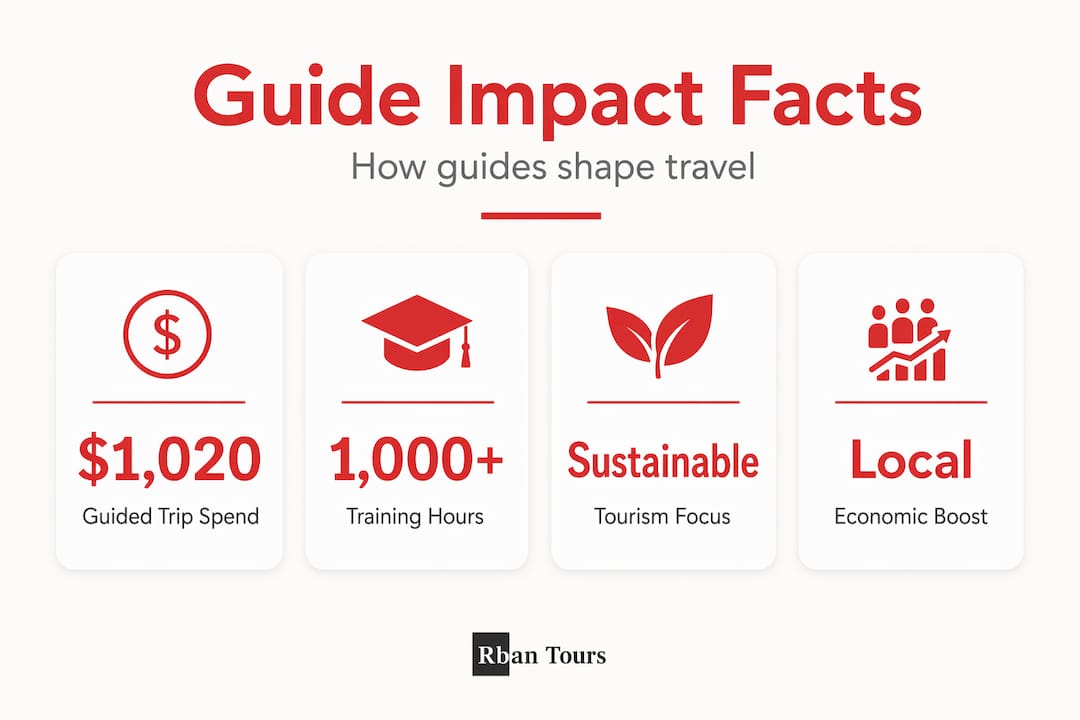
Increased traveler spending | Guided visitors average $1,020 vs. $826 for independent travelers per trip |
Local business support | Guides direct spending toward neighborhood restaurants, artisans, and small vendors |
Job creation | Guide certification programs create skilled employment within local communities |
Environmental stewardship | Certified guides educate visitors on conservation and enforce low-impact behavior |
That spending gap is not trivial. Guided travelers contribute more, and guides actively channel that spending into local ecosystems rather than international hotel chains. The local guides’ impact on tourism extends far beyond the individual experience.
Professionalization also matters. In Costa Rica, certified guides must complete over 1,000 hours of training covering ecology, safety, and cultural history before they can work independently. That standard of preparation directly affects how well they can serve as stewards of both the environment and the traveler experience.
Pro Tip: When booking, look for guides affiliated with national tourism boards or regional certification programs. That credential signals accountability to both travelers and the communities they represent.
Sustainable tourism is not an abstract concept. It is the guide who tells you not to touch a coral formation. It is the one who chooses a family-run lunch spot instead of a tourist trap. These are not small decisions. They define whether tourism helps or slowly depletes the places we love to visit.
Safety and logistics: what guides protect you from
Hiring a local guide is not just about enrichment. In certain environments, it is about not getting hurt.
Altitude management. In Nepal, professional guides follow strict protocols that limit daily ascent above 2,500 meters to just 300 to 500 meters. That pacing prevents altitude sickness, which can escalate quickly and become life-threatening without intervention.
Real-time itinerary adaptation. Weather changes, road closures, political unrest. Experienced guides adjust itineraries to local conditions in real time, pivoting without drama to keep the day on track.
Permit and documentation handling. High-traffic trekking routes, protected archaeological sites, and restricted areas all require specific permits. Guides manage documents like TIMS cards in Nepal and coordinate with local authorities so you never face a bureaucratic wall mid-trip.
Emergency coordination. In a medical or safety crisis, a guide is your fastest and most effective resource. They know the local hospital, the evacuation route, and who to call. As temporary guardians of visitor well-being, guides carry responsibility that most travelers never fully appreciate until they need it.
Vetting reliable contacts. Even in urban settings, referrals from trusted sources like hotels, tourism boards, and travel advisors consistently produce better guide relationships than searching cold online platforms.
Why hire a local guide for complex or unfamiliar trips? Because the cost of not having one can be measured in missed opportunities at best and serious risk at worst. The logistics alone are worth the investment. The peace of mind is priceless.
My take on what a great guide actually changes
I have seen travelers spend two weeks in a city and leave with nothing but photos and receipts. I have also seen someone spend three days in the same city with a brilliant local guide and come home fundamentally changed. The difference is not the city. It is the access.
What I have learned is that credentials are the floor, not the ceiling. A certified guide with a rehearsed script is infinitely less valuable than someone who grew up on that street and actually cares whether you feel something. The guide-traveler relationship works best when there is genuine communication and shared curiosity about a place.
The uncomfortable truth about the why hire a local guide conversation is that most people underestimate what they are getting. They see it as paying for information. It is not that. It is paying for an introduction to the soul of a place, through a person who loves it. That is a completely different transaction.
I also think guides are the most underappreciated actors in sustainable tourism. They absorb local knowledge over a lifetime and then spend that knowledge one traveler at a time. When you travel with local hosts, you are participating in a system that keeps culture alive, keeps spending local, and keeps the rhythm of a place intact. That matters far beyond any single trip.
— Rban
Discover cities through the people who know them best
At Rbantours, we believe a city reveals itself through the people who live and breathe it every day. Every experience we design is built around that conviction.
[

Our walking and cultural tours are led by local guides who are not just knowledgeable but genuinely passionate about sharing their city’s creative energy, hidden rhythms, and living culture. Whether you are exploring the art-soaked streets of Barcelona, the layered neighborhoods of Mexico City, or the quietly extraordinary detail of a Japanese side street, our guides bring you into the pulse of each destination.
From street food to vintage finds to unexpected conversations with local artisans, Rbantours crafts moments that feel personal, not produced. Explore our Barcelona experiences or discover what awaits you across all our destinations. Your most meaningful trip starts with the right guide.
FAQ
What does a local guide actually do on a tour?
A local guide handles cultural interpretation, safety monitoring, logistics coordination, and storytelling. They translate a destination’s customs, history, and hidden life into direct, personal experiences for travelers.
How do local guides enhance cultural immersion?
Local guides unlock access to hidden sites, facilitate introductions to community members, and explain the context behind what travelers see. This depth of engagement turns a visit into a genuine cultural experience rather than a surface-level tour.
Are local guides worth hiring for safety reasons?
Yes, especially in challenging environments. In high-altitude trekking regions like Nepal, guides enforce strict ascent limits and monitor for altitude sickness, while also managing permits and emergency protocols that travelers cannot easily navigate alone.
How do I find a trustworthy local guide?
Referrals from reputable hotels, tourism boards, and travel advisors consistently yield the most reliable guides. Certified guides affiliated with national or regional programs offer an additional layer of accountability and professional training.
Do local guides help support the local economy?
Guided travelers spend approximately 20% more per trip than independent travelers, and guides actively direct that spending toward local vendors, restaurants, and small businesses rather than international chains.
Recommended
Comments