
Why Art-Based Tours Transform How You Travel

Art-based tours are defined as immersive, creativity-centered travel experiences that guide participants through a city’s cultural identity using art, architecture, and local narratives as the primary lens. Unlike conventional sightseeing, these experiences ask you to interpret rather than simply observe. The result is a richer, more personal connection to the places you visit. Research confirms that art tours reorient visitor goals from consumption to interpretation, producing deeper engagement with every destination. Whether you are exploring Barcelona’s street murals, Mexico City’s muralist tradition, or Tokyo’s museum corridors, why art-based tours matter comes down to one thing: they let you feel a city’s pulse, not just photograph it.
Why art-based tours enhance cultural understanding
Art-based tours, known in the travel industry as creative tourism or cultural immersion tours, do something traditional guided tours rarely achieve. They connect the physical fabric of a city to its living story. A neighborhood’s architecture, its gallery walls, and the rhythm of its streets all speak to the same cultural identity. A well-designed art tour reads all three at once.
Seoul’s “Arts in Seoul” program for international visitors is one of the clearest examples of this approach in practice. The tour links alleys and exhibition venues sequentially, allowing visitors to feel the city’s texture rather than collecting quick photo stops. That sequential, narrative structure is what separates a creative tourism experience from a standard walking tour. You are not moving from landmark to landmark. You are building a picture.
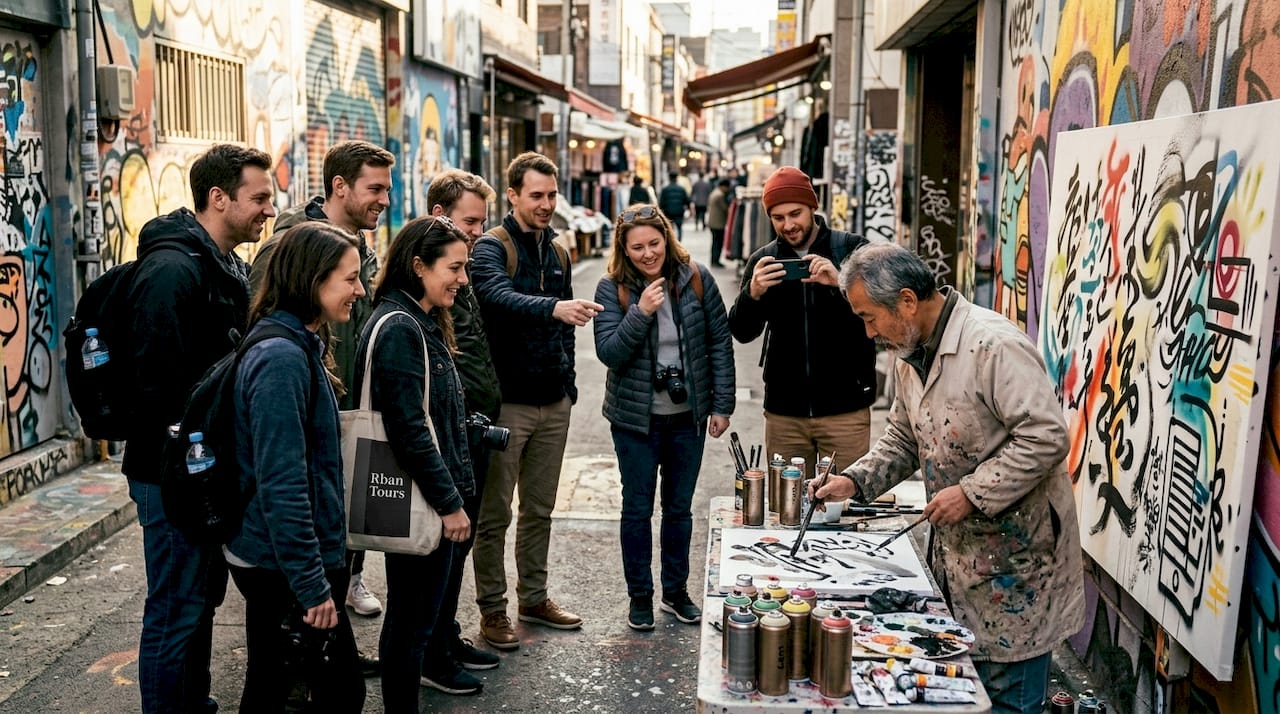
Psychology research published in Frontiers in Psychology frames this process precisely. Museum-based cultural experiences function as place-based communication that actively builds cultural identity and confidence. This means that when a guide connects a painting to a neighborhood’s history, your brain is doing more than storing a fact. It is constructing a relationship between you and that place.
Here is what that looks like in practice for travelers:
Narrative context: Guides connect artworks to the social and political history of the neighborhood, giving you a framework for what you see.
Sequential discovery: Moving through a curated route builds cumulative understanding rather than isolated impressions.
Participatory moments: Hands-on activities, sketching exercises, or creative workshops anchor the experience in memory.
Local perspective: Expert-led tours introduce you to artists, venues, and stories that no travel app surfaces.
Pro Tip: Before booking, ask whether the tour follows a thematic or chronological narrative. Thematic tours, organized around a single idea like color, protest art, or sacred imagery, tend to produce stronger cultural recall than route-based tours.
How art tours improve your mental and physical wellbeing
The wellbeing benefits of art-based tours are measurable, not anecdotal. A study analyzing 1,850 visitors at the National Museum of Western Art in Tokyo found that even short museum visits of 10 to 30 minutes significantly improved mood and reduced negative emotions including anger and depression. Physiological regulation, including heart rate stabilization, was also recorded. For travelers managing the fatigue of transit, unfamiliar environments, and packed itineraries, this is a meaningful finding.
“81% of visitors report feeling better, and 64.2% show significantly improved wellbeing after guided slow-looking art exercises.” This is not passive enjoyment. It is a structured, restorative practice that produces real psychological change.
The San Diego Museum of Art’s monthly Sensory Experience Tours demonstrate how this effect can be amplified. These multisensory tours combine docent-led exhibition walks with hands-on educator activities, integrating sound, scent, touch, and tactile engagement. The result is a deeper understanding of artistic materials and context, and a more complete sensory reset for the visitor. For travelers, this format turns a museum visit into something closer to active meditation than passive observation.
The science behind slow-looking is straightforward. When you spend extended time with a single artwork, your nervous system responds to the stillness and focused attention. Guided exercises that prompt you to notice color, texture, or emotional response accelerate this effect. Travelers who build even one structured art experience into a trip consistently report that it becomes the most memorable part of their visit. Not because it was the most dramatic, but because it was the most felt.
Practical considerations: formats, booking, and timing
Understanding the logistics of art tour experiences prevents frustration and helps you get the most from each visit. Tour formats vary widely, and the right choice depends on your group size, available time, and how deeply you want to engage.
Book early. Portland Art Museum’s private guided tours require reservations at least 3 weeks in advance, with non-refundable deposits. This is standard practice across major institutions. Last-minute bookings for quality guided experiences are rarely available.
Budget for guide fees separately. Private guided tours at institutions like Portland Art Museum cost approximately $250 per guide, on top of admission fees. Group tours spread this cost, but private options offer significantly more personalization.
Choose timed, modular tours when possible. Research shows that structuring visits into short modules prevents museum fatigue and preserves the restorative effect of the experience. Tours longer than 90 minutes without breaks tend to diminish engagement rather than deepen it.
Prioritize multisensory options. The San Diego Museum of Art’s Sensory Experience Tours run monthly at one hour each, combining exhibition walks with hands-on activities. This format is replicable across many institutions and consistently outperforms passive viewing for wellbeing outcomes.
Check accessibility in advance. Many institutions offer adapted tours for visitors with mobility, visual, or hearing considerations. These are often the most thoughtfully designed tours available, with slower pacing and richer sensory detail.
Tour format | Best for | Typical duration | Advance booking needed |
Private guided tour | Small groups, deep focus | 60 to 90 minutes | 3 weeks or more |
Multisensory group tour | Families, sensory learners | 60 minutes | 1 to 2 weeks |
Self-guided audio tour | Solo travelers, flexible schedules | 45 to 120 minutes | None |
Creative workshop tour | Hands-on learners, social groups | 90 to 120 minutes | 1 to 2 weeks |
Pro Tip: If you are traveling with a mixed group, book a multisensory tour as your anchor experience and pair it with a self-guided audio tour the following day. The contrast between guided interpretation and independent discovery produces a more complete picture of any collection.
How art tours democratize cultural access
One of the most significant and underappreciated benefits of art tours is their role in broadening who gets to participate in cultural life. Admission pricing has historically been the primary barrier. Italy’s “Domenica al Museo” program, which offers free entry to state museums on the first Sunday of each month, increased first-Sunday attendance by 30% compared to average Sundays. That is not a marginal shift. It represents a structural change in who walks through museum doors.
The implications for travelers are direct. Free admission days and reduced-fee programs exist across Europe, Latin America, and Asia, and they are often the best days to experience a museum’s full social energy. The crowd on a free Sunday at the Prado in Madrid or the Museo Nacional de Antropología in Mexico City is different from the crowd on a paid weekday. It is more local, more diverse, and more alive.
Access model | Example | Impact |
Free admission days | Italy’s Domenica al Museo | 30% attendance increase on free Sundays |
Reduced-fee programs | Many US museums offer pay-what-you-wish hours | Broadens visitor income diversity |
Community-targeted tours | Neighborhood-specific art walks | Connects local residents and travelers |
Participatory design | Workshops open to all skill levels | Removes the “I’m not an artist” barrier |
The limitation worth acknowledging is that price alone does not solve all access barriers. Time constraints, transportation, and the perception that art institutions are not “for everyone” all play a role. The most effective art tours address this by meeting people where they are, literally and culturally. Tours that begin in neighborhoods rather than museum lobbies, and that use local artists as guides, tend to reach the widest and most engaged audiences.
Key takeaways
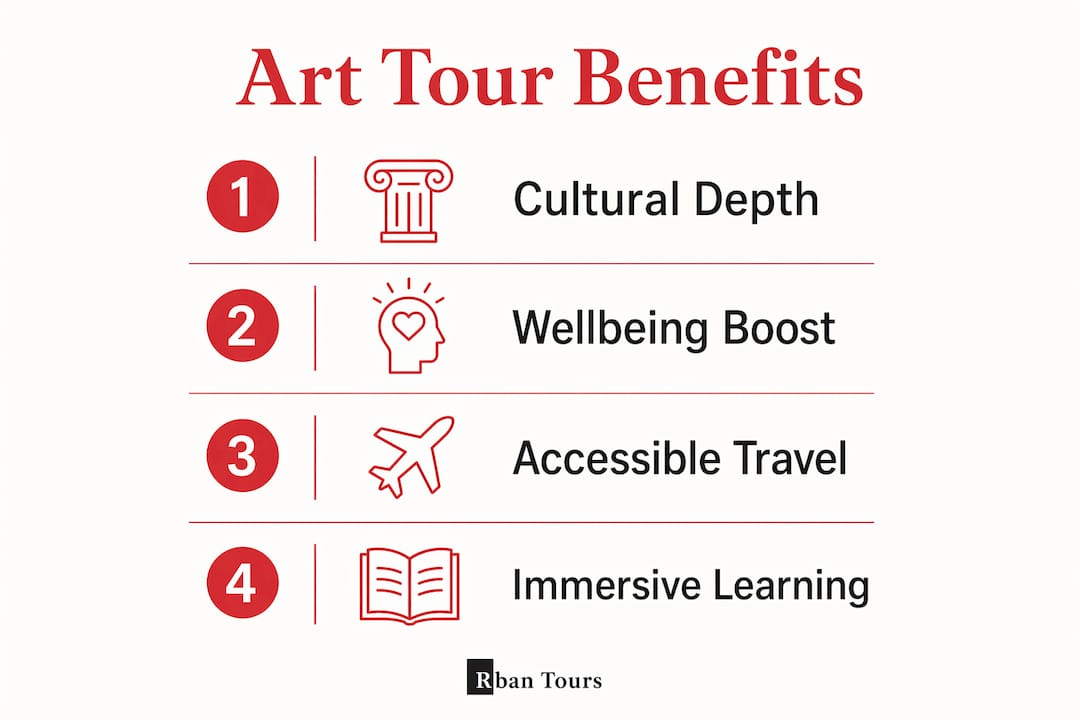
Art-based tours produce measurable cultural, psychological, and social benefits that conventional sightseeing cannot replicate, making them the most rewarding format for travelers who want to genuinely connect with a destination.
Point | Details |
Cultural depth over sightseeing | Art tours use narrative and sequential routes to build real cultural understanding, not just visual impressions. |
Proven wellbeing benefits | Even 10 to 30-minute art experiences improve mood and reduce negative emotions, confirmed by Tokyo museum research. |
Plan logistics early | Private guided tours require bookings 3 weeks ahead and cost around $250 per guide at major institutions. |
Multisensory formats amplify impact | Tours combining touch, sound, and hands-on activities produce stronger engagement and memory retention. |
Free access days expand participation | Programs like Italy’s Domenica al Museo increase attendance by 30%, making cultural access more equitable. |
What we have learned from designing art-centric travel
After years of building art-centered experiences across Barcelona, Mexico City, and beyond, we have come to one clear conclusion: the travelers who get the most from a city are the ones who slow down long enough to let it speak.
Most people arrive in a new city with a list. They move fast, check boxes, and leave with photographs. Art-based tours break that pattern. Not because they are slower, but because they ask a different question. Instead of “what should I see?” they ask “what does this place mean?” That shift changes everything about how you experience a destination.
We have watched travelers who claimed they “don’t really care about art” become completely absorbed in a neighborhood mural tour in CDMX, or spend forty minutes in front of a single painting in Barcelona because a guide gave them the right question to sit with. The art itself is almost secondary. What matters is the permission to look carefully and the framework to understand what you are seeing.
The research on cultural confidence through art tours confirms what we see on the ground. When interpretation is well-designed and expert-led, visitors leave not just informed but changed. They carry a piece of the city’s identity with them. That is what we build every experience around at Rbantours. Not a tour. A relationship between you and the place.
If you have been traveling and feeling like something is missing, like you are moving through cities without really touching them, an art-based experience is the most direct correction we know. Start with one. One neighborhood, one collection, one guide who knows the story behind the walls.
— Rban
Discover immersive art experiences with Rbantours
We design every experience at Rbantours around one idea: that the best way to know a city is through its creative soul. Our Barcelona art experiences take you through neighborhoods where street art, gallery culture, and architectural history converge into something you can actually feel. In Mexico City, our CDMX cultural tours connect you to the muralist tradition, the market culture, and the living pulse of one of the world’s most creatively charged cities.
[
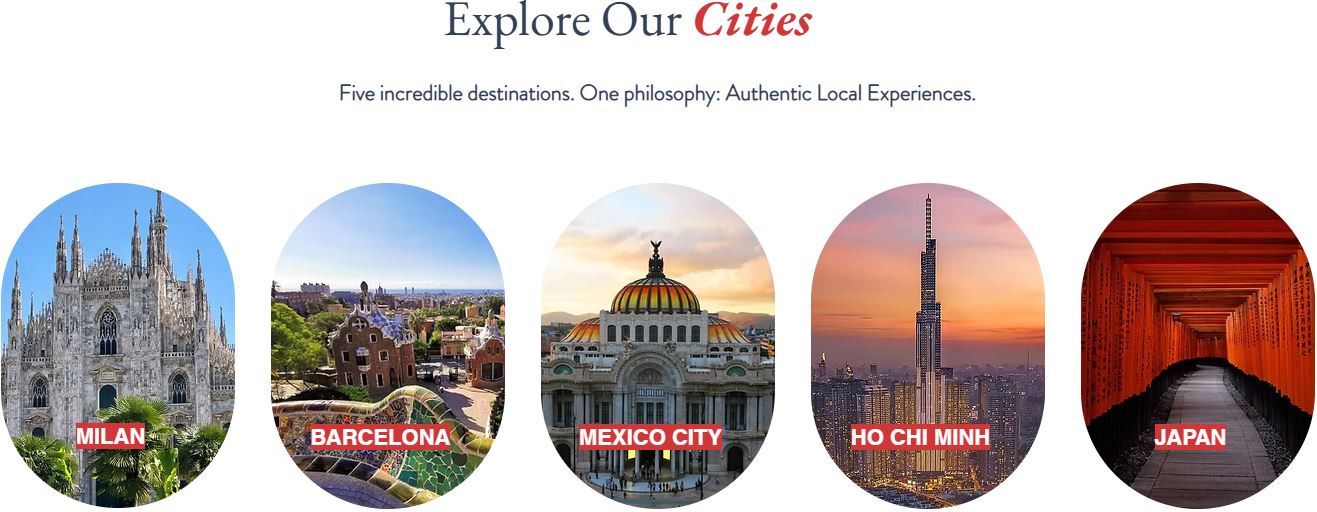
Every tour is led by local creatives who know their city from the inside. Group sizes stay small so the experience stays personal. Whether you are looking for a walking cultural tour that weaves art and heritage together or a hands-on creative workshop, we have built something worth your time. Explore what is available and find the experience that fits where you are going next.
FAQ
What are art-based tours exactly?
Art-based tours are guided travel experiences that use art, architecture, and creative culture as the primary framework for exploring a city. They differ from standard tours by prioritizing interpretation and sensory engagement over landmark collection.
What are the main benefits of art tours for travelers?
Research shows that art tour experiences improve mood, reduce negative emotions, and build cultural confidence. Even short visits of 10 to 30 minutes at art museums produce measurable wellbeing improvements, according to a study of 1,850 visitors at the National Museum of Western Art in Tokyo.
How far in advance should I book an art-based tour?
Most quality guided art tours require booking at least one to three weeks in advance. Portland Art Museum’s private tours, for example, require reservations three weeks ahead with a non-refundable deposit.
Do I need to know about art to enjoy an art-based tour?
No prior art knowledge is needed. The best art tours are designed to give you the interpretive framework as you go, connecting artworks to history, identity, and place in ways that are accessible to any curious traveler.
Are art tours worth it for short city trips?
Yes. Studies confirm that even brief, structured art experiences produce significant mood and wellbeing benefits. Modular tours of 60 to 90 minutes are specifically designed to maximize impact without fatigue, making them ideal for travelers with limited time.
Recommended
Comments